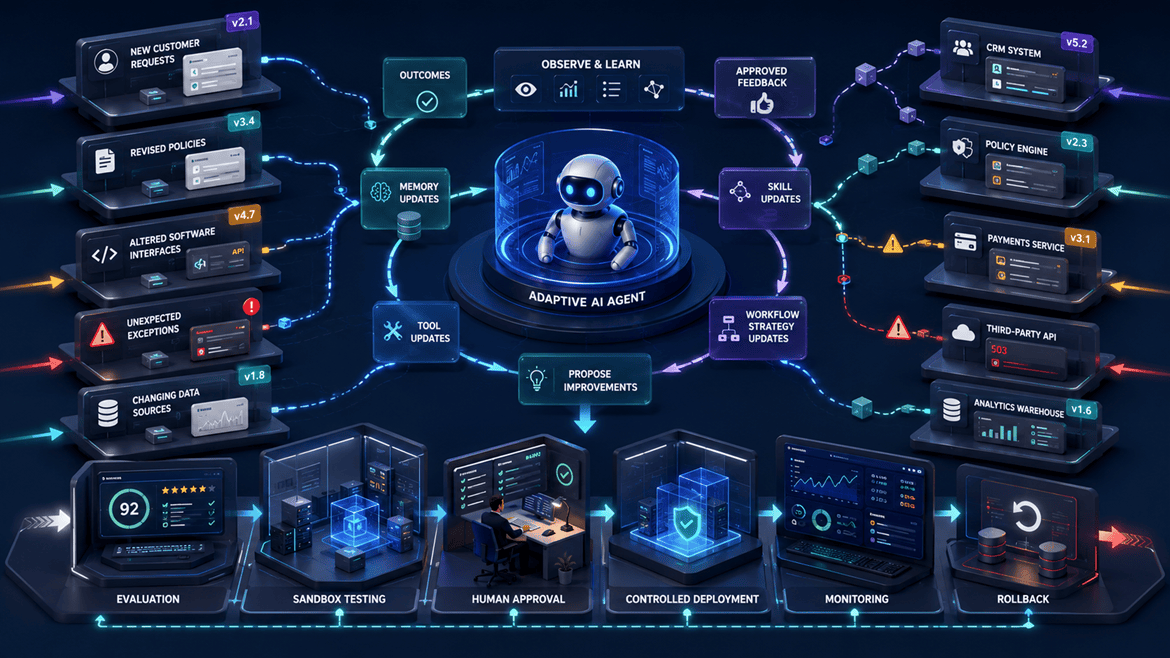
Self-Evolving AI Agents: How to Automate the Tasks That Keep Changing
Self-Evolving AI Agents help businesses automate tasks that keep changing by improving memory, skills, retrieval, tools, and workflows through controlled evaluation.

Self-Evolving AI Agents help businesses automate tasks that keep changing by improving memory, skills, retrieval, tools, and workflows through controlled evaluation.

Enterprise artificial intelligence is evolving at an extraordinary pace. Organizations developing autonomous AI agents are discovering that traditional software development approaches often cannot keep up with the rapid evolution of large language models, reasoning systems, orchestration frameworks, retrieval technologies, and multi-agent workflows. Rather than treating architecture as something that remains fixed for years, many AI […]

As artificial intelligence rapidly evolves from simple chatbots into autonomous software agents capable of planning, reasoning, making decisions, and interacting with enterprise systems, organizations face a new challenge: how do you govern AI agents without limiting their ability to innovate? Traditional governance models rely on predefined policies, fixed rules, and extensive documentation before deployment. However, […]

Artificial intelligence is entering a new phase where raw model size is no longer the only measure of progress. As organizations deploy increasingly sophisticated AI agents capable of reasoning, planning, coding, researching, and making autonomous decisions, the efficiency of the underlying computing infrastructure has become just as important as model accuracy. This shift has placed […]

Enterprises Using Multiple AI Models Are Underestimating Failure Rates by 2.25x Table of contents enterprises using multiple AI models failure rates. The 2.25x Failure Rate Problem Every Enterprise Is Missing How Multiple AI Models Compound Failure Risks Real-World Scenarios Where Multi-Model AI Breaks The Hidden Costs of Underestimated AI Failures Why Enterprises Keep Underestimating These […]

Anthropic unveils Conway, an always-on AI agent for iOS that combines Claude’s language model with proactive assistance, privacy-first design, and advanced automation capabilities.

AI agent harnesses — frameworks like OpenClaw, LangGraph, CrewAI, and AutoGen — are rewriting how AI models are built, orchestrated, and governed in production. Here is what every leader needs to know.
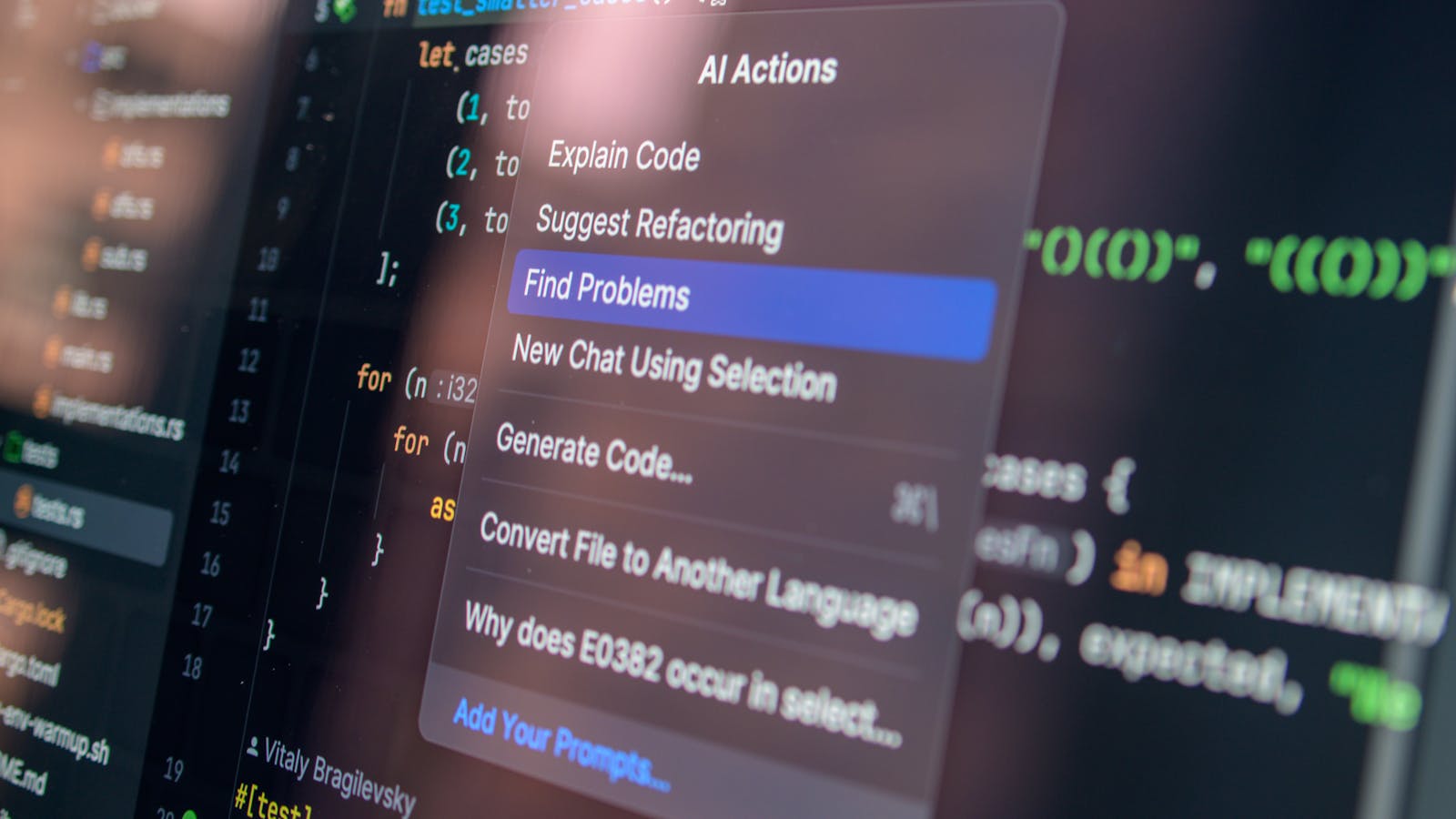
Intent-Based Chaos Testing helps teams test whether AI assistants and agents preserve real user intent when prompts, context, tools, policies, and handoffs become messy.

The Agentic AI Failure Rate warning is really about workflow design, cost control, risk governance, data quality, and avoiding broken manual process automation.
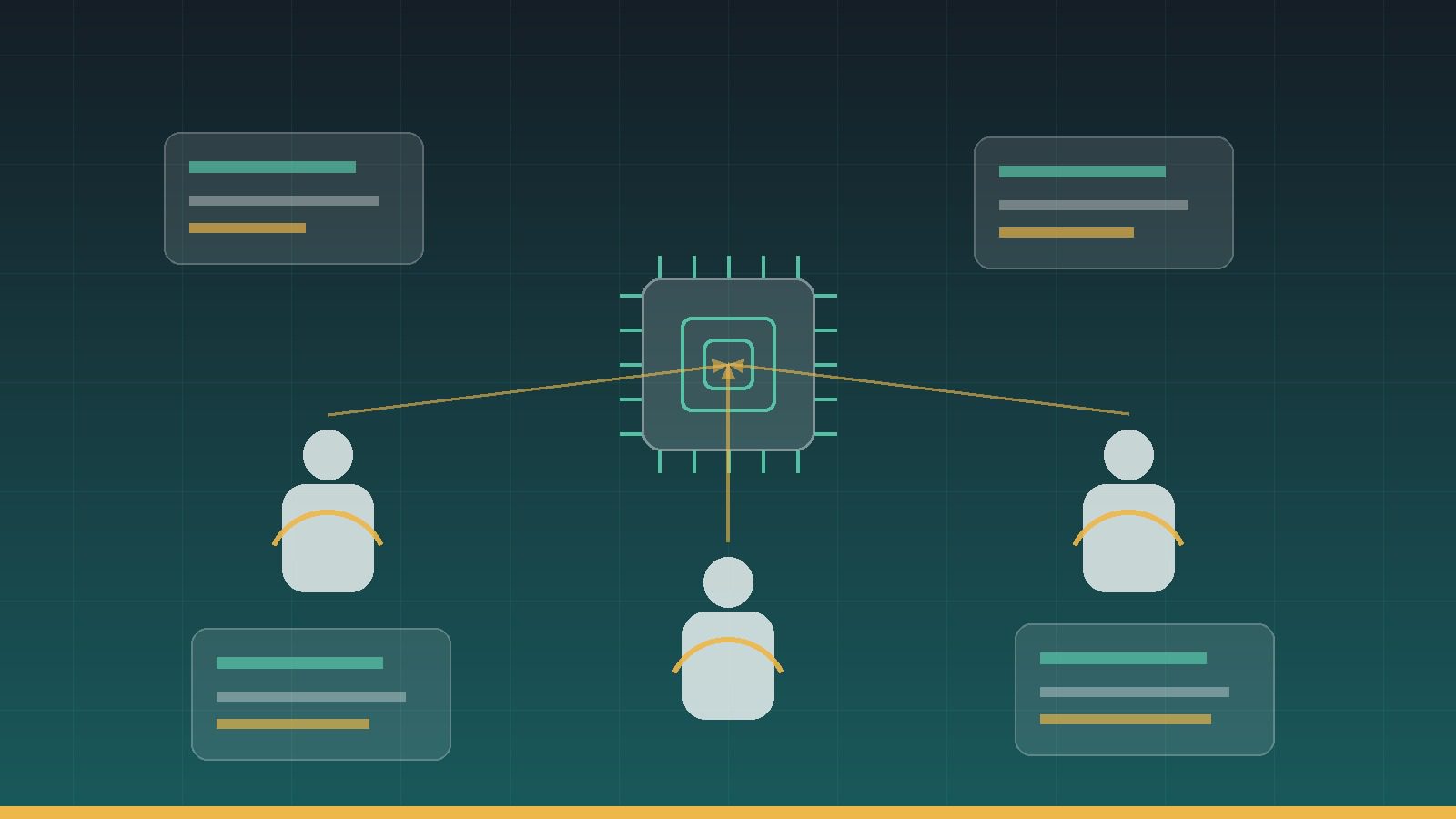
A practical guide to building an AI-Native Organization by redesigning workflows, intake, data, decision rights, handoffs, measurement, and governance before scaling AI automation.










