
Enterprise artificial intelligence is evolving at an extraordinary pace. Organizations developing autonomous AI agents are discovering that traditional software development approaches often cannot keep up with the rapid evolution of large language models, reasoning systems, orchestration frameworks, retrieval technologies, and multi-agent workflows. Rather than treating architecture as something that remains fixed for years, many AI leaders now view continual redesign as a competitive advantage.
The recent discussion surrounding Intuit AI Agent Architecture highlights this changing philosophy. During VB Transform 2026, Intuit’s AI leadership explained that the company rebuilt its internal AI agent architecture twice within only four months. Rather than viewing those redesigns as failures, they described rapid architectural iteration as the fastest path toward building reliable enterprise AI systems.
The story behind Intuit AI Agent Architecture reflects an important lesson for enterprises deploying Agentic AI. Modern AI platforms operate in an environment where foundation models, orchestration techniques, reasoning capabilities, security practices, memory architectures, and enterprise integrations improve almost weekly. In such a rapidly changing landscape, rigid architectures can quickly become obsolete.
Instead of attempting to design a perfect AI platform from the beginning, organizations increasingly adopt iterative engineering practices. Teams deploy working architectures, observe performance in production, identify bottlenecks, incorporate new AI capabilities, and continuously redesign systems to improve scalability, reliability, security, and developer productivity.
The Intuit AI Agent Architecture demonstrates that rebuilding software infrastructure is not necessarily a setback. For AI-native organizations, redesigning architecture can significantly accelerate innovation because each iteration incorporates lessons learned from real enterprise deployments.
This engineering mindset aligns closely with modern DevOps, agile software development, continuous integration, and continuous deployment practices. AI engineering extends these principles by recognizing that AI systems themselves continue evolving after deployment, requiring architectural flexibility rather than long-term rigidity.
For enterprises implementing intelligent assistants, financial AI, customer service automation, software engineering copilots, knowledge management platforms, and autonomous AI agents, the philosophy behind Intuit AI Agent Architecture provides valuable guidance for building scalable AI ecosystems capable of adapting to continuous technological change.
In this comprehensive guide, we’ll explore what Intuit AI Agent Architecture is, how rapid architectural iteration works, why rebuilding can accelerate enterprise AI, key benefits, challenges, future implications, and how adaptive AI engineering may shape the next generation of enterprise software.
Key Takeaways
- Intuit AI Agent Architecture emphasizes rapid architectural iteration.
- Rebuilding AI systems can accelerate enterprise innovation.
- Modern AI platforms require flexible engineering approaches.
- Continuous architecture improvements support evolving AI capabilities.
- Enterprise AI development increasingly favors adaptive system design.
- Agile AI engineering may become the industry standard.
What Is Intuit AI Agent Architecture?
Intuit AI Agent Architecture refers to the evolving enterprise AI framework used to build, manage, orchestrate, and scale autonomous AI agents across business applications.
Rather than relying on a fixed architecture, the approach emphasizes continuous redesign based on operational experience, developer feedback, AI model improvements, infrastructure changes, and evolving enterprise requirements.
The philosophy behind Intuit AI Agent Architecture recognizes that modern AI ecosystems are fundamentally different from traditional enterprise software because their core intelligence continues improving over time.
As a result, AI architecture itself must remain adaptable.
Why Rapid AI Architecture Matters
Artificial intelligence systems now integrate numerous rapidly changing technologies.
Modern enterprise AI platforms combine:
- Large language models.
- Agent orchestration.
- Retrieval systems.
- Tool calling.
- Memory management.
- Security frameworks.
- Workflow automation.
- Enterprise integrations.
Because each of these technologies evolves quickly, organizations benefit from architectures that can be redesigned and optimized without disrupting business operations.
The Intuit AI Agent Architecture illustrates how rapid iteration can improve performance, developer productivity, reliability, and long-term scalability.
How Intuit AI Agent Architecture Works
The Intuit AI Agent Architecture is built around the idea that enterprise AI systems should evolve continuously instead of remaining tied to a fixed technical design. Unlike traditional enterprise software, where architectures often remain stable for years, AI platforms must constantly adapt to improvements in foundation models, reasoning capabilities, orchestration frameworks, retrieval systems, memory architectures, security controls, and enterprise integrations.
Rather than attempting to predict every future requirement during initial development, the Intuit AI Agent Architecture encourages teams to deploy functional AI systems, observe real-world performance, gather engineering feedback, identify limitations, and rapidly redesign components as better technologies emerge. This iterative approach enables organizations to adopt innovation more quickly while reducing long-term technical debt.
Each architectural iteration incorporates lessons learned from production environments, allowing AI systems to become increasingly reliable, scalable, secure, and efficient over time.
Continuous Architecture Evolution
Traditional software projects often prioritize architectural stability.
Enterprise AI systems, however, operate in a rapidly changing technological landscape where major improvements occur almost every month.
The Intuit AI Agent Architecture supports continuous evolution by encouraging engineering teams to regularly evaluate whether existing components remain the most effective solution.
Areas frequently reviewed include:
- AI model selection.
- Agent orchestration.
- Memory systems.
- Retrieval pipelines.
- Tool integrations.
- Infrastructure design.
- Security architecture.
- Performance optimization.
Instead of resisting change, continuous architectural evolution treats improvement as part of normal AI development.
Modular AI Components
A key advantage of the Intuit AI Agent Architecture is modularity.
Rather than building one large monolithic AI platform, enterprise AI systems can be divided into specialized components that evolve independently.
Typical modules include:
- Foundation models.
- Retrieval engines.
- Vector databases.
- Agent frameworks.
- Planning systems.
- Tool execution services.
- Workflow automation.
- Monitoring platforms.
This modular structure makes it easier to replace individual technologies without rebuilding the entire AI ecosystem.
Real-World Performance Feedback
Enterprise AI development increasingly depends on production feedback rather than theoretical assumptions.
The Intuit AI Agent Architecture emphasizes measuring how AI agents actually perform during real business operations.
Engineering teams may evaluate:
- Task completion.
- Response quality.
- Latency.
- Cost efficiency.
- Reliability.
- User satisfaction.
- Error frequency.
- Security performance.
Operational insights help determine which architectural improvements provide the greatest business value.
Scalable Enterprise Infrastructure
As organizations deploy hundreds or thousands of AI agents, infrastructure scalability becomes increasingly important.
The Intuit AI Agent Architecture supports scalable deployment through cloud-native infrastructure and distributed computing principles.
Enterprise scalability may include:
- Elastic cloud resources.
- Distributed processing.
- Load balancing.
- API management.
- Resource scheduling.
- Intelligent caching.
- High availability.
- Fault tolerance.
These capabilities allow AI platforms to grow alongside enterprise demand.
AI Security by Design
Enterprise AI systems often access sensitive customer information, financial records, internal knowledge bases, and business workflows.
The Intuit AI Agent Architecture integrates security throughout the AI development lifecycle rather than treating it as an afterthought.
Security practices may include:
- Identity verification.
- Access control.
- Data encryption.
- Audit logging.
- Permission management.
- Secure APIs.
- Compliance monitoring.
- Threat detection.
Embedding security directly into the architecture helps reduce operational risks as AI adoption expands.
Benefits of Intuit AI Agent Architecture
Organizations adopting adaptive AI engineering approaches can experience numerous advantages.
Key benefits include:
- Faster innovation.
- Improved scalability.
- Easier technology upgrades.
- Lower technical debt.
- Better AI performance.
- Stronger security.
- Greater engineering flexibility.
- Continuous enterprise optimization.
The Intuit AI Agent Architecture demonstrates that rapid architectural iteration can become a strategic advantage rather than a source of instability.
Enterprise Applications
The principles behind the Intuit AI Agent Architecture extend far beyond financial technology.
Organizations across many industries can apply similar approaches.
Financial Services
AI agents can automate financial analysis, customer support, fraud detection, and advisory services.
Healthcare
Healthcare providers can continuously improve AI-powered diagnostics, administrative automation, and clinical decision support.
Software Development
Engineering organizations can redesign AI coding assistants as foundation models improve.
Customer Support
Businesses can refine conversational AI platforms using production insights and evolving language models.
Manufacturing
Industrial AI systems can continuously optimize predictive maintenance, workflow automation, and operational analytics.
Enterprise Knowledge Management
Organizations can improve retrieval systems, intelligent search, and AI assistants through iterative architectural enhancements.
Challenges and Limitations of Intuit AI Agent Architecture
Although the Intuit AI Agent Architecture demonstrates the advantages of rapid architectural iteration, continuously redesigning enterprise AI systems also introduces technical, operational, and organizational challenges. Rebuilding architecture multiple times can significantly improve long-term performance, but it requires disciplined engineering practices, strong leadership, robust testing, and a culture that embraces continuous learning.
Unlike conventional enterprise software that may remain stable for years, AI platforms operate in an environment where foundation models, orchestration frameworks, vector databases, reasoning engines, and developer tools evolve at remarkable speed. Maintaining an adaptive architecture therefore requires organizations to invest continuously in infrastructure, engineering talent, governance, and operational excellence.
As enterprises increasingly deploy autonomous AI agents, the philosophy behind the Intuit AI Agent Architecture will require balancing innovation with stability, scalability, security, and business continuity.
Rapid Technology Evolution
One of the biggest challenges facing enterprise AI is the extraordinary pace of technological change.
Every few months organizations may encounter improvements in:
- Large language models.
- Agent frameworks.
- Retrieval systems.
- Memory architectures.
- AI orchestration.
- Security platforms.
- Cloud infrastructure.
- Development tools.
The Intuit AI Agent Architecture embraces change, but engineering teams must carefully evaluate whether adopting new technologies provides measurable business value before redesigning production systems.
Engineering Complexity
Modern AI platforms contain many interconnected components.
Rebuilding architecture affects multiple layers simultaneously, including:
- AI models.
- APIs.
- Databases.
- Agent workflows.
- Monitoring systems.
- Enterprise integrations.
- Security controls.
- Deployment pipelines.
As the number of components grows, maintaining architectural consistency becomes increasingly complex.
Organizations implementing the Intuit AI Agent Architecture must ensure that redesign efforts remain coordinated across engineering teams.
Infrastructure Costs
Continuous architectural improvements may require additional investment in cloud infrastructure and engineering resources.
Organizations may need to support:
- Development environments.
- Testing infrastructure.
- Production systems.
- AI model evaluation.
- Performance benchmarking.
- Cloud scalability.
- Security monitoring.
- Disaster recovery.
Although rapid iteration can reduce long-term technical debt, short-term infrastructure costs may increase during active development cycles.
Organizational Adaptation
Technology alone does not determine AI success.
Engineering teams, product managers, executives, compliance specialists, and operations personnel must all adapt to increasingly agile development processes.
Successful implementation of the Intuit AI Agent Architecture often requires:
- Cross-functional collaboration.
- Executive support.
- Continuous training.
- Agile engineering.
- DevOps maturity.
- AI governance.
- Knowledge sharing.
- Organizational flexibility.
Without strong internal alignment, architectural changes can become difficult to coordinate.
Maintaining Enterprise Stability
While continuous improvement accelerates innovation, enterprise applications must also remain reliable.
Organizations must balance architectural evolution with operational stability by ensuring:
- Minimal downtime.
- Reliable deployments.
- Thorough testing.
- Rollback strategies.
- Performance monitoring.
- Security validation.
- Business continuity.
- Customer satisfaction.
The Intuit AI Agent Architecture encourages rapid iteration without sacrificing enterprise reliability.
Security Throughout Every Redesign
Every architectural change introduces new security considerations.
Engineering teams must continuously reassess:
- Authentication.
- Authorization.
- API security.
- Data encryption.
- Secret management.
- Compliance.
- Audit logging.
- Threat detection.
Security should evolve alongside every new version of the Intuit AI Agent Architecture rather than being reviewed only after deployment.
Best Practices for Adaptive AI Architecture
Organizations adopting continuous AI engineering can improve success by following several proven practices.
Build Modular Systems
Design independent AI components that can be replaced individually without rebuilding the complete platform.
Measure Before Redesigning
Use production metrics and user feedback to determine whether architectural changes are justified.
Automate Testing
Continuous testing helps validate AI performance, security, reliability, and scalability after each iteration.
Prioritize Documentation
Maintain updated architectural documentation to help engineering teams understand evolving AI infrastructure.
Foster Continuous Learning
Encourage engineers to regularly evaluate emerging AI technologies while maintaining alignment with long-term business objectives.
The Evolution of Enterprise AI Engineering
The Intuit AI Agent Architecture represents a broader transformation in enterprise software engineering.
Future AI engineering practices are expected to emphasize:
- Continuous architecture evolution.
- AI-native development.
- Modular AI infrastructure.
- Intelligent orchestration.
- Automated optimization.
- Enterprise scalability.
- Adaptive security.
- Continuous innovation.
Organizations that successfully combine architectural flexibility with disciplined engineering processes will likely gain significant competitive advantages as AI technologies continue evolving.
The Future of Intuit AI Agent Architecture
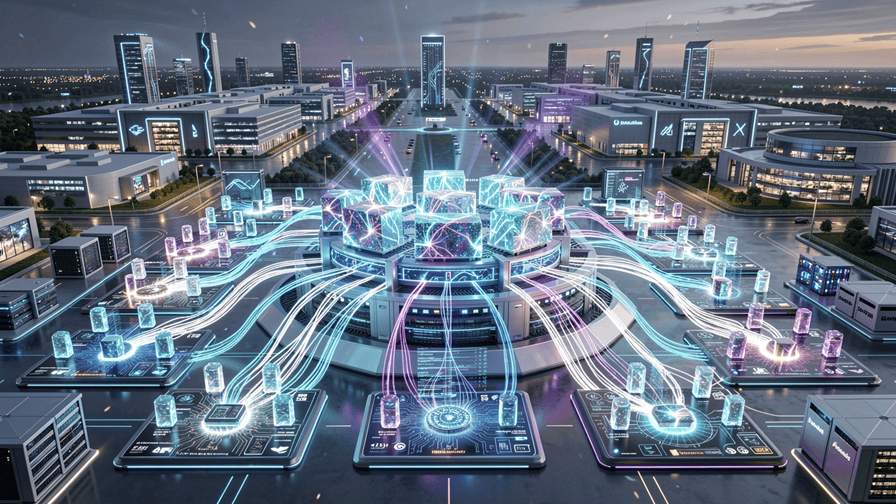
The Intuit AI Agent Architecture reflects a major shift in how enterprise software is designed, deployed, and continuously improved. Rather than treating architecture as a permanent foundation that changes only every few years, AI-native organizations increasingly recognize that enterprise AI platforms must evolve alongside rapid advances in large language models, reasoning systems, retrieval technologies, agent orchestration, memory architectures, and cloud infrastructure.
As Agentic AI becomes capable of handling increasingly complex business workflows, future enterprise AI platforms will likely prioritize flexibility over permanence. The philosophy behind the Intuit AI Agent Architecture suggests that frequent architectural improvements are not signs of instability but indicators of healthy engineering practices that enable organizations to respond quickly to technological breakthroughs.
Future AI development is expected to rely heavily on modular system design, allowing enterprises to replace individual components such as foundation models, orchestration frameworks, vector databases, planning engines, and memory systems without redesigning the entire platform. This modularity will help organizations adopt innovations more rapidly while minimizing technical debt and operational disruption.
Artificial intelligence will also become increasingly autonomous. Instead of deploying isolated AI assistants, enterprises will manage ecosystems of specialized AI agents collaborating across finance, accounting, customer service, software engineering, cybersecurity, legal operations, human resources, supply chain management, and business intelligence. Managing these intelligent ecosystems will require architectures that continuously evolve as AI capabilities expand.
Future enterprise AI engineering may include:
- Autonomous AI infrastructure optimization.
- Self-improving orchestration systems.
- Dynamic model routing.
- Intelligent workload balancing.
- Adaptive memory management.
- Automated architecture recommendations.
- AI-assisted software engineering.
- Continuous enterprise optimization.
The engineering philosophy demonstrated by the Intuit AI Agent Architecture may influence how organizations build enterprise AI platforms for the next decade.
Strategic Takeaways
The Intuit AI Agent Architecture demonstrates that rapid architectural iteration can accelerate enterprise AI innovation rather than slow it down.
Key insights include:
- Intuit AI Agent Architecture embraces continuous redesign as AI technologies evolve.
- Modular AI systems simplify future upgrades and technology replacement.
- Production feedback provides valuable guidance for architectural improvements.
- Enterprise AI requires flexible infrastructure capable of adapting to constant technological change.
- Continuous engineering helps reduce long-term technical debt.
- Adaptive AI architecture may become the standard approach for enterprise AI development.
Conclusion
The Intuit AI Agent Architecture illustrates an important evolution in enterprise artificial intelligence engineering. Rather than attempting to build a perfect architecture from the beginning, organizations increasingly benefit from deploying practical AI systems, learning from production experience, and continuously refining their technical foundations as new capabilities emerge.
As foundation models, orchestration frameworks, retrieval technologies, and autonomous AI agents continue advancing, architectural flexibility will become a critical competitive advantage. Organizations that embrace iterative engineering practices will be better positioned to integrate emerging AI innovations while maintaining security, scalability, reliability, and operational efficiency.
Although rebuilding enterprise architectures requires investment, disciplined engineering, and organizational adaptability, the long-term benefits can significantly outweigh the short-term costs. By treating architectural redesign as a natural part of AI development rather than a failure, businesses can accelerate innovation and remain competitive in an increasingly AI-driven economy.
The principles demonstrated by the Intuit AI Agent Architecture are likely to influence enterprise AI development across industries as organizations continue building intelligent, scalable, and continuously evolving AI ecosystems.
Frequently Asked Questions (FAQs)
What is Intuit AI Agent Architecture?
Intuit AI Agent Architecture refers to Intuit’s evolving enterprise AI framework that emphasizes rapid architectural iteration, modular design, and continuous improvement for autonomous AI systems.
Why did Intuit redesign its AI agent architecture?
According to discussions at VB Transform 2026, rapid redesign enabled engineering teams to adopt better technologies, improve scalability, reduce technical debt, and accelerate enterprise AI innovation.
How does Intuit AI Agent Architecture differ from traditional software architecture?
Traditional software architectures often remain stable for years, whereas the Intuit AI Agent Architecture encourages continuous adaptation as AI technologies rapidly evolve.
Which organizations can benefit from adaptive AI architecture?
Financial institutions, healthcare providers, software companies, manufacturers, retailers, customer service organizations, and enterprises deploying Agentic AI can all benefit from iterative AI engineering practices.
Is rebuilding AI architecture a sign of failure?
Not necessarily. The philosophy behind the Intuit AI Agent Architecture suggests that rebuilding based on operational learning can accelerate innovation and produce stronger long-term enterprise AI platforms.
Build Adaptive Enterprise AI That Evolves with Your Business
Enterprise AI moves quickly, and your architecture should too. Whether you’re building AI agents, modernizing enterprise workflows, integrating large language models, or creating scalable AI infrastructure, our experts can help you design secure, flexible, and future-ready AI solutions that adapt as technology evolves.
More AI coverage: explore Progressive Robot's AI Models, Tools & Releases hub — hands-on reviews, setup guides and benchmarks in one place.










