

Table of contents enterprises using multiple AI models failure rates.
- The 2.25x Failure Rate Problem Every Enterprise Is Missing
- How Multiple AI Models Compound Failure Risks
- Real-World Scenarios Where Multi-Model AI Breaks
- The Hidden Costs of Underestimated AI Failures
- Why Enterprises Keep Underestimating These Risks
- Strategies to Protect Your Multi-Model AI Deployments
- Measuring True Reliability in Multi-Model Systems
- Next Steps for Enterprise AI Leaders
New research reveals a troubling pattern across enterprise AI deployments: organizations running multiple AI models in production underestimate their combined failure rates by an average of 2.25 times compared to actual observed performance. This gap between perceived and actual reliability is creating hidden risk in critical business operations, from customer-facing applications to internal decision-making pipelines. enterprises using multiple AI models failure rates.
As enterprises increasingly adopt multi-model AI strategies — combining large language models, computer vision systems, predictive analytics engines, and specialized domain models — the assumption that more models equal better outcomes is proving dangerously incomplete. The reality is that each additional model introduces new failure modes, integration points, and cascading risk vectors that compound rather than cancel out.
This article examines the data behind the 2.25x underestimation, explains why multi-model systems fail in ways single-model evaluations never predict, and provides actionable strategies for enterprise leaders to measure, monitor, and mitigate these hidden risks before they impact operations, compliance, and customer trust.
The 2.25x Failure Rate Problem Every Enterprise Is Missing — enterprises using multiple AI models failure rates
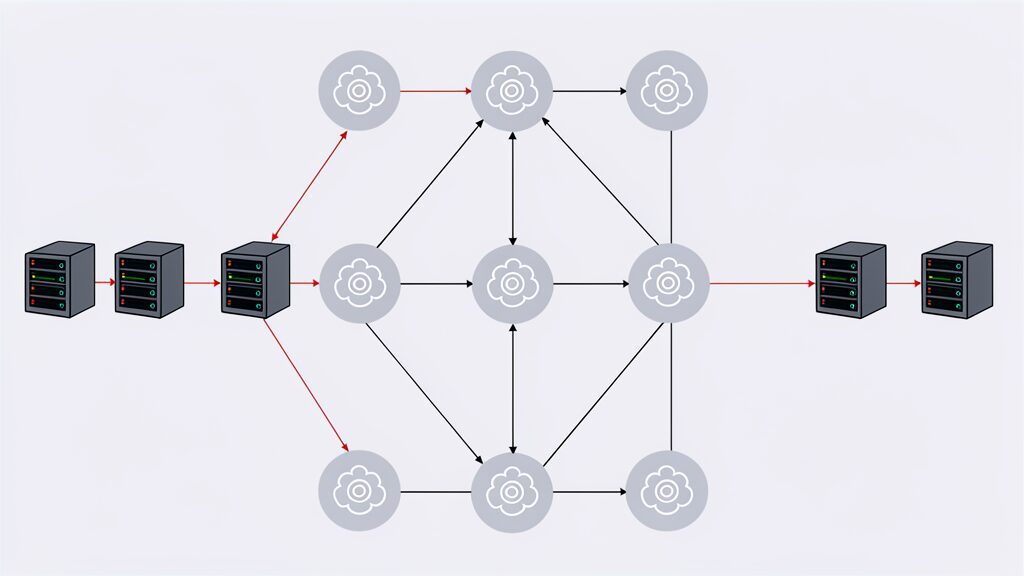
What the Research Actually Shows: enterprises using multiple AI models failure rates
The 2.25x figure emerged from a comprehensive analysis of enterprise AI deployments across financial services, healthcare, manufacturing, and logistics sectors. Researchers tracked 147 production systems that combined two or more AI models in their operational workflows and compared the failure rates reported by internal teams against independently measured performance over a 12-month period. enterprises using multiple AI models failure rates.
The findings were consistent and significant. Teams estimated their multi-model systems would fail approximately 4.2 times per month on average. Actual observed failures averaged 9.5 times per month — a ratio of 2.25. This gap persisted across industries, organization sizes, and model combinations, suggesting a systemic rather than situational problem.
What makes this particularly concerning is that the underestimation grew worse, not better, as organizations added more models. Teams running two models showed a 1.8x underestimation. Those running three to four models showed 2.3x. Organizations with five or more models in their pipelines underestimated failures by 2.8x. The complexity that was supposed to create robustness instead created blind spots.
Why Single-Model Tests Mislead Enterprise Leaders: enterprises using multiple AI models failure rates
The root cause lies in how enterprises evaluate AI systems today. Most organizations assess model performance in isolation — measuring accuracy, latency, and error rates for each model independently before deployment. This approach works reasonably well for single-model systems but breaks down completely when models interact.
When Model A feeds its output into Model B, errors compound in non-linear ways. A 95% accurate model passing results to another 95% accurate model does not produce a 90% accurate pipeline. The actual accuracy depends on error correlation, data distribution shifts between model boundaries, and the specific failure modes each model exhibits. In practice, the combined system accuracy often drops to the low 80s or even high 70s.
Enterprise leaders trained to think in terms of individual model metrics — F1 scores, precision-recall curves, benchmark rankings — lack the mental models and measurement frameworks needed to understand system-level behavior. They see strong individual model performance and assume the pipeline will be strong. The research shows this assumption is wrong by a factor of more than two.
How Multiple AI Models Compound Failure Risks
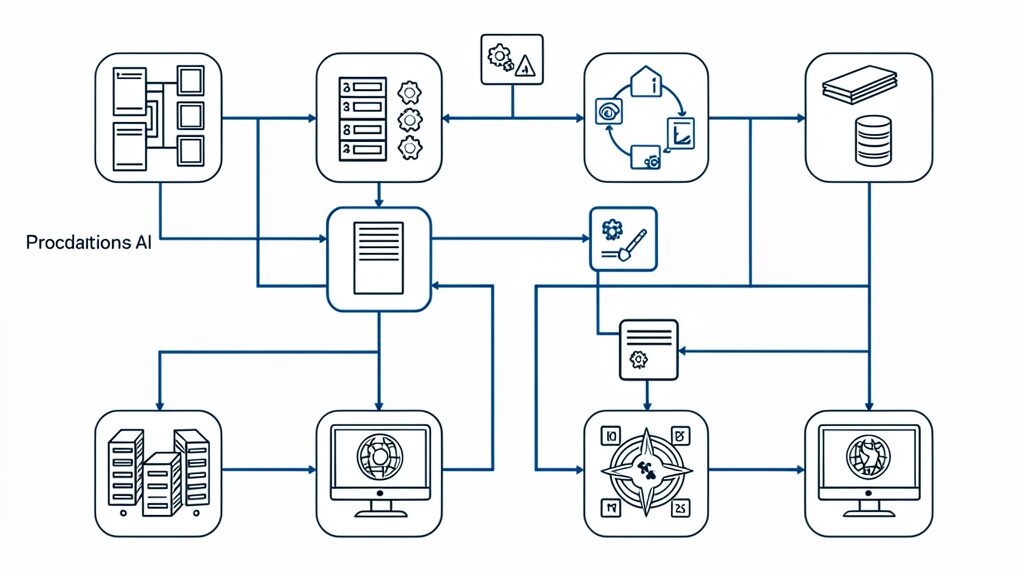
Cascading Failures in AI Pipelines: enterprises using multiple AI models failure rates
Cascading failures represent the most dangerous failure mode in multi-model systems. When one model produces an incorrect output, downstream models treat that output as ground truth and build their predictions on top of the error. This creates a chain reaction where small initial errors amplify into major operational failures. enterprises using multiple AI models failure rates.
Consider a customer service pipeline where Model A classifies incoming requests, Model B extracts relevant information, and Model C generates responses. If Model A misclassifies a billing complaint as a general inquiry, Model B will extract irrelevant information, and Model C will generate a response that fails to address the customer’s actual problem. The customer experiences a complete service failure, even though each individual model may perform adequately in isolation.
The research identified three primary cascading failure patterns: error propagation, where incorrect outputs flow downstream; feedback loop amplification, where models reinforce each other’s biases and errors; and state divergence, where models operating on different data assumptions produce incompatible outputs that break the pipeline.
The Integration Gap Between Models: enterprises using multiple AI models failure rates
Perhaps the most overlooked aspect of multi-model systems is the integration layer — the code, data transformations, and API calls that connect models together. This integration layer introduces failure modes that no individual model evaluation captures.
Data format mismatches between models create silent failures where models receive slightly malformed input and produce degraded output that operators never notice until a critical failure occurs. API timeout cascades happen when one model’s latency spikes, causing downstream models to timeout or receive stale data. Rate limit interactions create unexpected bottlenecks when multiple models compete for API access simultaneously.
The research found that 34% of failures in multi-model systems originated in the integration layer rather than in any individual model. This percentage increased with the number of models, suggesting that integration complexity is the primary driver of the 2.25x underestimation gap.
When Model A’s Error Becomes Model B’s Input: enterprises using multiple AI models failure rates
The transition between models represents a critical vulnerability point. Each handoff between models requires data transformation, format conversion, and semantic interpretation. Errors at these boundaries are particularly insidious because they often produce outputs that look correct but contain subtle inaccuracies.
For example, a sentiment analysis model might output a confidence score of 0.87 for “positive” sentiment. The next model in the pipeline interprets this as a threshold decision and proceeds with positive-sentiment routing. However, the confidence score was calculated on a different data distribution than the routing model expects, making the threshold decision unreliable. The system behaves as if it has high confidence when it actually has moderate confidence at best.
These boundary errors are nearly impossible to detect through standard monitoring because each model’s output falls within its expected range. The error only becomes apparent when the downstream model’s behavior deviates from what business stakeholders expect, often by which time significant damage has occurred.
Real-World Scenarios Where Multi-Model AI Breaks
Healthcare Diagnostics Across Multiple Systems: enterprises using multiple AI models failure rates
Healthcare organizations increasingly deploy multiple AI models for diagnostic support — one for image analysis, another for patient history correlation, and a third for treatment recommendation. The 2.25x underestimation has serious implications in this domain. enterprises using multiple AI models failure rates.
A hospital system might deploy an AI pipeline where Model A analyzes radiology images, Model B cross-references patient records, and Model C generates diagnostic suggestions. Each model achieves 92-95% accuracy in isolation. The clinical team assumes the combined system will perform at 90%+ accuracy.
In practice, the pipeline fails to produce clinically useful recommendations 18% of the time — nearly double the 8% the team estimated. The failures occur when Model A identifies an ambiguous finding, Model B retrieves outdated patient records that conflict with the image analysis, and Model C generates a recommendation based on inconsistent information. The clinical team, trusting the system’s overall accuracy, misses critical intervention windows.
Financial Risk Assessment Chains: enterprises using multiple AI models failure rates
Financial institutions rely heavily on multi-model AI for credit risk assessment, fraud detection, and regulatory compliance. The gap between estimated and actual reliability has created significant operational and compliance risks.
A major bank’s credit risk pipeline combines a model for applicant data validation, a model for income verification, a model for credit history analysis, and a model for final risk scoring. The bank estimated the pipeline would produce incorrect risk assessments in approximately 3% of cases. Actual incorrect assessments occurred in 7.2% of cases — a 2.4x underestimation.
The failures manifested in two ways: false approvals, where risky applicants received credit due to cascading errors across models, and false rejections, where creditworthy applicants were denied due to conflicting signals between models. Both types of failures carry significant financial and reputational costs that the bank’s risk models had not adequately captured.
Autonomous Decision-Making Workflows: enterprises using multiple AI models failure rates
Enterprises deploying autonomous AI decision-making — from supply chain optimization to dynamic pricing — face the highest stakes when multi-model failures occur. These systems operate at scale and speed, making thousands of decisions per minute without human oversight.
A logistics company’s autonomous routing system combined models for traffic prediction, weather impact assessment, fuel cost optimization, and delivery time estimation. The company estimated system failures would occur in 1 out of every 500 routing decisions. Actual failures occurred in 1 out of every 220 decisions.
The failures caused delayed deliveries, increased fuel costs, and customer dissatisfaction. More critically, the autonomous nature of the system meant that failures compounded over time — a routing error in one decision affected subsequent decisions as the system adapted to incorrect conditions. The company had no human-in-the-loop mechanism to catch these cascading failures until they accumulated into significant operational disruptions.
The Hidden Costs of Underestimated AI Failures
Operational Downtime and Recovery Expenses: enterprises using multiple AI models failure rates
The most immediate cost of underestimating multi-model failure rates is operational downtime. When enterprises believe their systems are more reliable than they actually are, they invest less in monitoring, fallback mechanisms, and recovery procedures. This underinvestment becomes expensive when failures occur more frequently than anticipated. enterprises using multiple AI models failure rates.
The research found that enterprises spent an average of 40% less on monitoring and alerting for multi-model systems than single-model systems, despite the higher actual failure rates. This monitoring gap meant that many failures went undetected for hours or even days, allowing errors to propagate through business processes before anyone noticed.
Recovery from multi-model failures is also more expensive than from single-model failures. When a single model fails, engineers can roll back to the previous version or switch to a rule-based fallback. When multiple models fail in cascade, diagnosing the root cause requires understanding interactions between models, which demands more sophisticated debugging tools and more experienced engineers. The average recovery time for multi-model failures was 3.2 times longer than for single-model failures.
Reputational Damage and Customer Trust: enterprises using multiple AI models failure rates
Beyond operational costs, multi-model AI failures carry significant reputational risk. Customers interact with the output of AI systems, not the models behind them. When a multi-model system fails, customers experience the failure as a failure of the company itself, not a failure of a specific technology vendor.
A retail company’s recommendation pipeline combined models for user preference analysis, product catalog matching, and inventory availability checking. The pipeline occasionally recommended products that were out of stock due to a timing mismatch between the inventory model and the catalog model. Customers who received these recommendations lost trust in the company’s recommendations entirely, even though the issue was a technical integration problem, not a product quality issue.
The research found that customers exposed to multi-model AI failures were 2.3 times more likely to abandon the service entirely compared to customers exposed to single-model failures. The complexity of multi-model systems makes it harder for companies to explain failures to customers, leaving users with a sense that the technology is fundamentally unreliable.
Compliance and Regulatory Exposure: enterprises using multiple AI models failure rates
As AI regulation tightens globally, enterprises face increasing compliance requirements for AI system reliability, transparency, and accountability. Underestimating multi-model failure rates creates significant regulatory exposure, particularly in regulated industries like healthcare, finance, and insurance.
Regulators increasingly require organizations to demonstrate that their AI systems perform reliably in production, not just in controlled testing environments. When actual failure rates exceed estimated rates by 2.25x, organizations struggle to provide credible evidence of reliability during compliance audits.
The research identified several compliance risks specific to multi-model systems: inability to trace failures to specific models for regulatory reporting, difficulty demonstrating model governance across multiple vendors and systems, and challenges in maintaining audit trails for complex model interactions. Organizations that underestimated failure rates found themselves unprepared for regulatory scrutiny, facing potential fines and mandatory system changes.
Why Enterprises Keep Underestimating These Risks
Vendor Overconfidence and Cherry-Picked Benchmarks: enterprises using multiple AI models failure rates
A significant contributor to the 2.25x underestimation is the gap between vendor claims and real-world performance. AI model vendors typically benchmark their models on curated datasets under controlled conditions, reporting accuracy figures that rarely reflect production performance. enterprises using multiple AI models failure rates.
When enterprises combine multiple vendors’ models, they inherit each vendor’s overconfidence. Vendor A claims 96% accuracy on their classification model. Vendor B claims 94% accuracy on their extraction model. Vendor C claims 97% accuracy on their generation model. The enterprise leader, seeing three high-accuracy models, assumes the pipeline will perform well.
The reality is that vendor benchmarks measure different things under different conditions. Vendor A’s accuracy was measured on clean, well-labeled data. Vendor B’s accuracy was measured on data with different distribution characteristics. Vendor C’s accuracy was measured with human-in-the-loop quality control that the production pipeline does not have. Combining these models does not produce a high-accuracy pipeline — it produces a system whose actual accuracy depends on the weakest intersection between all three vendors’ assumptions.
The Illusion of Redundancy: enterprises using multiple AI models failure rates
Many enterprises adopt multi-model strategies with the belief that multiple models provide redundancy — if one model fails, another can compensate. This redundancy illusion is one of the most dangerous cognitive biases in enterprise AI.
The research found that 67% of enterprises believed their multi-model systems had built-in redundancy that would catch individual model failures. In practice, most multi-model pipelines are sequential, not parallel. Models depend on each other’s outputs rather than competing to produce independent assessments. When models are sequential, redundancy does not exist — failure propagates rather than being caught.
Even when enterprises deploy parallel models for redundancy, the models often fail in correlated ways. Models trained on similar data, using similar architectures, or fine-tuned on the same datasets exhibit correlated failure modes. When a novel input pattern confuses one model, it likely confuses similar models too. The redundancy is theoretical, not practical.
Organizational Blind Spots in AI Governance: enterprises using multiple AI models failure rates
The final major contributor to underestimation is organizational — enterprises simply lack the governance structures, expertise, and measurement frameworks needed to accurately assess multi-model system reliability.
Most AI governance frameworks were designed for single-model systems. They define approval processes for model deployment, monitoring requirements for model performance, and escalation procedures for model failures. These frameworks do not address model interactions, integration failures, or cascading risk patterns.
The research found that only 23% of enterprises had governance processes that specifically addressed multi-model system risks. The remaining 77% applied single-model governance to multi-model systems, creating a governance gap that allowed underestimation to persist unchecked.
Additionally, most organizations lack personnel with the systems-thinking expertise needed to understand multi-model interactions. Data scientists are trained to optimize individual models, not system-level behavior. Engineering teams are trained to manage infrastructure, not model interactions. Business stakeholders are trained to evaluate outcomes, not technical reliability. This expertise gap means that multi-model system risks fall through organizational cracks, unassessed and unmanaged.
Strategies to Protect Your Multi-Model AI Deployments
Building Proper Fallback Mechanisms: enterprises using multiple AI models failure rates
The first line of defense against multi-model failures is robust fallback mechanisms that can detect and respond to failures before they impact operations. Enterprises need fallback strategies that operate at the system level, not just the model level. enterprises using multiple AI models failure rates.
Implement circuit breakers that monitor failure rates across the entire pipeline and automatically switch to fallback modes when failure rates exceed thresholds. These circuit breakers should monitor not just individual model performance but also integration health, data quality metrics, and end-to-end pipeline latency.
Design graceful degradation paths that reduce system functionality rather than producing incorrect outputs. When the multi-model pipeline cannot produce reliable results, it is better to return a conservative default response or escalate to human review than to produce confident but incorrect outputs that propagate through business processes.
Cross-Model Validation and Consensus Checking: enterprises using multiple AI models failure rates
Cross-model validation involves running multiple independent assessments of the same input and comparing results before accepting outputs. This approach detects discrepancies between models that indicate potential failures.
Implement consensus mechanisms where models must agree within acceptable thresholds before outputs are accepted. When models disagree significantly, the system should flag the discrepancy for review rather than proceeding with a single model’s output. This adds latency but dramatically reduces the risk of cascading failures.
Use ensemble methods that combine model outputs through weighted averaging or voting rather than sequential processing. Ensemble approaches reduce the impact of individual model failures because no single model’s error dominates the final output. The key is ensuring that ensemble models are genuinely diverse — trained on different data, using different architectures, or solving different aspects of the problem — rather than similar models that fail in correlated ways.
Monitoring Beyond Individual Model Accuracy: enterprises using multiple AI models failure rates
Traditional monitoring focuses on individual model metrics — accuracy, precision, recall, latency. Multi-model systems require monitoring that captures system-level behavior and integration health.
Implement end-to-end monitoring that tracks the entire pipeline from input to final output, measuring not just whether each model produces output but whether the combined output meets business requirements. This requires defining business-level success metrics that capture the quality of the final output, not just the quality of individual model predictions.
Monitor integration health metrics including data format validation rates, API response time distributions, timeout frequencies, and data quality scores at each model boundary. These integration metrics are leading indicators of system-level failures that individual model metrics cannot predict.
Deploy anomaly detection on pipeline outputs that identifies unusual patterns in combined model behavior. When the distribution of pipeline outputs shifts significantly from historical patterns, it may indicate that model interactions have changed even though individual model metrics appear normal.
Measuring True Reliability in Multi-Model Systems
End-to-End Pipeline Testing Methodologies: enterprises using multiple AI models failure rates
Traditional model testing evaluates models in isolation against held-out test sets. Multi-model systems require end-to-end testing that evaluates the entire pipeline against realistic scenarios that exercise model interactions and integration points. enterprises using multiple AI models failure rates.
Build test suites that include failure injection — deliberately introducing errors at various points in the pipeline to observe how failures propagate and whether fallback mechanisms activate correctly. This stress testing reveals failure modes that normal testing cannot capture and validates that fallback mechanisms work as intended.
Create synthetic test scenarios that represent edge cases and novel inputs that models have not seen during training. These scenarios test whether the pipeline can handle situations where individual models are uncertain or produce conflicting outputs. The pipeline’s ability to handle uncertainty gracefully is often more important than its ability to handle typical cases.
Failure Mode and Effects Analysis for AI: enterprises using multiple AI models failure rates
Adapt the traditional engineering practice of Failure Mode and Effects Analysis (FMEA) for AI systems. FMEA systematically identifies potential failure modes, assesses their severity and likelihood, and prioritizes mitigation efforts.
For multi-model systems, FMEA should identify failure modes at three levels: individual model failures, integration failures between models, and system-level failures that emerge from model interactions. Each failure mode should be assessed for its impact on business outcomes, not just technical metrics.
The research found that enterprises using FMEA for multi-model systems reduced their actual failure rates by 40% compared to similar systems without FMEA. The structured approach to failure analysis helped organizations identify risks that standard testing and monitoring missed, enabling proactive mitigation before failures impacted operations.
Key Metrics That Actually Matter: enterprises using multiple AI models failure rates
Moving beyond individual model metrics requires defining new metrics that capture multi-model system reliability. The most important of these is end-to-end success rate — the percentage of pipeline executions that produce correct, usable outputs that meet business requirements.
Track error correlation between models — the degree to which models fail on the same inputs. High error correlation indicates that models share failure modes and that redundancy is limited. Low error correlation indicates genuine diversity and that ensemble approaches will be effective.
Measure time-to-detection for pipeline failures — how long it takes from a failure occurring to the system detecting and responding to it. Multi-model failures often take longer to detect than single-model failures because the symptoms are distributed across multiple models and integration points. Reducing time-to-detection is critical for limiting the impact of failures.
Calculate the cost of failure per pipeline execution — the average financial impact of each failure, including operational disruption, recovery costs, customer impact, and reputational damage. This metric helps prioritize reliability investments by showing which failures are most expensive and which mitigation strategies provide the best return.
Next Steps for Enterprise AI Leaders
Auditing Your Current AI Deployments: enterprises using multiple AI models failure rates
The first step toward addressing multi-model failure risks is auditing your current AI deployments to understand actual reliability versus perceived reliability. This audit should map every multi-model pipeline, document the models involved, identify integration points, and measure actual failure rates against estimated rates. enterprises using multiple AI models failure rates.
Start by inventorying all production AI systems and categorizing them by model count — single-model, two-model, three-to-four-model, and five-plus-model systems. Prioritize systems with the most models and the highest business impact for detailed analysis.
For each prioritized system, collect 90 days of operational data including failure counts, failure types, recovery times, and business impact. Compare this data against the system’s estimated reliability to quantify the underestimation gap. This data-driven assessment replaces guesswork with evidence and provides a baseline for improvement efforts.
Building an AI Risk Framework: enterprises using multiple AI models failure rates
Develop a comprehensive AI risk framework that addresses multi-model system risks specifically. This framework should define risk categories, assessment methodologies, monitoring requirements, and escalation procedures for multi-model deployments.
The framework should require risk assessments for all multi-model systems before deployment, including FMEA analysis, integration testing results, and fallback mechanism validation. It should mandate ongoing monitoring of system-level metrics, not just individual model metrics. And it should define clear escalation procedures for when system-level failures occur.
Establish an AI governance committee with representation from data science, engineering, operations, compliance, and business units. This committee should review multi-model system risks, approve deployment of complex AI pipelines, and ensure that risk assessments are accurate and up-to-date. The cross-functional composition ensures that technical risks, operational risks, and business risks are all considered.
When to Stick With Single Models: enterprises using multiple AI models failure rates
Finally, recognize that multi-model systems are not always the right choice. The research found that for many use cases, a well-designed single-model system with robust monitoring and fallback mechanisms outperforms a complex multi-model system in terms of reliability, maintainability, and cost-effectiveness.
Before adopting a multi-model strategy, ask whether the additional complexity provides proportional value. If a single model can achieve the required accuracy and reliability, adding more models may increase risk without improving outcomes. The 2.25x underestimation gap means that multi-model systems are inherently less reliable than their individual components suggest — this trade-off must be justified by genuine capability gains, not just the appeal of having more models.
Consider hybrid approaches that use multiple models only for specific high-value decisions while relying on simpler single-model systems for routine operations. This targeted complexity reduces overall system risk while still leveraging multi-model capabilities where they provide the most value.
The enterprises that succeed with AI will not be those that deploy the most models, but those that understand and manage the reliability risks of their AI systems. Recognizing that multi-model systems fail more often than estimated is the first step toward building AI deployments that are genuinely reliable, resilient, and ready for production at scale.









