

ByteDance has taken the wraps off its most production-oriented video model to date, and the headline numbers are the kind that make working editors sit up. Dreamina has confirmed the global launch of Seedance 2.5, positioning Dreamina AI as the official platform for a model that generates thirty seconds natively in one pass, stretches to three minutes in a long video mode, lets you reshape parts of a frame interactively, and ships with plugins for Maya and Blender aimed squarely at film-grade pipelines.
Duration has been the defining constraint of generative video since the category became usable. Most competing systems still hand back somewhere between five and ten seconds per generation, which forces creators into a stitching workflow where every cut is a fresh opportunity for the character’s face, the wardrobe, or the light to quietly change. A model that holds a single coherent take for thirty seconds — and, in beta, for a hundred and eighty — is attacking the problem that actually blocks professional adoption.
The plugin announcement is arguably the more consequential half of the story, and it has attracted far less attention. Autodesk Maya and Blender are where the previsualisation, layout, and animation work already happens. Wiring a generative model into those applications rather than asking artists to export frames and upload them to a browser is what turns Seedance 2.5 from a novelty into something that can sit inside an existing shot pipeline with version control, review, and delivery attached.
This article covers what is genuinely confirmed about the release, what remains vague enough to warrant caution, how the long video mode and the reference system actually work, where the Maya and Blender integrations fit into a studio workflow, how Seedance 2.5 compares to the rest of the 2026 field, and what the provenance and licensing obligations look like now that AI labelling rules have teeth.
Seedance 2.5: The Quick Answer
Seedance 2.5 is ByteDance’s latest text-to-video and reference-to-video model, distributed globally through Dreamina and available to subscriber accounts. It generates up to thirty seconds in a single native generation at up to 4K, accepts as many as fifty multimodal references per clip, supports localised editing of specific regions and timestamps without regenerating the whole shot, and adds a beta long video mode reaching three minutes. Plugins for Maya and Blender extend the same capability into 3D production software.
The practical framing is that this is a shot-length and controllability release rather than a raw fidelity release. The visual jump from the previous generation is real but incremental; the jump in how long a shot can run and how precisely you can direct it is the part that changes what the tool is for.
| Area | Typical 2026 AI video model | Seedance 2.5 |
|---|---|---|
| Native clip length | 5 to 10 seconds per generation | 30 seconds in a single pass |
| Extended length | Stitching or extend calls, drift after ~60s | Beta long video mode up to 180 seconds |
| References | One or two images, sometimes a video | Up to 50 multimodal inputs per clip |
| Reference types | Image and text prompt | Text, image, video, audio, storyboards, white models, green screen |
| Editing | Regenerate the whole clip and hope | Localised region and timestamp edits that preserve the rest |
| Timing control | Prompt-level, approximate | Timestamp control reported down to one second |
| 3D integration | Manual export, upload, download | Plugins for Maya and Blender |
| Output | 1080p typical, 4K sometimes | Up to 4K, interpolation to 60 FPS |
| Provenance | Varies, often minimal | Invisible watermark, C2PA credentials, visible AI label |
What ByteDance Actually Shipped in Seedance 2.5
Seedance 2.5 was first shown publicly at the Volcano Engine FORCE conference on 23 June 2026, with a public release signalled for early July. The rollout followed a China-first pattern across Dreamina, Doubao, and CapCut before widening, and the global launch announcement confirms Seedance 2.5 is now live for Dreamina subscribers with the full feature set attached.
Four capabilities were called out in the launch itself: native thirty-second generation in a single pass, an interactive editing experience that lets you reshape any part of the frame, a long video mode reaching three minutes with consistency that holds across the duration, and Dreamina plugins for Maya and Blender built for film-grade production pipelines. Everything else in the release supports one of those four.
Reporting ahead of the launch had already established the shape of it. Coverage from TestingCatalog described the standard thirty-second ceiling alongside a beta mode extending to a hundred and eighty seconds, against a previous generation that topped out somewhere between four and fifteen seconds depending on configuration. That is not an incremental change to shot length; it is a different unit of work.
Availability is worth reading carefully. The rollout has been described as reaching users aged sixteen and over across Europe, Asia, the Middle East, and South America, on subscriber accounts rather than free tiers, which means the practical answer to “can I use Seedance 2.5 today” depends on both where you are and what you pay for.
The Distribution Story Is Not Just Dreamina
ByteDance runs the same underlying video stack beneath several surfaces, so Seedance 2.5 turning up in Dreamina is the beginning rather than the end. CapCut, Doubao, and partner platforms building on the Volcano Engine stack inherit Seedance 2.5 on their own schedules, which matters if your team standardised on one of those rather than on Dreamina itself.
The Seedance 2.5 3-Minute Long Video Mode Explained
The long video mode is the feature most likely to be misunderstood, so it is worth being precise about what it is and is not. It is a beta capability that produces a continuous piece of video up to three minutes long from a single job, rather than a convenience wrapper that quietly runs six thirty-second generations and joins them.
The distinction matters because stitched output fails in a specific and recognisable way. Every join is a point where the underlying model re-derives the scene from whatever context it was handed, and small errors compound: a jacket collar changes shape, a shadow moves to the wrong side, a background extra appears from nowhere. Audiences do not consciously notice each drift, but they register the result as artificial.
Holding consistency across three minutes is a materially harder problem than holding it across thirty seconds, and the honest expectation is that a beta long video mode will be less reliable than the native path. Treating the three-minute ceiling as a hard capability rather than as an experimental one is the fastest way to be disappointed by Seedance 2.5.
There is also a workflow question that the duration number does not answer. Three minutes of continuous generated footage is only useful if you can direct what happens across it, and long-form directability depends on the reference and timestamp controls rather than on the length itself. A three-minute take you cannot steer is three minutes of expensive B-roll.
Where Long Takes Genuinely Help
Product walkthroughs, architectural fly-throughs, ambient background footage, music-led sequences, and continuous establishing shots all benefit from length without demanding shot-by-shot direction. These are the use cases where the long video mode in Seedance 2.5 will earn its keep first, well before narrative drama does.
Why Native 30-Second Generation in Seedance 2.5 Matters
If the three-minute mode is the headline, the thirty-second native generation is the feature most teams will actually use every day. Thirty seconds is a complete advertising spot, a full social pre-roll, an entire explainer beat, or a generous establishing shot, and getting it in one pass removes the stitching problem entirely for a large share of real briefs.
The economics change alongside the craft. A thirty-second sequence assembled from six separate generations requires six prompts, six review cycles, six sets of retries when something drifts, and an editor to assemble the survivors. One generation that runs the full length collapses that into a single iteration loop, and iteration loops are where the cost of AI video actually lives.
Continuity of camera behaviour is the subtler gain. Within a single generation Seedance 2.5 maintains one notion of lens, movement, and pacing, so a slow push in stays a slow push in. Across stitched generations, camera language resets each time, which is why so much early AI video reads as a sequence of unrelated beautiful moments rather than as a shot.
For teams already running generative video in production, the comparison worth making is not against last year’s models but against your current assembly overhead. Our earlier look at scaling AI content output without producing slop applies directly here: the bottleneck is rarely generation capacity, it is the human review and repair work that follows.

Seedance 2.5 Interactive Editing: Reshaping the Frame Without Regenerating
The second launch pillar is an interactive editing experience that lets you change a specific part of the frame rather than rolling the dice on a full regeneration. In practical terms this means selecting a region, a character, or a moment in the timeline and altering it while lighting, composition, motion flow, and the surrounding timeline continue unchanged.
Anyone who has worked with generative video will recognise why this is significant. The traditional failure loop is that a thirty-second clip is ninety-five per cent right, one element is wrong, and the only remedy is to regenerate and lose the ninety-five per cent that worked. Localised editing turns that from a gamble into a correction.
Timestamp precision in Seedance 2.5 reportedly reaches one second, which is granular enough to fix a specific beat rather than a general stretch. Combined with region selection, that gives you something closer to a notes-and-revisions workflow — the way actual creative review works — instead of prompt roulette.
The realistic caveat is that localised editing is hardest exactly where you most want it. Changing an element that other elements interact with, such as a moving character casting shadows on a surface, requires the model to propagate the change coherently. Expect Seedance 2.5 to handle isolated corrections better than entangled ones.
This Is What Makes Client Review Possible
Client feedback arrives as specific notes: make the jacket darker, hold on her face a moment longer, lose the reflection in the window. A model that can act on notes without rebuilding the shot is the difference between generative video being a pitch tool and being a delivery tool.
Fifty Multimodal References in Seedance 2.5 and What They Are For
Seedance 2.5 accepts up to fifty references for a single clip, spanning text, images, video, audio, storyboards, character sheets, style frames, camera descriptions, and sound notes. That number sounds like marketing until you look at what a real shot brief contains, at which point it starts to look like the minimum.
The point of a large reference budget is role separation. One image defines a character’s identity, another defines wardrobe, a third defines the location, a style frame defines grade and lens character, a storyboard defines shot order, and a reference clip defines the camera move. Each reference carries one job, and the prompt explains which job each one has.
This is a genuinely different discipline from prompt engineering. The prompt stops being a description of the desired output and becomes an explanation of how the supplied materials relate to each other — closer to a director’s brief to a crew than to a search query.
Reference organisation also becomes an asset management problem the moment more than one person is involved. Teams producing at volume will need naming conventions, versioning, and a clear source of truth for which reference set produced which approved shot, which is the same discipline covered in our guide to digital asset management for growing content libraries.
R2V in Seedance 2.5: White Models, Green Screens, and Motion Guidance
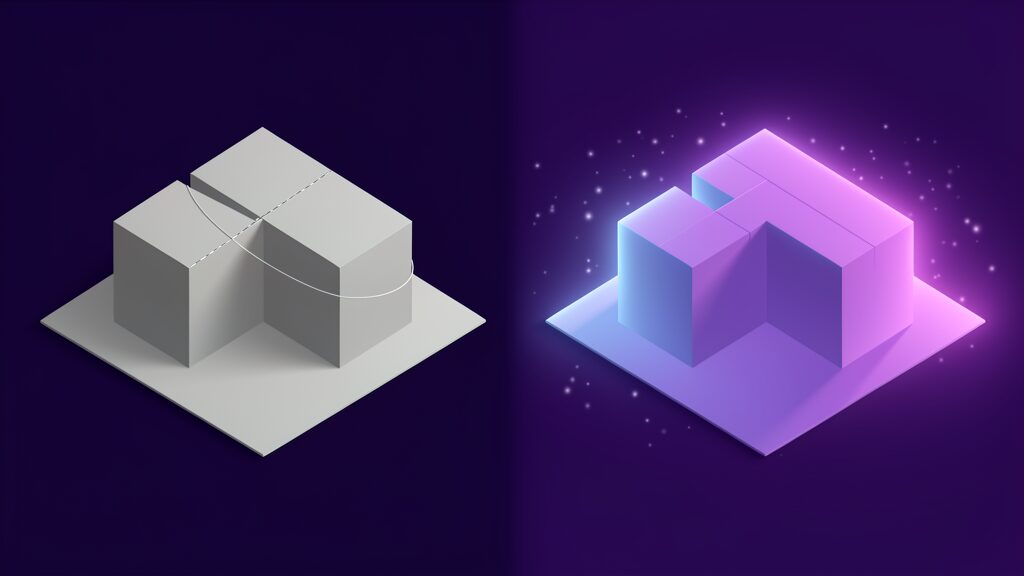
The reference-to-video capability is where Seedance 2.5 stops being a text-driven toy and starts being a controllable tool. R2V accepts structural inputs — untextured 3D white models, green-screen plates, blocked animation, camera paths — and treats them as motion and composition guidance rather than as pictures to imitate.
White-model guidance is the most interesting of these for anyone with a 3D pipeline. You block a scene in grey geometry, define the camera move precisely, render a rough pass, and hand it to Seedance 2.5 as the structural skeleton for a finished-looking shot. Composition, staging, and timing come from you; surfacing, lighting nuance, and detail come from the model.
Green-screen input serves the complementary case. Real performance, real timing, real eyelines, with the environment and treatment generated around it. That combination sidesteps the weakness generative models still have with sustained human performance while keeping the production value they are good at.
The strategic reading is that ByteDance is optimising for people who already know what they want the shot to be. Seedance 2.5 rewards teams that arrive with structure and punishes teams that arrive with a sentence and hope, which is a reasonable trade for professional work and a meaningful learning curve for everyone else.
Structure In, Quality Out
The consistent finding across R2V workflows is that the quality of the guidance determines the quality of the result far more than prompt wording does. A precise camera path and clean blocking produce a usable shot on the first or second attempt; vague guidance produces attractive footage that does not cut with anything else.
The Seedance 2.5 Maya Plugin and Where It Fits in a Studio Pipeline
Autodesk Maya remains the backbone of a great deal of professional animation and VFX work, and a Dreamina plugin that lives inside it is a statement about who Seedance 2.5 is being sold to. The pitch is film-grade production pipelines, and the integration point is where layout, previs, and animation already exist.
The workflow it targets is straightforward to describe. Playblasts, grey-shaded scene previews, turntables, camera paths, character blocking, animation tests, and lighting references are already produced as a matter of course in Maya. Those artefacts are exactly the structural references Seedance 2.5 wants, and a plugin removes the export-upload-download-reimport tax on using them.
What that unlocks in practice is fast previs-to-pitch conversion. A rough animation pass that a client cannot read becomes a shot they can evaluate, without committing to lighting, look development, or a render farm. For pitch work, that is the difference between winning a job on a grey blockout and winning it on something that resembles the finished film.
The important discipline is keeping the source intention visible. A generated pass that improves on the blocking is not automatically an improvement to the shot, because the blocking usually encodes decisions somebody made for a reason. Teams that treat Seedance 2.5 output as a lighting and surfacing proposal rather than as a replacement for the animation retain control of their own work.
Pipeline Integration Is a Real Project
A plugin reduces friction but does not answer the pipeline questions: where generated frames live, how they are versioned, who approves them, how they are tracked against shot numbers, and what happens when the model is updated mid-production. Studios that skip that groundwork end up with untracked assets of uncertain provenance in a delivery, which is a problem nobody wants to discover at the end.
The Seedance 2.5 Blender Plugin and the Independent Creator
The Blender plugin serves a different constituency with the same underlying capability. Blender’s user base skews toward independent creators, small studios, motion designers, and product visualisation specialists — people with genuine 3D skill and without a render farm or a lighting department.
For that group, the value proposition is sharper than it is for a large studio. A designer who can model and block a scene but cannot afford the time to light and render it now has a route from geometry to finished-looking footage that costs generation credits rather than machine hours. Renders, low-poly scenes, camera paths, product shots, white models, storyboards, and VFX plates all feed the same R2V path.
Product visualisation is the obvious early winner. A clean model, a defined camera orbit, and a style reference produce the kind of glossy sequence that normally requires a look-dev artist, and Seedance 2.5 is comparatively strong on hard-surface material response.
The trade is control. Traditional rendering is deterministic — the same scene renders the same way every time — and generative output is not. For anything requiring exact brand colour, precise typography, or verifiable product accuracy, the generated pass is a starting point that still needs a deterministic finish.
What “Consistency That Holds” Really Means
Consistency is the word doing the heaviest lifting in the Seedance 2.5 launch, and it is worth unpacking because it means several distinct things that fail independently.
Identity consistency is whether a character remains the same person: same face structure, same proportions, same wardrobe details. This is the most visible failure mode and the one audiences catch immediately.
Spatial consistency is whether the environment stays coherent — whether doors remain where they were, whether the geography of a room survives a camera move, whether an object left on a table is still there when the camera returns. Long takes stress this far more than short ones.
Lighting and temporal consistency cover whether the key light stays put and whether motion obeys physics across the duration. Both degrade gradually rather than suddenly, which is why the practical test of any long-form claim is watching the last twenty seconds rather than the first.
The claim attached to Seedance 2.5 is that consistency holds throughout the long video mode. That should be verified against your own content before it is planned around, because consistency behaviour is highly dependent on scene complexity, number of characters, and how much the camera moves.
Seedance 2.5 Against Veo, Kling, and the Rest of the Field
The competitive picture in mid-2026 makes the duration story easier to appreciate. Google’s Veo line has been built around single-shot quality with a roughly eight-second ceiling per generation. Kling generates up to ten seconds natively with an extend mechanism that can accumulate toward three minutes, but stacked extensions show subtle drift after around thirty seconds and noticeable degradation beyond a minute. OpenAI discontinued the Sora web and app product in April 2026, removing one of the highest-profile names from the consumer conversation.
Against that field, the native thirty-second generation in Seedance 2.5 is the clearest differentiator, because it is thirty seconds of one continuous inference rather than thirty seconds assembled from extensions. The distinction between “can produce three minutes” and “can produce three minutes coherently” is precisely where competitors have been vulnerable.
Fidelity is a closer contest. Veo retains a strong reputation for per-shot polish and character micro-expression, and for a single premium eight-second hero shot it remains a serious answer. The Seedance 2.5 argument is not that every frame is better but that you can direct more of them at once.
Control is where the gap is widest. Fifty references, R2V structural guidance, localised editing, and 3D plugins add up to a workflow proposition rather than a generation feature, and no competitor currently packages the same combination. For reference, the broader direction of travel is visible across the category — Google’s Flow editing tools reaching iOS and Vids generating personalised presenter footage are the same instinct expressed differently.

Seedance 2.5 Resolution, Frame Rate, and Deliverable Quality
Dreamina’s material describes cinematic 4K output for Seedance 2.5, with frame rate enhancement up to 60 FPS through interpolation and post-generation tooling including upscaling and soundtrack generation.
The caveat worth stating plainly is that the native generation resolution of Seedance 2.5 and the delivered resolution are not necessarily the same number. Many systems generate at a lower internal resolution and upscale, and the leaked credit rate that circulated before launch referenced a 720p thirty-second clip, which suggests a resolution ladder rather than a single 4K path. Test the actual output rather than the specification.
Frame interpolation carries its own trade. Interpolated 60 FPS is smoother, and it can also introduce the soap-opera quality that reads as cheap in dramatic contexts. For anything with a cinematic intent, 24 FPS native is usually the better answer even when 60 is available.
The audio question is unresolved in the public material. Soundtrack generation is described as an enhancement tool rather than as synchronised native audio, so teams should assume Seedance 2.5 delivers picture and plan for sound design separately until proven otherwise.
Seedance 2.5 Pricing, Credits, and the Cost of a Three-Minute Clip
Pricing is the least satisfying part of the launch. ByteDance indicated at the June announcement that a rate card would be published before release, and as of late July no official public price had appeared on either the Dreamina Seedance 2.5 page or the BytePlus resource pages. What has circulated is a leaked Dreamina credit rate of roughly 660 credits for a thirty-second 720p clip, which sits above the previous per-second ladder.
If that figure is representative, the cost model deserves attention before anyone plans a campaign around the long video mode. Thirty seconds at that rate is already a meaningful spend; three minutes is six times the duration, and higher resolutions typically multiply again. A three-minute 4K generation could plausibly cost more than a day of a junior editor’s time, which changes the calculus considerably.
Free daily credits are referenced for testing Seedance 2.5, without a quantified allotment, which is enough to evaluate whether Seedance 2.5 suits your content and not enough to produce with.
The budgeting advice is unglamorous but useful: measure cost per approved second rather than cost per generation. A cheap model that needs eight attempts is more expensive than a costly one that lands in two, and the retry rate is the variable nobody puts on a pricing page.
Seedance 2.5 Availability, Regions, and Age Restrictions
Access to Seedance 2.5 is gated in three ways at once, and all three matter for planning. It is limited to subscriber accounts rather than free tiers, restricted to users aged sixteen and over, and rolled out regionally — with Europe, Asia, the Middle East, and South America named in coverage of the rollout.
The regional pattern reflects the regulatory reality of shipping a generative video model in 2026 rather than any technical constraint. Different jurisdictions impose different obligations around labelling, likeness, and minors, and staged availability is how platforms manage that.
For distributed teams, the practical consequence is that colleagues in different offices may not have the same access on the same day. Confirm availability for every location that needs to use the tool before committing a schedule to it.
Enterprise access through the Volcano Engine and BytePlus routes follows a separate track from consumer Dreamina subscriptions, and organisations needing API-level integration rather than interface access should expect a different commercial conversation.
Provenance: Watermarks, C2PA, and the EU Labelling Deadline
Seedance 2.5 ships with a provenance stack: invisible watermarking, C2PA Content Credentials, and visible AI labels, alongside content moderation covering harmful material and unauthorised intellectual property.
The timing is not accidental. EU rules requiring clear labelling of authentic-looking AI-generated content take effect on 2 August 2026, and we covered what that means for publishers in our analysis of the EU AI content labelling mandate. A model launching into that environment without credentials attached would be unusable for anyone publishing in Europe.
For teams producing with Seedance 2.5, the obligation is to preserve provenance metadata through the pipeline rather than to generate it. C2PA credentials survive only if every tool between generation and publication respects them, and a great many editing and transcoding steps still strip metadata silently. Verify that your chain preserves credentials before you rely on them.
Visible labelling is a separate requirement from embedded provenance, and platform behaviour varies. Some distribution surfaces detect and label automatically, some rely on creator declaration, and some do both — the likeness detection tooling TikTok has been building is one example of platforms taking their own view rather than trusting upstream metadata.
Assume Detection Improves
Provenance systems are getting better, and content published without accurate labelling today may be identified as synthetic later. Labelling correctly at the point of publication is cheaper than a retroactive credibility problem.

Rights, Likeness, and the Seedance 2.5 Legal Surface
The reference system that makes Seedance 2.5 powerful also expands the rights surface considerably. Fifty references per clip is fifty opportunities to introduce material you do not have the right to use, and the model’s willingness to follow a style reference closely makes that risk more concrete than it was with prompt-only generation.
Likeness is the sharpest edge. Uploading footage or images of a real person as an identity reference requires their consent for the specific use, and the fact that a model can reproduce someone convincingly is not an argument that it may. Performer agreements written before generative tooling frequently do not cover synthetic extension of a performance at all.
Style references occupy murkier ground. Using a competitor’s advert or a named director’s work as a look reference may be legally defensible and is reputationally risky, and the distinction between influence and imitation is thinner when a model executes it precisely.
The practical control is a reference provenance log: for every clip, what was supplied, where it came from, and what right permitted its use. That record is trivial to maintain during production and effectively impossible to reconstruct afterwards, which is exactly when someone will ask for it.
Where Seedance 2.5 Fits in a Real Production Pipeline
The most useful mental model is that Seedance 2.5 is a rendering and look-development accelerator that happens to accept natural language, not a replacement for the creative process in front of it.
In previsualisation it is close to unambiguously good. Turning blocking into something a client or director can read costs generation credits rather than department time, and nothing downstream depends on the result being final.
In finishing it is conditional. Generated footage that must intercut with live action has to match grade, lens character, grain, and motion behaviour, and achieving that match usually requires more compositing work than the generation saved. That calculation improves as the model improves, but it should be made explicitly rather than assumed.
In social and marketing output it is already the default for a growing share of work. Volume, speed, and iteration matter more than frame-level perfection, deliverables are short, and the thirty-second native length in Seedance 2.5 maps neatly onto the formats those channels want.
Asset Management for Seedance 2.5 Output at Scale
Seedance 2.5 produces an unusual amount of near-duplicate material, and teams underestimate how quickly that becomes unmanageable. A single approved thirty-second shot might sit on top of twenty rejected variants, each with its own reference set, prompt, and seed.
Without discipline, the recurring failure is an approved clip nobody can reproduce. The reference bundle was overwritten, the prompt was edited in place, and the only surviving artefact is a rendered file with no lineage. When a client asks for the same shot with one change, the work starts again from nothing.
Treating the generation recipe as the asset solves this. Prompt text, reference bundle, model version, mode, and seed together are what should be versioned; the video file is an output of that recipe and can always be regenerated if the recipe survives.
Model versioning deserves particular attention. Seedance 2.5 will be superseded, and a recipe that produced an approved shot on this version may not reproduce it on the next. Recording the model version alongside the recipe is what makes a campaign refreshable a year later.
What Seedance 2.5 Still Cannot Do
No launch announcement lists limitations, so it is worth being direct about the boundaries that still apply to every model in this category, including this one.
Sustained human performance remains hard for Seedance 2.5. Faces holding emotional continuity through a long take, hands doing precise work, and dialogue synchronised to visible mouth movement are the classic failure zones, and thirty seconds gives a model far more opportunity to slip than five did.
Exactness is not a strength. Legible text, accurate logos, correct product geometry, and precise brand colour are all unreliable, which means regulated categories and brand-critical work still need deterministic tools for anything that must be exactly right.
Physical causality is approximate. Liquids, cloth, collisions, and anything with rigorous physics are convincing at a glance and frequently wrong on inspection, which matters more in a three-minute take than in a three-second one.
Determinism is absent by design. The same inputs do not guarantee the same output, and workflows that assume reproducibility will break. Planning around that limitation is more productive than hoping the next release removes it.

Who Should Adopt It Now, and Who Should Wait
Teams already producing generative video should evaluate Seedance 2.5 immediately, because the native thirty-second length and localised editing directly reduce the assembly and retry overhead they are currently paying.
Studios with Maya or Blender pipelines and a previs or pitch workload should run a scoped pilot on the plugins. The integration is the differentiator, and the evaluation question is whether it fits your existing versioning and review process, not whether the footage looks good.
Marketing teams producing short-form video at volume have the clearest cost case, provided they measure cost per approved second honestly and account for the credit rate once it is published.
Organisations in regulated sectors, or those whose output must be exact, should wait and watch. The provenance stack is a genuine step forward, and the remaining accuracy limitations mean Seedance 2.5 is not yet the right tool where being approximately right is a compliance failure.
Adoption Roadmap for Seedance 2.5
Confirm Access Before Planning Anything
Verify that the accounts, regions, and subscription tiers your team actually uses can reach the model, including the long video mode and the plugins, which may roll out separately from the base capability.
Run a Benchmark Against Your Own Content
Generate the same brief on your current tool and on Seedance 2.5, using your own characters, products, and style references. Vendor showreels are optimised for Seedance 2.5; your content is what you have to ship.
Build a Reference Library First
Assemble and name canonical identity, wardrobe, location, and style references before production starts. A reusable reference library is the single highest-leverage investment in a generative video workflow.
Pilot the Plugins on a Non-Critical Shot
Install the Seedance 2.5 Maya or Blender plugin and take one real but low-stakes shot from blocking to generated pass. The goal is discovering where it breaks your pipeline, not producing a deliverable.
Establish Provenance Handling End to End
Confirm that C2PA credentials survive your editing, transcoding, and publishing chain, and define who is responsible for visible labelling on each distribution surface.
Measure Cost Per Approved Second
Track credits consumed against seconds actually approved, including retries. This is the only number that supports a real budget, and it is invisible if you measure per generation.
Version Recipes, Not Just Files
Store prompt, reference bundle, model version, mode, and seed together for every approved shot, so an approved result can be reproduced or amended months later.
Review the Long Video Mode Separately
Evaluate the three-minute beta as its own capability with its own reliability profile. Do not let a successful thirty-second test justify a schedule built on three-minute output.
Metrics That Matter
Generation count is a tempting metric and a useless one. The measures below tell you whether Seedance 2.5 is improving your output or simply changing where the effort goes.
| Metric | What it tells you | How to read it |
|---|---|---|
| Cost per approved second | The real economics, retries included | Compare against the tool it replaces, not against zero |
| First-pass acceptance rate | Whether your references and prompts are working | Rising rate means the workflow is maturing, not the model |
| Retries per approved shot | Where iteration cost is concentrated | Segment by shot type; humans and text will dominate |
| Time from brief to viewable | The speed benefit clients actually notice | Measure to something reviewable, not to final delivery |
| Consistency defect rate | How often identity or geography drifts | Track separately for short and long-mode output |
| Manual repair time per clip | Hidden downstream cost | If this grows, generation savings are being eaten |
| Provenance completeness | Whether credentials survive to publication | Should be one hundred per cent or it is not a control |
| Reference reuse rate | Whether the library is paying off | Low reuse means every shot is starting from scratch |

Common Mistakes
The most common mistake is treating the three-minute figure as a production capability rather than a beta. Building a schedule on the long video mode before validating consistency on your own content is how a launch date becomes a crisis.
The second is prompting instead of referencing. Seedance 2.5 is built around structural guidance, and teams that carry over a prompt-only habit from earlier models will get generic output while blaming the model.
The third is ignoring the credit economics until the invoice arrives. Without a published rate card, the only responsible approach is to instrument consumption from day one and extrapolate from measured usage.
The fourth is letting generated assets into a delivery without provenance or lineage. Untracked footage of uncertain origin is a legal and operational liability, and it is far easier to prevent than to remediate.
The fifth is using real likenesses without documented consent for the specific synthetic use. The technical ease of doing it has no bearing on whether it is permitted.
The sixth is abandoning deterministic tools too early. Rendering, compositing, and motion graphics remain the right answer wherever exactness matters, and a mixed pipeline will beat a purely generative one for some time yet.
Frequently Asked Questions
What is Seedance 2.5?
It is ByteDance’s latest generative video model, launched globally on Dreamina. It produces up to thirty seconds of video in a single native generation, accepts up to fifty multimodal references, supports localised editing, and adds a beta long video mode reaching three minutes.
Can Seedance 2.5 really generate three-minute videos?
The long video mode is described as reaching a hundred and eighty seconds and is a beta capability. Thirty seconds is the reliable native length, and any three-minute plan should be validated on your own content first.
What do the Maya and Blender plugins do?
They connect Dreamina to the 3D applications where blocking, camera work, and previs already happen, so playblasts, white models, camera paths, and renders can drive generation without a manual export and upload cycle.
How much does Seedance 2.5 cost?
No official rate card had been published as of late July 2026. A leaked Dreamina figure of roughly 660 credits for a thirty-second 720p clip circulated before launch, and free daily credits are referenced for testing without a stated allotment.
Is Seedance 2.5 available everywhere?
No. Access is limited to subscriber accounts, users aged sixteen and over, and a staged regional rollout that has been reported across Europe, Asia, the Middle East, and South America.
How does it compare to Veo and Kling?
Veo remains strong on single-shot polish with a much shorter ceiling, and Kling reaches long durations through stacked extensions that drift. The differentiator for Seedance 2.5 is native shot length combined with reference control and 3D integration.
Does it generate audio?
Public material describes soundtrack generation as an enhancement tool rather than synchronised native audio. Plan for separate sound design until native audio is confirmed.
Is generated video labelled as AI?
Yes. Seedance 2.5 applies invisible watermarking, C2PA Content Credentials, and visible AI labels, which matters given the EU labelling requirements taking effect on 2 August 2026.
What is the first thing to try?
Take one shot you have already produced conventionally and rebuild it with structured references. Comparing against known-good work tells you far more than generating something new and impressive.
Final Verdict
Seedance 2.5 is the most production-minded release the generative video category has seen, and the reason is not the three-minute headline. It is the combination of a genuinely usable native shot length, a reference system that rewards people who know what they want, editing that responds to notes instead of demanding regeneration, and plugins that meet artists inside the software they already use.
The gaps are real and worth naming. Pricing is unpublished, the long video mode is beta, availability is staged, audio is unclear, and the familiar accuracy limits around faces, hands, text, and physics have not been repealed. Anyone planning a campaign around the three-minute ceiling before testing it on their own material is taking an avoidable risk.
The right posture is to evaluate quickly and adopt narrowly. Build the reference library, pilot the plugin on a shot that does not matter, instrument the credit spend, and keep provenance intact from generation to publication. Do that, and Seedance 2.5 becomes a tool that takes real cost out of previs, pitch, and short-form work. Skip it, and you will have very impressive footage that nobody can reproduce, cost, or lawfully publish.