
From 2 August 2026, the European Union will require AI content that looks authentic to announce itself. The new EU AI labeling duties live in Article 50 of the AI Act, and they reach deepfakes, synthetic photographs, cloned voices, generated video, and AI-written text published to inform the public on matters of public interest.
The shift is bigger than it sounds. Until now, disclosure has largely been a platform choice. Instagram, TikTok, and YouTube each built their own synthetic media badges on their own timetables — TikTok, for instance, went as far as building its own AI likeness detection tooling. EU AI labeling turns that patchwork into a legal floor for everyone selling or deploying generative systems into the European market.
This guide explains exactly what changes on 2 August, who carries which obligation, what is carved out, how the machine-readable marking is meant to work, and what the fines look like if you ignore it. If your organisation ships a generative model, runs a chatbot, or publishes synthetic media into Europe, the EU AI labeling regime is now part of your release checklist.
What Actually Changes on 2 August 2026
The AI Act entered into force in August 2024 with a staged rollout. Prohibited practices arrived first, then general-purpose model obligations. The EU AI labeling deadline of 2 August 2026 switches on the transparency chapter, and it is the first tranche of the Act that ordinary content teams — not just model labs — will feel directly.
Article 50 does not ban synthetic media. It does not require a licence, a registration, or a conformity assessment. It requires honesty about provenance. A person exposed to realistic AI output in Europe must be able to tell that a machine made it, and they must be able to tell at the moment of exposure rather than after digging through terms and conditions.
Why the “Authentic-Looking” Threshold Matters
The trigger is realism, not intent. If synthetic content appreciably resembles real people, objects, places, entities, or events, and would falsely appear authentic to an ordinary viewer, the EU AI labeling duty attaches. A creator who claims they were joking, satirising, or experimenting does not escape the requirement simply because deception was never the goal.
That design choice closes an obvious loophole. Most harmful synthetic media circulates without any stated intent to deceive; it is stripped of context, reposted, and screenshotted until the original framing is gone. Anchoring the obligation to appearance rather than motive means the label survives the journey.
Disclosure Must Be Clear and Timely
Article 50(5) sets the quality bar for every EU AI labeling disclosure. Information must be provided in a clear and distinguishable manner, at the latest at the moment of the first interaction or exposure, and it must meet accessibility requirements. Grey four-point text in a footer does not qualify. A disclosure buried on page nine of a terms document does not qualify. A visible badge on the asset, an opening card on a video, or an audible notice on synthetic speech does.
The Four Transparency Duties Inside Article 50
Compliance teams keep treating Article 50 as one rule. It is four, and they attach to different parties at different points in the supply chain. Getting that mapping wrong is the most common EU AI labeling mistake surfaced in readiness reviews.
Article 50(1): Tell People They Are Talking to a Machine
Providers of AI systems designed to interact directly with people — chatbots, voice agents, virtual assistants, automated support lines — must build them so the person knows they are dealing with AI. The only exception is where it would be obvious to a reasonably well-informed, observant, and circumspect person. A branded assistant on a bank’s website is not obviously artificial to every visitor, so the disclosure stands.
Article 50(2): Mark the Output Machine-Readably
Providers of generative systems must ensure their outputs are marked in a machine-readable format and detectable as artificially generated or manipulated. This covers audio, image, video, and synthetic text alike. It is the technical core of EU AI labeling and a provider duty: watermarks, cryptographic provenance manifests, and embedded metadata rather than a visible sticker. The solutions must be effective, interoperable, robust, and reliable as far as technically feasible.
Article 50(3): Emotion Recognition and Biometric Categorisation
Deployers running emotion recognition or biometric categorisation systems must inform the people exposed to them and process personal data in line with the GDPR. This sits alongside — not inside — the Article 5 prohibition on emotion inference in workplaces and schools. Retail analytics, recruitment screening, and audience measurement all land here.
Article 50(4): Label Deepfakes and Public-Interest Text
Deployers who generate or manipulate content constituting a deepfake must disclose that it is artificially produced. Deployers publishing AI-generated text to inform the public on matters of public interest owe the same EU AI labeling disclosure — unless the text underwent human review with a named natural or legal person holding editorial responsibility. That editorial carve-out is the single most important exemption for newsrooms.
Which Content the EU AI Labeling Rules Cover
The scope question dominates every readiness workshop. The short answer: if it could pass for real and a European will see it, assume it needs marking until you can document why it does not.
Synthetic Images, Video, and Cloned Audio
Photorealistic images of people who do not exist, face swaps, body doubles, digitally resurrected actors, synthetic B-roll of real locations, and voice clones all fall inside the deepfake definition. Consumer tools have already normalised much of this — Google Vids, for example, generates personalized videos featuring a real person’s likeness. Audio is the modality teams most often forget, and it is arguably the highest-risk one for EU AI labeling, because a cloned voice on a phone call carries none of the visual cues audiences use to sense manipulation.
AI-Generated Text on Matters of Public Interest
Text obligations are narrower than image obligations. Marketing copy, product descriptions, and internal documents are not “matters of public interest.” Political coverage, health guidance, public safety information, and news reporting are. If an AI system drafts that material and no human takes editorial responsibility for it, it needs a disclosure.
Mixed and Partially Edited Assets
Most real-world production is hybrid: a photographed plate with a generated sky, a human-written article with three AI paragraphs, a recorded voiceover with synthetic pickup lines. There is no clean percentage threshold in the text, which makes hybrid work the hardest call to make. The practical test remains whether the result appreciably resembles reality and would read as authentic. Partial manipulation of a real person’s likeness is squarely covered.

What the EU AI Labeling Rules Do Not Cover
Exemptions matter as much as obligations, and several are broader than the early commentary suggested.
Purely private and personal use sits outside EU AI labeling entirely. A synthetic image sent in a family group chat or a private message is not a regulated deployment. The Act targets content placed on the market or put into service, not everything a person makes on a laptop.
Evidently artistic, creative, satirical, fictional, or analogous work gets lighter treatment. The obligation shrinks to disclosing the existence of generated content in a way that does not spoil the display or enjoyment of the piece — a credit line rather than a watermark burned across the frame. Clearly fantastical output that nobody would mistake for reality falls outside the realism trigger entirely.
Law enforcement carve-outs apply where use is authorised by law to detect, prevent, investigate, or prosecute criminal offences, subject to third-party rights safeguards. And content both generated and published before 2 August 2026 escapes retroactive EU AI labeling, which spares organisations an impossible archive migration.
How Machine-Readable Marking Is Supposed to Work
The provider-side duty under Article 50(2) is where EU AI labeling meets engineering reality, and it is the part of the regime most likely to disappoint.
Watermarks, Metadata, and Provenance Manifests
Three families of technique are in play. Invisible statistical watermarking embeds a detectable signal in pixels, audio samples, or token distributions. Cryptographically signed provenance manifests — the C2PA Content Credentials approach — travel alongside the asset and record how it was made. Plain embedded metadata is the cheapest and weakest option. Most serious implementations now pair a watermark with a signed manifest so that one survives when the other is stripped.
The Standardised EU Label
For the deployer-facing disclosure, the Commission has published standardised black-and-white icons so audiences learn one visual vocabulary instead of twenty. Organisations are not forced to adopt the official marks — bespoke designs remain permitted — but using them shortcuts the argument about whether a notice is clear and distinguishable.
Why Detection Is Still the Hard Part
Watermarks degrade. Screenshotting, re-encoding, cropping, format conversion, and compression on social platforms all attack the signal, and metadata is routinely stripped on upload. Adversarial removal tools exist and are trivially available. The regulation asks for robustness “as far as technically feasible,” an acknowledgment that the mandate has arrived ahead of the technology. Expect enforcement conversations about documented best effort rather than perfect durability.

The Code of Practice on Transparency of AI-Generated Content
To translate the statute into engineering practice, the AI Office ran a drafting process from September 2025 through spring 2026 and published the final Code of Practice on Transparency of AI-generated Content on 10 June 2026. By late July, roughly 190 companies and organisations had signed it.
The Code has two halves that mirror the statute. Section 1 addresses providers and details acceptable marking and detection approaches across audio, image, video, and text. Section 2 addresses deployers, covering deepfake labelling and public-interest text disclosure, including the standardised icons.
What Signing Actually Buys You
The Code is voluntary and does not replace the law. What it offers is legal predictability and a reduced administrative burden: a signatory demonstrating adherence has a recognised route to showing EU AI labeling compliance, rather than defending a bespoke interpretation to a national market surveillance authority. For multinationals facing 27 regulators, that consistency is the real prize.
The Four-Month Grace Period the Digital Omnibus Created
The Digital Omnibus compromise reached in 2026 softened one edge of the deadline. Generative AI systems already placed on the EU market before 2 August 2026 have until 2 December 2026 to satisfy the Article 50(2) machine-readable marking requirement.
Read that narrowly. The relief covers the technical marking mechanism only. Systems entering the market on or after 2 August get no grace period at all and must mark from day one. Every other EU AI labeling duty — chatbot disclosure, deepfake labelling, emotion recognition notice, public-interest text disclosure — applies from 2 August without exception.
The practical effect is a split calendar. Deployer-facing EU AI labeling obligations bite immediately, while incumbent model providers get one extra quarter to retrofit watermarking into shipped systems. Anyone assuming December is a blanket extension has misread the deal.
Penalties, Enforcement, and Who Comes Knocking
Breach of the transparency obligations can draw administrative fines up to €15 million or 3% of total worldwide annual turnover for the preceding financial year, whichever is higher. That is the AI Act’s middle penalty tier — below the prohibited-practice band, well above nuisance level for a large advertiser or studio.
Enforcement runs through national market surveillance authorities in each member state rather than a single central regulator, with the AI Office coordinating on general-purpose models. Member states were required to designate and empower those authorities, and capacity varies considerably across the bloc. The gap between written policy and operational reality is familiar to anyone who has looked at where enterprise AI governance has not caught up.
Realistically, the first months will bring guidance, complaints, and information requests rather than headline fines. The exposure that should worry most organisations sooner is contractual and reputational: agency clients, broadcasters, and platforms are already writing EU AI labeling warranties into supply agreements, and those bite long before a regulator calls.
The Industries That Feel EU AI Labeling First
Social platforms have shipped AI labels for two years and will adapt quickly. The disruption lands hardest where generative tooling has quietly become routine and disclosure has not.
Advertising and Marketing
Synthetic product photography, generated models, cloned spokesperson voices, and AI-assembled video variants are now standard in performance marketing, and very little of it is labelled. Campaign approval workflows will need an EU AI labeling gate, and asset management systems need a field recording how each file was produced.
Film, Broadcast, and Games
De-ageing, digital doubles, synthetic crowds, environment extension, and generated dialogue lines all touch the realism threshold. The artistic carve-out helps considerably here, but it reduces the duty to an appropriate disclosure rather than removing it. Expect credit-roll and metadata solutions rather than on-screen badges.
Publishing and Newsrooms
The editorial-responsibility exemption is generous, and most established outlets already have a named editor in the loop. EU AI labeling risk sits instead with high-volume, low-touch content operations: aggregators, SEO farms, and automated local news feeds where no human meaningfully reviews the output before publication.
A Practical EU AI Labeling Checklist Before 2 August
Start with an inventory. List every generative system your organisation provides or deploys into the EU, note the modality, and record whether it produces authentic-looking output. You cannot label what you have not counted, and most inventories surface tools nobody in legal knew existed.
Then classify each use against the four duties. Direct interaction, output marking, biometric or emotion inference, deepfake and public-interest text — each maps to a different owner internally. Assign a named person to each EU AI labeling duty, not a department.
Next, check what your vendors already emit. Many commercial image and video models now ship C2PA manifests or watermarking by default, which discharges a large share of the provider duty upstream. Where a vendor does not, get that in writing and plan your own marking layer.
Finally, fix the publishing surface. EU AI labeling has to appear at first exposure, so the work lands in your CMS templates, video players, social publishing tools, and ad trafficking systems. Update the asset schema, the review checklist, and the client contracts, and decide whether to adopt the Commission’s standard icons.
How EU AI Labeling Compares Globally
Europe is not alone, but it is the most prescriptive. China’s labelling measures took effect in September 2025 and require both explicit visible labels and implicit metadata, with duties pushed onto distribution platforms — in some respects stricter than the EU AI labeling regime.
The United States has no comparable federal mandate. Rules arrive state by state, concentrated on political advertising and non-consensual intimate imagery, alongside the federal TAKE IT DOWN Act. Spain, South Korea, and others have moved with their own disclosure regimes.
For anyone operating globally, the practical answer is to build to the strictest common denominator. Implementing durable provenance once and applying it everywhere is cheaper than maintaining a matrix of jurisdiction-specific pipelines, and it is what most large content operations are now doing.

What EU AI Labeling Means for Trust Online
The honest assessment is that these rules will not stop determined bad actors. Criminals running voice-clone fraud are not going to attach a compliance badge, and the watermarking they would need to defeat is defeatable. Judged as a defence against deliberate abuse, EU AI labeling will underdeliver.
Judged differently, it looks better. The regime targets the vast middle ground of legitimate commercial synthetic media — ads, stock imagery, corporate video, automated copy — where nobody is malicious and nobody was disclosing either. Normalising provenance there gives audiences a baseline expectation and makes unlabelled realistic content quietly suspicious.
That inversion is the strategic point behind EU AI labeling. If most legitimate synthetic media carries credentials, the absence of a credential becomes a signal in itself. It is a slower, less satisfying mechanism than catching deepfakes, but it is the one with a plausible path to working at scale.
Frequently Asked Questions
Does EU AI labeling apply to companies outside the EU?
Yes. The AI Act applies extraterritorially where the system is placed on the EU market or its output is used in the Union. A US or UK provider serving European users is in scope regardless of where the model is hosted.
Do I have to label AI-assisted writing?
Only if it is published to inform the public on matters of public interest and no human holds editorial responsibility for it. Ordinary business writing, marketing copy, and internal documents sit outside the text obligation.
What counts as a deepfake under the AI Act?
Generated or manipulated image, audio, or video content that appreciably resembles existing people, objects, places, entities, or events and would falsely appear authentic to an ordinary observer.
Is a visible label mandatory, or is metadata enough?
Both duties exist and sit with different parties. Providers owe machine-readable marking under Article 50(2). Deployers of deepfakes owe a human-perceptible disclosure under Article 50(4). Metadata alone does not discharge the deployer duty.
What happens to content published before the deadline?
Content generated and published before 2 August 2026 needs no retroactive EU AI labeling. Republishing or materially reworking it after the date is a different question and should be treated as a new deployment.
Does signing the Code of Practice guarantee compliance?
No. It is a voluntary instrument offering a recognised route to demonstrating adherence and reducing administrative burden, but the legal obligation remains the Act itself.

Conclusion
2 August 2026 does not outlaw synthetic media. It ends the era in which realistic AI content could circulate in Europe with no obligation to say what it is. EU AI labeling asks providers to mark their outputs, asks deployers to disclose deepfakes and unreviewed public-interest text, and backs both with fines reaching €15 million or 3% of global turnover.
The technology is not ready for the ambition — watermarks still break under ordinary compression, and detection remains unreliable. But the direction is settled, the Code of Practice gives a workable route to EU AI labeling compliance, and roughly 190 organisations have already signed on.
For teams shipping content into Europe, the sensible move is to stop treating provenance as a legal question and start treating it as a pipeline feature. Inventory the systems, assign the four duties, verify what your vendors emit, and put the disclosure where the audience actually sees it. Organisations that build EU AI labeling into their tooling now will spend the next year improving it, while everyone else spends it explaining themselves.
References
- Article 50: Transparency Obligations — EU Artificial Intelligence Act
- Transparency obligations under Article 50 of the AI Act — European Commission
- Code of Practice on Transparency of AI-generated Content — European Commission
- EU will mandate labels on authentic-looking AI content starting August 2 — Engadget
- The EU AI Act’s Transparency Rules: A Practical Guide to Article 50
Image Credits
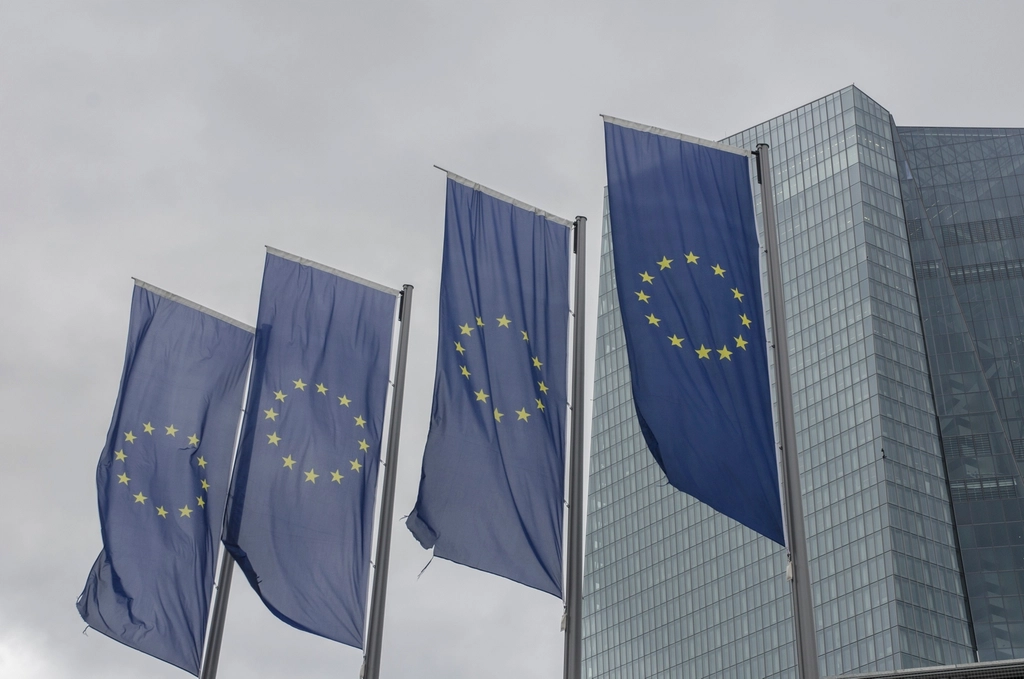
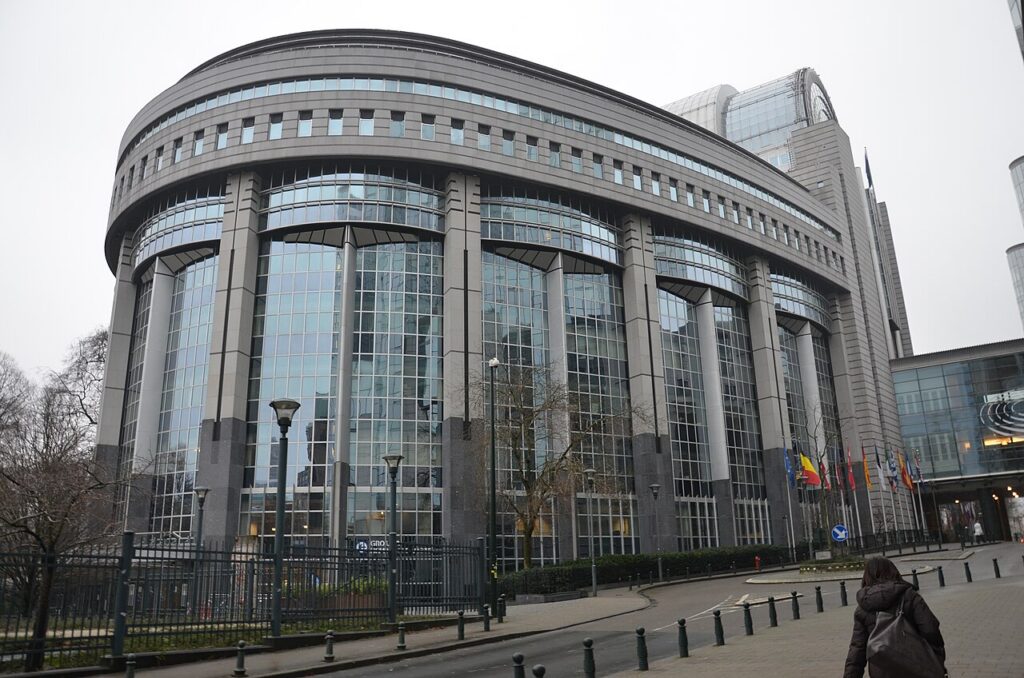
- European Parliament building, Brussels — photo by Steven Lek, CC BY-SA 4.0, via Wikimedia Commons.
- European Union flags, film production still life, and team meeting — CC0 / public domain, via Openverse.
- Generative AI and camera monitor photographs — Pexels License.