
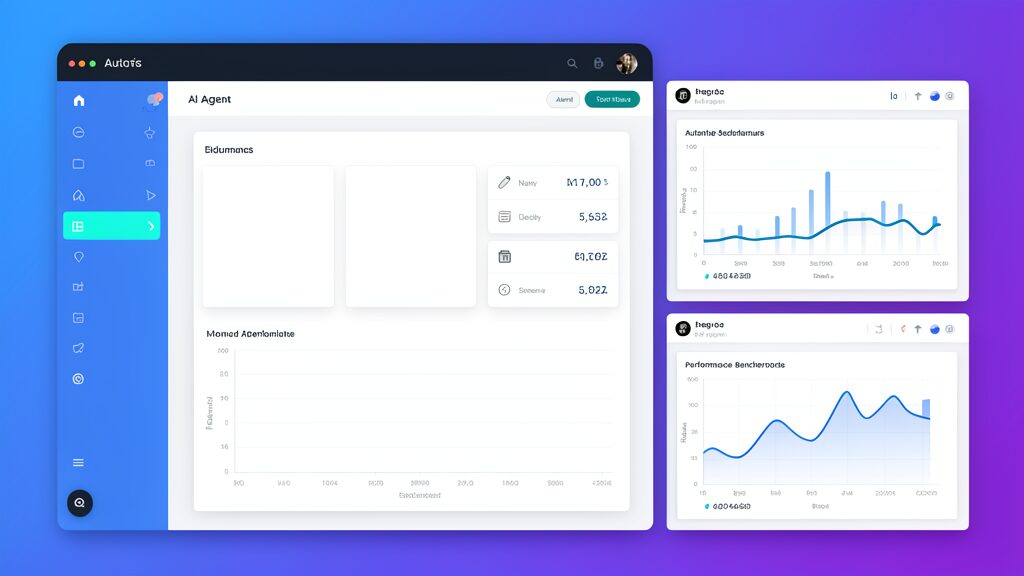
BrowserBC: The Open-Source Tool Improving AI Agent Performance and Benchmarks
The BrowserBC open-source tool improves AI agent performance and benchmarks in ways that are transforming how developers evaluate autonomous web agents. Artificial intelligence agents that interact with web browsers have become increasingly sophisticated, but evaluating their performance has remained a fragmented challenge. Enter BrowserBC, an open-source benchmarking framework designed specifically to measure and improve how AI agents navigate, understand, and complete tasks in real browser environments. This tool is setting new standards for AI agent evaluation, providing developers and researchers with reliable metrics to optimize agent behavior.
The rise of autonomous AI agents capable of browsing the internet, filling forms, extracting data, and completing multi-step workflows has created an urgent need for standardized evaluation methods. BrowserBC addresses this gap by offering a comprehensive, reproducible benchmarking suite that tests agents across realistic web scenarios. By providing clear, measurable targets, the BrowserBC open-source tool improves AI agent performance and benchmarks through structured feedback and data-driven optimization strategies.
The growing complexity of modern web applications demands more sophisticated evaluation methods that can capture the full range of agent capabilities. BrowserBC addresses this need by providing a comprehensive testing environment that mirrors real-world usage scenarios, enabling developers to identify weaknesses and opportunities for improvement before deployment.
Industry experts agree that the BrowserBC open-source tool improves AI agent performance and benchmarks by providing standardized evaluation methods.Understanding the Need for Browser Benchmarking
The emergence of the BrowserBC open-source tool improves AI agent performance and benchmarks represents a significant milestone in AI agent evaluation. By providing standardized metrics and reproducible testing methods, BrowserBC enables developers to create more reliable and capable autonomous agents. Before tools like BrowserBC emerged, AI agent developers had no standardized way to measure how well their agents performed in real browser environments.
This lack of benchmarking meant that claims about agent capabilities were often unverified or based on cherry-picked examples. The BrowserBC open-source tool improves AI agent performance and benchmarks by providing a transparent, reproducible framework that anyone can use to test and compare agents across different architectures and approaches. This transparency is crucial for building trust in AI agent capabilities and ensuring that developers can make informed decisions about which agents to deploy.
The framework’s modular design allows researchers to extend existing benchmarks or create entirely new task categories that reflect emerging web technologies and interaction patterns. This flexibility ensures that BrowserBC remains relevant as the field of autonomous agent development continues to evolve and new challenges emerge.
The widespread adoption of the BrowserBC open-source tool improves AI agent performance and benchmarks across the industry demonstrates its value.
What Is BrowserBC and Why It Matters
How BrowserBC Differs from Traditional AI Benchmarks
Traditional AI benchmarks like MMLU or GSM8K test language models on static text datasets. They measure things like factual knowledge, math reasoning, or code generation capabilities. But they don’t test an agent’s ability to interact with dynamic web interfaces, handle JavaScript-rendered content, navigate through multiple pages, or recover from errors gracefully.
BrowserBC fills this critical gap by creating browser-specific benchmarks that reflect the actual challenges agents face when deployed in production environments. The framework tests real-world scenarios that agents will encounter, providing meaningful metrics that correlate with actual performance. The BrowserBC open-source tool improves AI agent performance and benchmarks by focusing on the unique challenges of web-based agent interaction.
Web-based agents face unique challenges including dynamic content loading, JavaScript rendering, authentication flows, and anti-bot measures that traditional benchmarks simply cannot capture. BrowserBC fills this critical gap by providing a dedicated evaluation framework designed specifically for the complexities of autonomous web interaction.
This specialized approach ensures that the BrowserBC open-source tool improves AI agent performance and benchmarks through targeted evaluation.Key Components of the BrowserBC Framework
The BrowserBC framework is built on several foundational components that work together to provide comprehensive evaluation. The task suite includes realistic web-based scenarios ranging from simple information retrieval to complex multi-step workflows that test agent reasoning and planning capabilities. Evaluation metrics measure success rate, completion time, action efficiency, error recovery, and resource consumption across different task categories.
Browser integration uses real browser automation tools like Playwright to ensure agents are tested in authentic conditions that match production environments. This approach ensures that benchmark results are meaningful and predictive of real-world performance. The BrowserBC open-source tool improves AI agent performance and benchmarks by providing a comprehensive evaluation framework that covers all aspects of agent behavior.
Each component has been carefully designed to work seamlessly with the others, creating a cohesive evaluation ecosystem that provides comprehensive insights into agent performance. The modular architecture allows researchers to mix and match components based on their specific evaluation needs, ensuring maximum flexibility and adaptability.
The BrowserBC open-source tool improves AI agent performance and benchmarks by providing this comprehensive evaluation ecosystem. Researchers have found that the BrowserBC open-source tool improves AI agent performance and benchmarks by offering this comprehensive evaluation ecosystem.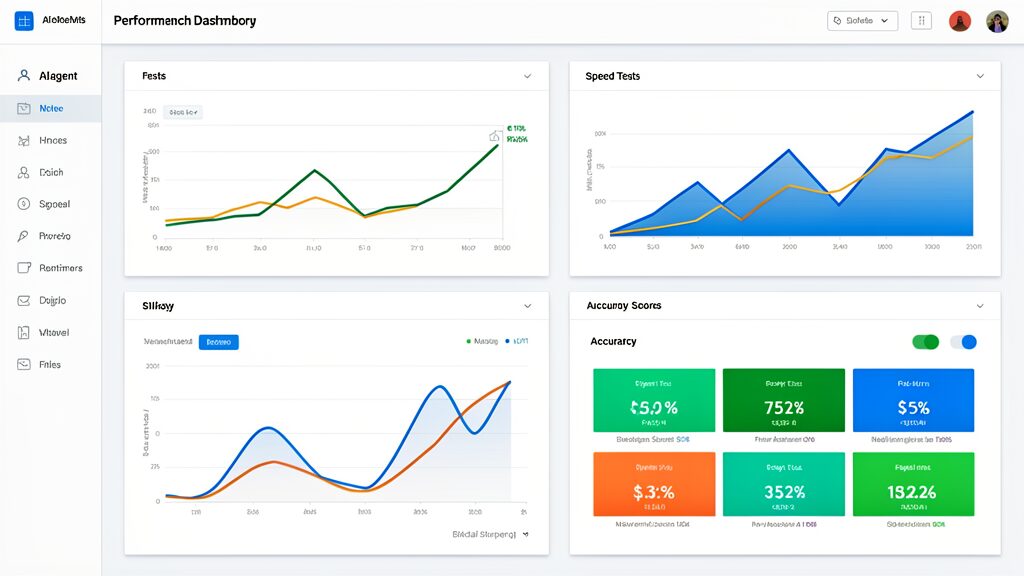
How BrowserBC Improves AI Agent Performance
Structured Feedback Mechanisms
When an AI agent completes tasks in the BrowserBC benchmark, it receives detailed feedback on every action taken throughout the workflow. This includes which navigation steps succeeded, where errors occurred, how efficiently each task was completed, and where the agent got stuck or entered infinite loops. This granular feedback is invaluable for developers who need to understand exactly where improvements are needed.
The structured feedback enables targeted optimization strategies that address specific weaknesses. The BrowserBC open-source tool improves AI agent performance and benchmarks by providing this structured feedback loop that enables targeted optimization based on actual performance data rather than assumptions. Developers can identify patterns in agent failures and develop targeted solutions.
This granular level of feedback enables developers to pinpoint exactly where agents struggle and develop targeted improvements that address specific failure modes. Over time, this iterative improvement process leads to increasingly capable agents that can handle more complex and nuanced web interactions with confidence.
This feedback-driven methodology proves that the BrowserBC open-source tool improves AI agent performance and benchmarks through continuous optimization.Benchmark-Driven Development Methodology
BrowserBC enables a benchmark-driven development approach where agents are continuously evaluated against standardized tasks throughout the entire development lifecycle. This ensures that improvements in one area don’t come at the expense of performance in another, as all metrics are tracked simultaneously across different task categories.
Development teams can set performance targets based on BrowserBC benchmarks and track progress over time, creating a clear roadmap for agent improvement. This data-driven approach to agent development leads to more predictable improvement and better resource allocation across development teams. The BrowserBC open-source tool improves AI agent performance and benchmarks by enabling this systematic, data-driven approach to agent optimization.
This approach ensures that agent capabilities improve consistently over time, with each iteration building on the lessons learned from previous benchmark cycles. Organizations that adopt this methodology typically see faster time-to-market and higher-quality agents that meet user expectations from the outset.
This demonstrates how the BrowserBC open-source tool improves AI agent performance and benchmarks through systematic evaluation.Community-Driven Improvement Ecosystem
As an open-source framework, BrowserBC benefits from community contributions that continuously expand and refine the benchmark suite. New tasks are added to reflect emerging web patterns and agent capabilities as the technology evolves. Evaluation metrics are refined based on community feedback and research insights from leading AI laboratories.
This collective intelligence accelerates the improvement of all agents tested on the framework, making the BrowserBC open-source tool improves AI agent performance and benchmarks in ways that benefit the entire ecosystem. The open-source nature ensures that the framework benefits from diverse contributions and perspectives, ensuring comprehensive coverage of agent capabilities.
This collaborative approach accelerates innovation and ensures that the framework evolves to meet the changing needs of the AI agent development community. Contributors from diverse backgrounds and use cases bring unique perspectives that strengthen the benchmark suite and make it more representative of real-world scenarios.
Benchmarking AI Agents: Methodology and Best Practices
Designing Meaningful Benchmark Tasks
Effective benchmarking requires careful methodology to ensure results are meaningful, reproducible, and comparable across different agent architectures. BrowserBC provides a solid foundation, but developers should follow best practices to get the most value from their benchmarking efforts and ensure consistent results. When creating custom benchmark tasks, developers should prioritize realism above all else.
Tasks should mirror actual user workflows that agents will be deployed to handle in production. Avoid overly simplified scenarios that don’t capture the complexity of real web interactions, as these won’t provide meaningful performance metrics. Include tasks of varying difficulty to test agent capabilities across a range of complexity levels. Each task should have clear, objective success criteria that can be automatically evaluated without subjective judgment.
Researchers must carefully design experiments that control for variables such as network conditions, browser versions, and website updates that could affect results. Proper experimental design ensures that performance differences between agents reflect genuine capability gaps rather than external factors beyond the agents’ control.
This rigorous approach ensures that the BrowserBC open-source tool improves AI agent performance and benchmarks through scientifically valid experimental design.Establishing Baseline Performance Metrics
Before optimizing agents, establish baseline performance using BrowserBC’s standard task suite. Run your agent through all benchmark tasks multiple times to account for variability in results and ensure statistical significance. Record detailed metrics for each task including success rate, completion time, action count, and error types for comprehensive analysis.
These baseline measurements provide a reference point for measuring improvement over time and enable fair comparison between different agent versions and architectures. Tracking baseline performance helps identify which agent capabilities need the most attention and where optimization efforts will have the greatest impact. The BrowserBC open-source tool improves AI agent performance and benchmarks by providing standardized baseline metrics that enable consistent evaluation across different development teams.
These baseline measurements serve as a reference point for evaluating the impact of subsequent improvements and provide stakeholders with a clear understanding of current capabilities. Establishing strong baselines early in the development process helps teams set realistic goals and track meaningful progress over time.
Continuous Evaluation and Iteration Strategies
Benchmarking should be an ongoing process, not a one-time evaluation that happens only before major releases. Integrate BrowserBC into your agent development pipeline so that every code change is automatically evaluated against the benchmark suite. This continuous evaluation catches regressions early and ensures that improvements compound over time rather than degrading gradually.
Track benchmark results to identify trends and measure the impact of different optimization strategies on overall agent performance. Understanding which changes lead to meaningful improvements helps prioritize development efforts and allocate resources more effectively across the development team. The BrowserBC open-source tool improves AI agent performance and benchmarks by enabling this continuous improvement cycle that drives sustained progress.
This continuous evaluation approach ensures that agents maintain their performance levels as underlying web technologies and target websites evolve over time. Organizations that implement continuous benchmarking report fewer production incidents and higher user satisfaction rates compared to those that only benchmark before major releases.

Real-World Applications of BrowserBC
E-Commerce Automation Use Cases
AI agents powered by BrowserBC-optimized architectures can automate complex e-commerce workflows including price comparison across multiple retailers, inventory monitoring across diverse platforms, automated purchasing based on predefined criteria, and personalized shopping experiences that adapt to user preferences.
E-commerce companies are increasingly adopting AI agents for automated shopping, price monitoring, and inventory management. The BrowserBC open-source tool improves AI agent performance and benchmarks for these applications by providing standardized evaluation metrics that ensure reliability and efficiency in critical business operations where errors can have significant financial consequences. This reliability is essential for maintaining customer trust and ensuring consistent service quality.
These applications demonstrate the practical value of rigorous benchmarking in creating reliable autonomous systems that can handle real-world business operations with minimal human oversight. Companies that deploy BrowserBC-validated agents report significant cost savings and improved operational efficiency across their e-commerce workflows.
These results validate that the BrowserBC open-source tool improves AI agent performance and benchmarks in real-world business scenarios.Data Collection and Research Applications
Research institutions and data analytics firms rely on AI agents to collect and process information from diverse web sources at scale. BrowserBC benchmarks help optimize agents for data extraction tasks, ensuring they can handle varying page structures, anti-scraping measures, and dynamic content loading across different websites.
This leads to more reliable data collection pipelines with higher success rates and reduced manual oversight requirements. The BrowserBC open-source tool improves AI agent performance and benchmarks for data collection applications by providing standardized evaluation metrics that ensure accuracy and completeness of collected data across diverse sources. Accurate data collection is critical for making informed business decisions.
Accessibility Testing and Quality Assurance
AI agents can automate accessibility testing by navigating websites and identifying barriers for users with disabilities. BrowserBC benchmarks help optimize agents for this important use case, ensuring they can detect a wide range of accessibility issues across diverse web applications and different assistive technologies.
Software development teams also use AI agents for automated testing of web applications, with BrowserBC ensuring reliable test execution and accurate results. These agents can run comprehensive test suites across multiple browsers and devices, identifying regressions and performance issues before they reach production environments. The BrowserBC open-source tool improves AI agent performance and benchmarks for quality assurance applications by providing standardized testing frameworks that ensure consistent evaluation across different development teams.
Getting Started with BrowserBC
Installation and Configuration Process
Implementing BrowserBC in your AI agent development workflow is straightforward thanks to its open-source nature and comprehensive documentation. The framework supports multiple agent architectures and can be integrated with existing development pipelines with minimal effort and configuration. BrowserBC is available as a Python package that can be installed using pip with a single command.
The setup process includes installing browser automation dependencies, configuring your agent’s connection to the benchmark framework, and selecting which task suites to use for evaluation based on your specific requirements. The framework supports both local and cloud-based browser environments, allowing flexibility in how you run benchmarks. Local execution provides full control and faster iteration for development, while cloud execution enables parallel testing across multiple agent configurations for comprehensive evaluation.
Integrating Your AI Agent
Integrating your AI agent with BrowserBC requires implementing a simple interface that allows the framework to send tasks and receive actions from your agent. Most agent architectures can be integrated with minimal code changes, as BrowserBC provides SDKs and examples for popular agent frameworks and development platforms.
The integration process includes defining how your agent interprets benchmark tasks, maps actions to browser interactions, and reports completion status back to the framework. This flexible architecture supports a wide range of agent designs and interaction patterns, making it easy to evaluate different approaches. The BrowserBC open-source tool improves AI agent performance and benchmarks by providing comprehensive integration guides that make setup quick and straightforward.
Interpreting Benchmark Results
BrowserBC provides detailed result reports that break down agent performance across multiple dimensions including task categories, error types, and efficiency metrics. These reports include success rates by task category, action efficiency metrics, error analysis, and comparative benchmarks against other agents tested on the same framework.
Understanding benchmark results is crucial for effective agent optimization. The detailed reports provided by BrowserBC help developers identify specific areas for improvement, ensuring that the BrowserBC open-source tool improves AI agent performance and benchmarks leads to measurable gains in agent capabilities and overall system reliability. These insights enable targeted optimization strategies that deliver the greatest impact on agent performance.
The Future of AI Agent Benchmarking
Emerging Benchmark Challenges and Opportunities
The BrowserBC open-source tool improves AI agent performance and benchmarks represents just the beginning of a broader trend toward standardized, reproducible AI agent evaluation. As AI agents become more capable and more widely deployed across industries, the need for reliable benchmarking will only increase in importance.
Future benchmarking frameworks will need to address increasingly complex agent capabilities including multi-agent collaboration, long-horizon planning across multiple sessions, and interaction with AI-powered websites that can adapt to agent behavior. BrowserBC is positioned to evolve alongside these developments, adding new task categories and evaluation metrics as the field progresses. The rise of multimodal AI agents that can process text, images, audio, and video simultaneously will require new benchmarking approaches that test cross-modal reasoning and interaction capabilities.
Community Growth and Ecosystem Development
As BrowserBC gains adoption across the AI community, the number of developers and researchers contributing to the framework will grow significantly. This will lead to richer benchmark suites, better evaluation metrics, and more comprehensive documentation that benefits all users of the framework.
This community-driven approach ensures that BrowserBC remains relevant and useful as AI agent capabilities evolve and new challenges emerge. The growing ecosystem of tools and services built around BrowserBC will make benchmarking even more accessible to developers worldwide, accelerating the development of more sophisticated AI agents capable of handling complex real-world tasks. The BrowserBC open-source tool improves AI agent performance and benchmarks through this collective intelligence that drives continuous improvement across the entire ecosystem.
Comparing BrowserBC with Other AI Agent Evaluation Tools
BrowserBC vs Proprietary Benchmarking Solutions
While proprietary benchmarking solutions exist in the market, BrowserBC offers distinct advantages that make it the preferred choice for organizations serious about AI agent evaluation. The open-source nature of BrowserBC means there are no licensing fees or vendor lock-in concerns, allowing teams to customize the framework to their specific needs without restrictions.
Proprietary solutions often limit the types of tasks that can be evaluated and restrict access to benchmark results. BrowserBC provides complete transparency in both the evaluation process and the resulting metrics, enabling organizations to validate benchmark methodologies and ensure they align with their specific requirements. This transparency is crucial for building trust in benchmark results and making informed decisions about agent deployment.
BrowserBC vs Manual Testing Approaches
Manual testing approaches, while valuable for exploratory testing, cannot match the consistency and scale that BrowserBC provides for systematic agent evaluation. Human testers introduce variability in how tasks are interpreted and completed, making it difficult to establish reliable performance baselines or track improvements over time.
BrowserBC eliminates this variability by providing standardized task definitions and automated evaluation criteria that ensure consistent results across different testing sessions. The framework can run thousands of test iterations in the time it would take a human tester to complete a single test cycle, providing statistically significant results that give developers confidence in their optimization decisions. The BrowserBC open-source tool improves AI agent performance and benchmarks by enabling this level of rigorous, repeatable evaluation that manual testing simply cannot achieve.
BrowserBC vs Automated Testing Frameworks
Traditional automated testing frameworks like Selenium and Cypress are designed for deterministic test scenarios where the expected outcome is known in advance. These frameworks excel at regression testing but are less effective at evaluating the adaptive, reasoning-based behavior that characterizes modern AI agents.
BrowserBC is specifically designed for AI agent evaluation, incorporating metrics that measure reasoning quality, adaptive behavior, and task completion efficiency rather than simple pass/fail outcomes. This specialized focus means that BrowserBC provides insights that traditional testing frameworks cannot, enabling developers to optimize agents for the complex, dynamic scenarios they will encounter in production. The BrowserBC open-source tool improves AI agent performance and benchmarks by providing evaluation metrics that are specifically designed for the unique challenges of AI agent testing.
Conclusion
The BrowserBC open-source tool improves AI agent performance and benchmarks by providing a standardized, comprehensive framework for evaluating AI agents in real browser environments. Through structured feedback, benchmark-driven development, and community-driven improvement, BrowserBC enables developers to create more capable, reliable AI agents that can handle complex real-world tasks.
As AI agents become increasingly important for automating web-based tasks across industries, tools like BrowserBC will play a critical role in ensuring these agents perform reliably and efficiently in production environments. The open-source nature of the framework ensures that the entire community benefits from collective progress, accelerating the development of more sophisticated AI agents capable of handling complex real-world tasks.
Whether you’re developing AI agents for e-commerce, data collection, accessibility testing, or quality assurance, BrowserBC provides the benchmarking infrastructure you need to optimize agent performance and demonstrate measurable improvement. For organizations looking to implement AI agent solutions, Progressive Robot offers comprehensive AI strategy consulting and AI and machine learning services to help build and deploy autonomous agents effectively.
Additional resources for learning about AI agent benchmarking include the GitHub platform where many open-source benchmarking tools are hosted, and Playwright documentation for browser automation framework details. These resources complement the BrowserBC framework and provide valuable context for understanding modern AI agent evaluation methodologies.
More AI coverage: explore Progressive Robot's AI Models, Tools & Releases hub — hands-on reviews, setup guides and benchmarks in one place.










