
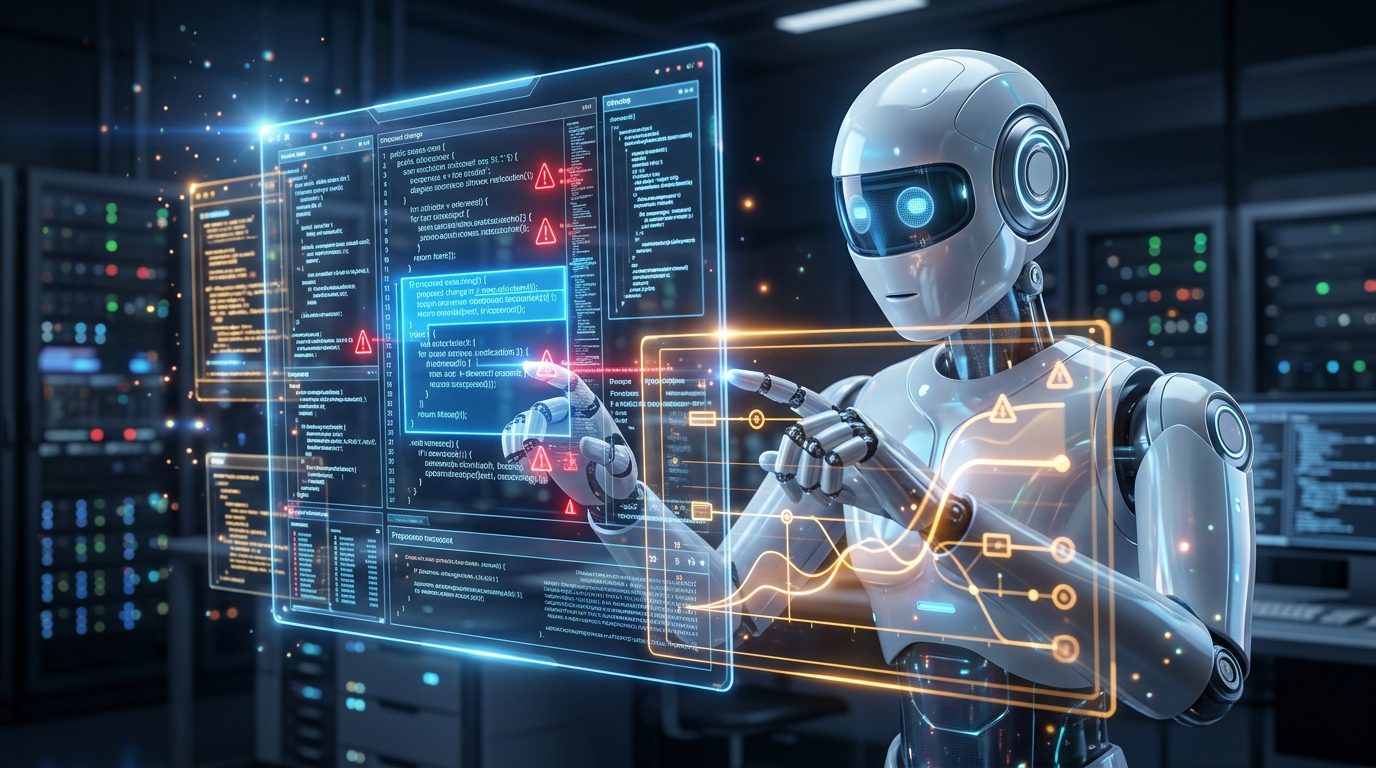
AI agents are becoming more capable of writing code, fixing bugs and improving the instructions that guide their work. But every change carries a risk: a modification intended to improve performance can introduce a new error, break an existing function or waste valuable computing resources.
New research suggests that AI agents can improve more efficiently when they predict the likely consequences of their proposed changes before testing them. Researchers from the University of Virginia, Microsoft Research and Tsinghua University developed a forecasting component designed to estimate how modifications might affect an agent’s performance. The findings were reported on October 16, 2026, by Tech Xplore, which covered the research published on arXiv.
The results are promising, particularly for software development and other tasks where AI systems repeatedly refine their own tools. However, the research is an early step toward more reliable self-improving systems—not proof that autonomous coding agents can safely rewrite production software without human supervision.
Table of Contents
How AI Agents Learn to Predict Their Own Errors
What Is the Improvement Dynamics Model?
How Forecasting Helps Coding Agents Improve
What the Researchers Found
Can the Same Technique Work Beyond Software Development?
Limitations and Remaining Challenges
Why This Research Matters for AI Development
Frequently Asked Questions
Conclusion
How AI Agents Learn to Predict Their Own Errors
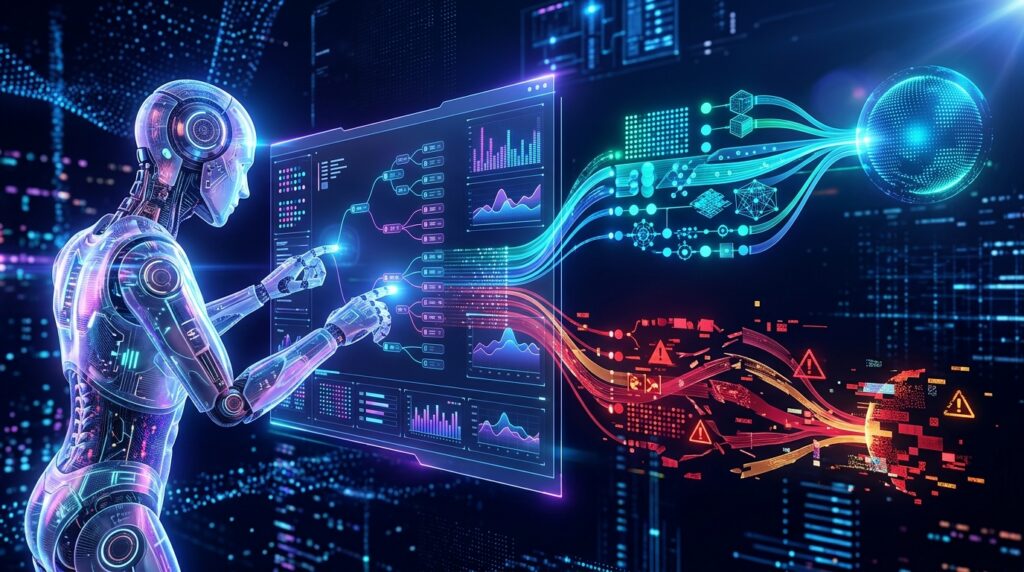
Traditional coding workflows often follow a familiar pattern: write a change, run tests, inspect the result and fix whatever fails. AI coding agents can use a similar cycle, but repeated trial and error can become expensive when each attempt requires additional model calls, code execution and evaluation.
The new research explores whether an agent can make better decisions by forecasting the likely effects of its own modifications before the next evaluation takes place. This is especially relevant to systems that can change their own code or instructions, rather than simply generate a patch for a human developer to review.
The researchers built on a framework called HyperAgents. In this setup, one component performs a task while another modifies the code and instructions that guide the task-solving system. Earlier versions and their results are retained in an archive, allowing subsequent improvement attempts to draw on previous experience.
With a forecasting component, the system can estimate the likely outcome before spending resources on a full evaluation. That prediction can help it decide whether a proposed change needs another revision.
The important distinction is that the system does not simply assume its forecast is correct. Its changes are still evaluated, and the observed results provide evidence that can improve future predictions.
What Is the Improvement Dynamics Model?
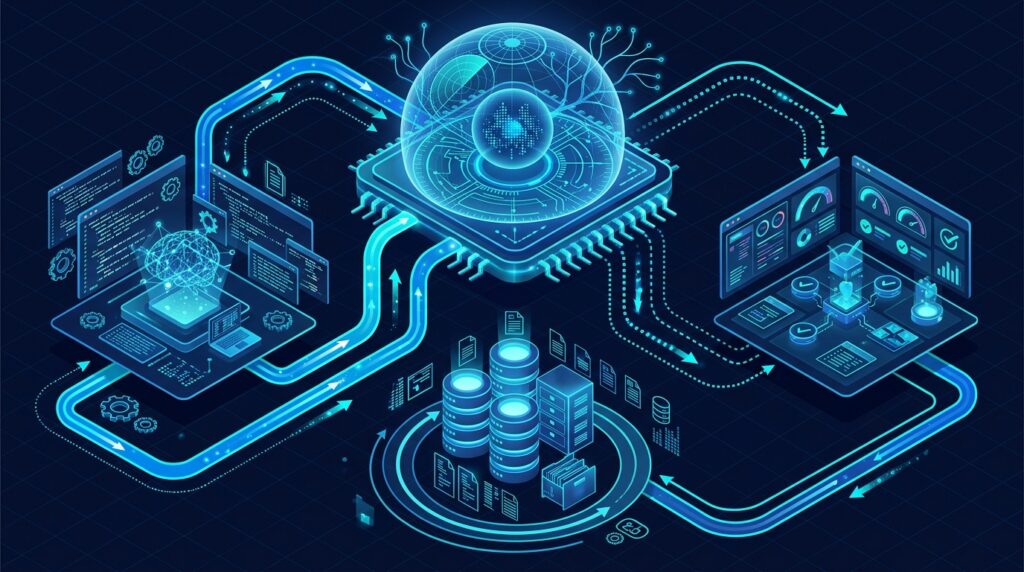
The central component introduced by the researchers is called the Improvement Dynamics Model (IDM). Its role is to forecast how a proposed modification may affect the performance of the agent being improved.
Rather than looking only at the code change in isolation, the model considers the proposed edit, the agent it will modify and evidence from earlier attempts. It predicts outcomes across individual tasks, including whether an agent is likely to produce an incorrect answer or fail to finish.
That distinction matters because different failures can require different solutions.
An agent that produces the wrong answer may need better task reasoning, clearer instructions or improved handling of information. An agent that fails to finish might instead have a broken program, an inefficient process or a tool-use problem that prevents it from completing its work.
According to the report, when the forecast—adjusted for the model’s previous prediction bias—suggests that the modified agent will perform worse than its current measured performance, the system receives the prediction and gets an additional opportunity to revise the change.
This creates a more targeted improvement cycle. The modifying component receives information about the likely consequences of its work rather than relying exclusively on a later pass-or-fail result.
The forecasting model can also be improved over time. The researchers describe a process in which predictions are compared with subsequent outcomes, giving the system evidence to assess and refine its own forecasting approach.
That does not mean the agent becomes infallible. Predictions can still be wrong, and a forecast is only useful if it is sufficiently accurate for the task being attempted.
How Forecasting Helps Coding Agents Improve
More AI coverage: explore Progressive Robot's AI Models, Tools & Releases hub — hands-on reviews, setup guides and benchmarks in one place.










