
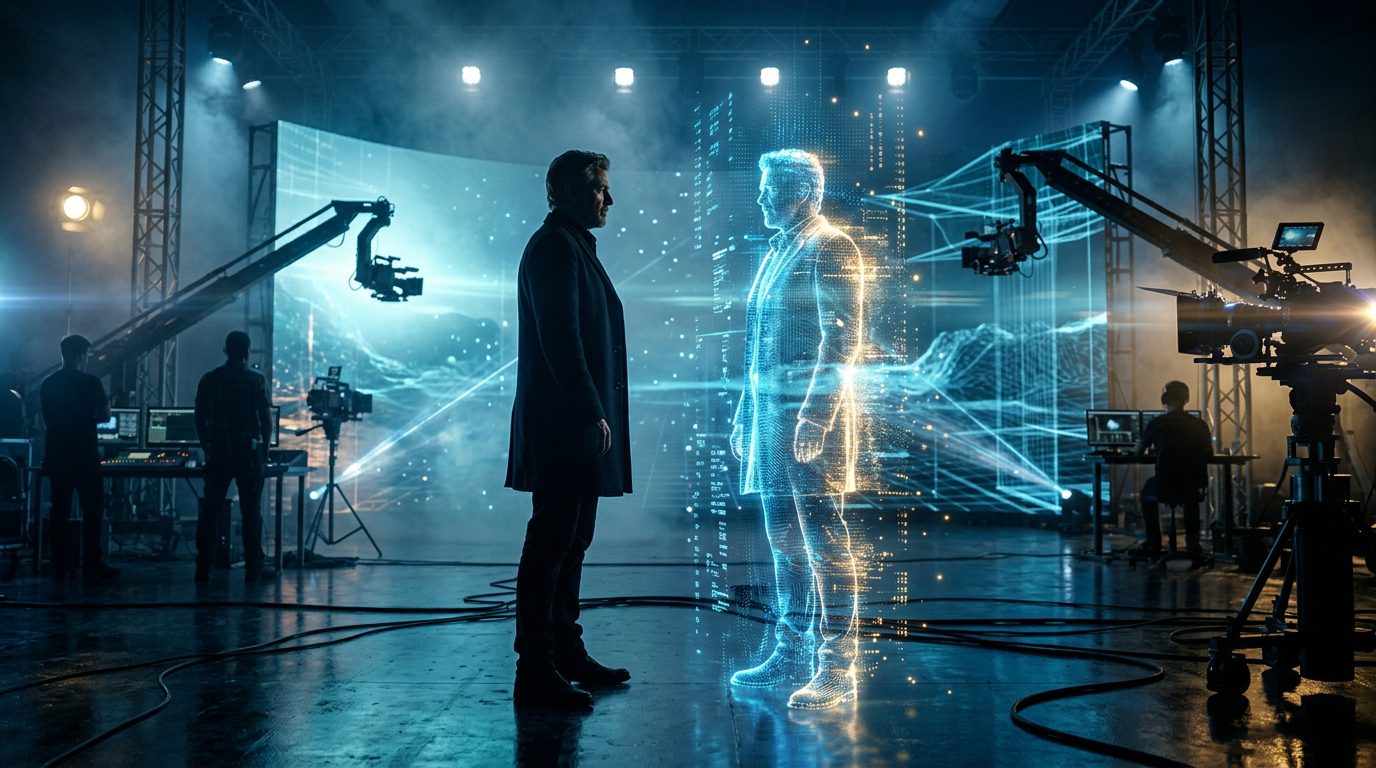
Mark Wahlberg AI clone technology could eventually allow the Hollywood actor to continue appearing in films and television projects long after his traditional acting career ends. Speaking at TechCrunch Disrupt on October 16, 2026, Wahlberg discussed using artificial intelligence in filmmaking and expressed openness to the possibility of a digital version of himself carrying on his legacy.
His comments arrive as Hollywood continues debating whether AI will support creative professionals or replace them. Wahlberg believes the technology should enhance film production rather than eliminate the need for real actors, compelling scripts, and human storytelling.
He also raised an intriguing possibility: what if his children or grandchildren could oversee his digital likeness and decide how it should be used in future productions? The idea introduces new questions about creative ownership, performers’ rights, and the long-term value of a person’s digital identity.
The discussion is not simply about creating a convincing digital face. It is about whether an actor’s likeness could become a carefully managed part of their creative legacy.
Table of Contents
Mark Wahlberg Wants AI Used the Right Way
How AI Could Help His Pete Rose Biopic
Mark Wahlberg AI Clone Could Preserve His Legacy
Could AI Keep the Ted Franchise Alive?
The Biggest Challenges Facing AI Actors
What This Means for the Future of Hollywood
Frequently Asked Questions
Conclusion
Mark Wahlberg Wants AI Used the Right Way
Hollywood’s relationship with artificial intelligence remains complicated. Some filmmakers see generative AI as a way to reduce production costs and unlock new creative possibilities, while others worry about its effects on acting jobs, screenwriting, and artistic ownership.
Wahlberg’s position is that AI should improve a creative project rather than replace the people who make it meaningful. At TechCrunch Disrupt, he discussed using AI to enhance films but questioned the idea of simply generating a screenplay with ChatGPT and producing it without real actors.
His comments highlight a distinction between AI-assisted filmmaking and fully automated entertainment. In the first approach, filmmakers use technology to improve particular production tasks. In the second, AI could take over substantial parts of the creative process, raising difficult questions about the future of human participation.
Wahlberg also stressed the importance of storytelling. Technological advances can expand what filmmakers put on screen, but expensive visual effects alone do not guarantee a compelling movie.
This perspective helps explain why the Mark Wahlberg AI clone discussion is significant. The actor is considering how technology might support production today and potentially preserve his work for future audiences, rather than arguing that human performers are no longer necessary.
How AI Could Help His Pete Rose Biopic

One practical example of Wahlberg’s approach involves his biopic about baseball star Pete Rose, in which he is set to play the title character.
According to TechCrunch’s report, the production is considering AI to enhance elements of the stadium setting. Wahlberg described the project as relatively expensive and discussed the potential for technology to improve aspects of the production.
Large sports stadiums can be difficult and costly to recreate convincingly. Historical games may require extensive crowds, detailed architecture, period-specific surroundings, and wide shots that establish the scale of the event. Digital environments and AI-assisted visual effects can give production teams additional ways to approach these challenges.
However, the report does not confirm precisely which AI tools will be used, which scenes will be altered, or how much money the production might save. Those details should not be assumed.
The broader opportunity is clear: filmmakers may be able to use AI to enhance backgrounds, extend virtual environments, and simplify selected visual-effects tasks while retaining human actors and creative direction.
For Hollywood, this represents a more targeted use of AI than attempting to automate an entire movie. It focuses on solving a production problem while preserving the performances and storytelling that audiences expect.
Mark Wahlberg AI Clone Could Preserve His Legacy
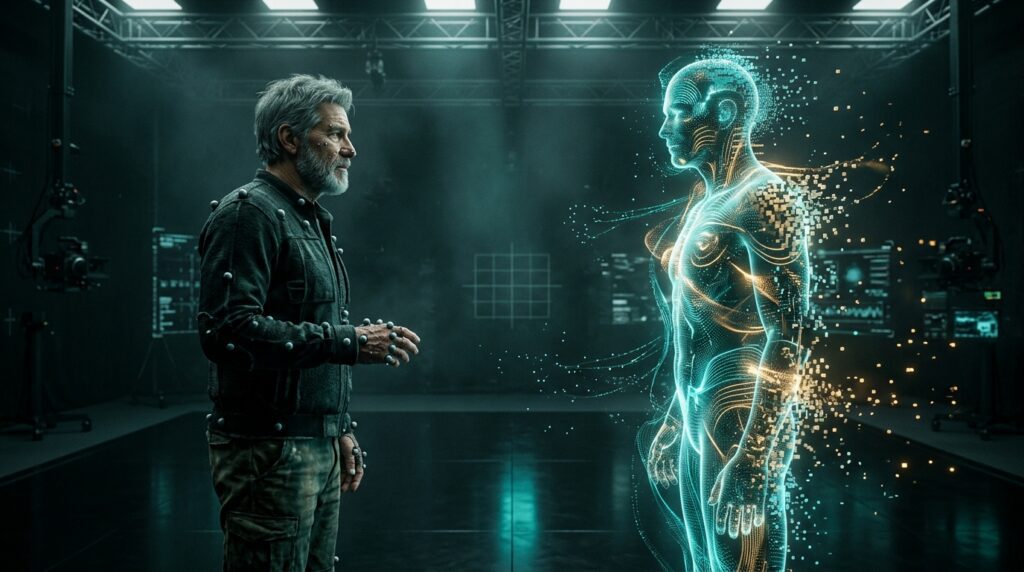
The most intriguing part of Wahlberg’s remarks was his willingness to consider a digital version of himself continuing to appear in entertainment after his traditional acting career ends.
When discussing the Creative Artists Agency’s CAA Vault, a facility associated with capturing performers’ physical characteristics and voices for digital-replica applications, Wahlberg said he had not visited it but was interested in the possibility.
He suggested that his children or grandchildren could eventually oversee his likeness and image, deciding whether it should appear in future productions.
That is what makes the Mark Wahlberg AI clone concept particularly interesting. Instead of focusing exclusively on how studios might use digital performers to reduce costs, the idea raises questions about whether actors and their families could retain control over how their identities are used over time.
An authorized digital replica could potentially support future appearances, franchise projects, or other carefully approved uses of an actor’s likeness. It might also allow a performer to establish conditions for how their digital identity can be used after retirement or death.
However, a digital likeness is not the same as a complete human performance. Reproducing someone’s appearance and voice does not automatically recreate their judgment, emotional interpretation, timing, or creative instincts.
There are also important legal and ethical questions. Who approves a new performance? Can a performer or their estate reject a particular script? How should compensation work? What happens if a studio wants to use a digital replica in a project the original actor would never have accepted?
These issues require clear agreements and meaningful safeguards. Wahlberg’s comments express openness to the idea, not confirmation that he has already created an AI replica or authorized a specific future project.
The future of digital performers will depend as much on consent and control as on advances in generative AI.
Could AI Keep the Ted Franchise Alive?
Wahlberg also said he would not oppose an AI version of his likeness being used if his comedy franchise Ted continued for decades.
His comments suggest that digital replicas could eventually give entertainment companies another way to maintain long-running franchises. If audiences continued to enjoy a series after its original performers retired, authorized digital likenesses might allow producers to explore additional stories.
This possibility is especially relevant to productions that combine animation, computer-generated imagery, and live-action performances. Digital actors could potentially be incorporated into these workflows while reducing some of the physical constraints associated with traditional filming.
But continuing a franchise is not simply a matter of reproducing a familiar face. Successful entertainment still requires strong scripts, engaging characters, skilled creative teams, and stories that justify another instalment.
The Mark Wahlberg AI clone concept also highlights the distinction between an actor’s willingness to participate and a studio’s desire to use their likeness. Permission for one project should not automatically mean unrestricted approval for every future appearance.
Clear agreements could establish which uses are permitted, who approves new material, and how the performer or their estate is compensated.
Wahlberg’s comments reflect his personal openness to the possibility if he could no longer participate and audiences still wanted the content. They do not confirm that a future AI-generated Ted series is in development.
The Biggest Challenges Facing AI Actors
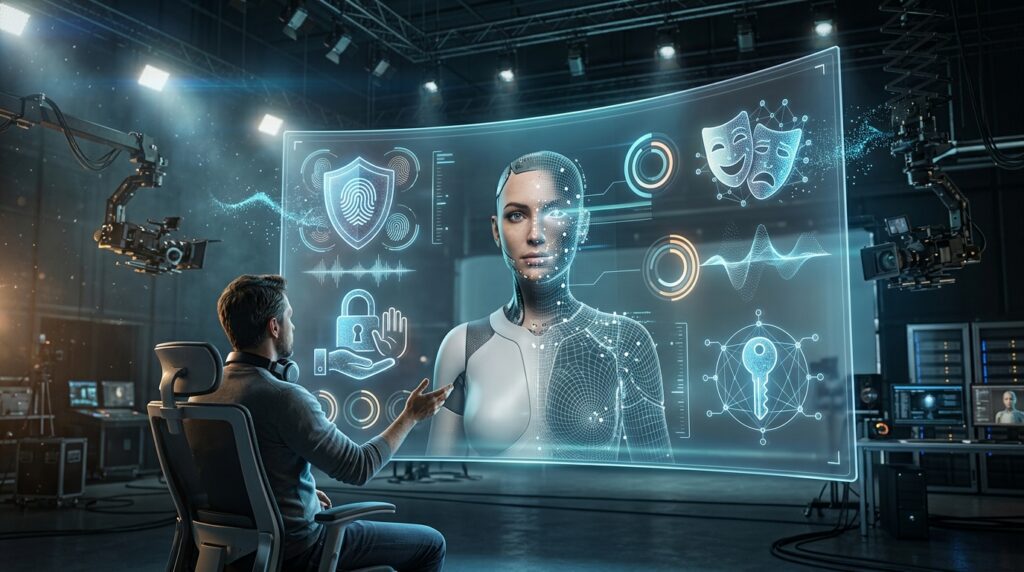
The potential benefits of AI actors come with substantial challenges. Even when a performer is willing to explore digital replication, the entertainment industry needs clear rules governing how the technology can be used.
Consent and ownership: Actors need to understand precisely how their faces, voices, movements, and other identifying features may be reproduced. Permission for one project should not automatically be treated as unlimited permission for future productions.
Creative control: A digital replica could be made to deliver dialogue or appear in a scene that the original performer would never have approved. Contracts may need to specify who can authorize scripts, editing decisions, and new performances.
Compensation: If studios use digital likenesses to create additional performances, agreements should clarify how performers or their estates are paid. The appropriate arrangements depend on the contract and applicable law.
Authenticity and audience trust: Viewers may want to know whether a performance was filmed traditionally, modified with AI, or generated using a digital replica. Transparency can be particularly important when a digital version represents someone who has died.
Employment and creative opportunities: Some AI applications may reduce the time and expense involved in specific production tasks. At the same time, widespread automation could affect the amount and type of work available to performers and other entertainment professionals.
These challenges do not mean AI replicas cannot be useful. They demonstrate why technical progress needs to be accompanied by responsible production practices and protections for the people whose identities make digital performances possible.
For the Mark Wahlberg AI clone concept to become a trusted model for Hollywood, permission and control would need to remain central to the process.
What This Means for the Future of Hollywood
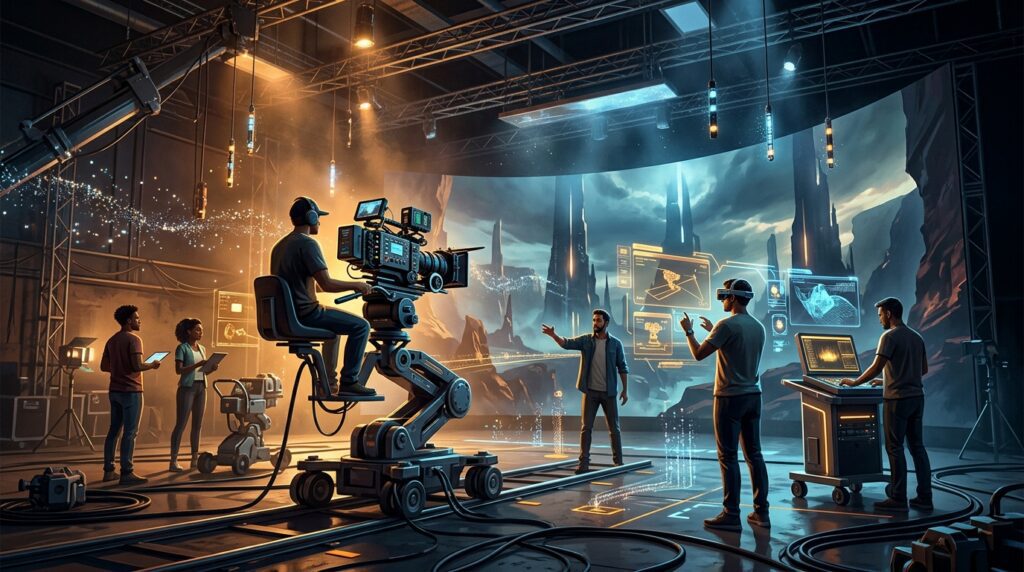
Wahlberg’s comments reflect a broader shift in how the entertainment industry is discussing artificial intelligence. The debate is moving beyond whether AI can generate images, voices, and digital performances towards questions about how those capabilities should be incorporated into real productions.
For studios, AI-assisted visual effects and digital environments may offer additional ways to manage production costs. For performers, digital likenesses could create new licensing opportunities when the terms are clear and the use is authorized. For audiences, the technology may make certain projects or performances possible that would otherwise be difficult to produce.
But these benefits are not automatic. The cost of an AI-assisted production depends on the project, and a digital performance still needs strong direction and storytelling to connect with viewers.
The Mark Wahlberg AI clone discussion is also a reminder that an actor’s digital identity may have value beyond their active career. If performers can establish clear permissions and retain meaningful control over future uses, digital replicas may become another part of how their creative work is managed.
Wahlberg has not announced a completed digital clone or a confirmed plan to continue acting through AI. His comments instead offer a glimpse of a possible future in which performers decide how technology should interact with their legacies.
The entertainment industry’s challenge will be to embrace useful innovation without undermining the human creativity that makes films and television worth watching.
Frequently Asked Questions
Is Mark Wahlberg creating an AI clone of himself?
Wahlberg has expressed interest in the possibility of a digital replica that his children or grandchildren could oversee in the future. However, he has not confirmed that an AI clone has already been created.
How does Mark Wahlberg want AI to be used in filmmaking?
He supports using AI to enhance productions rather than replace human actors and storytelling. One example he discussed was potentially using the technology to improve stadium environments in his Pete Rose biopic.
What is the Mark Wahlberg AI clone concept?
It is the idea of creating an authorized digital representation of Wahlberg that could potentially be used in future entertainment projects. Such uses would depend on technical capabilities, permissions, and applicable agreements.
What is the CAA Vault?
The CAA Vault is a facility associated with Creative Artists Agency that uses scanning technology to capture elements of performers’ physical likenesses, movements, and voices for digital-replica applications. Wahlberg said he had not visited it but was interested in the possibility.
Could AI allow Mark Wahlberg to appear in movies after his death?
Potentially. An authorized digital replica could be used in future productions, depending on technical capabilities, legal permissions, and applicable agreements. Wahlberg expressed openness to the possibility, but no specific posthumous project was confirmed in the report.
Could AI replace actors in Hollywood?
AI may automate or assist with some production tasks, but replacing actors entirely raises creative, ethical, and legal concerns. Wahlberg’s stated preference is to use AI to enhance filmmaking while keeping real actors and storytelling at its centre.
Conclusion
The Mark Wahlberg AI clone discussion offers a glimpse into a possible future in which actors have greater control over how their digital identities are used beyond their traditional careers. Wahlberg is open to exploring the technology, provided it serves a meaningful creative purpose and could help preserve his legacy.
His comments also underline an important distinction: AI can help filmmakers create digital environments, improve production workflows, and potentially extend the life of entertainment franchises, but those capabilities do not eliminate the need for compelling stories and human creativity.
Whether digital replicas become a mainstream part of Hollywood will depend on how studios handle consent, compensation, ownership, and creative control. For now, Wahlberg’s position is an expression of openness rather than a confirmed plan to create or deploy an AI version of himself.
The bigger question is no longer simply whether AI can recreate an actor. It is whether the entertainment industry can use that technology responsibly while respecting the people behind the performances.
How Progressive Robot Can Help Businesses Navigate AI
Artificial intelligence is transforming software development, creative industries, and digital business operations. Understanding how to adopt AI responsibly can help businesses identify practical opportunities while managing implementation, security, and governance challenges.
At Progressive Robot, we explore technology solutions that help businesses adapt to an evolving digital landscape.
Explore our AI and automation services to discover how AI could support your business.
Ready to explore AI for your business? Visit Progressive Robot to learn more about our IT solutions and services.
References
More AI coverage: explore Progressive Robot's AI Models, Tools & Releases hub — hands-on reviews, setup guides and benchmarks in one place.










