
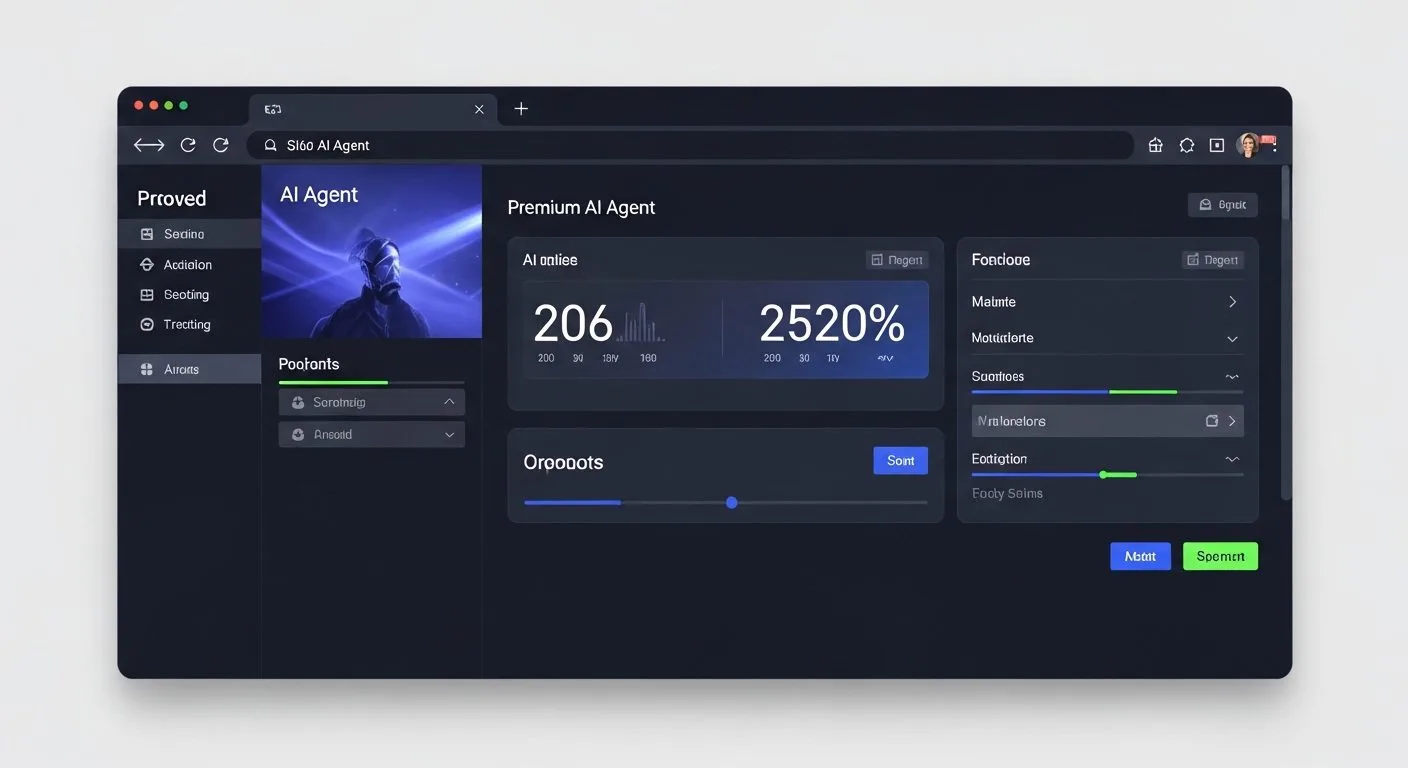
What is AgentGPT? AgentGPT is a browser-based tool from Reworkd that lets users name, configure, and deploy autonomous AI agents aimed at completing a goal through iterative task planning and execution.
If you want the short answer to what is AgentGPT, it is one of the best-known products from the early autonomous-agent wave, but it is important to describe it carefully in 2026. The live AgentGPT beta experience still presents a browser interface for launching autonomous agents, while the public open-source repository that helped make the project famous is now archived and read-only.
This guide uses the official live AgentGPT site, the official AgentGPT GitHub repository, and Reworkd’s official docs as the main references.
What is AgentGPT at a glance
What is AgentGPT at a glance? It is a browser-based autonomous-agent interface built to let users define a goal and have an AI agent try to break the work into tasks, execute them, and learn from the results.
- The live AgentGPT beta interface says users can configure and deploy autonomous AI agents and have them pursue a goal by thinking of tasks, executing them, and learning from results.
- The official GitHub README describes AgentGPT as a way to assemble, configure, and deploy autonomous AI agents in your browser.
- The public repository historically supported self-hosting with a frontend, backend, database, and setup scripts.
- The repo lists a GPL-3.0 license and includes a stack built around Next.js, FastAPI, Prisma, SQLModel, and LangChain.
- The GitHub repository is now archived and read-only as of January 28, 2026.
Reworkd’s main company site and docs are now focused on web data extraction, with AgentGPT referenced more as an earlier project than as the center of the company story. - The live interface still shows a beta experience with example agents and a visible run-based limit on the interface for AgentGPT-3.5.
Why understanding what is AgentGPT matters
If you want a useful answer to what is AgentGPT, it helps to separate the concept from the hype that surrounded autonomous agents in 2023. At that time, products like AgentGPT were often presented as a glimpse of software that could independently pursue goals with minimal human supervision.
That idea still matters, but the practical reality is more nuanced. AgentGPT is important partly as a live tool and partly as a landmark project in the history of browser-based AI agents. Understanding that difference makes it easier to evaluate whether you are looking at an actively evolving production platform, a legacy open-source codebase, or a still-accessible demo of an agentic interaction model.
If you are following how autonomous systems connect to broader workflow automation, AgentGPT is useful because it shows the early browser-native version of that idea.
What is AgentGPT in simple terms

What is AgentGPT in plain English? It is a tool where you give an AI agent a name and a goal, then watch it try to plan steps and work through them on its own.
The simplest mental model is this:
- You define the objective.
- AgentGPT creates tasks, attempts them, and keeps iterating toward the goal.
That means what is AgentGPT is not just a chatbot with one reply at a time. It is built around the idea of multi-step autonomous behaviour inside a browser interface.
7 essential facts behind what is AgentGPT

1. AgentGPT is fundamentally a browser-based autonomous-agent experience
The first thing to understand about what is AgentGPT is that the official product language centers on autonomous AI agents in the browser.
Both the live site and the GitHub README describe a system where users configure an agent, set a goal, and let it attempt to reach that goal by generating and executing tasks. That browser-native experience was a big part of what made AgentGPT widely recognizable.
2. AgentGPT is built around goal-driven task decomposition
Another core part of what is AgentGPT is the way it frames agent behaviour.
The official interface says the agent will attempt to reach a goal by thinking of tasks to do, executing them, and learning from the results. That is the heart of the product idea: not single-turn conversation, but iterative goal pursuit.
This matters because AgentGPT belongs to a category of AI products that tried to move from “answer my prompt” toward “take a goal and keep working on it.”
3. AgentGPT helped popularize autonomous agents for mainstream users
One reason what is AgentGPT still matters is historical influence. It became one of the more visible ways everyday users could try autonomous-agent behaviour from a web interface instead of building everything locally.
That visibility made AgentGPT more than a niche developer repo. It became part of the public imagination around what AI agents might become, even when the underlying practical limits were still obvious.
4. The live AgentGPT interface still exists, but access appears limited and beta-like
The current official site still presents AgentGPT as a beta product and shows a browser interface with example agents such as research, travel, and study use cases.
The interface also visibly shows a run count for AgentGPT-3.5, which suggests access is controlled through usage limits rather than an unlimited public experience. The official sources reviewed here are clearer about the existence of the live beta than about any broader pricing or commercial packaging.
So what is AgentGPT access right now? A still-live beta-style agent interface with visible usage constraints, rather than a clearly packaged mainstream SaaS plan page.
5. The open-source repo still explains the architecture, but it is archived
The GitHub repository remains important for understanding what is AgentGPT technically. It documents a project with a frontend, backend, database setup, environment variables, and optional integrations such as Serper and Replicate.
Historically, the project was self-hostable and included setup scripts for Windows and Mac/Linux, along with prerequisites such as Node.js, Docker, Git, and an OpenAI API key.
But the current status matters: the repository is archived and read-only. That means it still provides technical and historical insight, but it should not be treated as an actively maintained foundation in the same way as a fast-moving production platform.
6. AgentGPT is now somewhat separate from Reworkd’s main business focus
Another important part of what is AgentGPT in 2026 is company context.
Reworkd’s official homepage and main docs are now centered on AI-assisted web data extraction rather than AgentGPT. The docs still acknowledge that Reworkd built AgentGPT, but the company’s current public narrative has shifted elsewhere.
That means AgentGPT now reads more like a notable project in Reworkd’s history than the main centerpiece of the business.
7. AgentGPT is best understood as both a product and a milestone in agent UX
The most accurate answer to what is AgentGPT today has two parts.
It is still a live browser tool that lets people try autonomous-agent behaviour. But it is also a milestone project that showed how an agentic workflow could be exposed to mainstream users through a simple interface.
That dual identity matters. If you evaluate AgentGPT only as a current platform, you may miss its historical significance. If you evaluate it only as history, you may miss that the beta experience still exists.
What is AgentGPT good at

What is AgentGPT best suited for? Based on the official product framing, it is strongest as an accessible way to experiment with autonomous goal-driven agent behaviour.
Its clearest fits are:
- Exploring what multi-step autonomous agents feel like in a browser.
- Testing goal-driven AI behaviour for research, planning, and structured task decomposition.
- Demonstrating the difference between a chatbot and an agent that keeps iterating.
- Learning from a historically influential autonomous-agent project.
- Inspecting an older self-hostable open-source implementation of browser-based AI agents.
If your goal is cutting-edge enterprise agent operations, AgentGPT is less compelling than newer platforms. If your goal is understanding or trying a classic browser agent experience, it is much more relevant.
What is AgentGPT access and setup right now

What is AgentGPT access and setup right now? The official sources suggest two different answers depending on whether you mean the live product or the old codebase.
For live access, the official site still shows a beta interface where users can create an agent in the browser and run it against a goal. The interface reviewed here shows AgentGPT-3.5 with a visible run allowance, which suggests limited usage.
For self-hosting, the public repository still documents a setup process involving Git, Docker, Node.js, an OpenAI API key, and optional Serper or Replicate credentials. However, because the repo is archived, that path is better understood as a legacy self-host route rather than an actively evolving mainstream deployment story.
One practical caveat: unlike many newer SaaS AI tools, the official public sources reviewed here do not present a clean public pricing page for AgentGPT itself. So the safest description is that live access exists, but packaging and commercial details are not clearly presented in the same way as modern polished product sites.
What is AgentGPT still limited by
What is AgentGPT still limited by? Even from the official sources, several limits are clear.
- The public repository is archived, which reduces confidence in the self-hosted path as a current long-term platform strategy.
- The live product is still presented as beta, and visible run counts suggest controlled or limited access.
- The broader company focus has shifted away from AgentGPT as the core business narrative.
- Autonomous-agent systems remain vulnerable to weak planning, bad assumptions, and poor execution on complex real-world goals.
- The official public materials are more descriptive about the agent concept than about current enterprise packaging, governance, or production guarantees.
That means the best way to think about AgentGPT is as a still-live autonomous-agent experience with historical importance, not as the clearest example of a modern enterprise agent platform.
Frequently asked questions
Is AgentGPT just a chatbot?
No. The official positioning is broader than that. AgentGPT is built around autonomous goal-driven agents that attempt multi-step tasks rather than only responding once per prompt.
Can AgentGPT still be used in the browser?
Yes. The official AgentGPT site still presents a live beta browser interface where users can create and deploy agents.
Is AgentGPT open source?
Historically, yes. The public repository is available under GPL-3.0 and documents a self-hostable setup. But the repo is now archived and read-only, so it should be treated as a legacy open-source codebase rather than an actively maintained open project.
Can AgentGPT be self-hosted?
The repository still documents a self-hosted setup path with Docker, Node.js, and API keys. However, because the project is archived, that route should be treated cautiously.
Is AgentGPT still central to Reworkd’s business?
Not from the current public company materials. Reworkd’s main site and docs are now focused on web data extraction, while AgentGPT appears more as a notable earlier project.
Final thoughts
If you came here asking what is AgentGPT, the most useful answer is that it is a browser-based autonomous-agent tool that still exists as a beta experience and remains historically important in the evolution of AI agents.
That is what makes AgentGPT interesting in 2026. It is both a living product demo of goal-driven agents and a legacy open-source project that helped define the public conversation around autonomous AI systems.
Whether AgentGPT is the right tool for you depends on what you want. If you want to understand the early browser-agent model, it still matters. If you want a clearly packaged, actively maintained enterprise agent platform, newer products may fit better. But if you want a grounded answer to what is AgentGPT today, that live-beta-plus-archived-repo distinction is the place to start.
More AI coverage: explore Progressive Robot's AI Models, Tools & Releases hub — hands-on reviews, setup guides and benchmarks in one place.










