
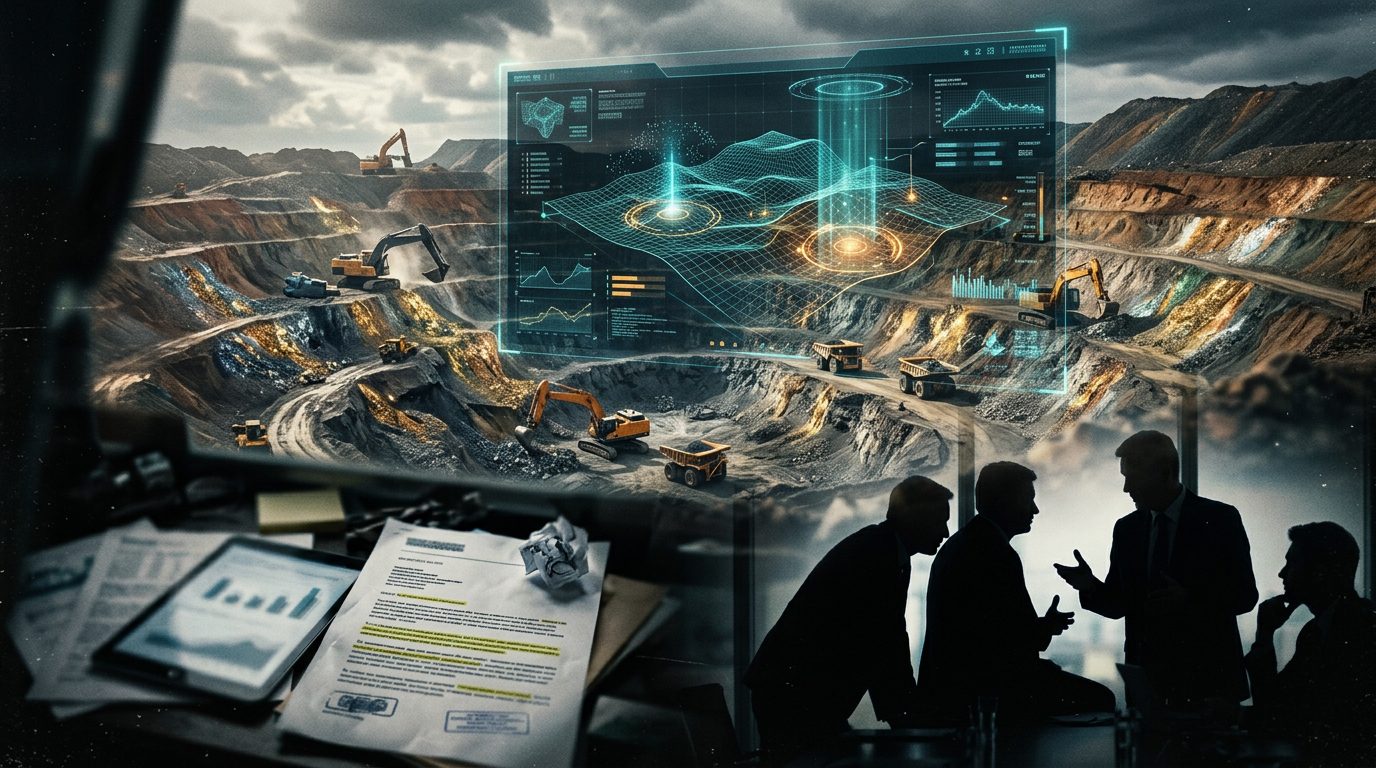
A Canadian mining company’s announcement about a political adviser took an unexpected turn when the person named in the release said the appointment was fake.
The company, now known as NRED Intelligent Mining, had announced that Katie Zacharia would join its advisory board alongside former US Homeland Security secretary Kristi Noem. But when WIRED asked Zacharia about the position, she said she had never joined. People connected to the company also acknowledged that discussions had taken place but the role had not been finalised.
The story is unusual on its own. It becomes stranger when set against the company’s business transformation: NRED began as a small copper-and-gold exploration firm and has since promoted an AI-assisted mining platform called MetalCore, alongside an ambitious vision involving robotics.
The central issue is not whether AI can contribute to mineral exploration. It is whether a company’s public claims about advisers, technology, and strategy accurately reflect what has been confirmed.
What Happened With Katie Zacharia?

On June 24, 2026, the company—then operating as NovaRed Mining—issued a press release announcing that Zacharia would join its advisory board. The release described her role as providing strategic guidance as the company advanced its exploration projects and emerging AI initiatives.
Zacharia had previously worked as a spokesperson at the US Department of Homeland Security. Her proposed appointment was announced shortly after Noem’s own advisory role at the company had been publicised.
When WIRED asked Zacharia in October whether she was still on the board, she replied, “That was fake,” according to the publication’s reporting. She directed the journalists to Sam Amsterdam, a strategic marketing and media-engagement professional who said the announcement had not been approved by Zacharia and was issued without her consent.
Amsterdam also acknowledged that conversations about a possible role had taken place. That distinction is important: discussions apparently occurred, but the people WIRED spoke with said the appointment was never completed.
Valentin Saitarli, then NRED’s chief technology officer and described as onboarding as CEO, confirmed that a role had been discussed but “never materialized.” He compared it to signing up for a gym and never attending.
The company’s public announcement therefore appears to have presented a proposed relationship as an established appointment. WIRED also reported that Zacharia’s name remained on the company’s website for a period, including in an archived version that listed her as management.
Why the Company’s AI Mining Pivot Matters

NRED’s corporate evolution is a major part of the story. Before adopting its current name, NovaRed Mining was a Vancouver-based junior company focused on copper and gold exploration. WIRED described it as a small exploration business, not an established AI technology provider.
The company later announced a shift away from its flagship Wilmac Copper-Gold Project and toward developing and commercialising MetalCore, which it calls an AI-assisted mineral exploration platform.
AI can have legitimate uses in mineral exploration. Geological datasets are complex, and machine-learning systems may help researchers interpret survey data, identify patterns, prioritise targets, or integrate information from different sources. Robotics could also support surveying and work in difficult environments.
But describing a platform as AI-assisted does not, by itself, demonstrate its technical maturity or commercial value. To evaluate such a system, investors and potential customers would need details about its data, methodology, performance, field validation, development status, and actual use in exploration projects.
The NRED story is therefore not simply about a mining company adopting AI. It is also about how a business communicates a major strategic pivot—and whether its public presentation matches the underlying evidence.
MetalCore and the Company’s Robotics Ambition
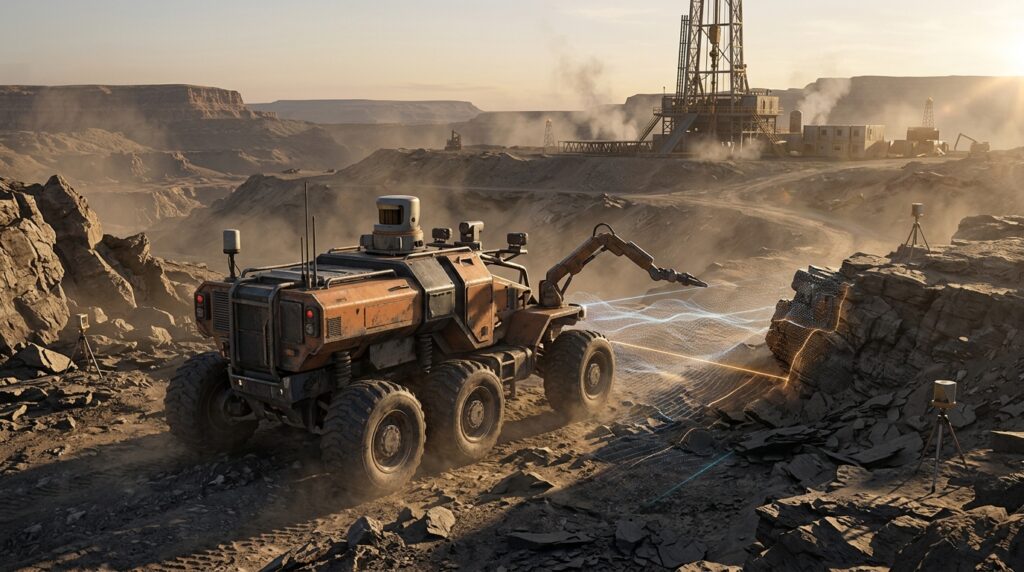
In its comments to WIRED, Saitarli described a vision that goes beyond conventional mining. He spoke about building a new generation of robotics and mining technology, including ambitions that extended to space.
The language is expansive, but the practical details matter more than the rhetoric. A credible mining technology platform needs to show what it can do today, which technical problems it solves, and how its results compare with existing methods.
For MetalCore, relevant questions would include whether it has been tested on real geological data, whether it has produced validated exploration targets, and whether mining operators are using it. The available reporting does not establish that the platform has already delivered those outcomes.
The company’s robotics ambitions may point toward a long-term development direction. They should not be confused with proof that autonomous mining systems or space-related applications are currently operational.
Why NRED’s Advisory Board Raised Questions

WIRED reported that NovaRed began adding advisers with political, defence, media, and international connections rather than concentrating its public appointments on geologists and technical mining specialists.
Noem’s appointment had already attracted criticism in Canada, in part because of her previous remarks referring to Canada as the “51st state.” The company’s advisory-board choices also drew attention from Phil Ehr, a retired US Navy commander and political candidate who had joined the company.
Ehr told WIRED that he knew little about mining and commodities. He said he was surprised by the announcement of Noem and Zacharia’s roles and questioned why the company was bringing in prominent political figures when he expected to see more geologists or technical consultants.
Ehr later resigned from the advisory board, according to the report, after objecting to Noem’s involvement.
An advisory board can legitimately include people who contribute political, commercial, communications, or strategic experience rather than technical expertise. The issue is whether the company clearly explains what each adviser contributes and whether its claims about those relationships are accurate.
For a business pitching sophisticated mineral exploration technology, independent technical credentials and transparent evidence of progress are especially relevant.
The Disclosure Problem: A Role Announced Before It Was Confirmed

The most concrete concern in the Zacharia episode is the gap between the company’s announcement and the accounts provided later.
The press release presented Zacharia’s advisory appointment as a completed development. Yet Zacharia said she had not joined, Amsterdam said the release was not authorised by her, and Saitarli said the role never materialised.
WIRED also reported that the announcement remained on NRED’s website after the appointment was understood to have been withdrawn. Saitarli told the publication that the site was being updated.
These details raise questions about how the company approved and maintained its public disclosures. A business announcement involving a named individual should be checked carefully, particularly when it implies an official affiliation or advisory relationship.
The reporting does not establish why the release was issued or who specifically authorised it. It does, however, document conflicting accounts and a failure to promptly align the public-facing information with the statements made to journalists.
That is a credibility issue for any company, regardless of whether its business involves mining, AI, or another sector.
What This Story Reveals About AI Branding in Traditional Industries
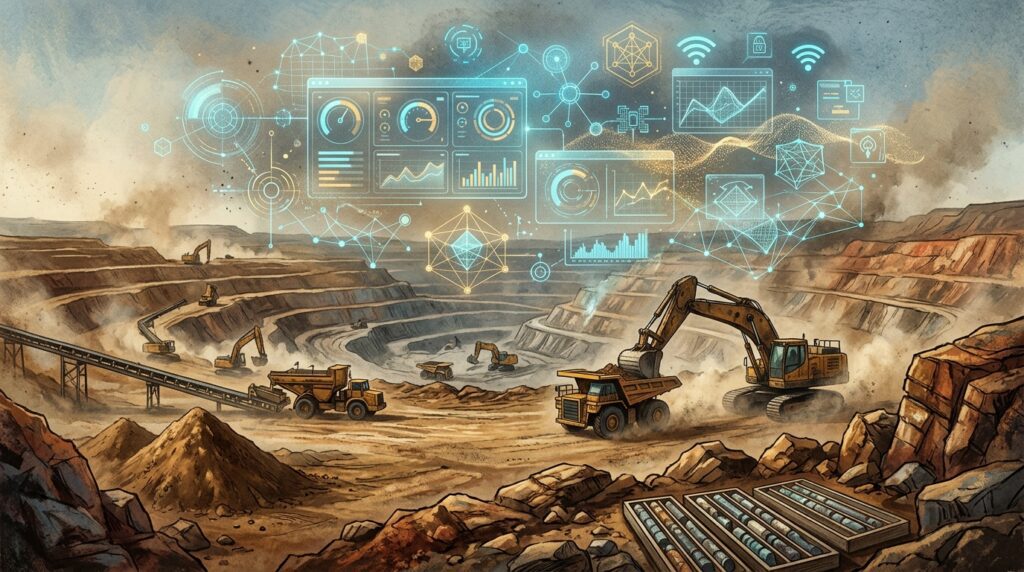
The NRED case arrives during a broader rush to apply AI to established industries. Mining is a plausible area for this technology: exploration companies work with geological data, remote sensing, equipment monitoring, and complex operational decisions.
The opportunity is real, but the label “AI” can cover a wide range of products and development stages. It might describe a validated analytical tool, an experimental prototype, a proposed platform, or simply a company’s future strategy.
Those categories are not interchangeable. A working product with independently measured performance is different from an ambition to build one. A company’s name, press releases, and high-profile advisers cannot substitute for technical validation.
The same principle applies to political associations. A prominent adviser may help a company attract attention, but that does not establish that its technology works, that its projects are economically viable, or that its management has the necessary operational expertise.
For readers evaluating AI-related businesses, the practical questions are straightforward: What has actually been built? What evidence supports its claims? Who has independently tested it? What expertise does the team possess? And are public announcements accurate?
What Is Known—and What Remains Unclear

Based on WIRED’s reporting, several points are established: NovaRed announced Zacharia as an adviser in June; Zacharia later said the announcement was fake; people associated with the company confirmed that discussions had taken place but the appointment was not completed; and the company was promoting a shift toward MetalCore, an AI-assisted mineral exploration platform.
Other matters remain unresolved in the available reporting. It does not conclusively identify who authorised the disputed announcement, explain why Zacharia’s name remained online for a period, or provide independent technical validation of MetalCore’s capabilities.
It would therefore be premature to conclude that the AI platform is fraudulent or that the company’s entire mining strategy lacks merit. The documented controversy concerns the disputed advisory role and questions surrounding the company’s public presentation.
The most responsible interpretation is narrower: the episode exposes a serious communications and credibility problem, while the company’s technical claims require their own evidence-based assessment.
Conclusion: A Strange Story About Politics, Mining, and AI Hype
The story of NRED and Katie Zacharia combines a disputed corporate appointment, politically connected advisers, and a mining company pivoting toward AI and robotics.
Zacharia says she never took the advisory role announced by the company. People associated with NRED told WIRED that discussions occurred but the appointment was not finalised. The company’s announcement and website listing created a public impression that differed from those accounts.
At the same time, NRED has been promoting MetalCore and a broader vision for AI-assisted mineral exploration. AI may genuinely help mining companies analyse geological information and improve operations, but the value of any particular platform depends on demonstrated technical performance.
The key lesson is not that AI mining is inherently implausible. It is that technology claims, corporate appointments, and strategic announcements should be verified independently—especially when they are used to attract attention to a business.
Frequently Asked Questions
Did Katie Zacharia actually join NRED’s advisory board?
According to WIRED’s reporting, Zacharia said the announcement was fake, and people associated with the company said the role never materialised. Discussions about a possible appointment had reportedly taken place.
What is NRED Intelligent Mining?
NRED Intelligent Mining is the rebranded company formerly known as NovaRed Mining, which WIRED described as a Vancouver-based copper-and-gold exploration company. It has shifted its public focus toward an AI-assisted mineral exploration platform called MetalCore.
What is MetalCore?
MetalCore is the name NRED uses for its AI-assisted mineral exploration platform. The available reporting describes the company’s pivot and ambitions, but does not independently establish the platform’s technical performance or commercial success.
Why was Kristi Noem connected to the company?
NRED announced Noem as a strategic adviser. Her appointment attracted criticism in Canada because of her previous comments referring to Canada as the “51st state.” Her involvement also formed part of the company’s broader pattern of recruiting politically connected figures.
Does the controversy prove NRED’s AI technology is fake?
No. The reporting documents a disputed advisory-board announcement and raises questions about corporate credibility. It does not independently prove that MetalCore is fraudulent or that AI-assisted mineral exploration cannot work. The platform’s claims should be evaluated on technical evidence.
Why does this story matter beyond one company?
It illustrates why readers and investors should distinguish between AI marketing, proposed technology, and demonstrated results. Public affiliations and promotional announcements are not substitutes for independent validation.
Explore AI and IT Solutions With Progressive Robot
AI can support meaningful advances across industries, but businesses need to evaluate new technologies against real operational requirements, evidence, security, and cost.
Progressive Robot provides IT solutions and services, including software development and AI-related services, to help organisations assess and implement technology suited to their needs.
Visit Progressive Robot to explore its services, or learn more about its AI-related services.
References
More AI coverage: explore Progressive Robot's AI Models, Tools & Releases hub — hands-on reviews, setup guides and benchmarks in one place.










