
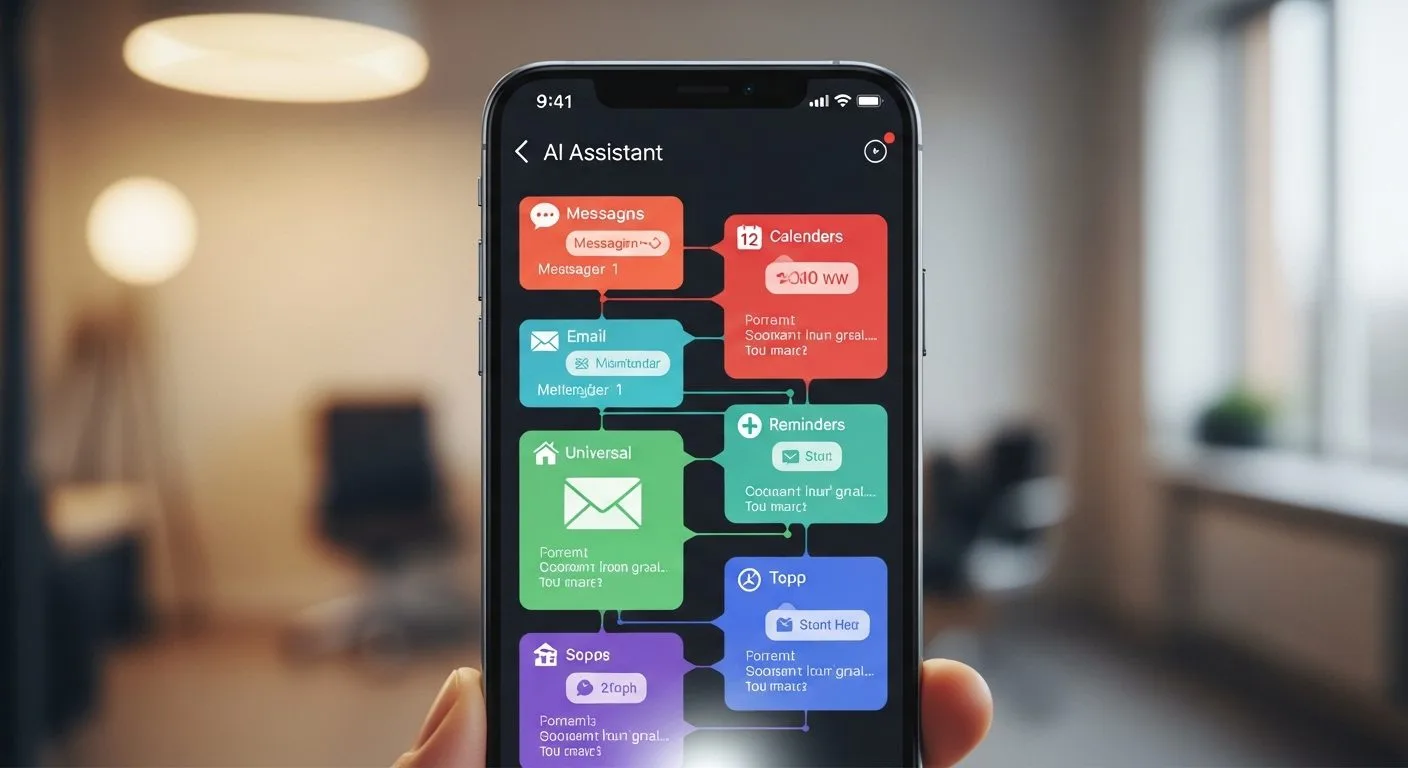
Poke AI agent is one of the clearest attempts yet to turn agentic software into something ordinary people can use without learning terminal commands, installing local runtimes, or stitching together a stack of tools.
If you want the short version, TechCrunch reports that Poke is a new AI agent startup offering a personal assistant you can reach through iMessage, SMS, Telegram, and, in some markets, WhatsApp. Instead of asking users to open another AI dashboard, the product tries to make everyday automation feel like texting someone who can actually do things for you.
That matters because most agent products still feel either too technical, too enterprise-heavy, or too risky for mainstream use. The Poke AI agent story is not mainly about a smarter chatbot. It is about reducing the distance between asking and acting.
This guide uses TechCrunch’s April 2026 report on Poke, the official Poke product site, Poke’s official recipes directory, Poke’s public explore page, and the official Interaction Company site as the main references. If you want broader context on where tools like this fit in the larger market, Progressive Robot’s page on autonomous AI agents is a useful companion read.
Poke AI agent in simple terms is this: a messaging-first assistant that combines AI models, integrations, and shareable automations so users can get work done through normal text conversations.
Poke AI agent at a glance

The product can be summarized in a few important points.
- Poke is designed to work through messaging channels people already use.
- TechCrunch says the current channels include iMessage, SMS, Telegram, and limited WhatsApp support in some markets.
- There is no standalone mobile app experience users need to learn first.
- Poke uses prebuilt and user-created “recipes” to package automations and integrations.
- The product connects to tools like Gmail, Google Calendar, Outlook, Notion, Linear, GitHub, Oura, Strava, Vercel, and more.
- Poke says users can get started for free, while heavier real-time usage can lead to personalised paid pricing.
- TechCrunch reports the startup added another $10 million on top of a prior $15 million seed round and reached a $300 million post-money valuation.
- The company behind the product is The Interaction Company of California, based in Palo Alto
Why Poke AI agent matters

Poke AI agent matters because it attacks one of the biggest problems in the agent market: usability.
Most AI agents are still presented as something you configure, wire together, supervise closely, and trust only if you are comfortable with permissions, APIs, or local system access. That works for developers and power users, but it is still a narrow audience. Poke is trying to flip that model by making the interface feel as familiar as texting a friend.
This story also matters because it shows the category moving away from the old chatbot framing. People do not always want another place to ask questions. They often want help remembering things, watching for events, checking external systems, editing content, or nudging a workflow forward without opening five different apps. That is where text-first agents become interesting.
If you are trying to understand why this shift matters beyond one startup, Progressive Robot’s page on autonomous AI agents helps frame the bigger idea: AI products are becoming less about isolated answers and more about continuous task execution.
7 critical facts behind the Poke AI agent

1. Poke AI agent is built around texting, not a new app interface
The first thing to understand is that Poke AI agent is not being sold as another destination app you have to remember to open.
According to TechCrunch, Poke is accessible through iMessage, SMS, Telegram, and in some markets WhatsApp. The official site also pushes a simple get-started flow centered on your phone number rather than on downloading a traditional app. That design choice is the whole pitch. The product wants the interaction model to feel native to behaviour people already have.
That is strategically important. A lot of AI products add friction before they add value. Poke is trying to remove friction first. If that works, it gives the product a better shot at becoming habit-forming instead of remaining a novelty people test once and forget.
2. Poke AI agent grew out of a narrower email assistant product
The next fact is that Poke AI agent was not originally conceived as a broad personal assistant for everything.
TechCrunch reports that co-founder Marvin von Hagen said the team had earlier built an AI assistant for email. What changed was user behaviour. Beta testers kept asking the product to do much more than email, including daily reminders, weather nudges, and lightweight personal-assistant tasks. In other words, the broader product emerged because users were already trying to treat the earlier assistant as a more general-purpose helper.
That matters because it suggests the product direction was shaped by observed demand, not only by startup storytelling. The company appears to be responding to how people naturally wanted to use conversational automation once they had a friendly messaging surface.
3. Poke AI agent turns integrations and automations into shareable recipes
The most important product layer here is the recipe system.
On the official site, Poke organizes a wide range of prebuilt recipes across productivity, health, finance, travel, home, school, email, and developer use cases. TechCrunch says these recipes can automate tasks across services people already know, including Gmail, Google Calendar, Outlook, Notion, Linear, Granola, GitHub, Vercel, Oura, Strava, Philips Hue, Sonos, and more. Users can also write their own automations in plain text and share them with friends.
That makes Poke AI agent more than a chat interface. The recipes are the operational packaging. They turn vague agent potential into reusable, discoverable tools people can install with a click, authorize, and run from the same text thread.
4. Poke AI agent is trying to stay model-flexible instead of being tied to one provider
Another important fact is that Poke AI agent is not positioned as a wrapper around one single model vendor.
TechCrunch reports that under the hood Poke uses whichever model best fits the task, whether that is from a major provider or from open source. Von Hagen explicitly contrasted that approach with products tied to one lab’s ecosystem. The report also notes that Poke uses Linq so it can live inside messaging apps rather than forcing users into a separate interface.
This gives the company two possible advantages. First, it can optimise task quality and cost at the model layer instead of inheriting one provider’s strengths and weaknesses. Second, it can keep the user experience focused on messaging and execution instead of on model branding. That is a very different position from products whose identity is mostly about which frontier model they sit on top of.
5. Poke AI agent has already attracted serious capital and a very aggressive valuation
The product is still early, but investors are clearly treating it like a high-upside category bet.
TechCrunch reports that the 10-person startup added another $10 million to its coffers on top of last year’s $15 million seed round and now carries a $300 million post-money valuation. The company is backed by Spark Capital, General Catalyst, and a long list of angels that reportedly includes Stripe founders John and Patrick Collison, OpenAI’s Joanne Jang, and leaders from companies like Cognition, Vercel, PayPal, Dropbox, Mercor, and Hugging Face.
That does not prove Poke AI agent will become mainstream, but it does show that major investors think messaging-native agent products could become much larger than niche productivity utilities. The valuation says the market sees a real consumer-platform possibility here.
6. Poke AI agent is selling trust and permissions discipline as much as convenience
One reason this startup is interesting is that the company appears to understand the trust problem that follows any tool promising to act on your behalf.
TechCrunch says Poke described its security model as multi-layered, including regular penetration testing, security checks, tooling safeguards, and permission limits for both agents and human employees. The report also says the team cannot see what is inside tokens by default unless the user explicitly opts in to share log or analytics information. TechCrunch did not independently audit those claims, which is worth remembering, but the product is clearly trying to make privacy and controlled access part of the core narrative.
That matters because Poke AI agent only works if users trust it with real integrations. A text-first assistant sounds convenient, but the real hurdle is not messaging. The real hurdle is convincing users that convenience will not quietly become overreach.
7. Poke AI agent still has to prove the long-term economics of text-first agents
The last critical fact is that the product has a strong ease-of-use pitch, but the economic model is still one of the biggest open questions.
TechCrunch reports that Poke is free to start and that pricing becomes more personalised based on how the assistant is used. According to the report, low-cost use cases that do not require real-time data may stay free, while more expensive automations like monitoring every incoming email or handling real-time flight check-ins push costs up. Von Hagen also told TechCrunch that profitability is not the current focus and that growth matters more right now.
That means Poke AI agent still has to show that users will build enough recurring behaviour around these text automations to justify both inference costs and long-term retention. The product vision is clear. The durable unit economics are less clear.
Poke AI agent in simple terms

Poke AI agent in plain English is a personal assistant you text instead of an agent system you configure.
You can use Poke AI agent to watch for emails, remind you about daily routines, interact with calendars, track health data, edit photos, connect to work tools, or install ready-made automations through recipes. The core bet is that most people will adopt agents faster if the experience feels conversational, lightweight, and familiar.
That is also why Poke AI agent is different from the most developer-centric agent products. It is not asking users to care about runtimes, terminals, or local orchestration. It is asking whether an agent becomes much easier to trust and use when it feels like sending a text.
FAQs
Poke AI agent raises a few obvious questions.
What is Poke AI agent?
Poke AI agent is a messaging-first AI assistant from The Interaction Company of California. According to TechCrunch and the official product site, it lets users access automations, integrations, reminders, and assistant-style actions through channels like iMessage, SMS, and Telegram.
Do you need to install an app to use Poke AI agent?
Not in the normal sense. The reported onboarding flow is centered on entering your phone number and using the assistant through messaging rather than through a separate mobile app interface.
Is Poke AI agent the same thing as OpenClaw?
No. TechCrunch framed the comparison as an “OpenClaw for the rest of us” idea, but Poke AI agent is much more consumer-friendly and messaging-driven. It is designed to hide technical complexity rather than expose it.
Is Poke AI agent free?
Poke AI agent is free to start, according to TechCrunch, but the company says heavier or more real-time usage can lead to personalised paid pricing depending on cost.
What can Poke AI agent connect to?
Based on TechCrunch and the official recipes directory, Poke AI agent can connect with a wide range of tools and services, including email, calendars, productivity apps, developer tools, health platforms, and smart home products.
Final thoughts
Poke AI agent is not important because it invented agents. It is important because it may have found a more natural consumer interface for them.
The product takes a category that often feels technical and intimidating and reframes it around habits people already have: texting, asking for help, receiving reminders, and installing simple prebuilt behaviours. That does not remove the hard problems around trust, permissions, and economics, but it does make the category easier to approach.
Poke AI agent is therefore worth watching not just as a startup, but as a signal. If text-first agents catch on, the next stage of AI adoption may come less from better chat windows and more from assistants that quietly live inside the communication channels people already use every day.
More AI coverage: explore Progressive Robot's AI Models, Tools & Releases hub — hands-on reviews, setup guides and benchmarks in one place.










