

Artificial intelligence has become remarkably capable at writing, coding, summarising documents, and answering questions. Yet understanding what is happening inside an image or video remains a difficult challenge, particularly when a task requires careful observation rather than a simple description.
Elorian, a Palo Alto-based AI startup, believes that part of the problem lies in how many multimodal models process visual information. Instead of repeatedly examining the original image while solving a problem, a system may encode the image and then reason primarily from that representation.
The company’s first model, Glimpse, takes a different approach. Announced on October 16, 2026, Glimpse is designed to return to visual evidence during its reasoning process. It can inspect selected image regions, extract relevant video frames, and use code to measure or compare what it sees. Elorian calls this capability a “visual scratch space.” https://techcrunch.com/2026/10/16/elorians-first-ai-model-wants-to-reason-with-images-not-just-about-them/
The distinction is important. Describing a picture requires identifying its visible contents, but solving a visual problem may require checking spatial relationships, counting objects, comparing measurements, or understanding how a scene changes over time.
The Glimpse AI model is intended to make that deeper inspection part of the reasoning process itself. Rather than relying entirely on an initial visual impression, it can revisit the source material when additional evidence is needed.
Elorian is launching Glimpse as a research preview with API access, while access to its chat interface is waitlist-only. The release is therefore an early step in the company’s effort to demonstrate a different approach to visual intelligence, rather than evidence that every visual reasoning challenge has already been solved.
1. What Is Elorian’s Glimpse AI Model?
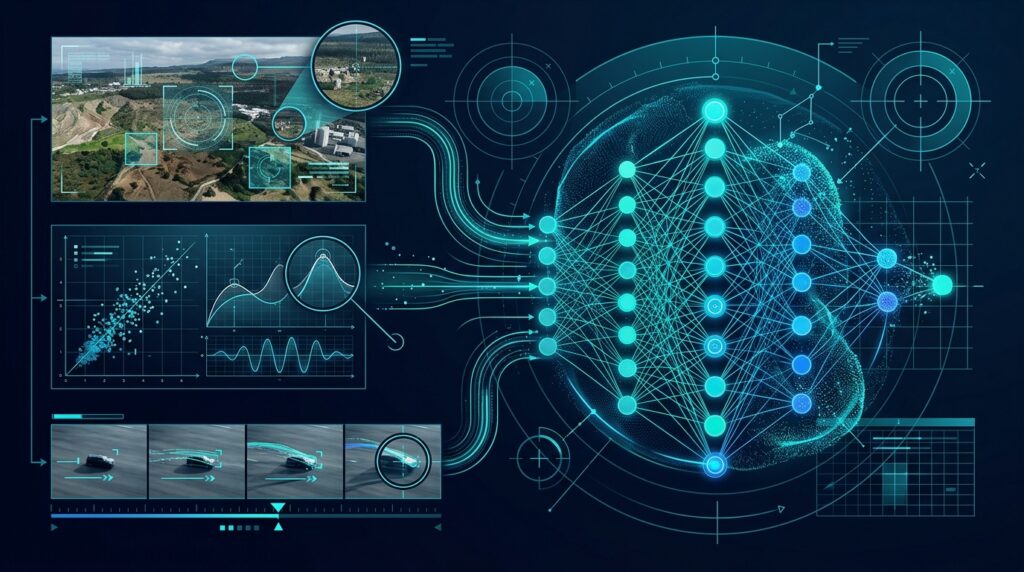
The Glimpse AI model is Elorian’s first publicly announced AI model and is focused on visual reasoning. The startup is positioning it for tasks in which a model must do more than recognise objects or describe the overall appearance of an image.
Consider a scientific chart. A basic visual description might identify a line graph and summarise its general trend. A more demanding task could require comparing two data points, estimating a value at a particular position, identifying an outlier, and explaining what the relationship means.
Those additional steps require precise inspection. A model must pay attention to axes, labels, plotted points, and relationships that might be easy to overlook when considering the image as a whole.
Glimpse is designed to revisit the source image and focus on relevant regions as it works through a question. It can also inspect video by selecting frames that provide useful evidence, rather than treating an entire clip as a single static picture.
The approach could be valuable in research, robotics, media production, and other areas where visual evidence carries important information. These are also the sectors Elorian has identified as initial targets for its technology.
The important point is that the Glimpse AI model is not simply being presented as another chatbot that accepts image uploads. Its central proposition is that a model should be able to inspect visual information repeatedly while reasoning about what it means.
2. What Does “Reasoning With Images” Actually Mean?

The phrase “reasoning with images” describes an approach in which visual information remains an active source of evidence throughout problem-solving.
Many multimodal systems convert an image into an internal representation that the model can process. This is necessary because neural networks cannot interpret visual information in precisely the same way humans experience looking at a photograph. The challenge is how effectively a model can use that representation when a question requires detailed analysis.
Imagine asking an AI system whether a small object will fit inside a container shown in a photograph. Recognising the object and container is only the first step. The system may also need to compare their dimensions, account for their orientation, and assess whether the available space is sufficient.
Similarly, analysing a video may require distinguishing between what happens at the beginning and end of a sequence, tracking an object’s movement, or identifying the moment when a particular action occurs.
The Glimpse AI model is designed to revisit visual inputs during these tasks. It can focus on a relevant region, examine selected frames, or perform calculations to test an interpretation. This gives it additional opportunities to verify what it has observed before producing an answer.
The idea does not mean that the model literally sees or understands the world exactly as a person does. Its performance still depends on its training, visual representations, tools, and ability to interpret evidence correctly.
However, the approach addresses a genuine engineering question: can AI systems become more reliable at visual problem-solving if they can repeatedly inspect the evidence rather than relying on a single initial pass?
3. How Glimpse Uses Its “Visual Scratch Space”
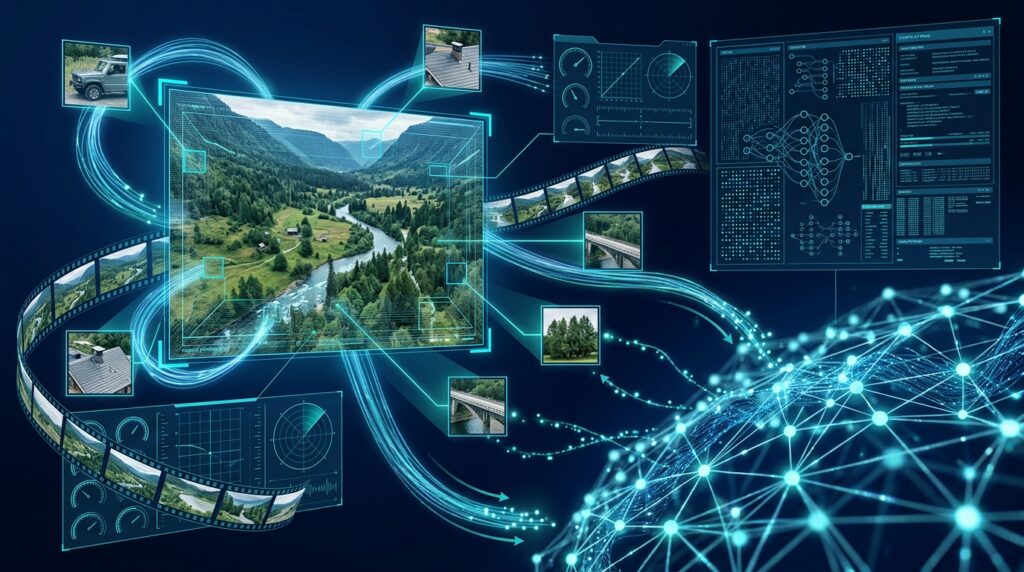
Elorian describes Glimpse’s approach as a “visual scratch space.” The concept is similar to a person zooming into a photograph, checking a detail, and then returning to the wider scene to confirm an interpretation.
Instead of treating its initial view as the only source of information, the model can revisit the image as its reasoning develops. That matters when the answer depends on a small feature that may be difficult to interpret at the original scale.
The system can also select specific frames from a video. For example, an analyst reviewing a manufacturing clip may need to determine whether a component was correctly positioned before a machine began operating. Examining relevant moments in sequence can provide more useful evidence than producing a general summary of the entire clip.
Another capability is running code to measure or compare visual information. Where appropriate, calculations can help the model evaluate a relationship rather than relying entirely on a qualitative impression.
These capabilities work together as part of a reasoning process. The model receives a question, examines the visual input, identifies details that need closer inspection, and uses additional evidence to refine its answer.
The Glimpse AI model is built around this repeated inspection approach, although the availability of a tool does not automatically guarantee a correct result. Measurements can be affected by image quality, perspective, scale, and the assumptions used in a calculation. The model must still interpret the evidence appropriately.
The broader significance is the design philosophy: visual inspection becomes an iterative process, with additional observations helping to inform the final answer.
4. Why Existing AI Models Still Struggle With Visual Reasoning

AI models can identify many objects and produce convincing descriptions of photographs. However, visual reasoning often requires a different level of precision.
A model may recognise that a picture contains a chart but misread the relationship between two values. It may identify a board game yet fail to interpret unfamiliar symbols or determine which player is winning. In video, it may describe the people and objects correctly but miss the order in which events occur.
Elorian CEO Andrew Dai described an experience involving a board game photograph that motivated his thinking about this problem. According to his account to TechCrunch, a leading model could not determine who was winning from the board state. Dai argued that humans can often interpret diagrams and visual symbols without requiring extensive written explanation.
These examples point to several difficulties. First, a model may overlook small details that are essential to a task. Second, visual relationships can require combining evidence from different parts of an image. Third, video introduces time: the meaning of one frame may depend on what happened before or after it.
The Glimpse AI model attempts to address some of these challenges by allowing the system to inspect the original evidence repeatedly. A closer crop may reveal a symbol, a selected frame may clarify an event, and a measurement may help test a hypothesis.
Nevertheless, repeated inspection is not a complete solution to visual understanding. A model can still misunderstand symbols, make incorrect assumptions, or produce a confident answer unsupported by the evidence. Its capabilities must therefore be evaluated on the specific tasks it is expected to perform.
5. Glimpse Benchmarks, Performance Claims, and What We Know
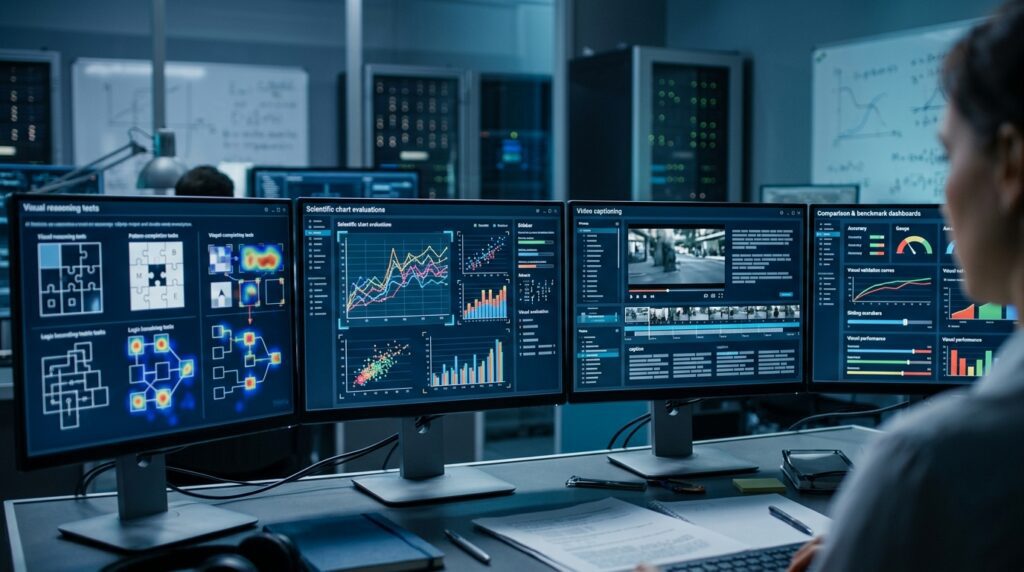
Elorian says Glimpse performs strongly on selected visual reasoning evaluations. According to the company’s results reported by TechCrunch, the model outperformed GPT-6 Astra on scientific chart reasoning and short-form video captioning, while delivering competitive performance on other visual reasoning tasks. https://techcrunch.com/2026/10/16/elorians-first-ai-model-wants-to-reason-with-images-not-just-about-them/
These claims are notable because chart analysis and video captioning test different abilities. Chart reasoning can require identifying values, comparing trends, and connecting visual data to a question. Short-form video captioning requires interpreting a sequence of frames and describing the actions or changes that occur.
However, benchmark results need context. Performance comparisons depend on the datasets used, evaluation procedures, model versions, prompts, and scoring methods. Results reported by a company should not automatically be treated as independently confirmed evidence that its model is better across all visual tasks.
The public announcement does not establish that Glimpse leads every visual reasoning benchmark, nor does it demonstrate that the model will perform equally well in every real-world setting. A model may be excellent at a particular evaluation and still struggle with unfamiliar images, unusual lighting, poor-quality video, or tasks outside its training distribution.
For potential customers, the most useful questions are practical. Can the model extract reliable information from the images and videos they use every day? Does it reduce manual review time? Can its results be checked? Does it perform consistently when the input quality changes?
The Glimpse AI model should therefore be assessed not only on headline benchmark claims but also on reproducible evaluations and performance in the intended application.
6. Glimpse Pricing, Availability, and Model Efficiency

Elorian has positioned Glimpse as a relatively efficient alternative to larger frontier models. The company says a small team trained the model using a few hundred GPUs and that it is substantially smaller than the frontier systems used in its comparisons.
Training efficiency matters because developing a modern AI model can require significant computing resources, engineering expertise, and financial investment. If a smaller team can produce a model that performs well on specific tasks, it could create new opportunities for specialised AI systems.
According to the launch reporting, Glimpse is priced at $0.60 per million input tokens and $3 per million output tokens. These are token-based rates, so the actual cost of a task depends on how much input and output the application generates. Image and video workflows can also involve different amounts of processing, depending on how the API accounts for those inputs.
Glimpse is available as a research preview through an API, while its chat interface remains waitlist-only. This means developers and organisations can investigate API-based integration, but access to a ready-to-use chat experience is more limited.
The Glimpse AI model may appeal to organisations that need to analyse visual information at scale without relying exclusively on the most expensive general-purpose systems. However, the best choice will depend on actual task accuracy, latency, integration effort, and total cost—not token prices alone.
Organisations evaluating the model should run representative tests using their own images and video, compare the results against existing workflows, and measure whether the model delivers enough practical value to justify deployment.
7. How Glimpse Could Help Robotics, Science, and Media
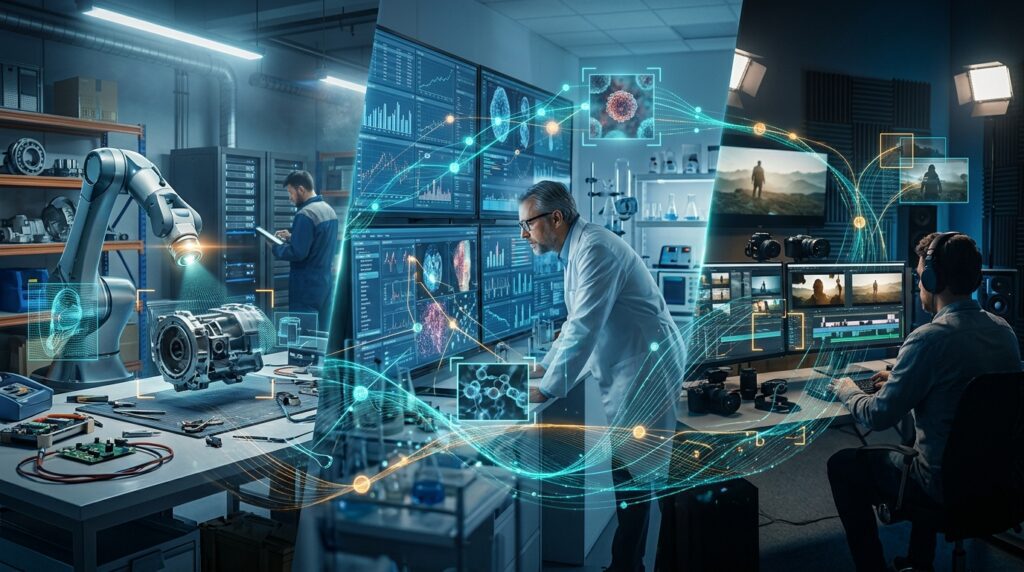
Elorian’s initial target markets include robotics companies, scientific laboratories, media organisations, and creative businesses. These sectors often handle large volumes of visual information that can be difficult or time-consuming to review manually.
Robotics and Industrial Inspection
Robots need to interpret their surroundings to navigate spaces, identify objects, and interact with equipment. A system that can examine a scene more carefully could help a robot distinguish relevant details, evaluate spatial relationships, or identify changes in an environment.
For example, a robot inspecting components on a production line may need to determine whether a part is correctly positioned. Visual reasoning could help analyse the component’s appearance and compare it with expected conditions. Real-world deployment would still require reliable perception, safety testing, and appropriate control systems.
Scientific Research
Scientific teams frequently work with charts, microscopy images, experimental recordings, and video observations. AI could assist researchers by extracting information from visual evidence, comparing observations, or identifying patterns that warrant closer investigation.
The Glimpse AI model could be relevant where a research question depends on small details or comparisons across several visual inputs. Its outputs would still need to be checked against the underlying evidence, particularly when conclusions affect scientific or operational decisions.
Media and Creative Work
Media companies produce and manage extensive video libraries. Searching those libraries for a specific action, event, object, or scene can consume considerable time.
A model that selects relevant frames and interprets sequences could help with content indexing, footage search, clip summaries, and editing workflows. For example, a production team could use visual analysis to identify scenes containing a particular action before a human editor reviews the results.
These applications are potential uses, not guarantees of current performance in every environment. The commercial value will depend on whether Glimpse can deliver accurate, repeatable results on the specific material each organisation handles.
8. From Visual Understanding to AI That Can Take Action
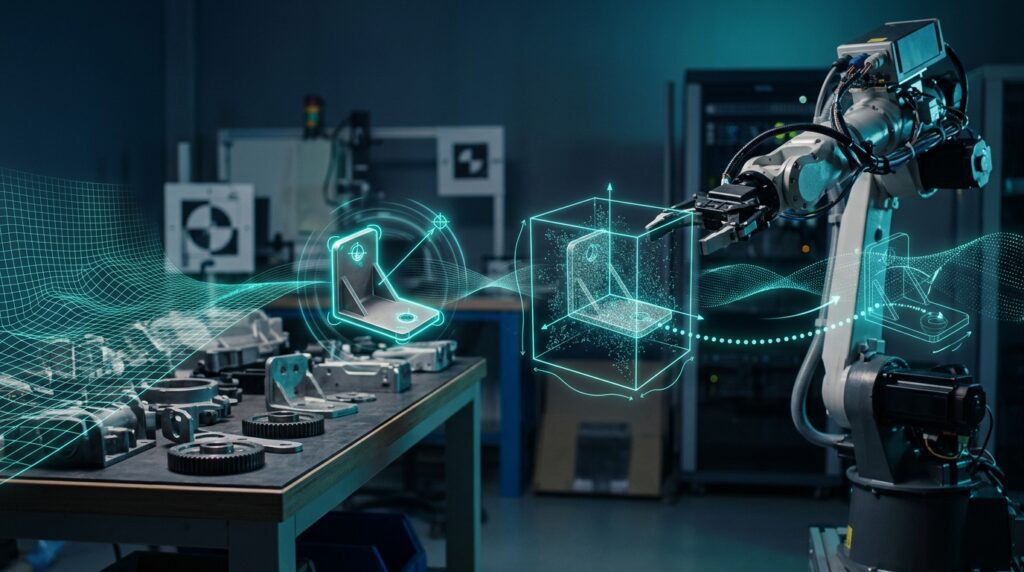
Elorian’s longer-term ambition extends beyond describing and analysing images. The company wants to develop AI systems that can build a useful representation of a scene and use that information to decide what to do next.
This direction connects visual reasoning with embodied AI: systems that interact with the physical world through robots or other machines. A robot must do more than recognise an object. It needs to understand where the object is, how it relates to surrounding items, what actions may be possible, and whether a planned movement is safe.
For example, identifying a cup on a table is a perception task. Determining whether a robotic arm can reach it without hitting nearby objects requires spatial reasoning. Picking it up successfully requires a control system capable of translating the plan into movement and responding to changes in the environment.
The Glimpse AI model represents an early step toward the visual reasoning part of this broader goal. Its ability to revisit image evidence could help a system examine details before selecting an action. However, analysing a scene and reliably controlling a robot are separate technical challenges.
Robotic systems must account for uncertainty, physical constraints, sensor limitations, and the consequences of incorrect actions. A visual model would need to operate alongside suitable planning, control, monitoring, and safety mechanisms.
Elorian CEO Andrew Dai has said the company aims to build a leading visual reasoning model in 2027. Whether that ambition is achieved will depend on future model development and evaluation, but the direction reflects a wider industry interest in AI that can move from visual perception toward practical interaction with the world.
9. How Glimpse Compares With Other Multimodal AI Approaches
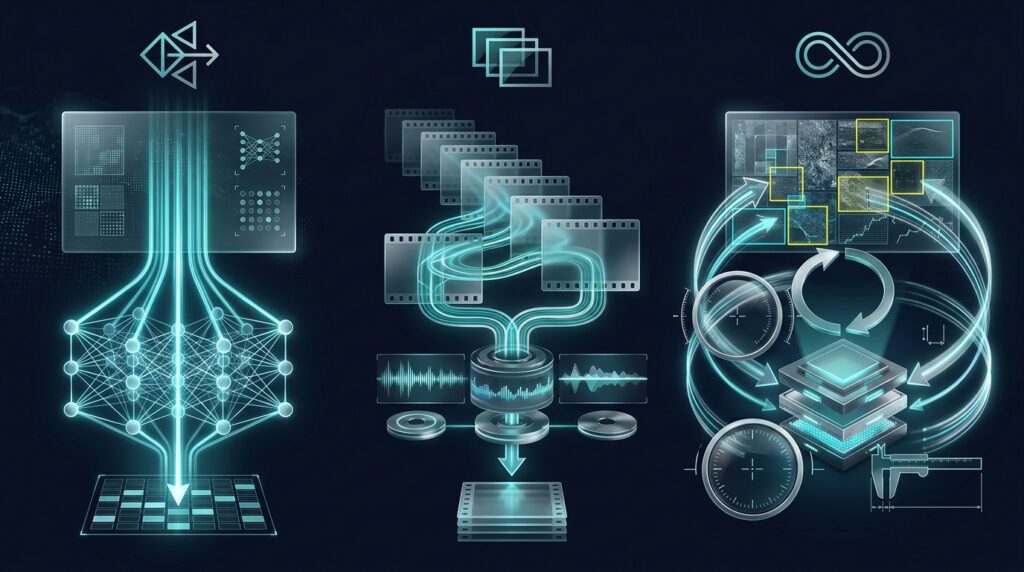
Elorian’s approach is distinctive in how it positions repeated visual inspection as a central part of its model design. However, the underlying idea of returning to an image or examining a crop more closely is not entirely new.
TechCrunch notes that OpenAI added crop-and-zoom capabilities during reasoning to its o-series models in 2025. This means Glimpse should not be described as the first AI system ever to inspect image regions repeatedly.
Elorian’s argument is that it has built its model around this style of visual reasoning while keeping training requirements relatively modest. The company’s emphasis is on making the capability central to the system rather than treating it as an isolated feature.
The distinction matters because AI progress does not always come from inventing an entirely new capability. Improvements can also result from integrating existing techniques more effectively, reducing their cost, or making them work reliably across a wider range of tasks.
For businesses, a fair comparison should consider more than one benchmark. Relevant factors include the accuracy of visual interpretation, the ability to handle long or complex video, latency, API costs, ease of integration, and performance on domain-specific material.
The Glimpse AI model may prove valuable if its iterative approach provides measurable improvements for particular workloads. Yet the best model for a business will depend on the application, the quality of the evidence, and the cost of achieving reliable results.
Conclusion: Glimpse Wants AI to Look Again Before It Answers
Elorian’s first model, Glimpse, reflects a growing effort to make AI more capable at understanding complex visual information. Rather than relying only on an initial interpretation, it is designed to return to images, inspect selected regions, retrieve relevant video frames, and use tools to measure or compare what it observes.
That approach could be useful for scientific analysis, robotics, video production, and other tasks where the answer depends on precise visual evidence. Elorian has reported promising results on selected evaluations and is offering API access through a research preview.
Still, the model’s claims should be considered in context. Company-reported benchmark results do not establish universal superiority, and visual reasoning remains a difficult research problem. Independent evaluations and real-world tests will be important for determining where Glimpse provides the greatest benefit.
The larger idea is straightforward: a capable AI system should not merely describe what appears in a picture. It should be able to inspect the relevant evidence, check details, and refine its interpretation when a task demands it.
If Elorian can make that process reliable and economical, the Glimpse AI model could become a useful option for organisations that depend on image and video analysis. Its longer-term ambition—connecting visual understanding with decisions and actions—will be an even greater test of the technology.
Frequently Asked Questions About the Glimpse AI Model
What is the Glimpse AI model?
The Glimpse AI model is Elorian’s first AI model, designed for visual reasoning. It can revisit image regions, select video frames, and use code to measure or compare visual information during analysis.
Who developed Glimpse?
Glimpse was developed by Elorian, a Palo Alto-based AI startup led by CEO Andrew Dai, a former Google DeepMind researcher.
What makes Glimpse different from a standard vision-language model?
Elorian emphasises repeated inspection of visual evidence during reasoning. Glimpse can return to an image, examine selected regions, retrieve video frames, and use tools rather than relying exclusively on an initial interpretation.
Is Glimpse available to the public?
Glimpse launched as a research preview with API access. Its chat interface is waitlist-only, according to the October 2026 launch reporting.
How much does Glimpse cost?
The reported pricing is $0.60 per million input tokens and $3 per million output tokens. Actual usage costs depend on the volume and type of information processed and generated.
Does Glimpse outperform other leading AI models?
Elorian says Glimpse outperformed GPT-6 Astra on scientific chart reasoning and short-form video captioning in its evaluations. Those claims should be interpreted in the context of the reported tests; they do not establish that Glimpse is better across all tasks or that every result has been independently verified.
Can Glimpse control robots?
Elorian’s longer-term plans include connecting visual reasoning with action, including robotic control. The current launch does not establish that Glimpse can safely or reliably control robots in every real-world setting.
Why is visual reasoning important for businesses?
Many industries rely on images and video containing detailed information. More capable visual reasoning could help organisations analyse scientific data, review footage, inspect products, and understand complex scenes, provided that model outputs are sufficiently accurate for the task.
Explore AI Solutions With Progressive Robot
Visual AI is creating new opportunities for organisations that need to analyse images, automate workflows, and develop intelligent software. Turning these capabilities into useful products requires the right combination of AI integration, software engineering, data workflows, and security.
Progressive Robot provides IT solutions and services, including software development, cybersecurity, and AI-related services. Visit Progressive Robot to explore its technology services, or learn more about AI and automation services.
References
TechCrunch: Elorian’s first AI model wants to reason with images, not just about them — October 16, 2026. Launch details, the visual scratch space, pricing, reported evaluation results, funding, and intended markets.
Elorian: Introducing Humanity’s Sixth Sense (HSS) — Company research on implicit visual reasoning and how humans understand visual scenes.
Elorian: Official website — Company information and updates.
More AI coverage: explore Progressive Robot's AI Models, Tools & Releases hub — hands-on reviews, setup guides and benchmarks in one place.










