Gemini 3.1 Flash-Lite Browser: 9 Critical Rules for Low-Cost Web-Aware AI
Gemini 3.1 Flash-Lite Browser is a practical architecture pattern for low-cost web-aware AI using URL Context, Search grounding, function calling, and safe routing.

Gemini 3.1 Flash-Lite Browser is a practical architecture pattern for low-cost web-aware AI using URL Context, Search grounding, function calling, and safe routing.

GPT-5.5 Costs can rise even when token use falls. Learn why higher rates, reasoning tokens, long context, tools, and routing decisions change the AI bill.

GPT-Realtime-2 Voice Agents bring GPT-5-class reasoning to real-time voice, changing what spoken AI can orchestrate across tools and workflows.

Strategy Gap guide for UK boards moving from AI hesitation to implementation with governance, assurance, workflow redesign, value metrics, and practical AI oversight.

A Responsible AI ethical framework helps businesses turn AI ethics into practical controls for risk, compliance, trust, security, oversight, and measurable outcomes.

Predictive intelligence helps organizations move beyond static dashboards by combining live data, forecasts, anomaly detection, alerts, workflows, governance, and measurable business outcomes.

AI integration protects global market share by helping companies sense demand shifts, localize experiences, speed decisions, reduce costs, support customers, manage risk, and measure competitive results.

The AI ROI gap appears when pilots look promising but fail to change costs, revenue, working capital, or enterprise performance. Here is how leaders can move from experiments to measurable impact.
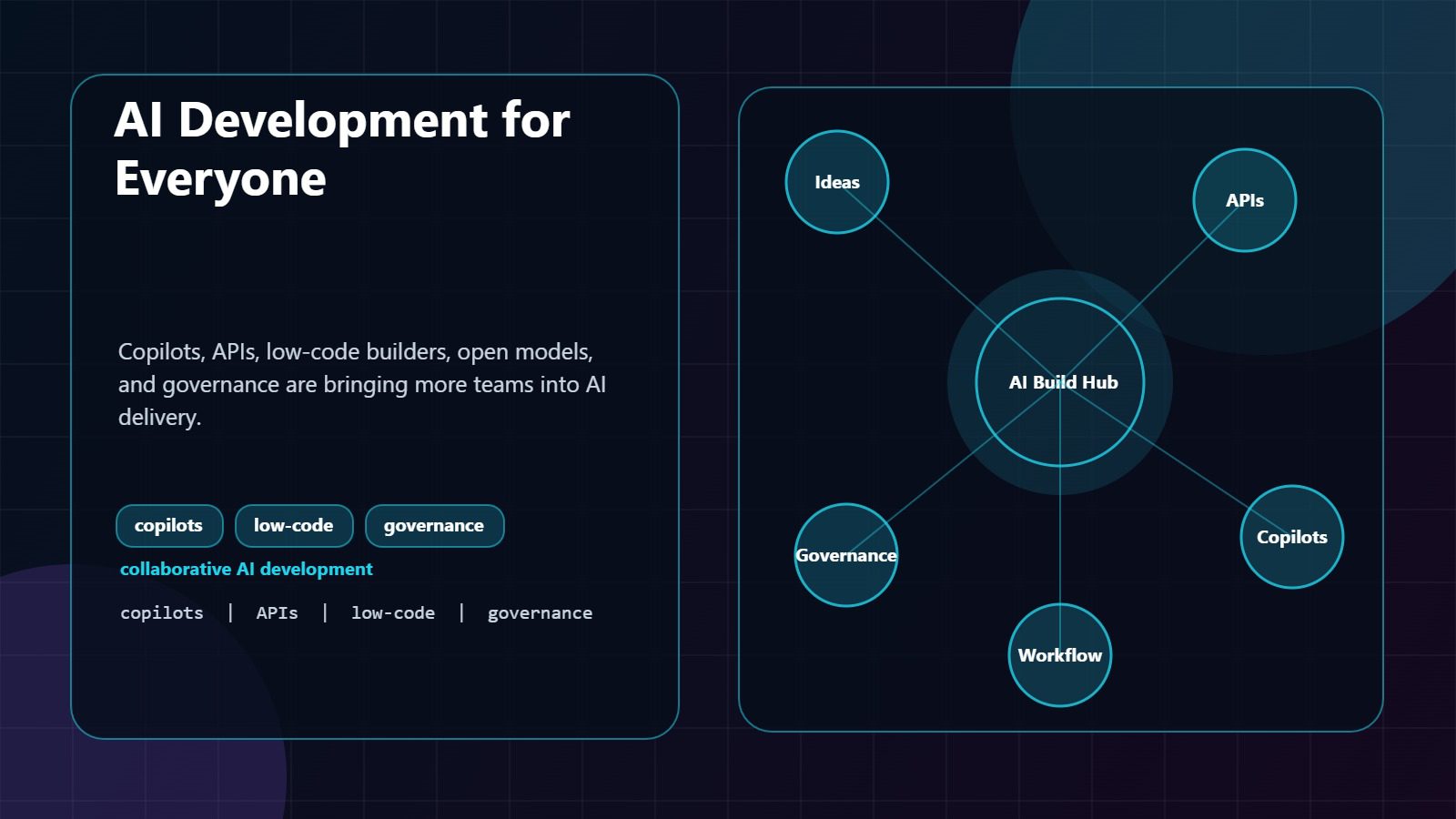
Democratization of AI development is accelerating as copilots, low-code tools, APIs, open models, and governance patterns let more teams build useful AI systems.

Embedded AI is becoming invisible infrastructure as intelligence moves into devices, sensors, workflows, and edge systems that make real-time decisions.