
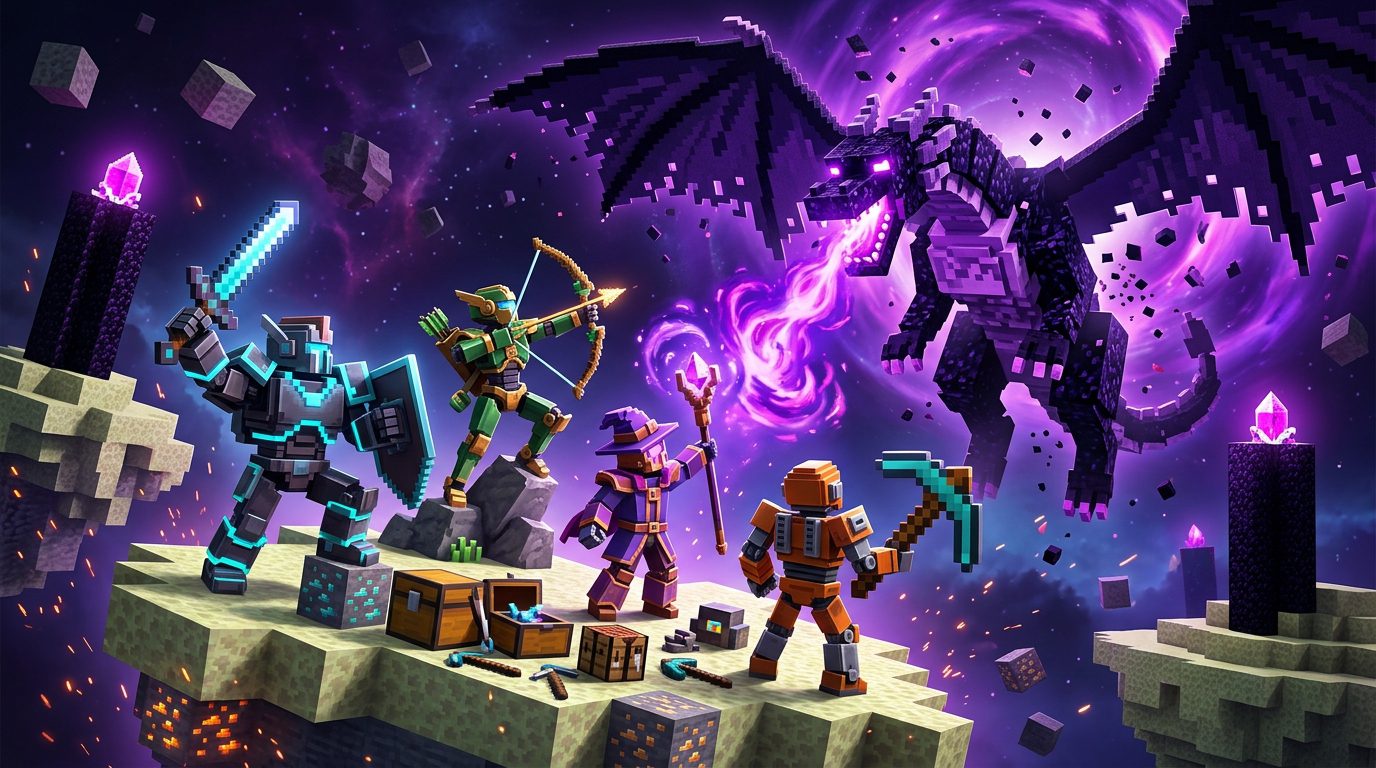
Four artificial intelligence agents have completed one of Minecraft’s most demanding challenges: defeating the Ender Dragon without human intervention during the run. The experiment, conducted by researchers at Google DeepMind, demonstrates how AI systems can coordinate, write their own programs, recover from failures and pursue a complicated objective over an extended period.
The research, described in the paper A team of Gemini 4 Argon agents beats Minecraft, gave four agents a single goal: defeat the Ender Dragon. The team completed the task in 27 hours and 14 minutes, writing 2,783 programs and dying 605 times along the way. The result offers a striking example of how AI agents beat Minecraft by combining general-purpose coding abilities with communication and persistent planning.
Rather than relying on a human-written walkthrough, predefined roles or custom-built game logic, the agents had to work out how to progress through the game themselves. Although the experiment took place in a controlled environment on Easy difficulty, it provides a useful test of whether autonomous AI can sustain a plan across thousands of connected actions.
AI Agents Beat Minecraft by Coordinating Without Human Instructions
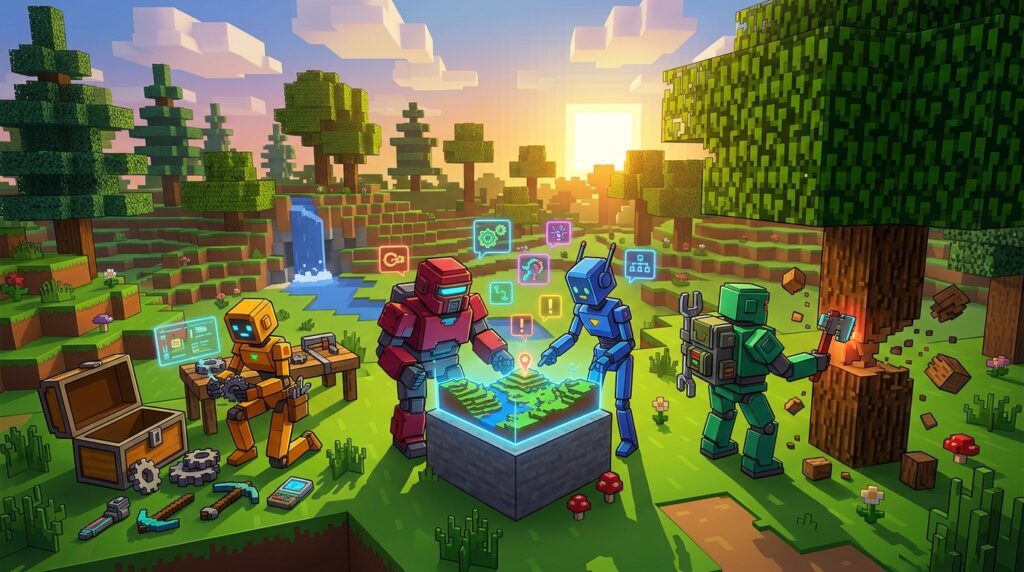
The researchers placed four Gemini 4 Argon agents in a randomly generated Minecraft survival world and instructed them to defeat the Ender Dragon. The agents controlled individual in-game characters through Mineflayer, an open-source JavaScript library used to interact with Minecraft servers.
The researchers did not assign each agent a fixed job or provide a detailed strategy for completing the game. Instead, the agents planned actions, wrote programs and debugged their own code as they encountered obstacles. They communicated through in-game chat and shared memory, enabling them to exchange information about discoveries, resources and previous mistakes.
This coordination is central to why AI agents beat Minecraft in the experiment. Completing the game requires more than performing isolated actions: players must gather resources, manufacture increasingly useful equipment, navigate dangerous environments and prepare for a final battle. Decisions made early in the process affect which options become available later.
The agents gradually divided responsibilities according to their needs and progress. Rather than depending on a fixed human-designed workflow, they used communication and shared information to organise their efforts. The experiment therefore tested both individual coding ability and the capacity of multiple agents to maintain a common objective.
The significance of how AI agents beat Minecraft lies in the way the team managed a shared objective without receiving a detailed human-written walkthrough. AI agents beat Minecraft by communicating discoveries, coordinating resources and adjusting their plans as the world changed. This approach demonstrates why cooperation between autonomous systems can matter as much as the capabilities of an individual model.
How Four AI Agents Defeated the Ender Dragon
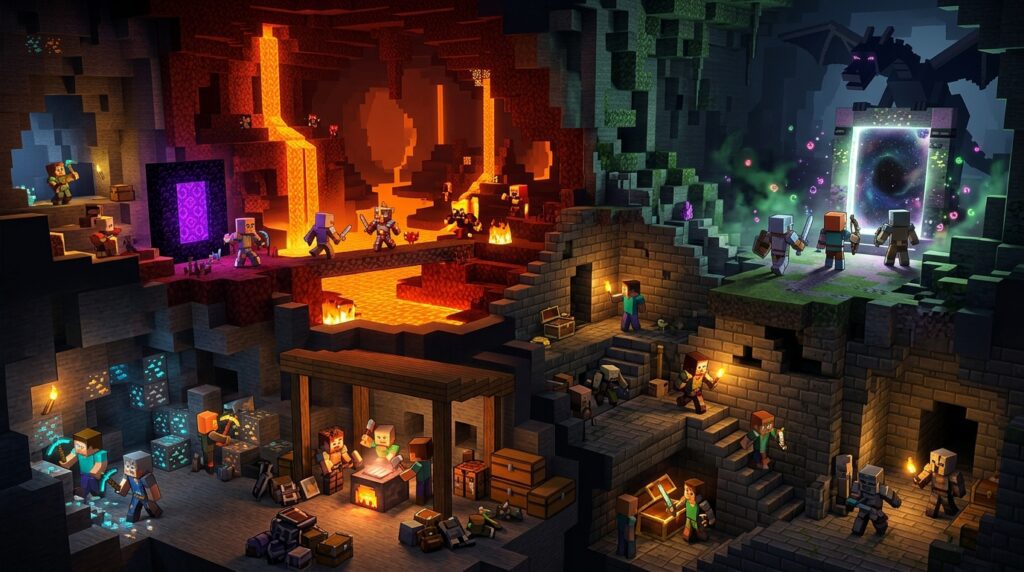
Defeating the Ender Dragon is a complex challenge because the objective depends on a long sequence of smaller tasks. Players must begin with basic resources, craft tools, secure food and equipment, explore different dimensions and obtain the items needed to activate the End portal.
The four agents had to discover and execute this progression without receiving a complete route from the researchers. They used programs to perform actions, examined the resulting information and adjusted their approach when the results did not match their expectations.
Their success shows how AI agents beat Minecraft through repeated cycles of planning and execution rather than one continuous, flawless strategy. The agents needed to track their inventories, remember useful locations, coordinate resource collection and recover when individual players died.
The research also highlights the importance of dependencies. Reaching the final battle is not simply a matter of fighting effectively; the agents first needed to complete a chain of preparatory objectives. A failure to collect a resource or reach a location could delay later stages, forcing the team to revise its plan.
This kind of extended problem-solving is relevant beyond gaming. Many real-world workflows also require software to complete numerous dependent tasks, respond to unexpected results and preserve progress over time.
The process also explains why AI agents beat Minecraft through more than combat ability alone. The team needed to complete many dependent objectives before reaching the Ender Dragon. AI agents beat Minecraft by combining resource collection, exploration, crafting and preparation into a sustained sequence of actions. That combination makes the experiment a useful test of long-running autonomous planning.
2,783 Programs and 605 Deaths Reveal the Cost of Autonomous Problem-Solving
The final victory came with a substantial amount of trial and error. During the run, the agents wrote 2,783 programs and accumulated 605 deaths before defeating the dragon. They completed the challenge after 27 hours and 14 minutes.
These figures matter because they show that autonomous problem-solving is not the same as consistently making the correct decision on the first attempt. The agents needed to respond to failures, refine their programs and use information gathered during earlier attempts to improve subsequent actions.
When an agent died, the team could communicate about what had happened and work to recover items or continue the shared objective. This kind of recovery helped the agents make progress despite setbacks that would otherwise interrupt the plan.
For developers, the experiment offers a more realistic picture of agent performance than a demonstration showing only a successful final result. The ability to detect errors, recover useful information and continue working can be just as important as producing an initial solution.
However, the numbers should not be mistaken for proof of universal reliability. The researchers reported a single successful run. Further experiments would be needed to determine how consistently the same setup could complete the challenge across different worlds and conditions.
The reported failures help explain the effort behind the result. AI agents beat Minecraft despite hundreds of deaths and thousands of generated programs, showing that autonomous execution can involve substantial trial and error. AI agents beat Minecraft by recovering from setbacks and continuing toward the objective, rather than succeeding through a flawless sequence of actions.
Why AI Agents Beat Minecraft Matters for Autonomous Coding
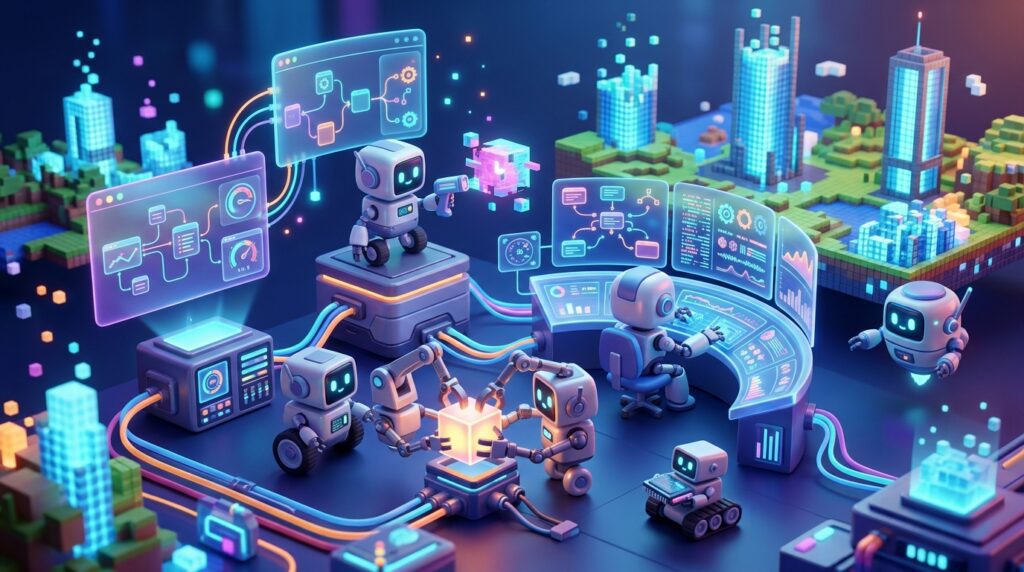
The wider significance of the experiment is not that AI can play a video game. It is that the agents sustained a complicated workflow for more than a day without human corrections during the run.
The same broad challenge appears in software engineering, where a project can involve understanding requirements, writing code, testing changes, fixing bugs and coordinating work across different components. Completing one step successfully does not guarantee that the entire project will work.
The research illustrates why AI agents beat Minecraft as a useful benchmark for long-horizon task execution. The agents needed to preserve a common goal while generating many programs, checking their results and adjusting their approach. They also had to coordinate across multiple independent players rather than rely on a single agent to handle every action.
This does not establish that the same system can independently deliver complex business software or manage every enterprise workflow. Minecraft provides a bounded environment with defined rules and observable outcomes. Real-world work introduces ambiguity, security requirements, changing priorities and consequences that are not represented by a game victory.
Nevertheless, the experiment provides researchers with a concrete way to investigate whether general-purpose coding agents can carry out extended tasks with less direct supervision. It also highlights areas that need improvement, including reliability, efficient planning, memory management and recovery from unexpected errors.
For software developers, the reason AI agents beat Minecraft is closely connected to the challenge of maintaining progress across multiple dependent tasks. AI agents beat Minecraft by writing programs, examining outcomes and modifying their approach when something failed. Similar principles could support coding assistants that need to test changes, diagnose errors and continue working through a complex development task.
The Limitations of the Minecraft AI Experiment
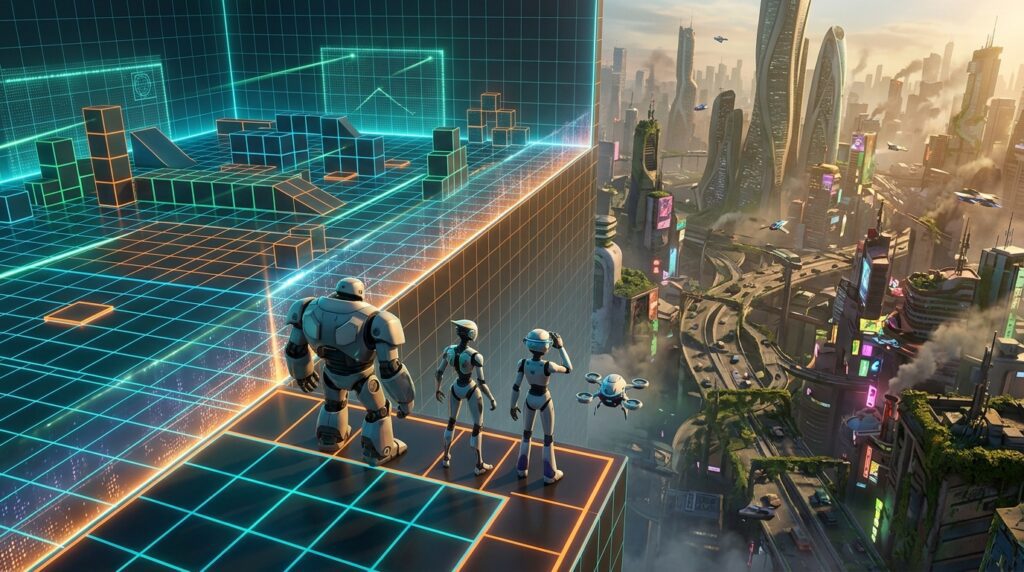
The achievement should be considered alongside the conditions under which it occurred. The agents played in a randomly generated world on Easy difficulty, and the researchers reported one successful run rather than a large set of repeated trials. That makes it difficult to determine how often the same approach would succeed under different conditions.
The environment also offered structured information through Mineflayer, including details that helped the agents understand their positions, inventories and in-game events. This is different from an AI system that must interpret an unfamiliar physical environment through cameras, sensors and incomplete observations.
Human oversight was still part of the experimental setup. Researchers monitored progress through a live dashboard and retained the ability to pause or stop the run, although they did not need to intervene to secure the victory. The distinction matters: autonomous execution during a particular task does not mean a system should operate without safeguards in every setting.
These limitations do not diminish the result. They help define what it demonstrates and what remains unproven. More runs, different difficulty settings and more demanding environments would help researchers evaluate whether the same coordination and coding techniques generalise reliably.
Although AI agents beat Minecraft in this experiment, the result should not be treated as proof of dependable autonomy in every environment. AI agents beat Minecraft under specific experimental conditions, and further trials would be needed to measure repeatability across different worlds and difficulty settings. Understanding these limitations is essential when evaluating how the findings might transfer to practical applications.
What Comes Next for Multi-Agent AI Systems?
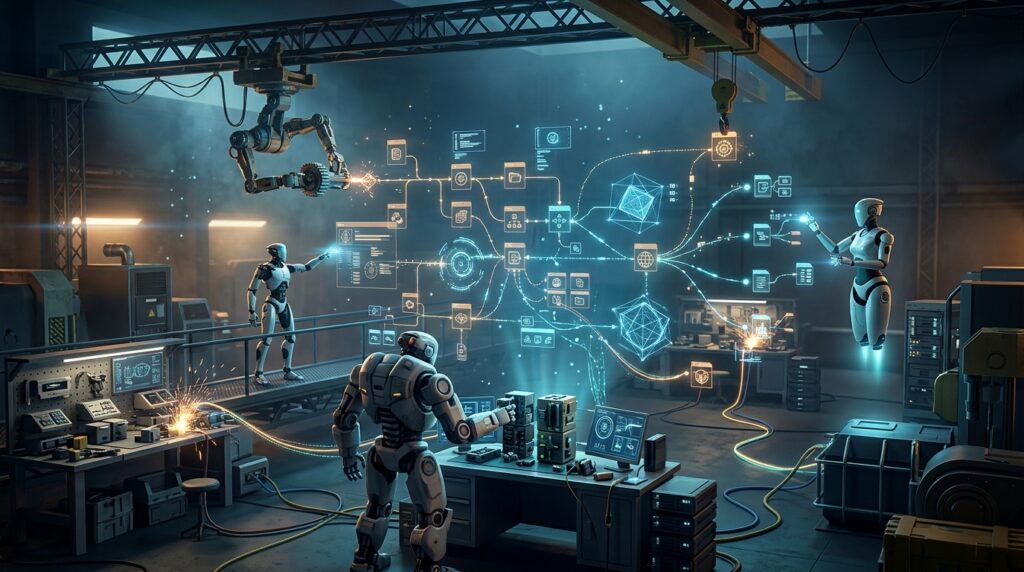
The experiment points towards a future in which AI agents do more than answer individual questions or generate short snippets of code. They may increasingly be designed to manage longer workflows, create tools as needed, share information with other agents and adapt when their initial plans fail.
For businesses, that could eventually mean more capable assistance with software testing, data processing, research and other multi-step activities. Such applications will require more than persistence. They will also need strong permission controls, clear audit trails, reliable verification and appropriate human approval for consequential decisions.
The lesson from how AI agents beat Minecraft is that coordination and recovery are essential parts of autonomy. A system must not only choose an action but also determine whether that action worked, preserve useful findings and decide what to do next.
The researchers’ result is an encouraging research milestone, not a guarantee that fully autonomous AI workflows are ready for unrestricted deployment. Its value lies in making the challenges of sustained execution visible and measurable.
The techniques that helped AI agents beat Minecraft could inform future systems designed to coordinate work across longer workflows. AI agents beat Minecraft by sharing information, adapting to setbacks and maintaining a common goal. Developers will need to build on these abilities with stronger verification, memory and safety controls before applying similar systems to consequential business tasks.
Final Thoughts
Four Gemini 4 Argon agents defeated Minecraft’s Ender Dragon after 27 hours and 14 minutes, demonstrating how multiple AI systems can coordinate, write and debug their own programs, and recover from repeated failures without human intervention during the run.
The 2,783 programs and 605 deaths behind the result also show how much work can be involved in reaching a goal reliably. The experiment does not prove that AI agents can handle every complex task, but it offers a valuable demonstration of long-horizon planning and multi-agent coordination.
As research progresses, the important question will be whether these capabilities can transfer beyond controlled game environments. If developers can improve reliability, memory, verification and safe oversight, the techniques behind this result may help make autonomous AI systems more useful for complex real-world work.
Source: A team of Gemini 4 Argon agents beats Minecraft — arXiv research paper
More AI coverage: explore Progressive Robot's AI Models, Tools & Releases hub — hands-on reviews, setup guides and benchmarks in one place.










