
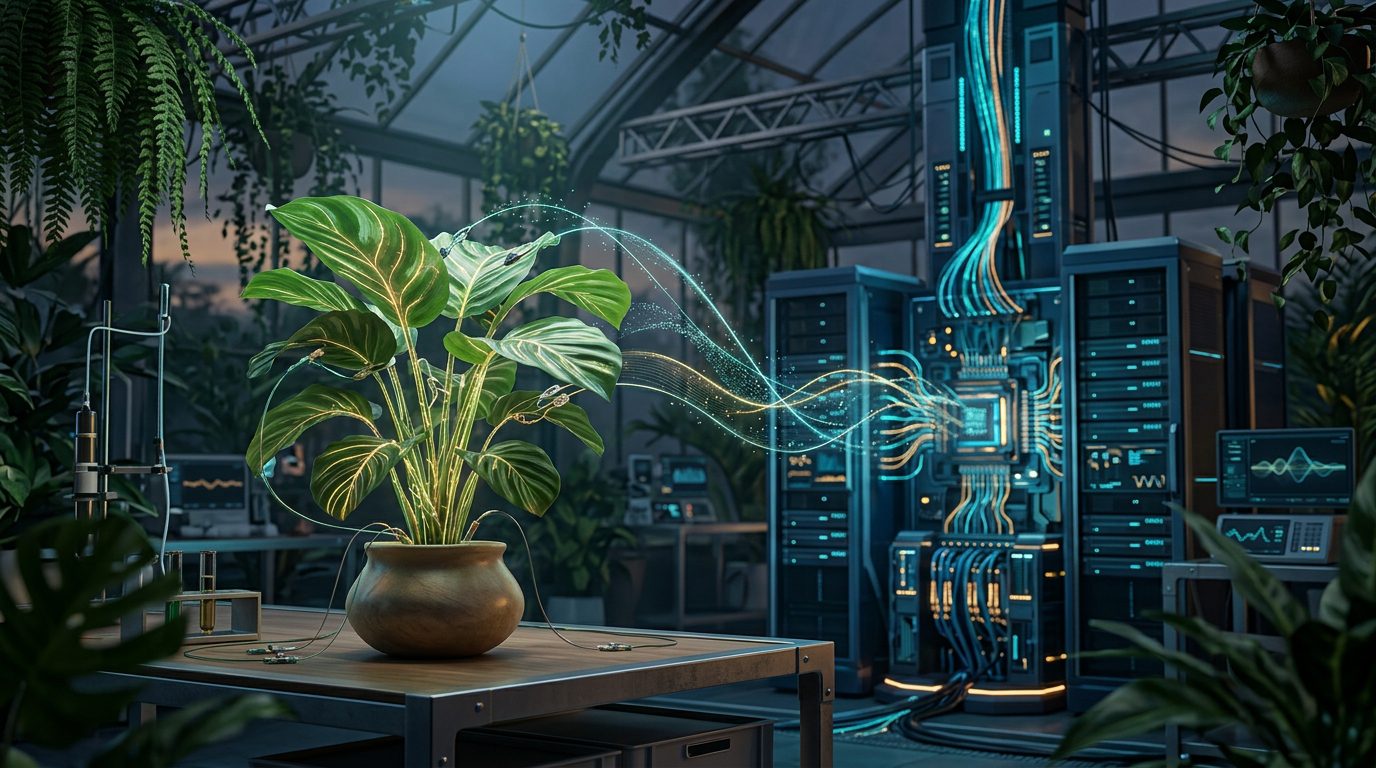
Plants may not speak with words, but electrical activity inside their tissues can reveal information about their biological condition. A startup called Electric Plant is developing technology that uses sensors and artificial intelligence to interpret these subtle signals, potentially giving farmers and growers a more direct way to understand what their plants need.
The company has spent approximately three years collecting data for Bombadil, an AI model designed to interpret electrical signals travelling through plant stems. According to a report by TechCrunch, the technology can interpret signals across around 125 plant species.
The idea is not that plants communicate through human language. Instead, Electric Plant wants to translate biological electrical activity into practical information that growers can use to make better decisions about watering, fertilisation and plant care.
The startup has also raised $11.2 million in seed funding to help bring its sensors and technology to market. If its approach proves reliable at commercial scale, it could offer a new way to monitor crops and forests.
How Electric Plant Developed Its AI Model
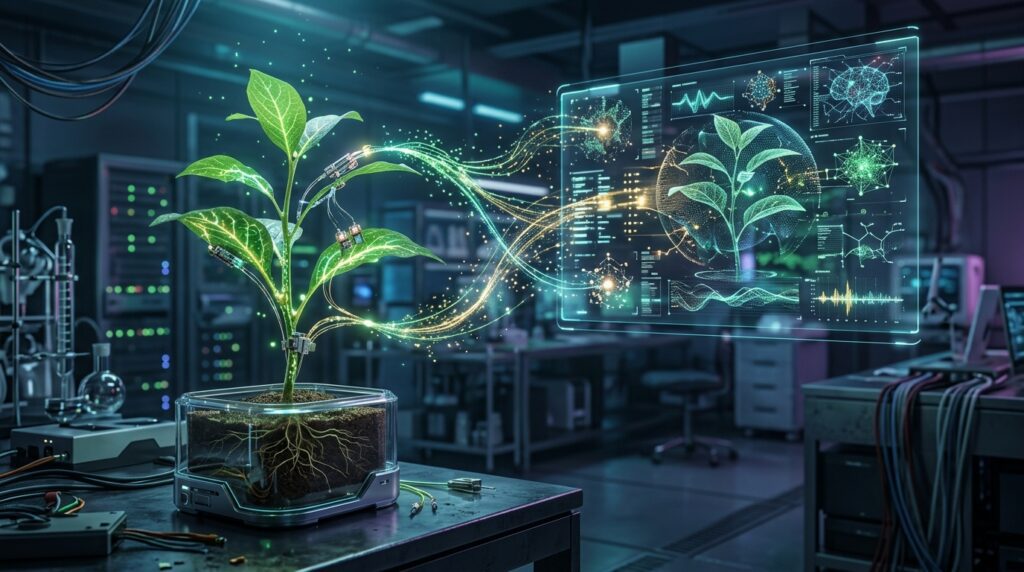
Electric Plant emerged from an unexpected discovery by co-founder Justin Mast. While reading scientific research, Mast encountered an experiment involving a houseplant connected to a motorised stand. When the plant required more light, electrical activity in its living tissues could be detected by a control system, which moved the plant towards a brighter location.
The experiment sparked an interest in whether electrical signals could provide a useful window into plant behaviour. Mast subsequently partnered with Lee von Kraus, a neuroscientist with experience working with DARPA, to establish Electric Plant.
The team began collecting biological signal data and developing Bombadil, its AI model for interpreting plant electrical activity. The challenge is to identify patterns in complex signals and associate them with meaningful information about a plant’s condition.
According to the company, the model currently covers approximately 125 species, including ferns, redwoods, tomatoes and dahlias. That variety matters because plants differ significantly in their structure, growing conditions and biological responses.
Training an AI model across many species could help the company build a more versatile monitoring system. However, the usefulness of its predictions will depend on the quality of the training data and how reliably its interpretations match real plant conditions.
Developing an AI model for plant communication requires more than collecting electrical measurements. Electric Plant must identify meaningful patterns in the data and determine whether those patterns correspond to changes in plant condition. The AI model needs to distinguish useful biological signals from background variation so that its results can support practical decisions. As the company expands its research, the ability of its AI model to interpret signals across different plant species will be an important measure of its progress.
How the Sensors Read Electrical Signals From Plants
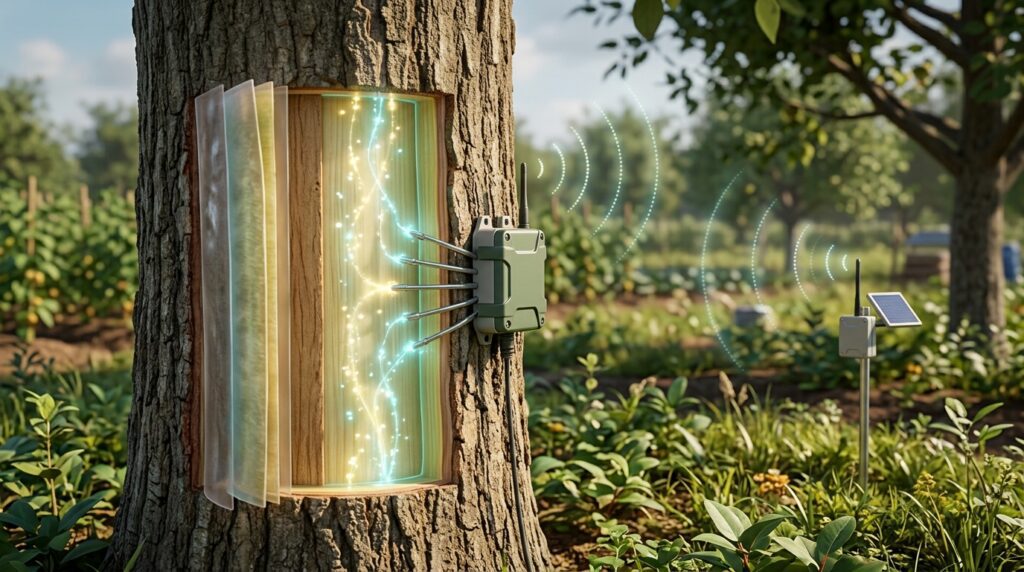
Electric Plant’s approach relies on hardware that detects extremely small changes in electrical activity inside plants. The sensors described by TechCrunch are approximately the size of an iPhone folded lengthwise and attach to plants using stainless-steel screws.
The probes must reach the cambium, the layer of living tissue just beneath the bark, to detect microvolt-level changes. These measurements are then transmitted to a base station using a low-power wireless network.
Once collected, the data is sent to the cloud, where Bombadil interprets the patterns and returns information to the customer. Growers could use those results to adjust irrigation, fertiliser application or other aspects of plant management.
The company says only a couple of sensors per acre may be needed for accurate results. It also claims its hardware costs tens of dollars, compared with some conventional monitoring equipment that can cost thousands.
These figures are company claims rather than independently established performance guarantees. The installation method also deserves scrutiny because sensors that penetrate living tissue could affect plants, particularly if they remain attached for extended periods.
Even so, the combination of compact sensors, wireless connectivity and an AI model could make continuous plant monitoring more accessible if the technology performs consistently in real-world conditions.
The quality of the sensor measurements directly affects how well the AI model can interpret plant activity. If electrical readings contain interference or inconsistent measurements, the system may struggle to identify reliable patterns. Electric Plant therefore needs a dependable process for collecting, transmitting and analysing data from living tissue. Combining consistent sensor readings with a carefully trained AI model could help make continuous plant monitoring more useful for growers.
What Bombadil Could Mean for Agriculture
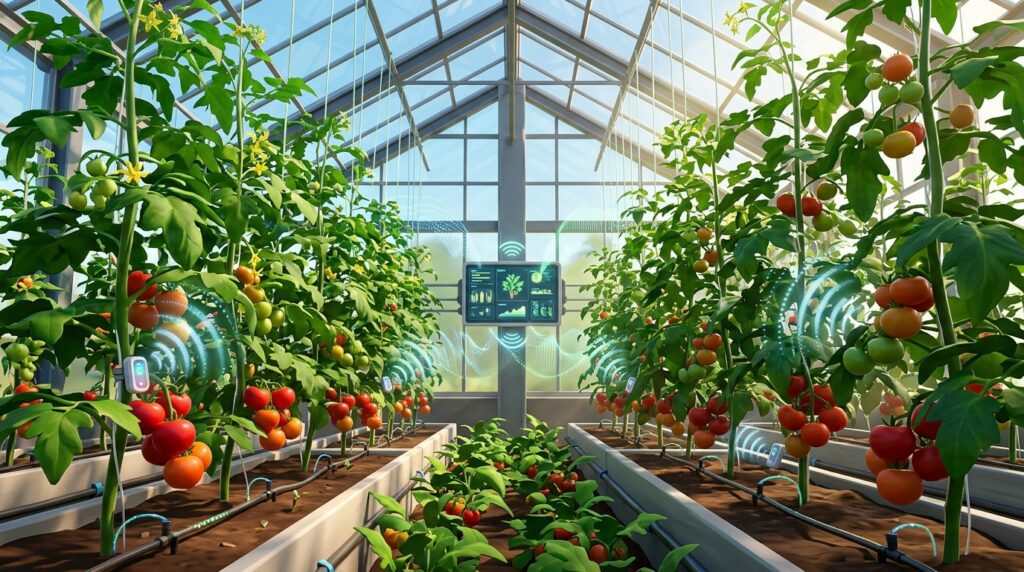
Agriculture is one of the clearest potential applications for Electric Plant’s technology. Farmers often rely on soil moisture probes, visual inspections, handheld instruments and satellite imagery to assess growing conditions. These methods can be valuable, but they do not always provide a direct, continuous view of what is happening inside a plant.
An AI model that interprets electrical signals could complement these existing tools by helping growers identify changes in plant condition and respond more quickly.
For example, a monitoring system might indicate that a crop requires attention before visible symptoms become obvious. Farmers could then investigate the issue and decide whether irrigation, fertilisation or another intervention is appropriate.
Electric Plant CEO Justin Mast has claimed that the company’s system could increase yields while reducing water consumption by 20% or more. That potential is significant in regions where water scarcity and agricultural efficiency are major concerns. However, the claim should be treated as a company projection until supported by independent trials across different crops and growing conditions.
The technology could also be relevant to forestry. Sensors connected to trees might eventually help operators monitor changes in tree condition across larger areas, although its effectiveness would need to be established under varied environmental conditions.
For now, the strongest case for this AI model is as a potential additional source of information for growers, rather than a complete replacement for existing agricultural monitoring systems.
An AI model that identifies changes in plant electrical activity could give farmers another source of information when deciding how to manage their crops. Instead of relying exclusively on visible symptoms or environmental measurements, growers could use the AI model’s findings alongside soil moisture readings, weather information and direct inspections. This combined approach could help farmers investigate potential problems earlier, although field trials will be needed to establish whether the technology consistently improves agricultural outcomes.
Why This Technology Is Different From Traditional Plant Monitoring
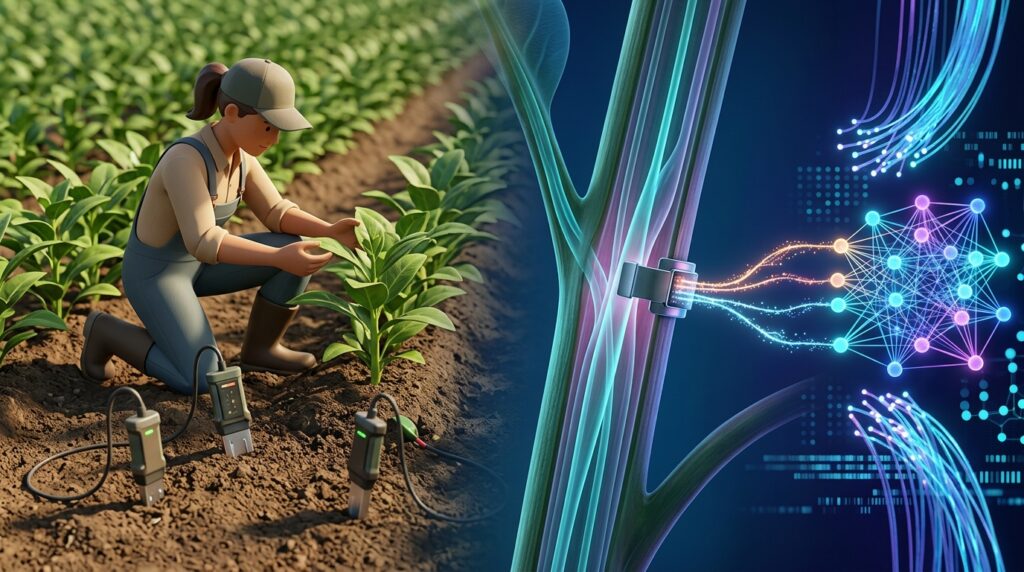
Traditional monitoring systems often measure environmental conditions surrounding a plant. Soil probes estimate moisture levels, weather stations record temperature and humidity, and satellite images can reveal changes across fields.
Electric Plant’s approach focuses on electrical activity within living plant tissue. Rather than relying solely on external measurements, its AI model attempts to interpret biological signals that may provide additional insight into how a plant is responding to its environment.
The distinction could be useful because two plants exposed to similar soil and weather conditions may not always have identical needs. A system that captures changes within the plant could potentially help growers understand these differences.
However, electrical signals do not automatically provide a complete explanation of a plant’s condition. Reliable interpretation requires evidence connecting particular signal patterns to specific biological states. Those relationships may vary between species, individual plants and environmental conditions.
For that reason, an AI model based on plant electrical activity is best understood as a developing measurement and interpretation technology. Its practical value will depend on whether it can deliver accurate, repeatable information that improves decisions beyond what existing tools already provide.
One potential advantage of this AI model is its focus on signals originating inside living plant tissue rather than relying exclusively on external environmental conditions. The AI model could eventually help researchers identify patterns that are difficult to observe through visual inspections alone. However, electrical activity must be connected to verified biological outcomes before growers can confidently use these interpretations to guide important decisions.
The Challenges Electric Plant Still Needs to Address

Despite the promise, several questions remain before Electric Plant’s technology can be considered a dependable agricultural tool.
First, the relationship between electrical patterns and particular plant needs must be validated. A model may recognise patterns in its training data without reliably predicting the same conditions in unfamiliar environments. Independent testing across different species, seasons and growing conditions will be important.
Second, the sensors themselves need further practical evaluation. Because the reported design penetrates the cambium, researchers and growers will need to understand whether prolonged installation causes damage or affects plant health.
Third, the system must demonstrate that its insights lead to measurable improvements. A useful AI model should do more than interpret signals: its recommendations should help growers make better decisions, reduce unnecessary resource use or improve crop outcomes.
Cost and deployment also matter. Although Electric Plant says its sensors are inexpensive, large-scale adoption will depend on installation, maintenance, connectivity, data processing and the reliability of the complete system.
Finally, the company will need to establish how its technology performs compared with established monitoring methods. If its sensors can deliver earlier or more useful information at a reasonable cost, they could become a valuable addition to precision agriculture.
Independent validation will be essential as Electric Plant develops its AI model. Researchers need to establish whether the system produces consistent results when plants experience different temperatures, soil conditions, diseases and levels of water availability. An AI model that performs well during initial testing may require additional training before it can generalise reliably to unfamiliar crops or environments. Transparent testing and measurable results will help potential customers assess whether the technology offers practical advantages over existing monitoring systems.
Electric Plant Raises $11.2 Million to Bring Its Technology to Market
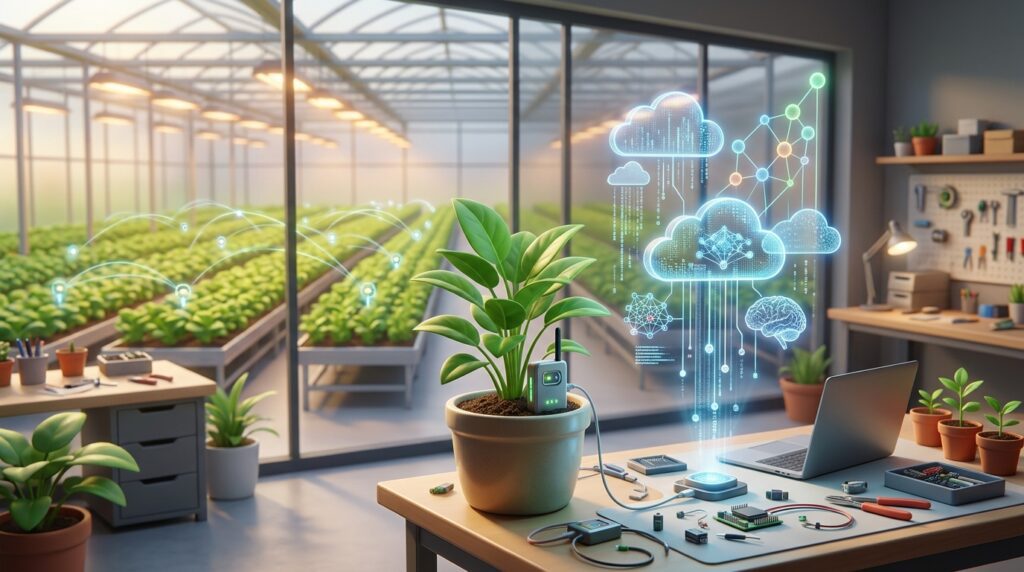
Electric Plant has raised $11.2 million in a seed funding round led by Onto Ventures and Climactic. Other participants included Ponderosa, Endeavor Catalyst, Ludlow, Michigan Rise, The Fund, Schox VC and Dug Song, according to TechCrunch.
The funding is intended to help the startup bring its sensor hardware and Bombadil technology to market. It also reflects investor interest in tools that combine artificial intelligence, biological sensing and agricultural applications.
The company has not publicly identified its initial customers in the TechCrunch report. Potential uses in agriculture and forestry appear promising, but commercial adoption will depend on demonstrated performance and customer demand.
For the startup, the next step is turning a promising technical concept into a dependable product. That means validating the model, improving the user experience and demonstrating that its insights can justify the cost of deploying and maintaining the sensors.
The funding gives Electric Plant an opportunity to improve its hardware, expand its datasets and prepare its AI model for practical deployment. Commercial success will depend on more than the novelty of interpreting plant electricity. The company must demonstrate that its AI model delivers dependable insights, fits into existing agricultural workflows and provides enough value to justify the cost of installation and maintenance. Strong evidence from real-world deployments could help establish whether the technology can move from experimental research to routine agricultural use.
Final Thoughts
Electric Plant is exploring an intriguing idea: using artificial intelligence to interpret the electrical activity already occurring inside living plants. Its Bombadil AI model aims to turn subtle biological signals into useful information for farmers, growers and potentially forestry operators.
If the technology proves accurate and practical, it could complement existing monitoring tools, improve decisions about water and fertiliser use, and give growers a closer view of plant conditions.
But plants are not speaking a human language, and interpreting their electrical activity is not the same as translating words. The real test will be whether the system can reliably connect its measurements to meaningful biological conditions and deliver measurable benefits in the field.
Electric Plant’s work illustrates how an AI model can be applied to biological data in ways that extend beyond conventional text and image processing. By interpreting electrical activity inside plants, the company is exploring a different method of understanding the natural world. If further testing confirms that its AI model can reliably identify meaningful changes in plant condition, the technology could become a useful addition to precision agriculture and environmental monitoring.
For now, Electric Plant offers a compelling example of how AI may extend beyond text, images and conventional software to help people interpret complex signals from the natural world.
Sources
More AI coverage: explore Progressive Robot's AI Models, Tools & Releases hub — hands-on reviews, setup guides and benchmarks in one place.










