
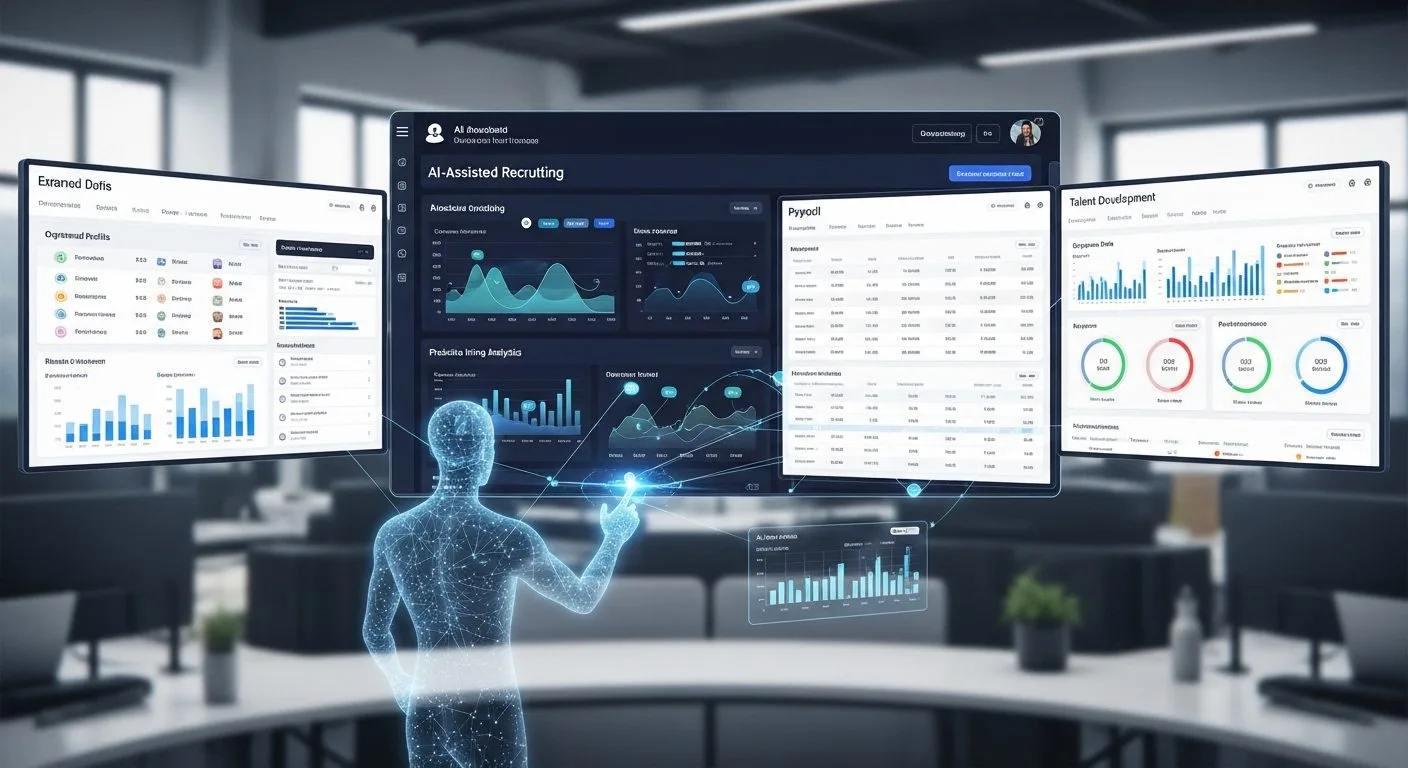
SAP brings agentic AI to human capital management through the latest SAP SuccessFactors release, extending Joule and a growing set of HR agents across recruiting, payroll, learning, performance, and talent workflows. SAP says the goal is more active support inside everyday HR work.
The official SAP SuccessFactors 1H 2026 Release describes a connected network of AI agents across core HCM processes. SAP also ties the story to SmartRecruiters for SAP SuccessFactors and its broader Joule strategy.
The reason this matters is simple. HR software is moving beyond recordkeeping. The real question is how much useful work it can do without adding confusion or risk.
Table of Contents
- SAP brings agentic AI to human capital management at a glance
- Why SAP brings agentic AI to human capital management matters
- 7 key facts about how SAP brings agentic AI to human capital management
- SAP brings agentic AI to human capital management in simple terms
- SAP brings agentic AI to human capital management FAQ
- Final thoughts on how SAP brings agentic AI to human capital management
SAP brings agentic AI to human capital management at a glance

SAP brings agentic AI to human capital management through SAP SuccessFactors, Joule, and HR-focused agents aimed at recruiting, workforce administration, payroll, learning, performance, and talent development.
- SAP says a connected network of AI agents now supports major HCM tasks across the suite.
- Joule is being extended deeper into HR workflows.
- SAP publicly names HR agents for performance preparation, HR service, people intelligence, career and talent development, payroll, and employee data integration.
- SmartRecruiters for SAP SuccessFactors is a major part of the recruiting story.
SAP brings agentic AI to human capital management as a move from recordkeeping toward guided execution.
Why SAP brings agentic AI to human capital management matters

SAP brings agentic AI to human capital management at a time when HR teams are under pressure to move faster without making lower-quality decisions. Hiring, payroll, learning, and performance management all involve repetitive work plus sensitive outcomes.
That is why the announcement matters. SAP is trying to place agentic behaviour inside workflows where people decisions are actually made. Oversight around autonomous AI agents matters for exactly this reason.
For HR leaders, the appeal is practical: fewer handoffs, clearer context, faster decisions, and more consistent execution across processes that are usually fragmented and manual.
7 key facts about how SAP brings agentic AI to human capital management

1. The launch is anchored in SAP SuccessFactors, not a separate HR AI product
The core announcement sits inside the SAP SuccessFactors 1H 2026 Release. SAP is positioning the change as part of the suite itself.
2. Joule is being pushed deeper into the flow of work
SAP has been positioning Joule as a common AI experience across its software stack. Here, the emphasis shifts toward more contextual support inside live HR workflows.
3. SAP is naming agents for specific HR jobs
SAP’s public Joule Agents page gives the strategy more weight by naming agents for performance preparation, HR service, people intelligence, career and talent development, payroll, and employee data integration.
4. Recruiting is a major part of the rollout story
SAP’s SmartRecruiters announcement shows that recruiting is not a side note. SAP says native integration across SmartRecruiters, Employee Central, and Onboarding is designed to create a more connected candidate-to-new-hire process.
5. Learning is one of the clearest practical use cases
SAP also highlights intelligent Q and A in SAP SuccessFactors Learning, one of the clearest places to prove whether embedded AI is useful.
6. Workforce intelligence is part of the long-term value proposition
SAP is also tying the release to People Intelligence and SAP Business Data Cloud. That suggests the company wants HCM agents to surface patterns using broader workforce data.
7. Some of the announcement is still clearly forward-looking
Not every part of the launch is described with the same level of availability detail. Some features read as current product expansion, while others still read as directional or forward-looking.
SAP brings agentic AI to human capital management in simple terms

SAP brings agentic AI to human capital management by making HR software more active. Instead of only storing records and routing tasks, the system is supposed to help answer questions, connect data, recommend actions, and guide execution.
That is the bigger story behind the release.
SAP brings agentic AI to human capital management
FAQ
SAP brings agentic AI to human capital management through Joule, SAP SuccessFactors, and a growing set of HR agents that touch recruiting, payroll, learning, performance, and workforce administration.
What did SAP actually announce?
SAP announced new agentic AI capabilities across SAP SuccessFactors, centered on Joule and a connected network of AI agents supporting core HCM workflows.
Is this all part of SAP SuccessFactors?
Mostly, yes. The main announcement is in SAP SuccessFactors, but SAP also ties the story to SmartRecruiters integration, Joule Agents, and People Intelligence.
Which HR areas are most affected?
Based on SAP’s own materials, the most directly affected areas are recruiting, workforce administration, payroll, learning, performance management, talent development, and HR service workflows.
Is everything generally available right now?
No. Some capabilities are presented as current suite functionality, while others are framed more as ongoing rollout or future-connected workflows.
Final thoughts on how SAP brings agentic AI to human capital management
SAP brings agentic AI to human capital management in a way that is broader than a simple assistant upgrade. The company is trying to reposition HCM as a more active execution layer where agents, embedded knowledge, and contextual guidance help teams move faster inside live workflows.
Whether that becomes durable product differentiation will depend on execution. SAP has the installed base and suite depth to make the strategy credible, but the real test will be whether these agents reduce friction in slow, fragmented HR work.
More AI coverage: explore Progressive Robot's AI Models, Tools & Releases hub — hands-on reviews, setup guides and benchmarks in one place.










