
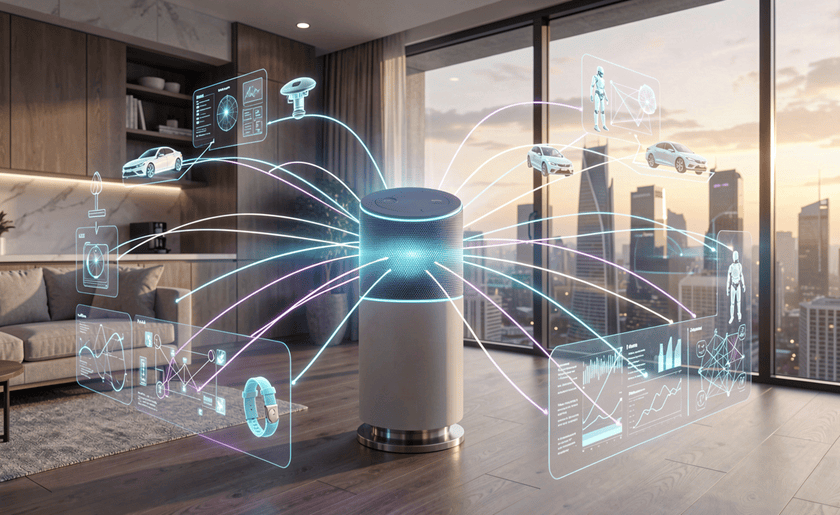
OpenAI developing screenless smart speaker marks one of the most intriguing developments in the evolution of artificial intelligence hardware. While AI assistants have traditionally relied on smartphones, computers, and smart displays, OpenAI appears to be exploring a new category of voice-first devices designed to function as intelligent companions without the distraction of a screen. This approach represents a shift toward more natural, conversational interactions where users communicate with AI through speech rather than visual interfaces.
The news that OpenAI developing screenless smart speaker has generated significant interest because it suggests a future where artificial intelligence becomes more seamlessly integrated into daily life. Instead of requiring users to constantly look at a display, a screenless AI companion could provide contextual assistance, answer questions, manage schedules, control smart home devices, and support productivity entirely through natural conversations.
Voice assistants are not new, but many existing devices focus primarily on simple commands and predefined responses. If OpenAI developing screenless smart speaker succeeds in combining advanced language models with dedicated hardware, the result could be a far more capable AI companion capable of maintaining context, understanding complex requests, and assisting users with both personal and professional tasks.
The development also highlights OpenAI’s growing ambition beyond software. As generative AI becomes increasingly powerful, dedicated AI hardware may provide more optimized experiences than relying solely on smartphones or traditional smart speakers. By integrating conversational intelligence directly into purpose-built devices, OpenAI could reshape how people interact with artificial intelligence throughout the day.
In this article, we’ll explore why OpenAI developing screenless smart speaker is attracting attention, examine the technology behind AI companions, discuss potential features and use cases, compare the concept with existing smart speakers, and analyze how voice-first AI devices could transform the future of computing.
Key Takeaways
- OpenAI developing screenless smart speaker signals a move toward dedicated AI hardware.
- Voice-first AI companions may reduce dependence on screens.
- Advanced language models could deliver more natural conversations.
- AI companions may improve productivity, accessibility, and smart home control.
- Privacy, security, and user trust will remain essential considerations.
- Screenless AI devices could represent the next phase of personal computing.
What Is the Screenless Smart Speaker?
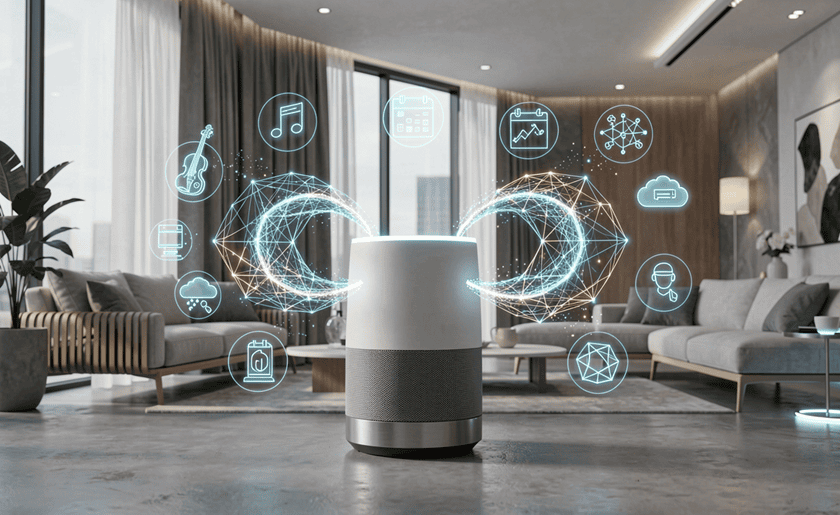
The announcement that OpenAI developing screenless smart speaker suggests the creation of an AI-first hardware device that emphasizes conversational interaction instead of visual interfaces.
Unlike traditional smart speakers that primarily respond to simple voice commands, this next-generation device would likely integrate advanced generative AI capable of maintaining context, reasoning through requests, and providing highly personalized assistance.
Rather than functioning as a conventional speaker with limited capabilities, the device could become an intelligent companion that understands ongoing conversations, remembers context within permitted settings, and assists users throughout their daily routines.
Why OpenAI Is Exploring AI Hardware
The fact that OpenAI developing screenless smart speaker reflects a broader trend in the artificial intelligence industry.
Leading AI companies are increasingly recognizing that software alone may not deliver the most natural user experience.
Purpose-built hardware offers several potential advantages:
- Always-available AI assistance.
- Faster voice interactions.
- Optimized performance.
- Seamless integration with cloud AI services.
- Improved energy efficiency.
- Dedicated microphones and audio processing.
Instead of opening an application on a phone or computer, users could simply begin speaking naturally.
Why a Screenless Design Matters
One of the most distinctive aspects of OpenAI developing screenless smart speaker is the decision to remove the display altogether.
Modern consumers already spend significant portions of their day looking at smartphones, tablets, laptops, and televisions.
A screenless device encourages more natural communication by allowing users to interact through conversation without becoming distracted by visual interfaces.
Potential benefits include:
- Reduced screen time.
- Hands-free productivity.
- More natural conversations.
- Better accessibility.
- Less visual distraction.
- Faster everyday interactions.
This design philosophy focuses attention on voice as the primary interface rather than touchscreens.
How AI Companions Differ from Traditional Smart Speakers
Current smart speakers generally excel at performing straightforward tasks such as:
- Playing music.
- Setting alarms.
- Providing weather updates.
- Answering simple questions.
- Controlling smart home devices.
However, the vision behind OpenAI developing screenless smart speaker extends far beyond these capabilities.
Future AI companions may be able to:
- Hold long-form conversations.
- Remember context across interactions.
- Summarize meetings.
- Brainstorm ideas.
- Assist with writing.
- Explain complex topics.
- Support programming tasks.
- Help manage ongoing projects.
These capabilities would transform the device from a voice assistant into a conversational AI partner.
Potential Features of the AI Companion
Although official specifications remain limited, industry expectations suggest several possible features.
Natural Language Conversations
The device would likely support fluid, human-like conversations powered by advanced large language models.
Rather than responding to isolated commands, it could understand follow-up questions and maintain conversational context.
Personalized Assistance
If OpenAI developing screenless smart speaker incorporates secure personalization, users could receive tailored recommendations based on calendars, reminders, routines, and preferences.
Smart Home Integration
The AI companion may connect with lighting, thermostats, security systems, entertainment devices, and other connected technologies, serving as a centralized voice-controlled hub.
Productivity Support
Professionals could use the device to:
- Capture ideas.
- Create reminders.
- Summarize discussions.
- Manage daily schedules.
- Retrieve information.
- Generate content through voice.
Multilingual Communication
Advanced language models may allow seamless conversations across multiple languages, improving accessibility for global users.
Benefits for Everyday Users
The announcement that OpenAI developing screenless smart speaker has implications for a broad range of users.
Students may receive instant learning assistance.
Professionals can manage workflows more efficiently.
Families could coordinate schedules and smart home devices.
Older adults may benefit from simplified voice interactions.
People with visual impairments may gain greater independence through conversational AI that requires no display.
The Evolution of Voice-First Computing
Voice interfaces have steadily improved over the past decade, but advances in generative AI have accelerated their capabilities dramatically.
The fact that OpenAI developing screenless smart speaker suggests that voice-first computing may become a major category alongside smartphones, laptops, and wearable devices.
Instead of replacing existing devices, AI companions could complement them by providing always-available conversational intelligence throughout the day.
How the AI Companion Could Work

The announcement that OpenAI developing screenless smart speaker has sparked widespread discussion about how a dedicated AI companion might function in everyday life. Unlike traditional smart speakers that mainly execute predefined voice commands, this device would likely rely on advanced large language models capable of understanding context, maintaining natural conversations, and responding intelligently to complex requests.
Instead of treating every interaction as a separate command, the AI companion could remember the flow of an ongoing conversation, allowing users to ask follow-up questions without repeating previous information. This conversational continuity would create a far more human-like experience than existing voice assistants.
If OpenAI developing screenless smart speaker reaches commercial deployment, users may simply speak naturally while the AI interprets intent, retrieves relevant information, performs reasoning tasks, and provides conversational responses in real time.
AI That Understands Context
One of the most exciting aspects of OpenAI developing screenless smart speaker is the possibility of contextual intelligence.
Current voice assistants often struggle with conversations that involve multiple steps or changing topics. A next-generation AI companion powered by modern language models could maintain context across an extended dialogue.
For example, a user might ask about planning a business trip, then continue asking about flights, hotels, weather, meeting schedules, and local restaurants without repeating the original request.
This ability to understand context transforms the interaction from command-based automation into genuine conversational assistance.
Everyday Productivity Applications
The news that OpenAI developing screenless smart speaker suggests significant productivity benefits for both personal and professional users.
Instead of opening multiple applications throughout the day, users could simply speak naturally.
Possible productivity uses include:
- Creating reminders.
- Managing calendars.
- Scheduling meetings.
- Summarizing emails.
- Brainstorming ideas.
- Drafting documents.
- Recording voice notes.
- Answering research questions.
- Organizing daily priorities.
- Managing task lists.
Because the AI understands conversational language, interactions become faster and more intuitive.
Smart Home Integration
Smart home technology continues expanding rapidly.
If OpenAI developing screenless smart speaker supports connected home ecosystems, users may be able to control numerous devices through natural conversation rather than memorizing specific voice commands.
Potential integrations include:
- Smart lighting.
- Climate control.
- Security systems.
- Smart locks.
- Cameras.
- Entertainment systems.
- Kitchen appliances.
- Energy monitoring.
- Home automation routines.
Rather than saying rigid commands, users could simply express their intentions conversationally.
A More Natural User Experience
Removing the screen changes how people interact with technology.
The fact that OpenAI developing screenless smart speaker focuses on voice-first communication encourages users to remain engaged with their surroundings instead of looking down at a display.
This approach may prove particularly valuable while:
- Cooking.
- Driving.
- Exercising.
- Working.
- Cleaning.
- Studying.
- Relaxing at home.
Hands-free AI assistance enables multitasking without interrupting ongoing activities.
Accessibility Benefits
Voice-first AI companions also have the potential to improve accessibility.
Individuals with visual impairments, mobility challenges, or limited computer experience may benefit from conversational interfaces that require little or no physical interaction.
The announcement that OpenAI developing screenless smart speaker highlights how AI hardware could become more inclusive by allowing users to interact naturally through speech rather than relying on touchscreens or keyboards.
Business and Enterprise Applications
Beyond personal use, organizations may also benefit from dedicated AI companions.
Businesses could use intelligent voice assistants for:
- Meeting preparation.
- Knowledge retrieval.
- Project management.
- Brainstorming sessions.
- Customer support.
- Team collaboration.
- Internal documentation.
- Scheduling.
- Workflow automation.
As OpenAI developing screenless smart speaker evolves, enterprise versions may integrate securely with workplace productivity platforms, allowing employees to retrieve information and complete routine tasks more efficiently.
Privacy and Security Considerations
Any always-listening voice-enabled device naturally raises questions about privacy.
The success of OpenAI developing screenless smart speaker will depend not only on its intelligence but also on how responsibly it handles user information.
Important considerations include:
- Voice data protection.
- Secure authentication.
- User consent.
- Encryption.
- Transparent privacy controls.
- Optional voice history management.
- Secure cloud communication.
Users are increasingly willing to adopt AI-powered devices when they have confidence that personal information is protected and handled responsibly.
Competition in the AI Hardware Market
The announcement that OpenAI developing screenless smart speaker also signals increasing competition within AI hardware.
Technology companies are investing heavily in intelligent assistants capable of delivering richer conversational experiences than traditional voice devices.
The differentiating factor will likely be the quality of the underlying AI model rather than the hardware specifications alone.
Companies that combine advanced reasoning, natural conversation, personalization, and strong privacy protections may define the next generation of consumer AI devices.
The Rise of Ambient Computing
Many industry analysts describe this evolution as ambient computing.
Instead of requiring users to actively open applications or search for information, AI becomes continuously available in the surrounding environment.
The fact that OpenAI developing screenless smart speaker aligns closely with this vision by placing conversational intelligence at the center of daily life.
Rather than interacting with technology only when looking at a screen, users can access AI whenever they need assistance through natural speech.
Preparing for the Next Generation of AI Devices
As artificial intelligence continues advancing, dedicated AI hardware may become increasingly common.
Future devices could work seamlessly across smartphones, computers, vehicles, wearable technology, and smart homes, creating an interconnected ecosystem where intelligent assistants remain available throughout the day.
The announcement that OpenAI developing screenless smart speaker may represent one of the first major steps toward this broader vision of ubiquitous conversational AI.
Challenges and Limitations of a Screenless AI Companion

Although OpenAI developing screenless smart speaker represents an exciting step toward voice-first artificial intelligence, several technical and practical challenges must be addressed before such devices can achieve widespread adoption. Building an AI companion that feels natural, trustworthy, and genuinely helpful requires much more than integrating a powerful language model into a speaker.
Factors such as speech recognition accuracy, latency, personalization, privacy, and contextual understanding will play a significant role in determining the success of the device. Even with rapid advances in generative AI, delivering consistently reliable voice interactions remains a complex engineering challenge.
Privacy Will Be a Major Concern
Whenever a voice-enabled device is designed to remain available throughout the day, privacy becomes one of the biggest concerns for consumers.
The news that OpenAI developing screenless smart speaker will inevitably raise questions about how voice interactions are processed, stored, and protected. Users will expect clear privacy controls, transparent data practices, and the ability to manage or delete conversation history.
To build trust, future AI companions may include features such as:
- End-to-end encryption.
- Secure cloud communication.
- Voice authentication.
- User-controlled privacy settings.
- Local processing for selected tasks.
- Optional conversation history management.
Responsible privacy practices will be just as important as advanced AI capabilities.
Understanding Complex Conversations
Although modern language models have improved dramatically, maintaining context across lengthy conversations remains challenging.
If OpenAI developing screenless smart speaker is intended to become a true AI companion, it must accurately understand:
- Multiple speakers.
- Follow-up questions.
- Changing topics.
- Emotional tone.
- Background noise.
- Context from previous interactions.
Delivering consistent conversational intelligence across these situations will require continual improvements in speech recognition and reasoning.
Dependence on Internet Connectivity
Many advanced AI systems rely on cloud computing to process complex requests.
As OpenAI developing screenless smart speaker evolves, reliable internet connectivity may remain essential for accessing the most advanced language models and real-time knowledge.
Future devices could reduce this dependency by combining cloud-based intelligence with on-device AI processing, allowing certain functions to operate even when internet access is limited.
Competition with Existing Smart Speakers
The smart speaker market is already well established.
Consumers currently have access to a wide range of voice-enabled devices for music playback, smart home automation, and basic digital assistance.
The success of OpenAI developing screenless smart speaker will depend on whether it delivers a significantly better conversational experience than existing products. Features such as contextual reasoning, long-form dialogue, intelligent task management, and advanced productivity assistance could become key differentiators.
Enterprise Opportunities
While much attention focuses on consumer applications, OpenAI developing screenless smart speaker may also create new opportunities for businesses.
Organizations could deploy AI companions to assist with:
- Internal knowledge retrieval.
- Meeting summaries.
- Calendar management.
- Project updates.
- Customer service support.
- Technical assistance.
- Voice-driven workflow automation.
By reducing the time employees spend navigating multiple applications, AI companions may improve workplace efficiency and collaboration.
Comparing AI Companions with Smartphones
Many users may wonder whether a dedicated AI companion can replace a smartphone.
In reality, OpenAI developing screenless smart speaker is more likely to complement existing devices rather than replace them.
Smartphones will continue to provide:
- Visual communication.
- Mobile applications.
- Photography.
- Navigation.
- Video conferencing.
- Mobile payments.
A screenless AI companion, however, could become the preferred interface for conversational assistance, hands-free productivity, and smart home control.
Together, these technologies may create a more seamless digital ecosystem.
The Future of AI Companions
The announcement that OpenAI developing screenless smart speaker reflects a much broader industry trend toward ambient artificial intelligence.
Instead of interacting with AI only through apps and websites, users may increasingly engage with intelligent assistants embedded throughout homes, offices, vehicles, and wearable devices.
Future AI companions may offer:
- Continuous conversational memory within user-controlled settings.
- Proactive reminders based on routines.
- Personalized learning assistance.
- Advanced health and wellness support.
- Intelligent home automation.
- Context-aware travel assistance.
- Voice-based content creation.
- Cross-device collaboration.
As these capabilities mature, AI companions could become an integral part of everyday life.
Best Practices for Adopting AI Voice Companions
Whether for personal or business use, users can maximize the benefits of future AI companions by following several best practices.
Protect Personal Information
Avoid sharing highly sensitive personal or financial information unless robust security measures are in place.
Use Strong Account Security
Enable multi-factor authentication and maintain strong account credentials to protect connected AI services.
Review Privacy Settings
Regularly review available privacy controls and manage stored voice history according to your preferences.
Integrate with Existing Workflows
As OpenAI developing screenless smart speaker becomes part of broader productivity ecosystems, integrating calendars, reminders, documents, and smart home devices can unlock greater efficiency.
Stay Informed About New Features
Generative AI evolves rapidly. Keeping devices updated ensures access to the latest security improvements, AI capabilities, and performance enhancements.
The Future of AI Companions

The announcement that OpenAI developing screenless smart speaker represents far more than the launch of another consumer device. It reflects the beginning of a new era where artificial intelligence becomes a constant companion rather than a tool that users access only through smartphones or computers. As large language models continue to evolve, voice-first AI devices are expected to become increasingly intelligent, proactive, and personalized.
Future AI companions may understand daily routines, remember user preferences within privacy settings, anticipate information needs, and coordinate seamlessly across multiple devices. Instead of waiting for commands, these assistants could provide timely reminders, summarize important updates, help manage workloads, and simplify everyday decision-making.
As OpenAI developing screenless smart speaker continues to evolve, future generations may include more advanced on-device AI processing, lower latency, stronger privacy protections, richer conversational memory, multilingual communication, and seamless integration with smart homes, vehicles, wearable technology, and enterprise productivity platforms.
The evolution of AI companions is likely to transform how people interact with technology, making conversations the primary interface for accessing digital information and completing everyday tasks.
Strategic Takeaways
The news that OpenAI developing screenless smart speaker highlights several important trends shaping the future of artificial intelligence.
First, AI is rapidly expanding beyond software applications into dedicated hardware designed specifically for conversational interaction.
Second, voice-first computing is becoming increasingly practical as language models improve their ability to understand context, reason through complex questions, and maintain natural conversations.
Third, organizations should begin preparing for AI companions that integrate with business workflows, knowledge management systems, and productivity tools.
Finally, responsible AI development remains essential. Privacy, transparency, security, and user control will play a major role in determining how quickly consumers adopt intelligent AI companions.
The announcement that OpenAI developing screenless smart speaker demonstrates that the future of AI will not simply be about generating information—it will be about making that intelligence continuously available through natural conversation.
Conclusion
The announcement that OpenAI developing screenless smart speaker marks an important milestone in the evolution of artificial intelligence hardware. Rather than relying on screens, keyboards, or mobile applications, this new approach focuses on natural voice interaction, allowing users to communicate with AI in a more intuitive and human way.
If successful, OpenAI developing screenless smart speaker could redefine the role of AI assistants by combining advanced conversational intelligence with dedicated hardware designed for everyday use. Users may benefit from faster access to information, improved productivity, smarter home automation, personalized assistance, and more meaningful interactions without constantly looking at a screen.
The concept also reflects a broader shift toward ambient computing, where AI becomes seamlessly integrated into homes, workplaces, vehicles, and connected devices. Instead of opening an application whenever assistance is needed, intelligent companions may simply be available through natural conversation.
Although challenges surrounding privacy, security, internet connectivity, and user trust remain important, the progress represented by OpenAI developing screenless smart speaker demonstrates how rapidly AI technology is evolving beyond traditional software experiences.
As conversational artificial intelligence continues advancing, dedicated AI companions may become one of the defining categories of next-generation consumer technology, changing how individuals, families, and businesses interact with digital intelligence every day.
Frequently Asked Questions (FAQs)
What is the OpenAI screenless smart speaker?
The OpenAI developing screenless smart speaker project is expected to focus on creating a voice-first AI companion that enables natural conversations without requiring a display, offering intelligent assistance through advanced language models.
Why is OpenAI developing a screenless smart speaker?
The goal is to provide a more natural way to interact with AI through conversation instead of relying on smartphones or computers. A screenless device may reduce distractions while delivering faster, hands-free assistance.
How is it different from traditional smart speakers?
Unlike conventional smart speakers that primarily execute predefined voice commands, OpenAI developing screenless smart speaker aims to deliver contextual conversations, advanced reasoning, personalized assistance, and productivity support powered by modern generative AI.
What are the potential benefits?
Potential benefits include improved productivity, natural conversations, smart home control, accessibility, hands-free assistance, personalized recommendations, and seamless integration with other AI services.
When could the device become available?
OpenAI has not officially announced commercial availability. As development continues, additional information regarding features, partnerships, pricing, and launch timelines is expected to emerge.
Build the Future with AI-Powered Solutions
Artificial intelligence is rapidly expanding beyond software into intelligent devices, conversational assistants, and next-generation digital experiences. Whether you’re exploring AI integration, developing intelligent applications, or modernizing your business with generative AI, our experts can help you build secure, scalable, and innovative AI solutions.
More AI coverage: explore Progressive Robot's AI Models, Tools & Releases hub — hands-on reviews, setup guides and benchmarks in one place.










