
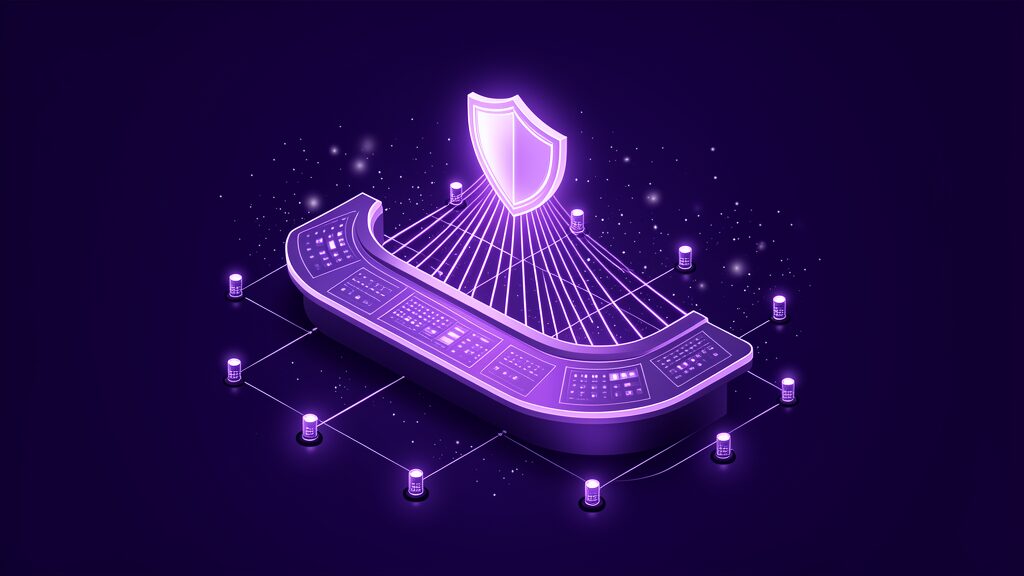
Security tool sprawl is the quiet tax most organizations are paying without ever approving it. Every incident, audit finding, and vendor demo adds another console, another agent, and another set of alerts, until the security function is spending more effort operating its tooling than defending the business. Unified SecOps is the correction: fewer places to look, one body of telemetry, and detection that works across the whole estate rather than inside a dozen separate boxes.
The numbers make the problem hard to dismiss. A Gartner survey of 162 large enterprises put the average at roughly 45 cybersecurity tools per organization, and the share of companies actively pursuing vendor consolidation has climbed to around three quarters, up from under a third in 2020. Complexity is now cited more often than budget as the barrier to effective security operations.
The consequence is measurable in outcomes, not just annoyance. Fragmented tooling lengthens the time it takes to notice an intrusion and the time it takes to shut one down, and both of those intervals map directly to cost. IBM’s 2025 Cost of a Data Breach research put the global average breach at $4.44 million, with the organizations using security AI and automation extensively cutting roughly 80 days off the breach lifecycle.
This guide explains what unified SecOps actually means beyond the marketing, where sprawl comes from, which consolidation moves pay off and which quietly reduce coverage, how to sequence a migration without losing detection, and what to measure so you can prove the change worked.
Unified SecOps: The Quick Answer
Unified SecOps is an operating model in which detection, investigation, response, and reporting run on one correlated set of data and one workflow, regardless of how many sensors feed it. It is not the same as buying one vendor’s entire catalog. The defining test is whether an analyst can pivot from a suspicious login to the endpoint process, the cloud API call, and the affected identity without leaving the workflow or manually stitching timestamps.
The shift is from tool count to signal quality. Sprawl optimizes for coverage on paper — a product for every threat category — while unified SecOps optimizes for the speed and confidence with which a real incident is understood and contained.
| Area | Sprawled security stack | Unified SecOps |
|---|---|---|
| Telemetry | Siloed per product, duplicated, inconsistent retention | One pipeline, normalized schema, deliberate retention tiers |
| Detection | Rules written per tool, blind to cross-domain activity | Correlated detections spanning identity, endpoint, cloud, network |
| Investigation | Analyst pivots between consoles and copies data by hand | Single timeline with linked entities and full context |
| Alert handling | High volume, high duplication, unclear ownership | Deduplicated, enriched, risk-ranked, routed by policy |
| Automation | Per-tool scripts that break on upgrade | Shared playbooks acting across the estate |
| Coverage gaps | Hidden between products nobody owns end to end | Mapped explicitly against a control framework |
| Cost model | Overlapping licences, shelfware, integration labor | Fewer contracts, higher utilization, lower operating burden |
| Success measure | Number of tools and dashboards deployed | Detection coverage, MTTD, MTTR, and containment quality |
What Security Tool Sprawl Actually Costs
The licence spend is the visible cost and usually the smallest one. The larger costs are the engineering hours spent maintaining integrations, the analyst hours spent reconciling conflicting data, and the incidents that take longer to resolve because nobody could see the full picture quickly.
Duplication is endemic. Most sprawled estates carry three or four products that all claim to detect the same lateral movement, each with its own rule syntax, each generating its own alert for the same event. The security team ends up triaging the same incident several times without realizing it.
Then there is the shelfware problem. Tools bought after an incident or an audit are deployed narrowly, never fully rolled out, and never decommissioned. They continue to consume licence budget, agent footprint, and patching attention while contributing almost nothing to detection.
The subtlest cost is false assurance. A long tool inventory reads like thorough coverage to a board, which makes it harder to fund the unified SecOps work that would actually reduce risk. Counting products is a poor proxy for defensive capability, and it is the metric most likely to be reported upward.
The Gaps Between Products
Attackers do not respect product boundaries, and the most damaging intrusions tend to travel across them: a phished credential, then a cloud console session, then a data export. Each product sees a fragment that looks unremarkable on its own.
Why Tool Sprawl Happens in the First Place
Sprawl is rarely the result of bad decisions. It is the result of many locally sensible decisions accumulating without anyone owning the total. Understanding the mechanism matters, because a consolidation that does not change the mechanism will simply re-sprawl within three years.
Incident-driven buying is the biggest contributor. After a breach or a near miss, there is budget and urgency, and buying a product is faster than redesigning a process. The tool arrives, the urgency fades, and the integration work never finishes.
Audit-driven buying works the same way. A control gap is identified, a product is purchased to close it on paper, and the operational question of who runs it day to day is deferred indefinitely.
Mergers and acquisitions inherit whole stacks at once. Two competent security estates combine into one incoherent estate, and the political cost of retiring the acquired company’s tooling usually delays consolidation for years. A unified SecOps target architecture, agreed before integration starts, is what prevents the merged estate from simply doubling.
Best-of-Breed as a Default Assumption
The best-of-breed instinct is reasonable in isolation and expensive in aggregate. A slightly better detection engine that cannot share context with anything else frequently produces worse outcomes than a merely good one inside a unified SecOps workflow.

What Unified SecOps Actually Means
The term gets attached to any product with a broad feature list, so it is worth being precise. Unified SecOps describes four things working together: one telemetry pipeline, one detection library, one investigation surface, and one response mechanism. A vendor can supply some of those while you supply the rest.
Crucially, unified does not mean single-vendor. Plenty of organizations run a unified SecOps model with a data platform from one supplier, endpoint sensing from another, and identity signals from a third, joined by a common schema and a common workflow.
Nor does it mean fewer sensors. Reducing the number of places you collect data from would reduce coverage. The goal is to reduce the number of places you have to look and reason.
The practical marker is whether a detection can reference entities from more than one domain in a single rule. If that is impossible, you have integrated tools rather than unified SecOps.
The Data Layer: One Pipeline, Many Sensors
Everything else in unified SecOps depends on getting the data layer right, and it is the part most consolidation projects underestimate. The objective is a single normalized pipeline where an identity, a host, and a user mean the same thing regardless of which sensor reported them.
Normalization is the hard part. The same login event arrives from an identity provider, an endpoint agent, and a network device with different field names, different timestamp precision, and different notions of who the actor was. Without a common schema, correlation is guesswork.
Retention should be tiered deliberately rather than uniformly. Hot data for active detection, warm data for investigation windows, and cheap cold storage for compliance and retrospective threat hunting keeps the economics sane while preserving the ability to look back after a late discovery.
Cost control belongs at the pipeline, not at the sensor. Filtering and routing low-value telemetry before ingestion is what makes broad collection affordable, and it is a better lever than turning off sources.
Do Not Collect What You Cannot Use
Every source added to a unified SecOps pipeline should have a named detection, investigation, or compliance purpose. Collection without purpose reproduces sprawl inside the platform you just consolidated onto.
Detection Engineering in a Unified SecOps Model
Consolidating tools without consolidating detection logic wastes most of the benefit. Detection engineering is the discipline that turns a unified data layer into actual coverage, and it should be treated as a software practice rather than a configuration task.
Detections belong in version control, with peer review, test cases, and a deployment pipeline. This is what makes coverage auditable and makes it possible to retire a tool without silently losing the rules that lived inside it.
Mapping to a common framework keeps the conversation honest. Expressing coverage against adversary techniques rather than product categories shows where the real gaps are and prevents the reflex to buy another product for a technique already covered.
The migration risk is real and worth naming. When a legacy tool is decommissioned, its native detections leave with it, and unified SecOps only stays safe if those detections are rebuilt and validated first.
Tuning Is Continuous, Not a Project
Environments change constantly, so a detection library needs an owner and a review cadence. Rules that were precise a year ago become noisy as infrastructure shifts, and untended noise is what recreates alert fatigue.
How Unified SecOps Cuts Mean Time to Detect and Respond
The clearest operational argument is time. Every manual pivot between consoles adds minutes, and every reconciliation of conflicting timestamps adds more, all while an intruder is progressing.
Correlated data collapses several of those steps. When an analyst opens an alert and immediately sees the associated identity, device, process lineage, and cloud activity on one timeline, the investigation starts from context rather than from assembly work.
The reported gains from automation are substantial. IBM’s research associates extensive use of security AI and automation with roughly 80 fewer days in the breach lifecycle and close to $1.9 million in avoided cost, and unified SecOps is the precondition that makes such automation trustworthy.
Containment speed improves for the same structural reason. A response action that can disable an account, isolate a host, and revoke a session from one workflow happens in a single decision rather than three coordinated ones.
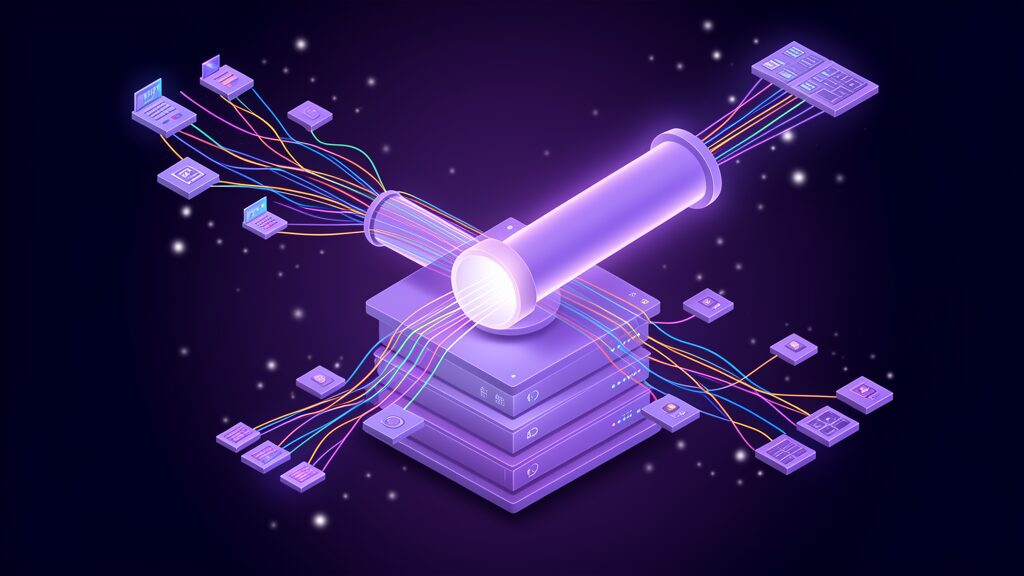
Alert Fatigue and the Human Cost of Fragmentation
Sprawl produces volume, and volume produces attrition. Industry surveys routinely find that a majority of security teams name alert fatigue as a primary concern, with a large share of alerts never addressed and close to half turning out to be false positives.
The damage is not only missed detections. When analysts spend their days on repetitive triage, proactive work stops — threat hunting, detection improvement, and purple teaming are the first casualties, and those are precisely the activities that reduce future alert volume.
Deduplication is the single highest-yield fix. In a unified SecOps model the three products that all noticed the same lateral movement produce one enriched incident rather than three competing alerts, which cuts queue depth without reducing sensitivity.
Risk-based ranking does the rest. Scoring incidents by asset criticality, identity privilege, and confidence lets a finite team spend its attention where consequences are largest, and unified SecOps is what makes those scoring inputs available in one place.
Retention Is a Security Control
Experienced analysts are a defensive asset, and burnout is an availability problem. Reducing avoidable toil through unified SecOps is a security investment, not an HR nicety.
Identity as the Center of Gravity in Unified SecOps
Most serious intrusions now run through credentials rather than malware, which makes identity telemetry the connective tissue of unified SecOps. Stolen or compromised credentials remain among the slowest breach types to identify, often taking months.
Identity signals are what let detections span domains. A privileged role assignment, an impossible-travel login, and an unusual data export are individually ambiguous and jointly conclusive, but only if they land in the same analytical space.
This is why identity-centric approaches and consolidation reinforce each other. Organizations moving toward identity-centric zero trust architecture find the unified SecOps case easier to make, because the architecture already assumes signals must be evaluated together.
Non-human identities deserve equal weight. Service accounts, API keys, CI/CD tokens, and increasingly AI agents now outnumber human users in many estates and are frequently the least monitored.
Endpoint, Cloud, and the Estate You Forgot
Coverage gaps usually sit at the seams of ownership rather than inside any one product. Unified SecOps forces those seams into the open, which is uncomfortable and useful.
Endpoint fragmentation is a common finding. Organizations wrestling with scattered device fleets and BYOD hardware often discover that a meaningful percentage of machines carry no working sensor at all, which no amount of detection engineering can compensate for.
Cloud coverage tends to be broad but shallow. Control-plane logging is usually enabled while data-plane and workload telemetry are not, so an attacker operating inside a compromised workload is far less visible than one fumbling at the console.
Operational technology and unmanaged devices are the hardest category. Passive network monitoring is often the only viable sensor, and unified SecOps at least ensures that what it sees is correlated with everything else.
Shadow IT belongs in the same conversation. Unsanctioned SaaS and unmanaged AI services rarely emit telemetry to anyone, and a unified SecOps rollout is usually the moment an organization discovers how much of its data already sits outside the monitored estate.

Automation and AI in Unified SecOps
Automation is where consolidation converts into leverage, and it only works on a coherent data layer. Playbooks that depend on brittle per-tool scripts break constantly; playbooks acting through one workflow survive upgrades.
Start with enrichment rather than response. Automatically attaching asset ownership, identity privilege, threat intelligence, and recent change history to every incident removes the most repetitive analyst work with essentially no blast radius.
Automated response should be graduated by confidence and reversibility. Revoking a session is cheap to undo, isolating a production server is not, and a mature unified SecOps program encodes that distinction rather than treating all response as equally risky.
AI-assisted triage is genuinely useful and genuinely oversold. It is effective at summarizing, clustering, and drafting, and the same techniques that help defenders are already helping attackers, with recent research attributing a meaningful share of breaches to AI-assisted phishing and deepfakes. Our earlier look at how AI helps root out ransomware threats covers where the value is most reliable.
Governance for Agentic Tooling
AI agents acting inside the security stack need the same identity, logging, and least-privilege discipline as any other actor. This is the same gap visible wherever enterprise AI governance has not kept pace with deployment, and unified SecOps is where it becomes observable.
Where Consolidation Goes Wrong
Consolidation done badly is worse than sprawl, because it replaces a messy stack that works with a tidy stack that does not. The failure modes are consistent enough to plan around.
The most common is decommissioning before validating. A legacy tool is switched off on schedule, and three months later an incident reveals that its detections were never rebuilt in the new platform.
The second is buying a suite and calling it done. Purchasing one vendor’s full catalog reduces contracts without necessarily unifying data, and it is entirely possible to run eight products from one vendor that still do not correlate.
The third is treating unified SecOps as a procurement exercise. If the operating model, ownership, and detection practice do not change, the same team will accumulate the same sprawl on a new foundation.
The fourth is optimizing for licence savings alone. Cost reduction is a legitimate benefit, but a consolidation justified purely on spend tends to cut telemetry sources that mattered.
Build, Buy, or Blend Your Unified SecOps Stack
There is no universally correct answer, and the honest framing is a trade between control and operating burden. Most organizations land on a blend, and the decision should follow team capacity rather than architectural fashion.
Buying an integrated platform is the fastest route to a working unified SecOps posture and suits teams without dedicated detection engineers. The trade is less control over data schema, retention economics, and detection logic.
Building on an open data platform gives maximum control and suits organizations with strong engineering capability and unusual requirements. The trade is that you now own reliability, upgrades, and the roadmap.
Blending is the pragmatic majority position: a commercial platform for the core workflow, with an open pipeline in front of it for routing, filtering, and cheap long-term retention. This preserves negotiating leverage and keeps a migration path open.
Managed and Co-Managed Unified SecOps
Very few organizations can staff a competent round-the-clock security operation, and pretending otherwise is how coverage gaps appear at three in the morning. Outsourcing part of the model is a legitimate design choice rather than an admission of weakness.
The co-managed pattern has become the practical middle ground. The provider carries triage, monitoring, and first-line response outside business hours, while the internal team keeps detection engineering, threat hunting, and incident command. Unified SecOps makes this split workable because both parties look at the same data and the same incidents.
The failure mode to avoid is outsourcing the platform along with the labor. When the provider owns the tooling, the data, and the detection logic, switching providers means rebuilding everything, and the internal team never develops the context to challenge what it is being told.
Retaining ownership of the data layer solves most of that. If normalized telemetry lands in storage you control and detections live in your repository, the provider becomes a staffing decision rather than an architectural one.
Set Expectations in Measurable Terms
Contract on outcomes that matter — time to triage, time to escalate, quality of context delivered — rather than on ticket volume. Volume-based service levels reward the same alert noise that unified SecOps exists to eliminate.
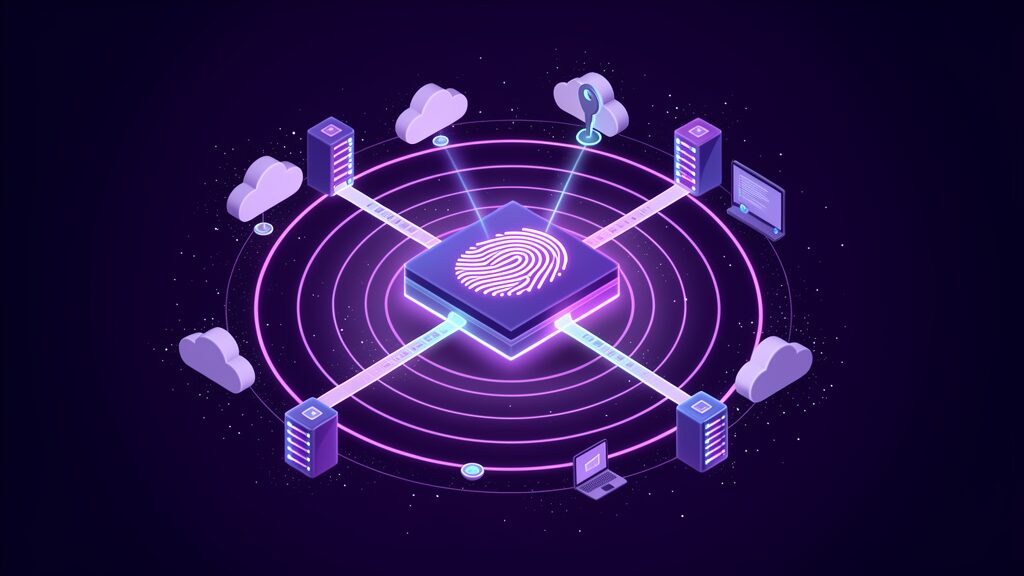
Making the Business Case for Unified SecOps
Security consolidation competes for budget against projects with clearer revenue stories, so the case needs to be built on numbers the finance function recognizes rather than on fear.
Start with the operating cost that is already being paid. Licence overlap, integration maintenance, and the analyst hours consumed by cross-console reconciliation are real, quantifiable, and usually larger than executives expect once totalled honestly.
Then attach the risk reduction to published benchmarks. Framing improvements in detection and containment time against the roughly $4.44 million average breach cost, and against the substantial savings associated with mature automation, converts a technical argument into an expected-value one.
Be candid about the transition cost. A unified SecOps programme runs parallel tooling for a period, requires detection engineering effort before it produces savings, and usually gets more expensive before it gets cheaper. Business cases that hide this lose credibility at the first budget review.
The strongest argument is often capacity rather than cost. Showing that the same team can cover more of the estate, respond faster, and finally spend time hunting is a more durable justification than a licence saving that a future acquisition will erase.
Vendor Lock-In and How to Limit It
Consolidation increases dependence on fewer suppliers, and pretending otherwise is how organizations end up trapped. The risk is manageable if it is designed for at the start rather than discovered at renewal.
Owning your data is the strongest protection. Keeping a copy of normalized telemetry in storage you control means a platform change becomes a workflow migration rather than a total rebuild.
Portable detection logic is the second protection. Detections expressed in a documented, exportable form and held in version control move with you; detections built in a proprietary GUI do not.
Contract structure matters more than most teams expect. Ingest-based pricing turns improved visibility into a budget penalty, so negotiating predictable economics is part of designing a durable unified SecOps program.
Unified SecOps for Compliance and Audit
Audit burden is an underrated argument for consolidation. Evidence gathering across a dozen consoles consumes weeks of skilled time every cycle, and the resulting evidence is inconsistent because each tool reports differently.
One correlated data layer makes control evidence a query rather than a project. Demonstrating monitoring coverage, retention compliance, and response timeliness becomes repeatable, which matters for organizations pursuing frameworks such as SOC 2.
Data residency constraints need to be designed into the pipeline. Regional retention and processing requirements are far easier to satisfy with deliberate routing than with a dozen products each making their own storage decisions.
The caution worth stating is that compliance coverage is not detection coverage. A unified SecOps program that optimizes for audit evidence rather than adversary behavior will pass its assessment and still miss intrusions.
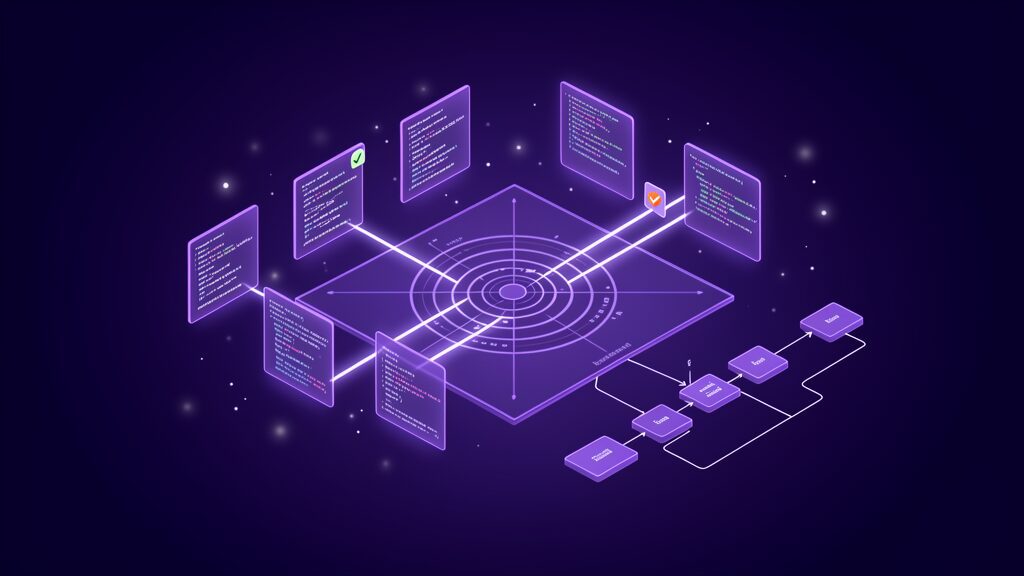
Cyber Resilience Is More Than Prevention
Resilience assumes compromise will happen and asks how quickly the organization detects, contains, and recovers. Unified SecOps contributes to all three, but only the first two are usually funded.
Recovery depends on knowing what was touched. Reconstructing an incident across fragmented logs with inconsistent retention is what turns a two-day recovery into a two-week one, and it is where a unified data layer pays for itself.
Resilience also depends on the security function surviving its own operating load. A team that is fully consumed by triage has no capacity for exercises, tabletop rehearsals, or recovery testing.
The honest limit is that consolidation is not a control. It improves the conditions under which controls operate, and an organization with poor patching, weak identity hygiene, and no backups will not be rescued by a better console.
Implementation Roadmap for Unified SecOps
Inventory What You Actually Run
Start with a complete list of security products, what each is licensed for, what it is actually deployed on, and who operates it. Most organizations discover tools nobody owns and coverage nobody can confirm.
Map Coverage to Adversary Techniques
Express current detection coverage against a technique framework rather than product categories. This converts a vague sense of overlap into a specific picture of duplication and gaps.
Fix the Data Layer First
Design the normalized schema, the routing, and the retention tiers before selecting a workflow platform. Every later decision inherits the quality of this one.
Rebuild Detections Before Retiring Tools
Port and validate the detections from any product slated for removal, and run both in parallel long enough to compare outputs. Nothing gets switched off on a calendar date alone.
Consolidate the Investigation Surface
Move analysts onto one workflow for triage and investigation even while some sensors remain legacy. This delivers the largest quality-of-life gain earliest and builds support for the rest.
Automate Enrichment, Then Response
Introduce automation in the low-risk direction first. Enrichment builds trust in the platform; graduated response follows once the data proves reliable.
Retire Deliberately and Reclaim Budget
Decommission superseded tools on a published schedule, remove their agents, and redirect the recovered spend into detection engineering rather than letting it disappear.
Prove Coverage With Adversary Simulation
Validate the consolidated stack with purple team exercises and breach simulation. Coverage claims that have not been tested against real technique execution are assumptions.
Establish Ownership and a Review Cadence
Assign a named owner for the pipeline, the detection library, and the automation catalog, with a recurring review. Sprawl returns wherever ownership is ambiguous.
Metrics That Matter
Tool count is a tempting metric and a poor one. Measuring the outcomes a unified SecOps program was meant to improve keeps the conversation on risk rather than procurement, and it gives the security function something defensible to report.
| Metric | What it tells you | How to read it |
|---|---|---|
| Mean time to detect | Whether correlation is shortening discovery | Segment by intrusion type; averages hide the worst cases |
| Mean time to respond | Whether containment is actually faster | Measure to containment, not to ticket acknowledgement |
| Detection coverage by technique | Where real gaps sit | Validate by simulation, not by vendor claim |
| Alert-to-incident ratio | Whether deduplication and tuning are working | A falling ratio with stable detections is the goal |
| False positive rate | Whether analyst effort is being wasted | Track per detection so noisy rules get owners |
| Sensor deployment coverage | Whether the estate is genuinely instrumented | Compare against asset inventory, not against licences |
| Automated containment share | Whether automation is earning trust | Growth should track validated confidence, not ambition |
| Analyst time on proactive work | Whether the team escaped pure reaction | The clearest signal that unified SecOps is working |
Common Mistakes
The most frequent mistake is starting with the platform decision. Selecting a vendor before understanding coverage, data volumes, and detection ownership guarantees a migration that discovers its requirements late and expensively.
The second is equating fewer vendors with unified SecOps. Contract consolidation and data unification are different achievements, and only the second changes detection quality.
The third is retiring tools on schedule rather than on evidence. Parallel running is unglamorous and it is the only reliable protection against silent coverage loss.
The fourth is ignoring the identity layer. A consolidation that unifies endpoint and network telemetry while leaving identity signals in a separate system misses the domain most intrusions actually traverse.
The fifth is under-resourcing detection engineering. A unified data layer with nobody writing and tuning detections is an expensive archive rather than a security capability.
The sixth is letting ingest pricing drive architecture. Quietly dropping telemetry sources to control cost produces gaps that nobody documented and nobody will remember during an incident.

Frequently Asked Questions
What is unified SecOps?
It is an operating model where detection, investigation, response, and reporting run on one correlated data set and one workflow. The test is whether an analyst can follow an incident across identity, endpoint, cloud, and network without leaving the workflow.
Does unified SecOps mean buying everything from one vendor?
No. Single-vendor stacks are one route, but many organizations unify a multi-vendor estate through a shared schema, a common pipeline, and one investigation surface. Contract count is not the measure.
How many security tools should an organization run?
There is no correct number, and chasing one is the wrong exercise. The useful questions are whether every tool has an owner, a purpose, and telemetry that reaches the common pipeline.
Will consolidation reduce our security coverage?
Only if detections are retired with the tools that housed them. Porting and validating detection logic before decommissioning, with a parallel-running period, is what keeps coverage intact.
How long does a unified SecOps migration take?
For a mid-sized estate, a realistic programme runs somewhere between two and four quarters to reach a consolidated investigation surface, with sensor migration and tool retirement continuing beyond that.
Is unified SecOps only for large enterprises?
No. Smaller teams often benefit most, because they have the least capacity to operate many consoles. The delivery model differs, with managed services carrying more of the load.
How does AI fit into unified SecOps?
Most reliably in enrichment, correlation, summarization, and triage support. Autonomous response should be introduced gradually, weighted by confidence and how reversible the action is.
What is the first thing to do?
Inventory what you run and map detection coverage to adversary techniques. Almost every subsequent decision depends on knowing what is genuinely covered today.
How do we avoid sprawling again?
Assign ownership, require every new tool to justify itself against existing coverage, and review the estate on a fixed cadence. Sprawl is a governance failure before it is a purchasing one.
Final Verdict
Security tool sprawl is not a tidiness problem. It lengthens detection, slows containment, exhausts analysts, and hides gaps behind an impressive-looking inventory, and every one of those effects shows up in the cost and duration of a real incident.
Unified SecOps is the credible answer, provided it is understood as an operating model rather than a purchase. The organizations that get value from it fix the data layer first, treat detection as engineering with version control and tests, retire tools on evidence rather than on dates, and keep identity at the center of the analysis.
The measure of success is not how few products appear on the invoice. It is whether an analyst can see a whole intrusion in one place, whether containment happens in minutes rather than days, and whether the team has recovered enough time to hunt for what the alerts missed.