

The AI race weakens climate pledges because the most visible breakthroughs in artificial intelligence are also some of the most power-hungry. As Google and Amazon expand AI features, cloud capacity, and model deployment, they are increasing demand for electricity, cooling, and specialized computing infrastructure at a pace that can outstrip clean energy growth. In other words, the AI race weakens climate pledges when the speed of innovation outruns the speed of decarbonization.
That tension is not theoretical. It is already visible in the way major technology companies plan new data centers, negotiate power contracts, and describe their long-term environmental goals. The AI race weakens climate pledges when companies promise ambitious sustainability progress while simultaneously building infrastructure that consumes far more power than earlier-generation services.
For readers, that matters because AI is no longer a niche technical trend. It is becoming a core business layer across search, cloud, software, media, and enterprise operations. The AI race weakens climate pledges because every new model, every new tool, and every new customer workload can translate into a larger physical footprint that must be supported by grids, generators, and cooling systems.
Why Google and Amazon face the same climate test
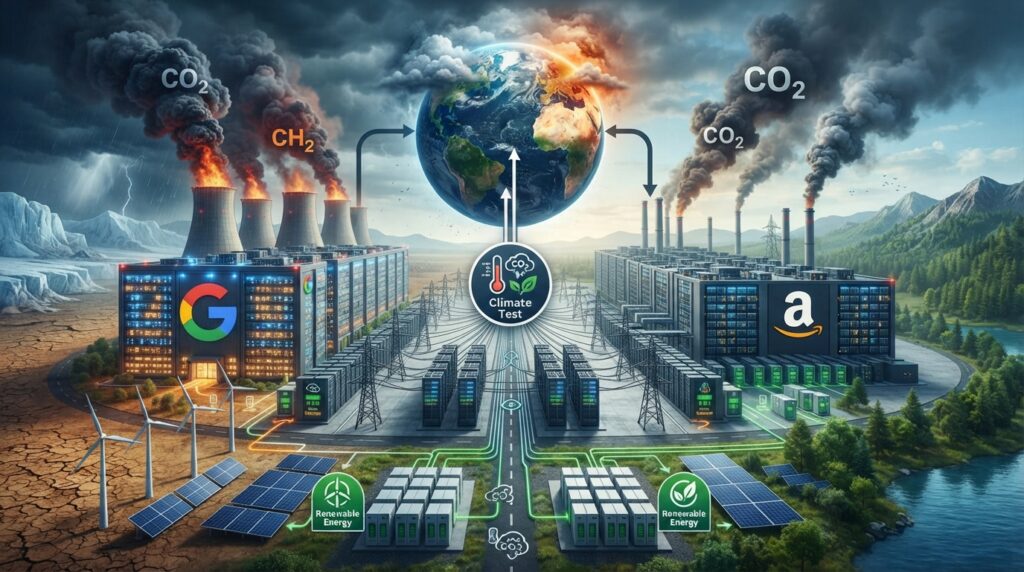
Google and Amazon are not exceptional in the sense that they are uniquely polluting. They are important because they show the problem clearly. The AI race weakens climate pledges at Google and Amazon because their AI ambitions sit inside companies with high public visibility, large infrastructure footprints, and significant climate commitments. Their growth strategies are therefore tested in public and scrutinized by investors, regulators, and customers.
Google has built its reputation on a strong sustainability narrative, while Amazon has spent years trying to balance rapid expansion with broad climate promises. In both cases, AI expansion creates pressure on those narratives. The AI race weakens climate pledges when growth targets, investor expectations, and infrastructure demands all accelerate at once while emissions reductions lag behind.
It is also worth noting that the pressure is not only about direct emissions. The AI race weakens climate pledges because the supporting ecosystem around AI, from chips to cooling systems to data center construction, can create a larger environmental burden than many executives initially expect. A company may still believe it is making progress in one part of the business while the broader footprint grows elsewhere.
How power demand turns AI growth into a climate test
Training and inference both add to the energy burden
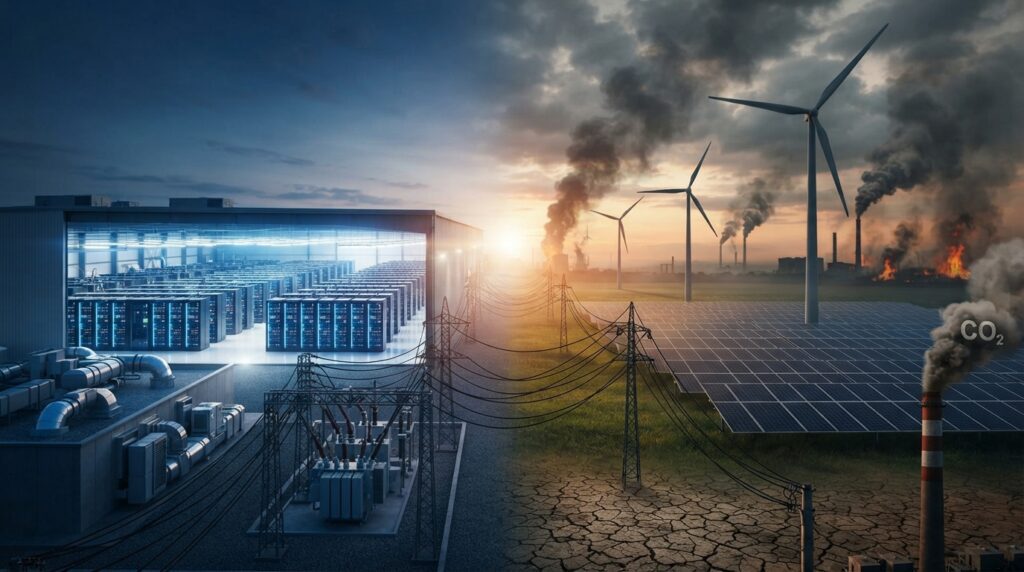
Artificial intelligence is not a lightweight technology. Training a large model requires a huge amount of compute, and inference keeps consuming energy long after the model has been trained. The AI race weakens climate pledges because the cost of running AI does not vanish once the first version is released; it scales with product adoption and user demand.
That means a company may launch an impressive AI feature and still add meaningful energy pressure to its operations. The AI race weakens climate pledges when the company celebrates efficiency gains while adding far more compute-heavy workloads than the prior version handled. Energy demand becomes the hidden multiplier in every new release.
For cloud providers, that multiplier is especially important. The AI race weakens climate pledges because the infrastructure behind AI is not just software; it is racks of servers, specialized accelerators, power conversion systems, and liquid or air-based cooling. The more ambitious the AI roadmap, the more the physical footprint expands.
Why data center growth makes the issue harder
Data centers are at the center of this issue. The AI race weakens climate pledges because AI capacity is often delivered through new facilities or major expansions of existing ones. Those buildings require not only construction but also long-term energy commitments, cooling systems, and regional utility coordination.
When a company accelerates AI adoption, it also accelerates the need for new power. The AI race weakens climate pledges when the deployment schedule of AI services exceeds the timeline for new clean energy procurement, grid upgrades, or efficiency improvements. In that scenario, the environmental claims look less credible because the physical reality is more demanding than the public narrative.
This is one reason why many climate experts see AI infrastructure as a stress test for corporate climate claims. The AI race weakens climate pledges because the operational burden of AI is not abstract; it shows up in the electricity bill, the local grid plan, and the timing of sustainability projects.
When clean energy lags behind AI demand
Another reason sustainability commitments come under pressure is that power procurement is slower than software delivery. The AI race weakens climate pledges when companies launch new AI services faster than they can secure new renewable energy, build storage, or complete the grid connections needed to support those services.
That is why the issue is not simply about whether companies want to be greener. The AI race weakens climate pledges when the pace of infrastructure deployment exceeds the pace of clean power deployment. A company can maintain a climate strategy on paper while still facing a real-world gap between its growth profile and its energy profile.
In many cases, the bottleneck is not just energy supply but delivery. The AI race weakens climate pledges because a renewable contract does not automatically solve the timing, location, or reliability problem for a data center that needs power this quarter. The gap between ambitious planning and operational reality becomes visible quickly.
Why regulators and investors are paying closer attention
Because AI is so strategically important, its impact is being measured more closely. The AI race weakens climate pledges when investors ask tougher questions, regulators demand better disclosure, and customers want evidence that advanced AI can be delivered responsibly. That scrutiny turns environmental messaging into a measurable business issue.
It also means the credibility of sustainability programs is now tied to operational facts, not just published targets. The AI race weakens climate pledges when companies talk about decarbonization while expanding infrastructure at a rate that makes those commitments look harder to achieve. The mismatch can have reputational and financial consequences.
That is why credible organizations increasingly frame climate strategy as part of core operations, not as a side initiative. The AI race weakens climate pledges when environmental planning is treated as an afterthought rather than a design constraint for growth.
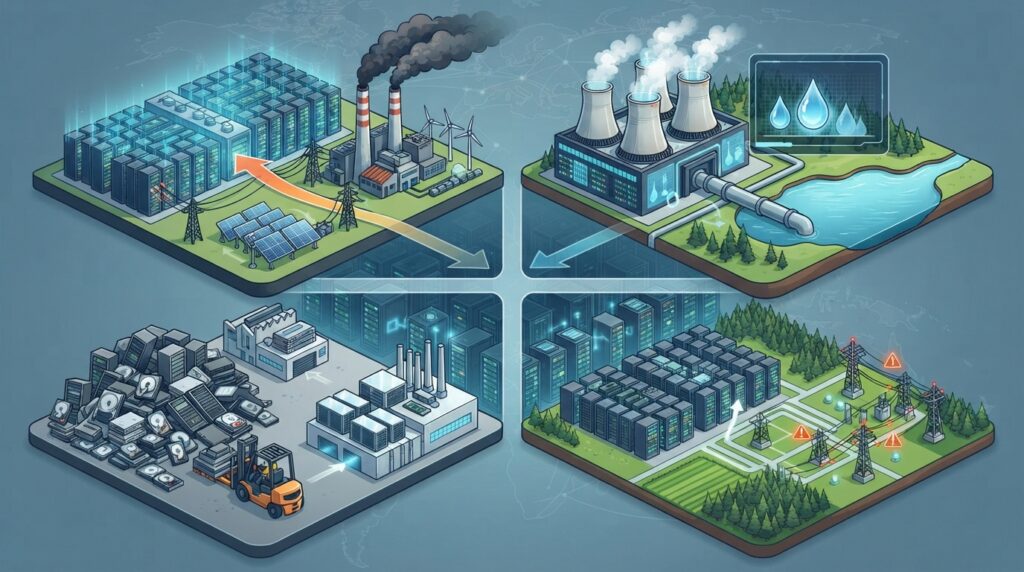
A practical list of the climate risks behind AI growth
What responsible AI companies should do next
There is still a path forward, and it starts with realism. The AI race weakens climate pledges only if companies treat sustainability as an optional message rather than a measurable operating discipline. The better approach is to pair AI growth with efficiency, transparent reporting, and smarter infrastructure design.
Companies can reduce waste by improving chip utilization, optimizing workloads, and designing data centers for energy efficiency from the beginning. The AI race weakens climate pledges less when leaders focus on actual emissions reductions instead of only on product announcements. That is where credibility becomes visible.
Useful reference points such as the International Energy Agency and our related coverage on AI models and tools show that AI strategy and energy strategy are now inseparable. The AI race weakens climate pledges when that connection is ignored, but it can be managed when leadership treats power planning as a core business issue.
Conclusion
The AI race weakens climate pledges because the speed of AI expansion is colliding with the slower pace of decarbonization, grid modernization, and clean power deployment. Google and Amazon are two of the clearest examples because their scale makes the conflict visible in practice. The AI race weakens climate pledges whenever companies grow faster than their environmental systems can support, but it also creates an opportunity for more honest, measurable, and credible climate leadership.
More AI coverage: explore Progressive Robot's AI Models, Tools & Releases hub — hands-on reviews, setup guides and benchmarks in one place.










