Cpu Memory

How to Deploy a Django App with Gunicorn on FreeBSD 12 — step-by-step FreeBSD 12 tutorial on Progressive Robot

How to Deploy a Django App with Gunicorn on FreeBSD 12

Introduction How to Deploy a Django App with Gunicorn on FreeBSD 12 is a core administration task for any FreeBSD 12 server operator. FreeBSD 12 ships with the 15.0-RELEASE kernel, ZFS as the default root filesystem, Capsicum capability sandboxing improvements, and an updated ports tree. Unlike Linux distributions, FreeBSD uses rc(8) for service management, pf […]
Read more
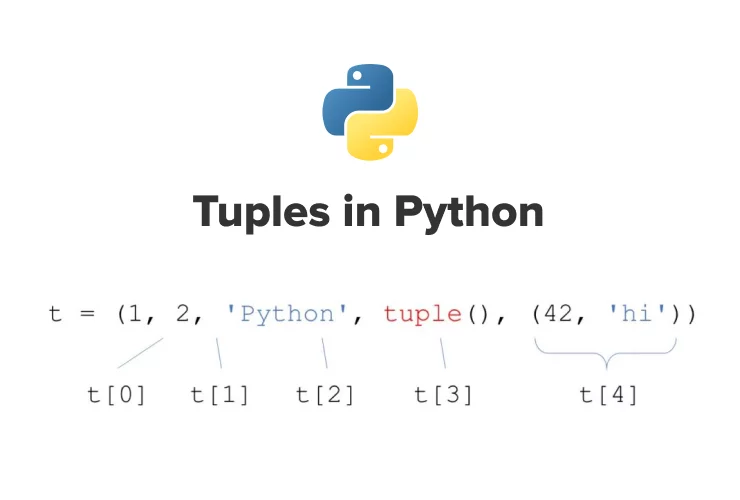
Understanding Tuples in Python 3: Complete Guide with Examples (2025–2026)

Understanding Tuples in Python 3: Complete Guide with Examples (2025–2026)

Understanding tuples in Python 3 is one of the most important skills for writing clean, efficient, and safe Python code — tuples are immutable, ordered sequences that let you group related data together without allowing changes after creation, making them perfect for fixed collections, function returns, dictionary keys, coordinates, records, and any data that should never be modified.

Read more
How to Install Memcached on FreeBSD 12 — step-by-step FreeBSD 12 tutorial on Progressive Robot

How to Install Memcached on FreeBSD 12

Introduction Deploying install memcached on freebsd 12 on a FreeBSD 12 machine differs from Linux in several important ways: packages come from the FreeBSD Ports Collection or the binary pkg repository, services are registered in /etc/rc.conf via sysrc(8), and firewall rules are written in pf.conf(5) syntax. This tutorial stays entirely within the standard base + […]

Read more
How to Configure MariaDB Galera Cluster on FreeBSD 12 — step-by-step FreeBSD 12 tutorial on Progressive Robot

How to Configure MariaDB Galera Cluster on FreeBSD 12

Introduction This guide explains how to Configure MariaDB Galera Cluster on FreeBSD 12 on FreeBSD 12. FreeBSD uses the pkg(8) binary package manager, rc.conf(5) for service startup configuration, and pf(4) as its primary packet filter. There is no SELinux or AppArmor — instead, FreeBSD provides the MAC (Mandatory Access Control) framework and Capsicum for fine-grained […]

Read more
How to Install InfluxDB on FreeBSD 12 — step-by-step FreeBSD 12 tutorial on Progressive Robot

How to Install InfluxDB on FreeBSD 12

Introduction How to Install InfluxDB on FreeBSD 12 is a core administration task for any FreeBSD 12 server operator. FreeBSD 12 ships with the 15.0-RELEASE kernel, ZFS as the default root filesystem, Capsicum capability sandboxing improvements, and an updated ports tree. Unlike Linux distributions, FreeBSD uses rc(8) for service management, pf for packet filtering, and […]

Read more
How to Install SQLite on FreeBSD 12 — step-by-step FreeBSD 12 tutorial on Progressive Robot

How to Install SQLite on FreeBSD 12

Introduction This guide explains how to Install SQLite on FreeBSD 12 on FreeBSD 12. FreeBSD uses the pkg(8) binary package manager, rc.conf(5) for service startup configuration, and pf(4) as its primary packet filter. There is no SELinux or AppArmor — instead, FreeBSD provides the MAC (Mandatory Access Control) framework and Capsicum for fine-grained privilege separation. […]

Read more
How to Back Up PostgreSQL with pg_dump on FreeBSD 12 — step-by-step FreeBSD 12 tutorial on Progressive Robot

How to Back Up PostgreSQL with pg_dump on FreeBSD 12

Introduction How to Back Up PostgreSQL with pg_dump on FreeBSD 12 is a core administration task for any FreeBSD 12 server operator. FreeBSD 12 ships with the 15.0-RELEASE kernel, ZFS as the default root filesystem, Capsicum capability sandboxing improvements, and an updated ports tree. Unlike Linux distributions, FreeBSD uses rc(8) for service management, pf for […]

Read more
How to Secure MySQL on FreeBSD 12 — step-by-step FreeBSD 12 tutorial on Progressive Robot

How to Secure MySQL on FreeBSD 12

Introduction Deploying secure mysql on freebsd 12 on a FreeBSD 12 machine differs from Linux in several important ways: packages come from the FreeBSD Ports Collection or the binary pkg repository, services are registered in /etc/rc.conf via sysrc(8), and firewall rules are written in pf.conf(5) syntax. This tutorial stays entirely within the standard base + […]

Read more
How to Set Up Microsoft Defender for Endpoint on Windows Server 2025 — step-by-step Windows Server 2025 tutorial on Progressive Robot

How to Set Up Microsoft Defender for Endpoint on Windows Server 2025

How to Set Up Microsoft Defender for Endpoint on Windows Server 2025 Microsoft Defender for Endpoint (MDE) is Microsoft’s cloud-powered extended detection and response (EDR) platform. While Windows Defender Antivirus provides local antimalware protection, MDE adds a powerful layer of behavioral analysis, threat intelligence correlation, live response capabilities, and centralized investigation through the Microsoft 365 […]

Read more
CHAT