AI policy

AI regulation becomes a political issue as Democrats target Big Tech ahead of the US midterm elections

AI Regulation: Why Democrats Think Cracking Down on AI Could Give Them an Edge

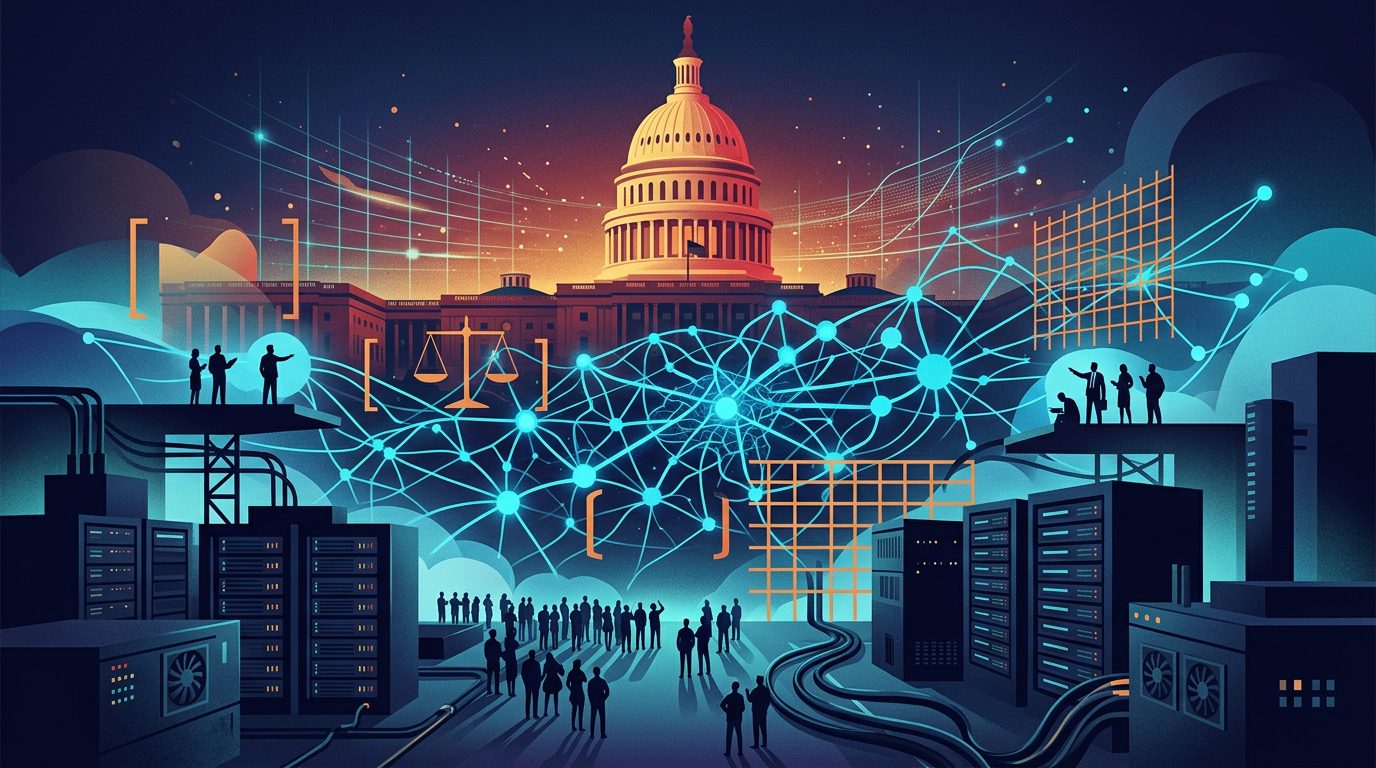
AI regulation is emerging as a potential political opportunity for Democrats ahead of the November 2026 US midterm elections. As public concerns grow about artificial intelligence, employment, electricity costs, privacy, and the power of major technology companies, Democratic strategists believe stronger oversight could help their candidates connect with voters. The argument is not simply about […]

Read more
regulating ai us china eu three paths a espalier pear tree trained on three wires

US, China, EU: Three Paths to Regulating AI

The US, China and the EU are regulating AI in three very different ways: voluntary pledges and executive orders, targeted state rules with tight content control, and a single law with named fines. We compare the instruments, dates and penalties, show where the paths converge, and set out a plan for firms that sell into all three.

Read more
super intelligence force trump ai czar jay clayton a space shuttle upright on a launch platform

Trump Announces an AI Czar for His Newly Created ‘Super Intelligence Force’

President Trump has named Director of National Intelligence Jay Clayton as his AI czar and chair of a new Super Intelligence Force. We set out who sits on it, what its 120-day charter asks for, how it compares with Space Force and earlier White House AI bodies, why Clayton calls not being first the biggest risk, and what it means for UK and EU buyers of AI.

Read more
bill gates ai legislation safeguards monitoring a control panel console with round dials

Bill Gates Joins Calls for AI Safeguards, Including Legislation

On Meet the Press, broadcast on 27 September 2026, Bill Gates told NBC’s Kristen Welker that “no one thinks self-regulation is enough” and that Washington must pass AI legislation making safeguards and monitoring “a required thing”. This article breaks his interview into five concrete requirements, explains why he says a kill switch is not enough, and tests the Sanders-Casar ban, the AI Kill Switch Act, the Senate duty-of-care talks, Cantwell’s principles, California’s SB 53 and the EU AI Act against them. It covers Trump’s Department of Justice answer, the US-China AI dialogue, the midterm calendar and what monitoring rules would mean for businesses that use AI.

Read more
turbulent ai era critical choices one month on a barometer disc with a blank dial on a short post

The Turbulent AI Era Is Here: One Month On, the Critical Choices Are Being Made

On 26 August 2026 Bill Gates published “The turbulent AI era is here. The choices we make now are critical.” Four weeks later, each choice he named has had a first public answer. President Trump rejected new guardrails and formed an “AI Force”, while his Treasury Secretary proposed a US-China AI incident notification mechanism ahead of today’s White House summit. A House bill would tax AI tokens or revenue, Australia has rejected a token tax as a “loser narrative”, and economists question whether token volume measures job loss at all. Human Reserved work has had wide coverage and no government adoption. And the Gates Foundation has committed $1 billion to wider AI access and convened a 60-organisation language coalition. This article scores each choice and sets out what UK businesses should do in the next 12 to 18 months.

Read more
super intelligence trump renames ai un speech a krater urn with two closed loop side handles

Super Intelligence: Trump’s Bold AI Rename and Real Risk

President Trump told the United Nations General Assembly on 22 September 2026 that the United States will call artificial intelligence “super intelligence” from now on, and the White House published the line with the word hereinafter attached. The same sentence rejects any “globalist scheme of control” over these systems. This article sets out the exact wording, the capability ladder the rename flattens, which documents a presidential rename can and cannot reach, and why the rejection of pooled international assessment is the part with measurable consequences.

Read more
ai executives calling for regulation history a bugle with tapering tube and flared bell

A Brief History of AI Executives Calling for Regulation

In the week of 14 September 2026, Sam Altman, Dario Amodei, Demis Hassabis, Satya Nadella and Elon Musk all agreed in public that frontier AI development should slow down. It is not the first time. The Verge’s Sean Hollister assembled the record on 16 September 2026, and it runs from Elon Musk’s July 2017 warning to US governors through Congressional testimony, a 22-word extinction statement, four nonbinding White House and summit agreements, and two California bills. Fifteen dated entries produced exactly one enforceable American statute: SB 53, signed in September 2025. This article walks the whole timeline, marks each entry binding or not, sets out where Anthropic, OpenAI, Musk and Meta actually split on specific measures, and explains what a business should do in a market where the safety rules are still mostly voluntary.

Read more
obama democrats clear plan ai safeguards a donkey standing side on with long upright ears

Obama Urges Democrats to Have a ‘Clear Plan’ for AI Safeguards

Barack Obama told Democrats at a private fundraiser on 10 September 2026 that they need a “very clear plan” on AI. We count what his 379 released words actually say, map the five issues a plan for AI safeguards would have to cover, and set it against the congressional calendar, Speaker Mike Johnson’s reply, Trump’s March framework and what voters tell pollsters.

Read more
CHAT