
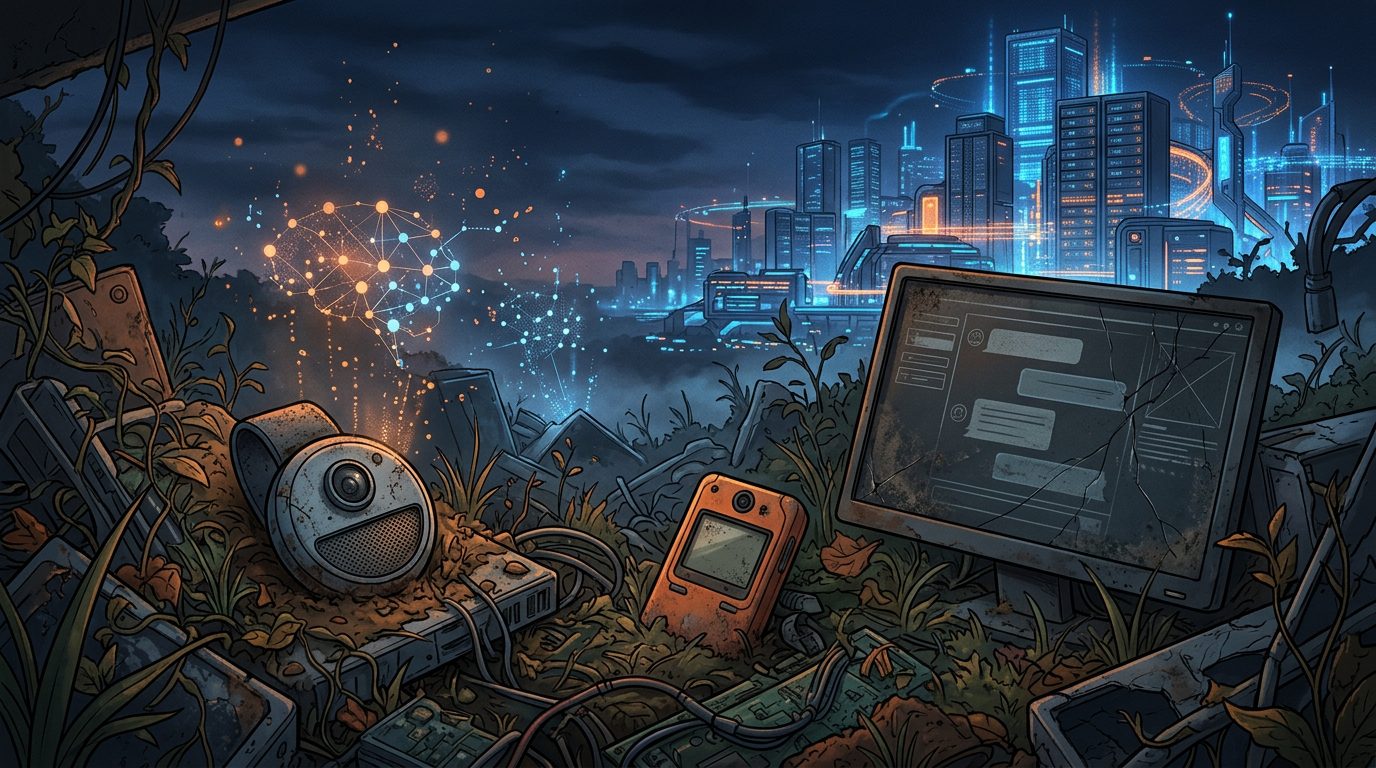
The AI graveyard is growing as promising startups, experimental products and ambitious technology projects encounter the difficult reality of building sustainable businesses. While artificial intelligence continues to attract investment and transform software development, some products have struggled to retain users, cover computing costs or compete with larger technology companies.
Recent examples include Relay, an AI-powered workflow automation platform that shut down in September 2026, and Huxe, an AI audio service that ended operations in May. The AI companion company Character.AI has also entered Chapter 11 bankruptcy proceedings, although its platform remains operational while a court-supervised sale is pursued.
These cases illustrate an important distinction: a promising AI demonstration does not automatically translate into a viable business.
The AI graveyard is not simply a list of failed ideas. It reveals how quickly competitive conditions can change when large platforms introduce similar features, customers resist paying for standalone tools, and the cost of operating sophisticated AI systems remains high.
Examining these setbacks provides useful lessons for founders, investors and businesses deciding which AI technologies deserve long-term investment.
The AI graveyard offers a valuable record of how quickly the artificial intelligence market can change. For founders, the AI graveyard highlights the importance of sustainable revenue and long-term customer demand. Investors can use the AI graveyard to examine why impressive technology does not always translate into a profitable business.
1. Relay: When Bigger Platforms Take Over the Market
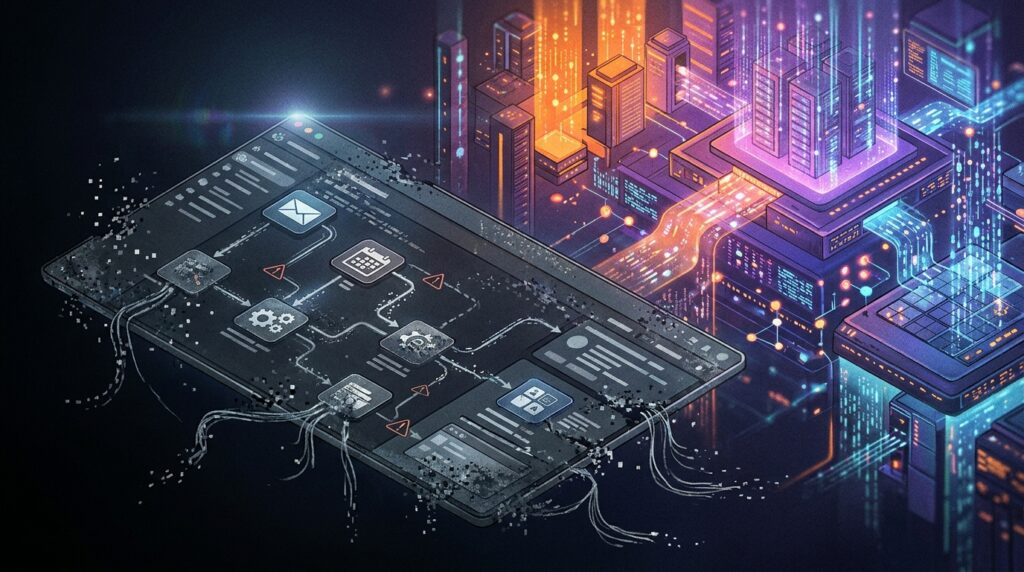
Relay was designed to help users automate business workflows with AI agents. Its capabilities included connecting applications and automating tasks involving email and other everyday business activities.
However, the company announced that its service had shut down in September 2026. Its official website confirms that accounts, workflows and run history were permanently deleted.
The closure highlights a difficult challenge for specialist AI startups. When established companies integrate comparable automation capabilities into their existing products, customers may have fewer reasons to purchase a separate service.
A small startup can develop an impressive product but still struggle to compete against platforms with established customer relationships, extensive distribution and the resources to bundle new features into existing subscriptions.
Relay’s experience is an important entry in the AI graveyard because it demonstrates how product quality alone may not be enough. A successful AI business also needs a defensible market position, a compelling reason for customers to switch and a business model that can survive competitive pressure.
The AI graveyard shows that specialised automation tools need a clear competitive advantage. For businesses evaluating new software, the AI graveyard also demonstrates why integration options and long-term product support matter. Relay’s closure makes the AI graveyard a useful reference point for evaluating standalone AI platforms.
Source: Relay’s official shutdown notice.
2. Humane AI Pin: The Risks of Reimagining Everyday Devices

The Humane AI Pin was one of the most visible attempts to move artificial intelligence beyond smartphones and laptops. The wearable device was designed to provide AI-powered assistance through a compact, screen-light interface.
Despite attracting substantial investment and considerable attention, the product struggled with performance, responsiveness and its ability to replace familiar smartphone functions. Questions about battery safety also damaged confidence in the device.
Humane shut down its AI Pin business in February 2025, and HP acquired most of the company’s assets for a reported $116 million.
The AI graveyard includes hardware projects like this because physical products face additional challenges beyond model performance. They must balance battery life, heat, connectivity, reliability, manufacturing costs and user experience.
For customers, a new AI device must provide a clear advantage over the technology they already own. If users can perform the same tasks more conveniently on a smartphone, the new hardware may struggle to justify its price.
Humane’s experience demonstrates that an innovative interface is not enough. Products must solve everyday problems reliably before novelty wears off.
Hardware failures occupy an important place in the AI graveyard because physical products must overcome challenges beyond software performance. The AI graveyard demonstrates why battery life, usability and reliability can determine whether an AI device succeeds. Humane’s experience adds another lesson to the AI graveyard: new technology must provide practical value that customers can recognise.
3. Huxe: When AI Features Become Standard

Huxe offered an AI-powered audio experience that turned written information into conversational, podcast-style briefings. The product aimed to help users consume information in a more personalised and accessible format.
The company announced its shutdown in May 2026. Its official notice stated that the service would end on 28 May and that user data would be permanently deleted the following day.
The closure illustrates a challenge facing many AI applications: features that initially appear distinctive can become easier to access through existing platforms.
When customers can obtain similar functionality through services they already use, a standalone product needs a stronger reason to exist. That reason could be better personalisation, superior content quality, unique integrations or a substantially better user experience.
The AI graveyard shows why founders must evaluate not only whether a product works, but also whether it can maintain a meaningful advantage as the market evolves.
The AI graveyard illustrates how quickly a standalone AI feature can lose its appeal when alternatives become widely available. Huxe adds to the AI graveyard a lesson about differentiation: products need reasons for customers to return. The AI graveyard also highlights the importance of building services around specific user needs rather than novelty alone.
Source: Huxe’s official shutdown announcement.
4. Yupp: Why Access to AI Models Is Not Enough

Yupp offered users a way to compare responses from hundreds of AI models side by side. The platform encouraged people to evaluate different answers and provide feedback on their relative quality.
Despite its broad model selection, Yupp announced that it was winding down its service in March 2026. Its website subsequently indicated that it was no longer accepting new users.
The experience highlights a central problem in the AI market: providing access to technology is not necessarily the same as creating a durable competitive advantage.
Model providers regularly release new capabilities, while developers can build interfaces around existing models with comparatively little infrastructure. This can make it difficult for a comparison platform to remain distinctive unless it offers additional value, such as trusted evaluation methods, specialist workflows or enterprise integrations.
The AI graveyard demonstrates that access to advanced technology must be accompanied by a clear customer need and a realistic revenue model.
The AI graveyard reminds developers that access to powerful models is only one part of a successful product. Yupp’s experience adds to the AI graveyard the importance of offering evaluation tools, specialist workflows or other distinctive benefits.
Source: Yupp’s official website.
5. Character.AI: When Legal and Operational Risks Become Overwhelming
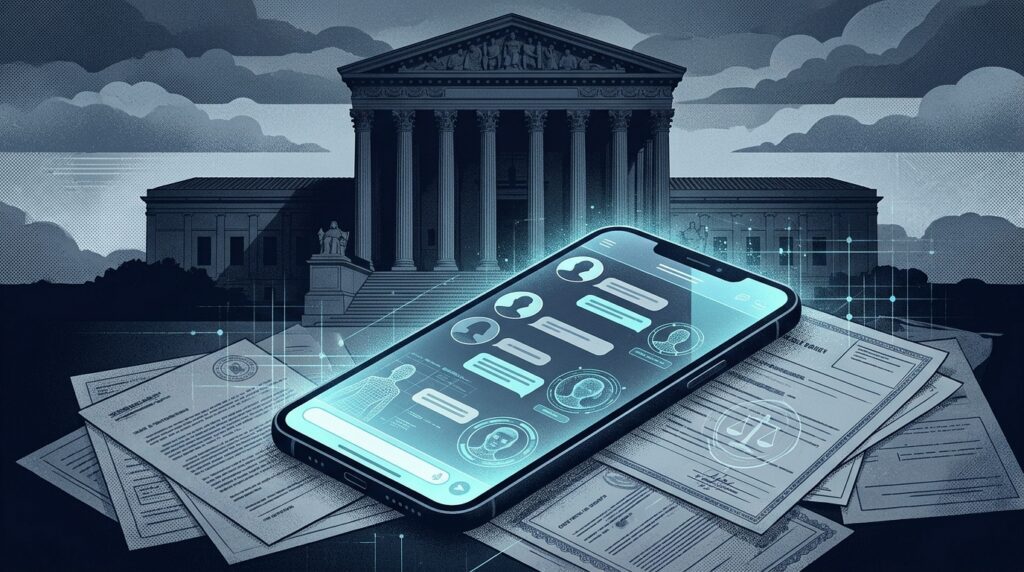
Character.AI became a prominent consumer AI platform by allowing people to create and interact with custom chatbot personalities. Its popularity demonstrated that users were interested in conversational systems designed for entertainment, role-play and companionship.
However, the company has faced lawsuits and regulatory scrutiny concerning chatbot safety, particularly allegations involving interactions with young users. The allegations have not all been finally resolved, and they should not be treated as established findings in every case.
On 12 October 2026, Character.AI announced that it had initiated voluntary Chapter 11 bankruptcy proceedings to facilitate a court-supervised sale. Disney became the initial bidder for a proposed $20 million deal involving a non-exclusive, perpetual licence to certain intellectual property.
The company has said that its platform remains operational during the sale process and could continue if a suitable proposal is secured. Therefore, Character.AI should be described as a company undergoing bankruptcy proceedings, not as a service that has already shut down.
Its position in the AI graveyard illustrates how legal costs, regulatory obligations, safety requirements and infrastructure expenses can combine to put pressure on a consumer AI business.
The case also demonstrates why responsible product design, clear safeguards and sustainable operating costs need to be considered from the beginning rather than added after a platform has attracted millions of users.
The AI graveyard also illustrates why safety and legal planning must accompany rapid product growth. Character.AI’s ongoing proceedings show that the AI graveyard should distinguish between a confirmed shutdown and a business restructuring or bankruptcy process.
Sources: Character.AI’s official update and Reuters reporting.
6. Sora and Standalone AI Products: The Challenge of Keeping Users

AI video generation has attracted considerable attention because it can turn text prompts and other inputs into moving images. However, running these systems can require substantial computing resources, and a product’s popularity does not necessarily guarantee that it can cover those costs.
OpenAI’s Sora video-sharing application was discontinued in March 2026, according to published reporting. The development illustrates the distinction between a technically impressive product and a service that can maintain sufficient user engagement and commercial value.
Standalone AI applications also face pressure when their core capabilities are integrated into broader platforms. A specialised product may initially attract early adopters, but users can move elsewhere if competing tools offer a more convenient experience or better integration with their existing workflows.
The AI graveyard provides a reminder that product teams must evaluate retention, infrastructure expenses, monetisation and strategic fit together. These factors can be just as important as the quality of the underlying model.
A shutdown does not necessarily mean the underlying technology has failed. It can also indicate that a company has decided to focus its resources on other products or distribute a capability through a different channel.
7. What Businesses Can Learn from the AI Graveyard

The AI graveyard offers practical lessons for companies planning to develop or adopt artificial intelligence.
First, validate demand before scaling. A successful demonstration does not prove that customers will pay for a product. Early testing should establish whether the proposed solution addresses a recurring problem.
Second, calculate the full operating cost. AI services may require ongoing expenditure on inference, cloud infrastructure, storage, monitoring and customer support. These costs must be reflected in pricing and financial planning.
Third, establish a clear competitive advantage. If a larger provider can reproduce a feature and bundle it into an existing subscription, a standalone product needs another reason for customers to choose it.
Fourth, prioritise reliability. AI tools must work consistently in real-world conditions. Impressive demonstrations cannot compensate for unreliable performance or frustrating workflows.
Fifth, build trust and safety into the product. Businesses need appropriate data protection, security controls, testing and safeguards, particularly when products interact with sensitive information or vulnerable users.
Sixth, monitor retention and commercial performance. Downloads, registrations and media attention are not substitutes for repeat usage, paying customers and sustainable margins.
Seventh, plan for product closure. Companies should consider data export, customer communication, account deletion and continuity arrangements if a service is discontinued.
These lessons matter beyond startups. Organisations adopting AI should evaluate long-term support, data portability and vendor stability before relying on a product for critical business processes.
Businesses looking for practical software development, cybersecurity and IT consulting can explore the services offered by Progressive Robot.
Conclusion: The AI Boom Also Needs Sustainable Businesses
The growing AI graveyard shows that technological progress and commercial success do not always move together. Relay, Huxe, Yupp and Humane’s AI Pin illustrate different challenges, from competition and product differentiation to hardware usability and the economics of operating a service.
Character.AI adds another dimension, demonstrating how legal and regulatory pressures can threaten a company’s ability to operate even when its platform has attracted a substantial audience. Its bankruptcy proceedings remain ongoing, so its ultimate outcome is not yet settled.
For the wider industry, the lesson is not that artificial intelligence is failing. Rather, the market is testing which products solve real problems, retain customers and operate sustainably.
As AI becomes a standard feature across software and digital services, the strongest businesses are likely to be those that combine useful technology with reliable performance, responsible design and a clear commercial purpose.
The AI graveyard is therefore more than a record of abandoned projects. It is a reminder that lasting innovation depends not only on what AI can do, but also on whether people need it, trust it and are willing to keep using it.
Sources
More AI coverage: explore Progressive Robot's AI Models, Tools & Releases hub — hands-on reviews, setup guides and benchmarks in one place.










