
Rehumanize.io Review: 7 Powerful AI Writing Lessons
Rehumanize.io is part of a fast-growing category of tools that promise to turn robotic AI drafts into natural writing. That positioning is easy to understand. Many teams now use ChatGPT, Claude, Gemini, and other models to create outlines, summaries, emails, product copy, and blog drafts. The problem is that those drafts often sound stiff, repetitive, overly symmetrical, or too obviously machine-shaped.
The official Rehumanize.io homepage describes the product as a free AI humanizer for transforming AI text into human writing. It highlights natural phrasing, meaning preservation, tone control, batch-style processing, multilingual polish, export options, and a cleaner publishing workflow. It also markets AI detection avoidance, which is where responsible use becomes important.
This Rehumanize.io review looks beyond the headline claim. It explains what the tool appears to do, where it may help writers, where organizations should be cautious, and how to fit it into an ethical content workflow. The goal is not to treat humanization as a shortcut for deception. The better goal is to use rewriting tools to improve clarity, voice, readability, and editorial quality while keeping authorship, sourcing, and policy expectations honest.
For teams building an AI strategy, adopting Artificial Intelligence (AI) and Machine Learning (ML), or scaling workflow automation, tools like this raise a practical question: how do you keep AI-assisted writing efficient without letting quality, trust, or compliance slip?
Rehumanize.io at a glance
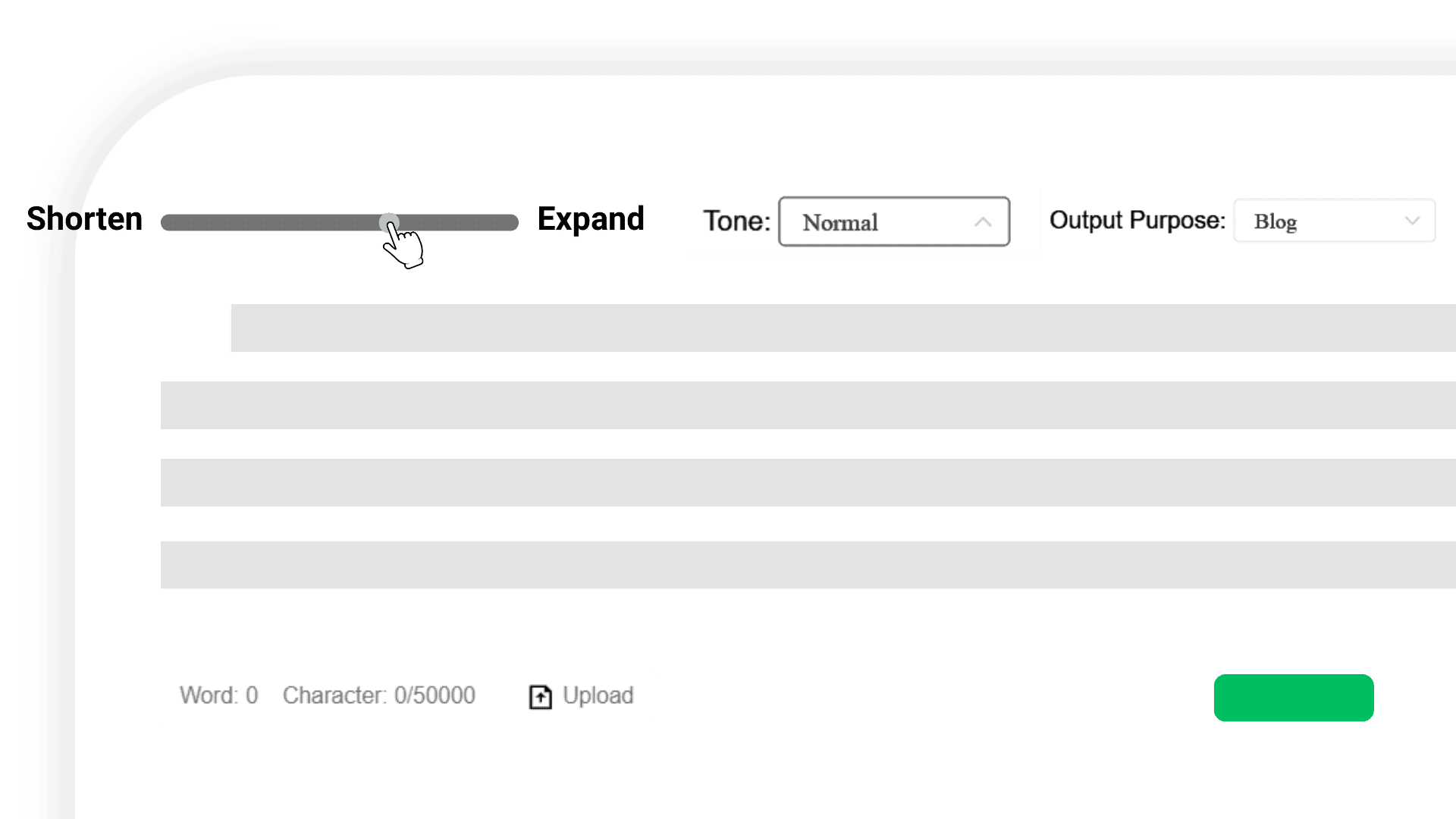
Rehumanize.io is an AI text rewriting tool focused on changing the feel of machine-generated copy. The product page says users can paste a draft, choose length, tone, purpose, and target language, then humanize the text in one click. It also presents a 50,000-character input area, upload support, copy and download options, and a result box for final text.
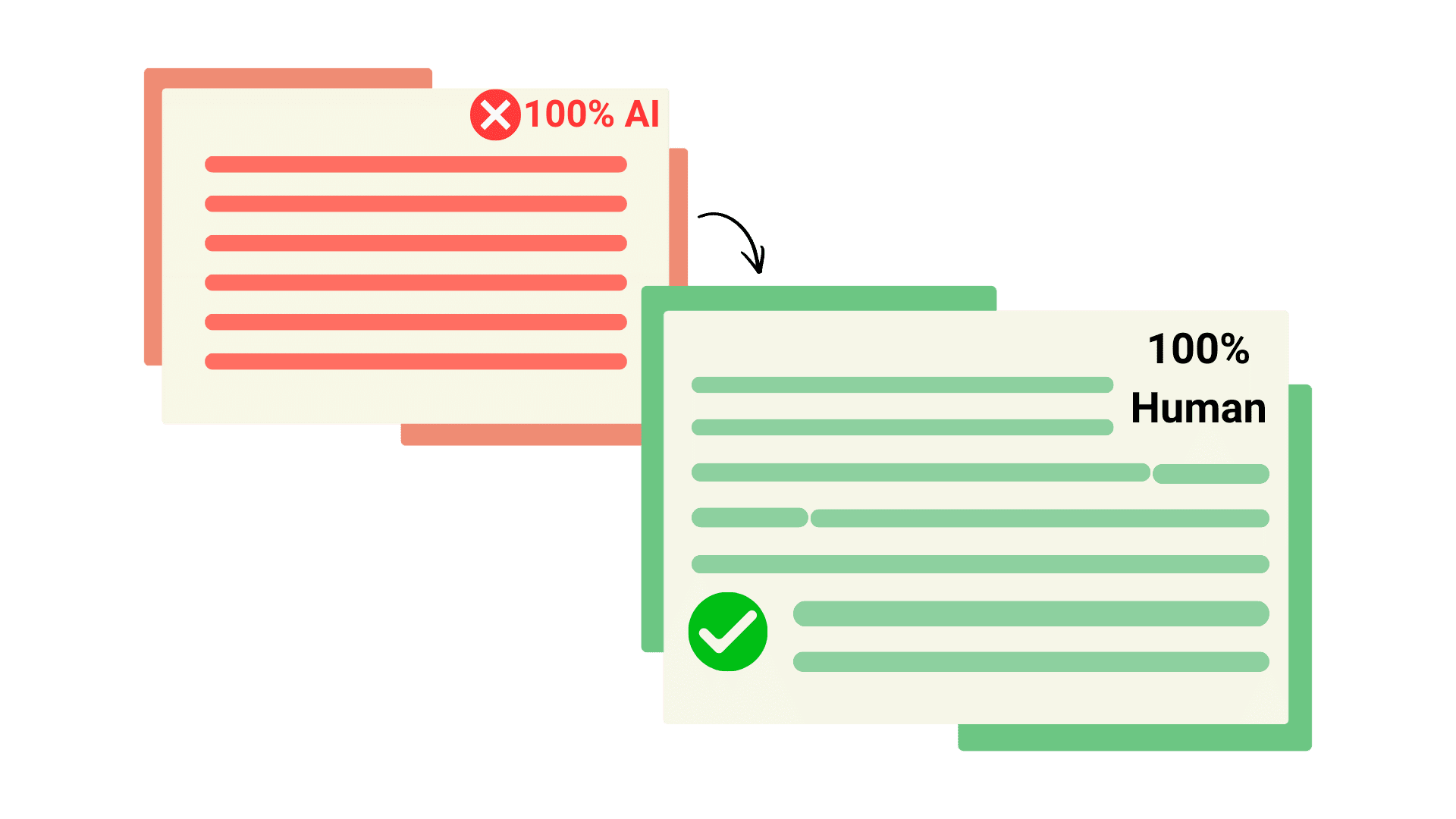
The main value proposition is tone repair. AI-generated writing can be grammatically correct but emotionally flat. It may repeat phrases, overuse transitions, produce generic claims, or sound like every sentence came from the same template. The tool tries to break those patterns by varying sentence rhythm, improving expression diversity, and making text feel more natural.
The second value proposition is meaning preservation. The site says its AI text humanizer protects original intent, locks in technical terms, and keeps core arguments intact while restructuring phrasing. That is an important promise because rewriting tools can easily change nuance. A helpful humanizer should improve flow without inventing facts, weakening claims, or changing the user's position.
The third value proposition is accessibility. The product repeatedly describes itself as free and simple to use, with no complex setup. For students, freelancers, marketers, and small teams, that low-friction experience is appealing. It is not positioned as a heavy enterprise content platform; it is positioned as a fast utility for making drafts sound less mechanical.
Still, the tool should be treated as an editor, not an authority. A polished rewrite can still contain factual errors, weak sources, or inappropriate claims if the original draft had those problems. It may improve how text sounds, but human review must still decide whether the text is accurate, original, useful, and appropriate for the audience.
How Rehumanize.io humanizes AI text
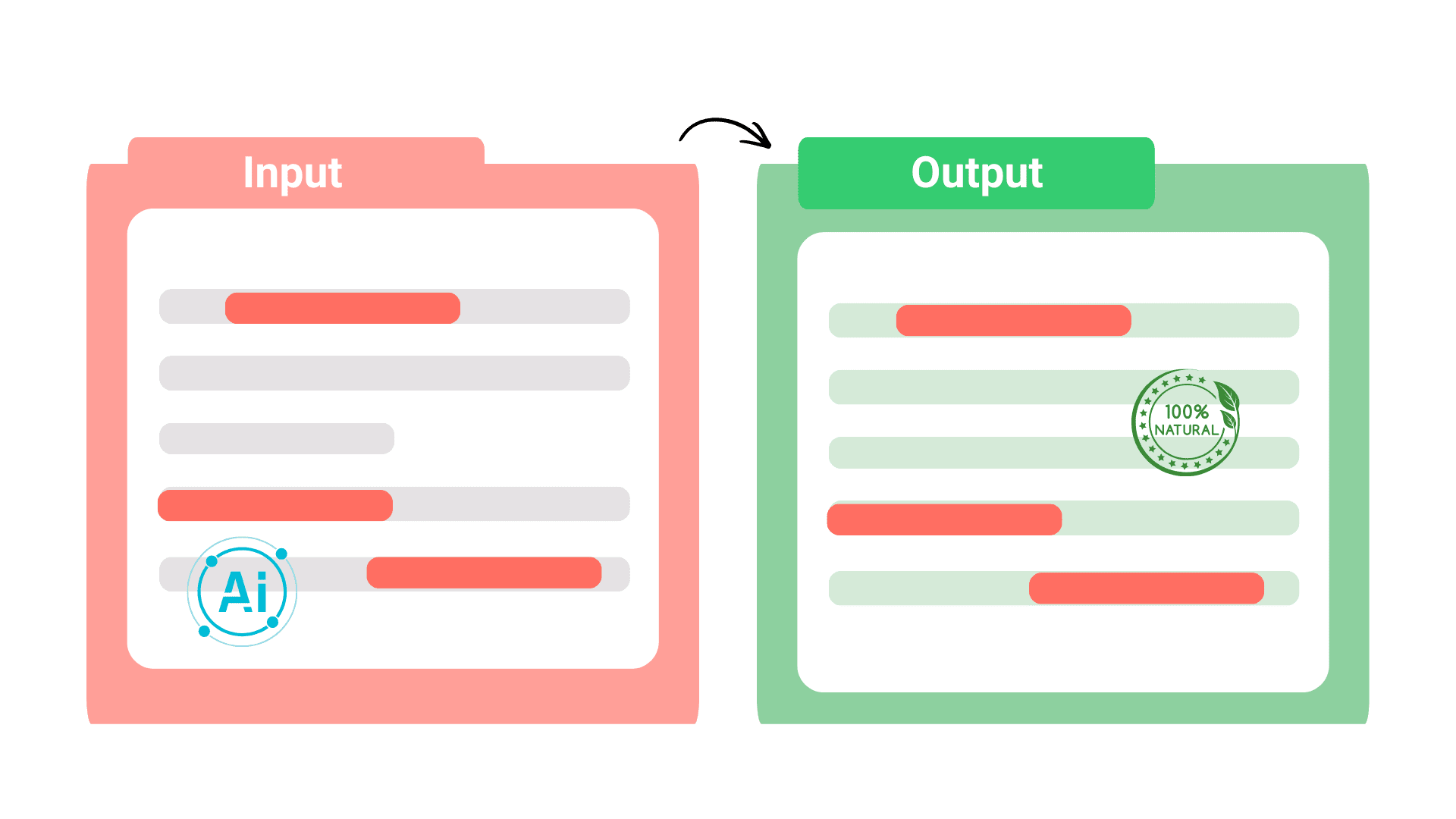
Rehumanize.io appears to work by restructuring sentences, varying phrasing, and reducing common AI writing signals. Its website mentions removing stiff tones, changing predictable patterns, improving expression diversity, and mimicking natural writing habits. In practical terms, that means the output may use more varied sentence lengths, less repetitive structure, and more audience-friendly language.
That workflow can be useful when an AI draft is directionally correct but not publishable. For example, a marketing team might generate a first draft of a product update, then use the humanizer to make the copy sound less generic. A support team might rewrite a templated response so it feels more personal. A blogger might improve transitions and rhythm before a human editor adds final judgment.
The tool also highlights control settings such as length, tone, goal, and target language. Those options matter because human writing is not one style. A professional email should not sound like a social post. A technical explanation should not sound like a sales page. A local-language rewrite should respect idioms and audience expectations. The service is most useful when the user knows the intended voice before pressing the button.
The product's key content locking feature is also notable. Brand names, technical terms, numbers, and legal phrases often need to stay unchanged. If a rewriting tool casually changes a feature name, pricing detail, or compliance statement, the result can become inaccurate. The product claims to preserve key terms, which is exactly what content teams should test before relying on it.
A good process is to compare three versions: the original AI draft, the rewritten output, and the final human-edited version. That comparison shows whether the tool improved clarity or merely swapped words. A humanizer should earn a place in the workflow by making edits faster and better, not by replacing the writer's responsibility to judge the final piece.
Features that matter for writers and marketers
For writers and marketers, the most important features are not gimmicks. They are workflow features. The site highlights multi-dimensional writing preferences, key content locking, high-volume file processing, one-click phrasing alternatives, multilingual polish, and export to formats such as PDF, Word, or TXT. Those details matter because content work is repetitive and deadline-driven.
Multi-dimensional preferences help teams keep context in view. A landing page, outreach email, product description, article section, and LinkedIn post each need different rhythm. If a tool lets users set purpose and tone, it can reduce the number of manual rewrites needed after generation.
High-volume processing is useful for long drafts, but it also creates risk. The more text a team processes at once, the more important quality control becomes. A 500-word email can be checked quickly. A 20,000-word document needs sampling, fact review, source review, and consistency checks. The tool may help with volume, but editorial governance should scale with that volume.
One-click phrasing alternatives can be valuable for breaking writer's block. Sometimes the problem is not that a sentence is wrong; it is that the sentence has no energy. Seeing alternate wording can help a writer choose a cleaner expression. Used well, the tool becomes a brainstorming partner for style, not a black box that decides the final voice.
Marketers should also care about brand consistency. A humanized paragraph can sound natural and still sound unlike the company. Before using this kind of tool across a content team, create examples of approved voice, banned phrases, preferred terminology, and claims that require review. That turns the tool from a random rewrite button into part of a controlled business process automation flow.
Risks: AI detection, originality, and responsible use
The most sensitive part of Rehumanize.io is its AI detector language. The site says it helps users bypass AI detectors, avoid sensitive identification, and make AI content undetectable. Those claims may attract users, but organizations should treat them carefully. Detection evasion is not the same thing as quality, originality, or ethical writing.
AI detectors are imperfect. They can produce false positives, especially for non-native writers, formulaic business writing, or highly structured academic prose. They can also miss AI-generated material. That means the goal should not be blind dependence on detector scores. The better goal is transparent, useful, accurate content that meets the rules of the place where it will be used.
Students should follow academic policies. Companies should follow disclosure rules, client agreements, search quality expectations, and internal review standards. Publishers should care about originality, sources, experience, and reader value. Rehumanize.io can help polish expression, but it should not be used to hide prohibited automation, fabricate expertise, or misrepresent authorship.
Privacy is another issue. The Rehumanize.io page claims data security and a delete-on-use policy. That is reassuring, but teams should verify the privacy policy, terms of use, and data handling practices before pasting confidential information. Drafts can contain customer data, unreleased product details, legal claims, or internal strategy. A free web tool may not be the right place for sensitive text.
Responsible adoption starts with boundaries. The NIST AI Risk Management Framework is a useful reference for teams thinking about trustworthy AI processes. Do not paste regulated or confidential content unless the tool's terms and controls satisfy your requirements. Do not use rewrites to mask plagiarism. Do not publish without fact-checking. Do use the tool to improve readability, remove awkward phrasing, localize tone, and make AI-assisted drafts more helpful for real readers.
Best Rehumanize.io use cases and workflow

Rehumanize.io is best suited for drafts that already have a clear purpose and accurate information. The strongest use cases include blog introductions, product descriptions, social posts, outreach emails, newsletter snippets, support templates, translation cleanup, and rough AI-generated summaries. In each case, the user brings intent and judgment while the tool helps with expression.
A simple workflow has five steps. First, create or collect the draft. Second, remove private information and verify the facts. Third, run the draft through Rehumanize.io with the right tone and purpose. Fourth, compare the rewrite with the original for meaning changes. Fifth, edit manually for brand voice, citations, and audience fit.
This workflow is especially helpful for teams that produce frequent content. A marketer might draft campaign blurbs with an LLM, use the humanizer for rhythm, then apply a brand checklist. A customer success team might improve response templates while keeping policy language unchanged. A founder might polish investor updates without losing the substance of the message.
The tool is less appropriate for high-stakes legal, medical, financial, academic, or regulatory text unless expert review remains central. Rehumanize.io can make a sentence smoother, but it cannot decide whether a claim is compliant, whether a citation is sufficient, or whether a disclosure is required. In those settings, the tool should support a specialist, not replace one.
For operational teams, the best metric is not detector score. Better metrics include time saved per draft, number of manual edits after humanization, readability improvement, brand consistency, source accuracy, and approval rate. If Rehumanize.io reduces editing time while preserving accuracy and trust, it can become a useful part of the content stack.
Rehumanize.io FAQ
What is Rehumanize.io?
Rehumanize.io is an AI humanizer that rewrites AI-generated text into more natural-sounding human writing. It is designed for drafts from tools such as ChatGPT, Claude, and Gemini.
Is Rehumanize.io free?
The official site describes the tool as free and highlights unlimited or high-volume usage. Users should still check the current terms on the Rehumanize.io website before relying on it for production work.
Does Rehumanize.io change the meaning of text?
The product claims to preserve original intent, key terms, and core arguments while improving rhythm and readability. Users should still compare the output with the source draft because any rewriting tool can alter nuance.
Can Rehumanize.io bypass AI detectors?
The site markets detector-avoidance benefits, but users should be careful. Detector scores are not a substitute for honesty, originality, or policy compliance. Use the tool to improve writing quality, not to hide prohibited AI use.
Who should use Rehumanize.io?
Content marketers, bloggers, students, freelancers, social media managers, and business teams may benefit when they need to polish AI-assisted drafts. Sensitive or regulated use cases require stronger review and privacy checks.
What should teams verify before using it?
Teams should review privacy terms, data retention claims, output accuracy, brand voice fit, source integrity, and any disclosure requirements. Rehumanize.io works best when it supports a clear human editorial process.
More AI coverage: explore Progressive Robot's AI Models, Tools & Releases hub — hands-on reviews, setup guides and benchmarks in one place.