
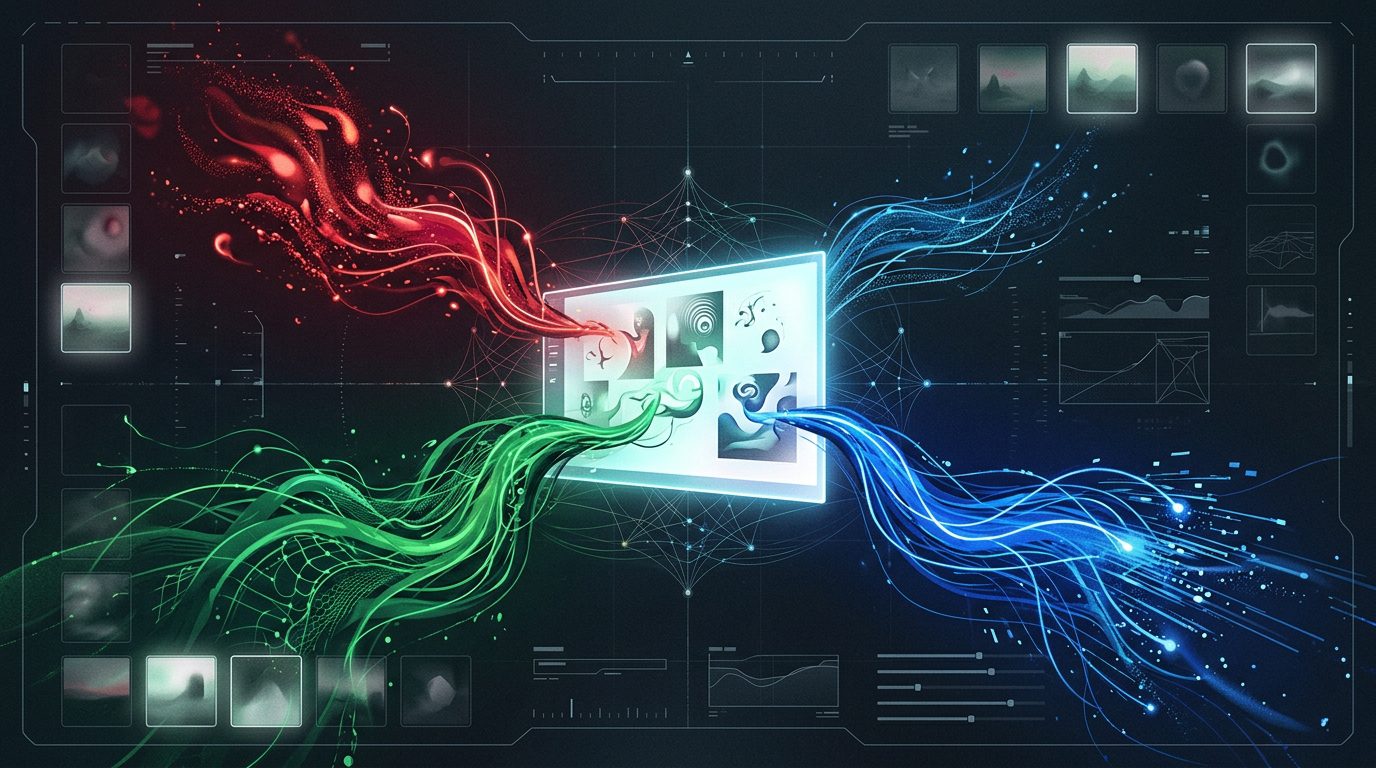
Aurora image models are attracting attention after three previously undocumented model identifiers reportedly appeared in OpenAI API references before being spotted in image-generation tests on Arena. The identifiers—aurora-red-alpha, aurora-green-alpha, and aurora-blue-alpha—have raised speculation that OpenAI may be evaluating a new generation of image-generation technology.
The discovery was reported by TestingCatalog on October 18, 2026. According to the report, the three references briefly appeared in OpenAI’s API environment and were subsequently removed. Community testers then reported encountering models with the same names on Arena, a platform where people can compare AI systems through side-by-side evaluations.
The most important detail is that the reports suggest image-generation capabilities, but OpenAI has not publicly confirmed the models’ identities, intended uses, or release plans. Their appearance does not establish that a new product is ready for launch.
For now, Aurora image models represent a potentially interesting development in OpenAI’s image-generation work rather than a confirmed commercial release.

What Are the Three Aurora Model Identifiers?
The three names reported in the discovery are:
| Model identifier | What is currently reported |
|---|---|
aurora-red-alpha | Reportedly generated an image during Arena testing. |
aurora-green-alpha | Reportedly generated an image during Arena testing and attracted attention for its visual style. |
aurora-blue-alpha | Identified as part of the same group, but its comparative performance remains unclear from the initial reports. |
The color-coded names are intriguing, but they do not explain how the models work. OpenAI has not published technical documentation establishing whether red, green, and blue represent different architectures, quality settings, experimental versions, or internal evaluation configurations.
The term “alpha” generally suggests an early-stage identifier, but the name alone cannot establish a model’s development status. It also does not prove that these systems will become separate products.
The reported appearance of Aurora image models is therefore best understood as a clue about testing activity, not a definitive description of OpenAI’s next image-generation release.

What Arena Testing Could Reveal About Image Quality
Arena testing can provide useful early clues about how an AI model performs when compared with other systems. In blind comparisons, users evaluate outputs without necessarily knowing which model produced each result. Such evaluations can help identify differences in visual quality, prompt adherence, composition, and stylistic consistency.
According to TestingCatalog, early examples associated with Aurora image models included cat portraits. The images reportedly showed clean details and different approaches to composition, lighting, and background treatment. However, a handful of examples cannot establish how well a model performs across a wide range of prompts.
An image generator might excel at portraits but struggle with complicated scenes, accurate text rendering, complex object relationships, or consistent characters. Reliable comparisons require more than a few appealing samples.
TestingCatalog also reported that early observations suggested differences between the red and green variants. These observations should not be treated as established benchmark results because the publicly described sample is limited and OpenAI has not published official performance figures.
The key question is whether further testing demonstrates consistent improvements across different image-generation tasks—not simply whether one sample looks impressive.

Could Aurora Be OpenAI’s Next GPT Image Model?
One of the biggest questions is whether the Aurora identifiers are connected to a future GPT Image release. TestingCatalog speculated that OpenAI could be testing technology intended for a potential next-generation image model, sometimes discussed as GPT-Image-3.
That remains speculation. No official announcement has confirmed that Aurora is GPT-Image-3, and the names themselves do not establish a connection to a particular product.
OpenAI could be experimenting with image-generation improvements, testing several internal configurations, or evaluating technology that will never be released under the Aurora name. Companies often use temporary identifiers while developing or assessing systems before making product decisions.
If Aurora image models are part of a broader image-generation upgrade, potential areas of improvement could include more accurate prompt interpretation, more consistent visual styles, better control over object placement, and improved rendering of complex scenes. These are plausible areas to watch, not confirmed capabilities of the reported models.
The distinction matters because a model appearing in a test environment is not the same as a model being ready for customers. Product naming, availability, pricing, supported features, and performance claims all require separate confirmation.
How Aurora Could Affect Competition in AI Image Generation
The AI image-generation market is increasingly competitive. Developers and consumers can choose from a growing range of tools for creating illustrations, marketing assets, product concepts, portraits, and other visual content.
For OpenAI, improvements in image generation could strengthen the role of visual tools within its broader AI ecosystem. Better prompt adherence and more dependable editing could make these systems more useful for designers, marketers, content creators, and businesses that need to produce visual material quickly.
The reports about Aurora image models have also prompted comparisons with other image-generation systems, including Google’s Gemini-based image tools. However, claims that Aurora outperforms a competitor cannot be established from isolated examples or informal reactions.
A meaningful comparison would need consistent prompts, repeatable tests, and evaluation across multiple categories. It should also consider practical factors such as generation speed, editing capabilities, output resolution, reliability, access, and cost.
For businesses, the strongest model will not necessarily be the one that produces the most striking image in a single test. A dependable tool that follows instructions, supports repeatable workflows, and delivers predictable results may offer greater value.

What the Aurora Reports Mean for Developers
For developers, the immediate lesson is to distinguish between a model identifier appearing in an API environment and a supported model being available for production use.
A temporary identifier does not guarantee stable access, published pricing, documented capabilities, or a commitment to maintain compatibility. Building a production workflow around an undocumented model could introduce unnecessary technical and commercial risks.
Developers interested in Aurora image models should watch for official model documentation, API changelog entries, pricing details, access instructions, and examples that can be reproduced independently. Those details would provide a much clearer picture of whether the systems are intended for external use.
It is also worth waiting for broader testing before making decisions based on early visual examples. Image-generation quality can vary substantially depending on prompt design, output settings, and the task being attempted.
Until OpenAI clarifies the status of the Aurora identifiers, developers should treat them as experimental leads rather than supported production options.

When Could OpenAI Announce Aurora?
There is currently no confirmed public release date for Aurora image models. Their reported appearance in API references and Arena tests suggests that the identifiers were being used or evaluated somewhere in the development process, but it does not reveal OpenAI’s launch plans.
Testing can precede a release, but it can also lead to further development, changes in model names, restricted access, or cancellation. A model tested by a limited group may never become a public product in its original form.
The most useful signals to watch are an announcement from OpenAI, the addition of the model names to official documentation, or a public API release that explains capabilities and access requirements. Independent testing across a broader range of prompts would also help establish whether the reported models represent a meaningful improvement.
Until those signals appear, claims about a launch date or the final product name should be treated cautiously.
Conclusion: Aurora Image Models Are an Early Clue, Not a Confirmed Launch
Aurora image models have drawn attention after three color-coded identifiers reportedly appeared in OpenAI API references and image-generation tests on Arena. Early examples and community observations have encouraged speculation that OpenAI could be evaluating new image-generation technology.
However, the available reports do not confirm that Aurora is GPT-Image-3, establish a public release date, or demonstrate a decisive performance advantage over competing systems. The reported samples are an early indication of possible testing activity, not a comprehensive evaluation.
For developers, creators, and businesses, the next step is to watch for official documentation and more systematic comparisons. Those will matter far more than model codenames or a handful of early images.
If OpenAI eventually releases a system based on these experiments, its real value will depend on how reliably it follows prompts, handles complex visual tasks, supports editing workflows, and performs in everyday use. Until then, Aurora remains a promising but unconfirmed development to watch.
Sources
More AI coverage: explore Progressive Robot's AI Models, Tools & Releases hub — hands-on reviews, setup guides and benchmarks in one place.










