
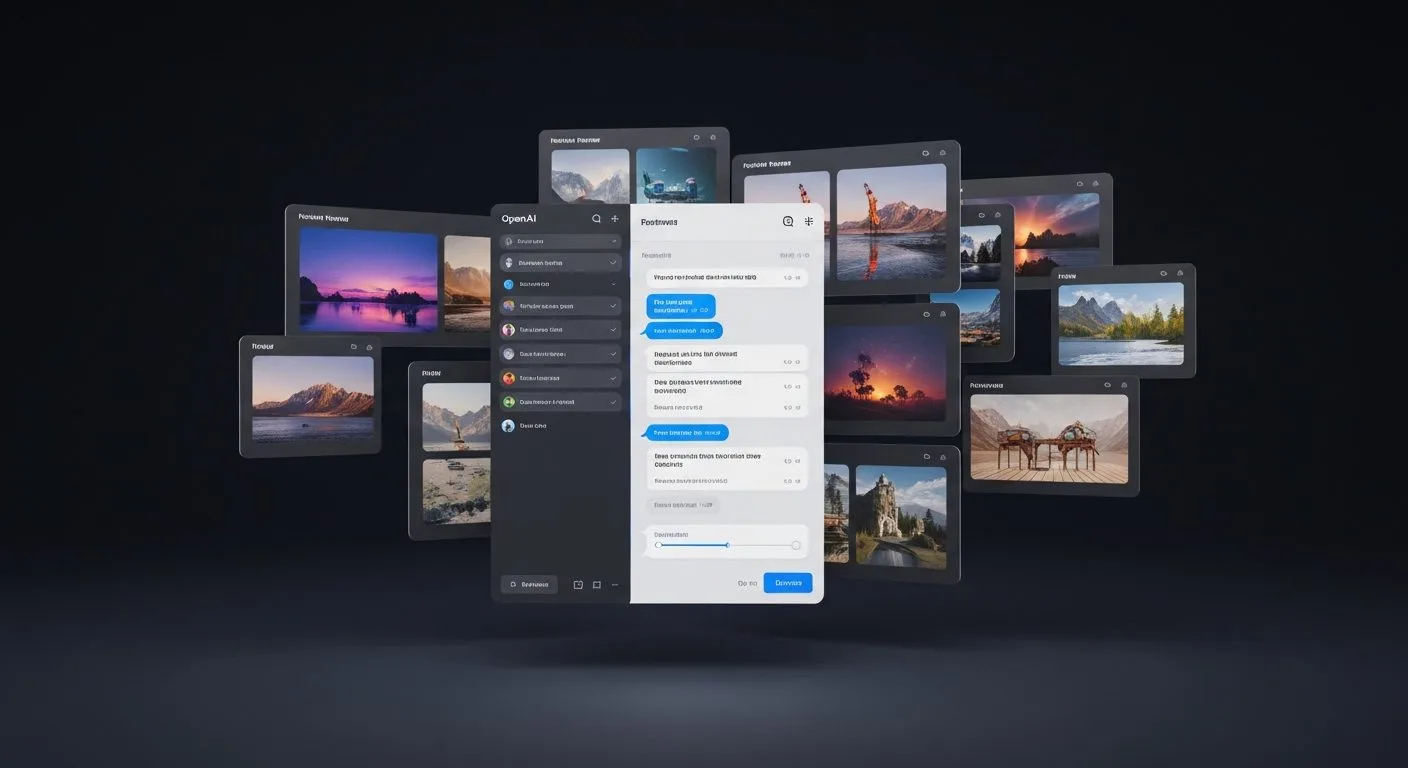
If you are asking what is ChatGPT 4o Images, the shortest accurate answer is that it refers to OpenAI’s 4o image generation feature built directly into GPT-4o inside ChatGPT. OpenAI does not formally brand the feature as “ChatGPT 4o Images,” but the phrase works as a practical shorthand for ChatGPT’s default GPT-4o image generator: a chat-native system that creates and edits images through normal conversation instead of through a separate prompt-only tool.
This guide uses OpenAI’s official Introducing 4o Image Generation announcement and related documentation as the main references. If you want to understand what is ChatGPT 4o Images in practical terms, the key idea is simple: OpenAI is trying to turn image generation from a novelty feature into a useful everyday capability for posters, diagrams, menus, product concepts, photo edits, and other workhorse visual tasks.
5 key facts at a glance
- ChatGPT 4o Images is a practical shorthand for GPT-4o’s native image generation inside ChatGPT.
- OpenAI says the system is natively multimodal, which means image generation is built into GPT-4o rather than bolted on as a separate tool.
- OpenAI highlights strong text rendering, detailed instruction following, multi-turn editing, and the ability to use uploaded images as context.
- The feature launched as the default image generator in ChatGPT and is also available in Sora, while related developer image workflows are documented separately through OpenAI’s APIs.
- OpenAI says generated images include C2PA metadata and are protected by policy enforcement, moderation, and stronger safeguards around sensitive real-person content.
Why understanding what is ChatGPT 4o Images matters
If you want a better answer to what is ChatGPT 4o Images, it helps to understand what problem OpenAI is trying to solve. Earlier image generators could make impressive art, but they often struggled with practical visuals that people actually use in work: signs, invitations, infographics, posters, menus, UI mockups, diagrams, and image edits that need to stay consistent across multiple iterations.
That matters because the commercial value of image AI is increasingly tied to precision rather than surprise. Teams care about whether a model can follow instructions, render readable text, keep a character or layout stable, and revise an image without starting over from scratch. If you are tracking how capabilities like that affect creative operations and business workflows, Progressive Robot’s article on AI in project management is useful context for understanding how AI tools move from experimentation into production.

What is ChatGPT 4o Images in plain English? It is ChatGPT’s built-in GPT-4o image generator that lets you ask for images the same way you ask for text: by chatting naturally, refining the result, uploading references, and making follow-up edits in context.
From a user perspective, that means you can ask ChatGPT to make an image, then immediately say things like “make it photorealistic,” “change it to 16:9,” “keep the same character,” or “turn this uploaded sketch into a polished product visual.” The point is not just that ChatGPT can generate pictures. The point is that it can now handle image generation as part of the same running conversation.
How ChatGPT 4o Images works and why it stands out

1. It is native to GPT-4o
The first thing to know about what is ChatGPT 4o Images is that OpenAI describes it as native image generation inside GPT-4o. That matters because the system can use the same chat context, uploaded images, and prior instructions that already exist in the conversation. Instead of handing work off to a disconnected image model, GPT-4o can reason across text and visuals together.
OpenAI frames this as one reason the feature feels more practical. The system can use previous turns, preserve more context, and make image creation feel like part of a continuous collaborative workflow rather than a series of isolated prompt attempts.
2. It is built for text rendering and tighter instruction following
One of OpenAI’s clearest public claims is that GPT-4o image generation is much better at rendering text inside images and following detailed prompts. OpenAI says GPT-4o can handle more complex scene instructions than many earlier systems, and specifically notes that while other systems often struggle around 5 to 8 objects, GPT-4o can handle about 10 to 20 objects with better binding between items, traits, and relationships.
That is a big part of why the feature matters. Image generation becomes much more useful when it can reliably place words, labels, signage, diagrams, menus, or poster copy in roughly the right form without collapsing into gibberish.
3. It supports multi-turn generation and uploaded-image context
OpenAI also emphasizes that because image generation is native to GPT-4o, it works naturally across multiple turns. You can generate an image, ask for revisions, reuse the same concept, and maintain more consistency across iterations. OpenAI’s examples show users turning a cat into a game character, changing aspect ratios, extending the scene, and building interface elements over several turns.
The model can also use uploaded images as visual inspiration or transformation input. OpenAI describes this as in-context learning for image generation: the system can analyse reference images and pull relevant details into the output instead of treating every request as starting from zero.
4. It combines world knowledge with broad visual style range
Another part of what is ChatGPT 4o Images is the way OpenAI positions its knowledge and style flexibility. Because GPT-4o is a natively multimodal model, OpenAI says it can use broader world knowledge and chat context when generating images. That helps with requests that mix concepts, real-world details, or information-heavy visuals.
OpenAI also shows a broad visual range, including photorealistic photography, poster design, illustrated concepts, UI overlays, branded graphics, and stylized creative scenes. So the product is not only trying to be an art generator. It is trying to be a general visual communication tool.
What ChatGPT 4o Images can do well

Posters, diagrams, menus, and infographics
OpenAI explicitly frames 4o image generation as useful image generation rather than decorative image generation. That is why so many of its examples focus on visual communication tasks: street signs, menus, invitations, diagrams, concrete poems, weather graphics, and information-rich layouts.
Iterative design and concept development
Because the feature works across multiple turns, it is well suited to iterative design work. A user can start with a rough concept, then ask for layout changes, different aspect ratios, stronger realism, a different style, or more detailed visual elements without abandoning the previous context.
Reference-based editing and transformations
OpenAI says the system can transform uploaded images or use them as visual inspiration. That makes the feature relevant for product mockups, idea exploration, style transfer, concept refinement, and practical edit workflows where the source image matters.
Photorealism and stylistic variety
OpenAI also leans heavily on photorealism and style range in its public showcase. The examples span analog-style photography, polished poster work, game-inspired visuals, surreal but realistic composites, and more conventional marketing-style outputs.
How to access ChatGPT 4o Images right now

For most people, the practical answer to what is ChatGPT 4o Images is simple: it is the default image generator inside ChatGPT’s GPT-4o experience. OpenAI’s launch post says the rollout started for Plus, Pro, Team, and Free users in ChatGPT, with Enterprise and Edu coming later, and it also says the feature is available in Sora.
For developers, the picture is related but slightly different. OpenAI’s current developer documentation routes image generation through the Image API and the Responses API, where GPT Image models and image-generation tooling support generation, edits, transparency, masking, reference-image workflows, and multi-turn image experiences. So the product experience people call “ChatGPT 4o Images” and the developer-side image stack are closely related, but not documented as one identical surface.
Limitations and safety considerations
A realistic explanation of ChatGPT 4o Images also has to include the caveats.
- OpenAI says the system can still crop long images like posters too tightly, especially near the bottom.
- The company also flags hallucinations, binding problems, precise graphing, multilingual text rendering, editing precision, and dense information with small text as current limitations.
- OpenAI says image generation can take longer than standard text responses, often up to about one minute in ChatGPT for detailed images.
On the safety side, OpenAI says all generated images include C2PA metadata identifying them as coming from GPT-4o, and that the company also uses policy enforcement, moderation, and heightened restrictions around requests involving real people, especially for nudity, sexual deepfakes, and graphic violence.
Frequently asked questions
Is ChatGPT 4o Images the same as DALL-E?
No. OpenAI says its most advanced image generator is now built into GPT-4o. DALL-E can still be accessed through a dedicated DALL-E GPT, but 4o image generation is the newer default ChatGPT image experience.
Can ChatGPT 4o Images edit uploaded photos?
Yes. OpenAI says GPT-4o can transform uploaded images, use them as inspiration, and refine outputs across multiple turns in chat context.
Is ChatGPT 4o Images available through the API?
The ChatGPT feature and the developer APIs are closely related, but OpenAI documents developer image workflows through the Image API and Responses API using GPT Image models and image-generation tools rather than describing the API simply as “ChatGPT 4o Images.”
What is ChatGPT 4o Images best understood as right now?
The clearest answer is that it is ChatGPT’s native GPT-4o image generator: a conversational image system designed for practical visual work, multi-turn editing, stronger prompt following, and better text-in-image performance than older consumer image generators typically offered.
Final thoughts
If you came here asking what is ChatGPT 4o Images, the most useful answer is that it is OpenAI’s chat-native 4o image generation experience inside ChatGPT. It matters because OpenAI is pushing image generation away from one-shot novelty prompting and toward a more useful workflow where text, images, revisions, and context all live in the same conversation.
Whether it fully becomes the default visual workbench for everyday users will depend on reliability, speed, safety, and how well it handles real production tasks instead of curated demos. But as a product direction, ChatGPT 4o Images is important because it shows OpenAI treating image generation as a core language-model capability rather than as a separate side feature.
More AI coverage: explore Progressive Robot's AI Models, Tools & Releases hub — hands-on reviews, setup guides and benchmarks in one place.