
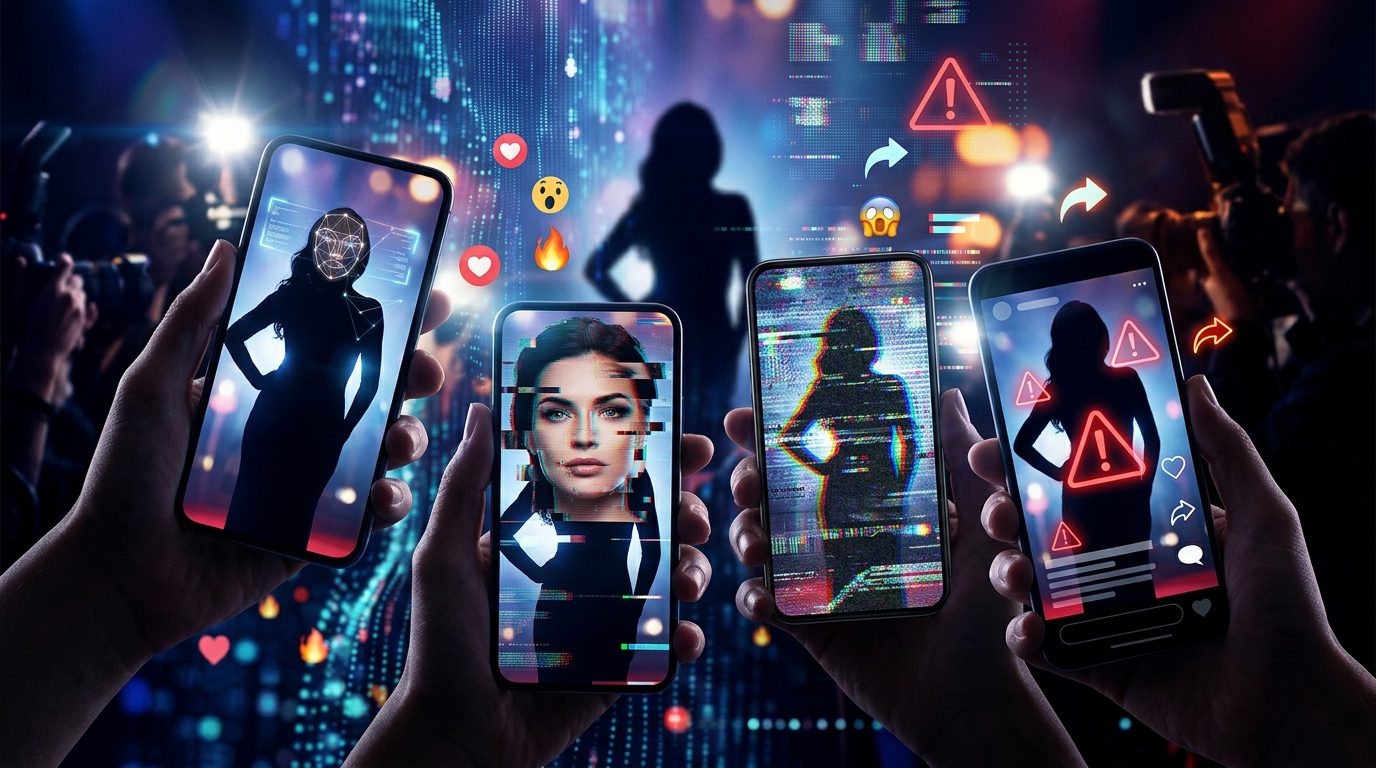
Celebrity AI deepfakes are exposing a serious weakness in the modern social media ecosystem: convincing images and videos can reach millions of people before anyone establishes whether they are genuine. Generative AI tools can now imitate a person’s appearance, voice, expressions and movements, making fabricated content increasingly easy to produce and distribute.
A recent report from The Verge illustrates how quickly the problem can escalate. An AI-generated image purporting to show actress Mia Goth wearing a provocative T-shirt message circulated on Instagram following news of her divorce filing. The post attracted substantial engagement despite the account being identified as a fan account. According to the report, Goth’s representative had previously complained about counterfeit AI images, and Instagram eventually removed the account for impersonating a public figure.
The incident highlights a problem that extends beyond Hollywood gossip. When an image appears on a popular account with a verification badge, people may assume it is authentic. Other accounts can then repost it, entertainment websites may discuss it, and search results can give the original falsehood additional visibility.
The result is a cycle in which fabricated content acquires the appearance of credibility simply because it has been widely shared.
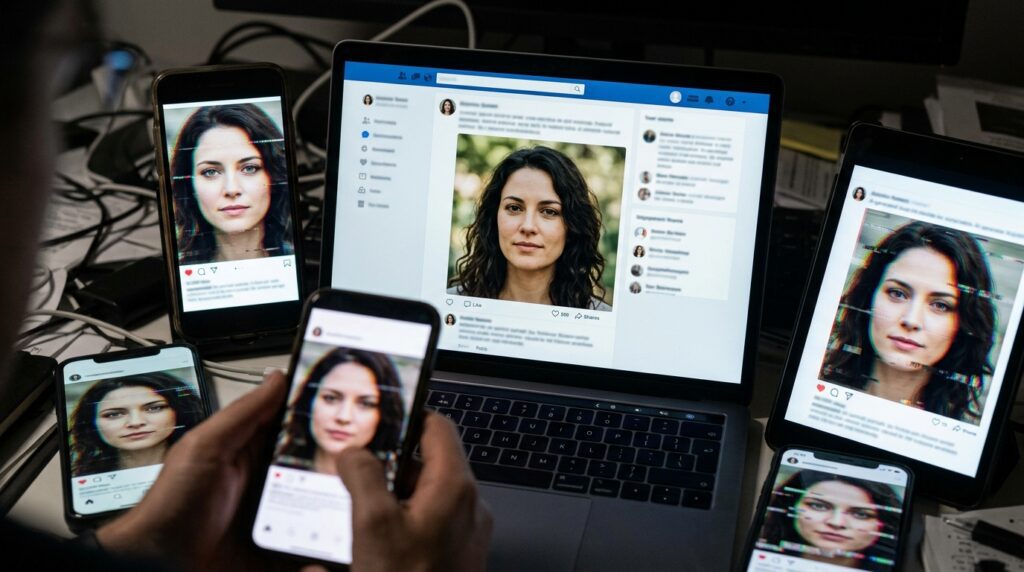
How AI-Generated Celebrity Content Tricks Audiences
Modern image and video generators can create realistic scenes that never happened. Voice-cloning systems can reproduce recognizable speech patterns, while video tools can make a person appear to say something they never said.
These capabilities have legitimate applications in film production, accessibility, dubbing and creative work. The problem arises when someone uses them to impersonate a real person without permission, mislead an audience or exploit that person’s reputation.
Celebrity AI deepfakes are especially effective at attracting attention because audiences already recognize the people involved. A fabricated clip of a famous singer behaving unusually, an actor supposedly making a controversial statement, or a public figure endorsing an investment can become instantly newsworthy in the eyes of viewers.
Some fabricated content is deliberately absurd and may be shared as a joke. Other material is designed to look authentic. The distinction is not always obvious when a video is viewed without context, particularly on a small screen or when it appears between genuine photographs and news updates.
Even a realistic image does not prove that an event occurred. Likewise, a familiar voice is not reliable evidence that a recording is genuine.
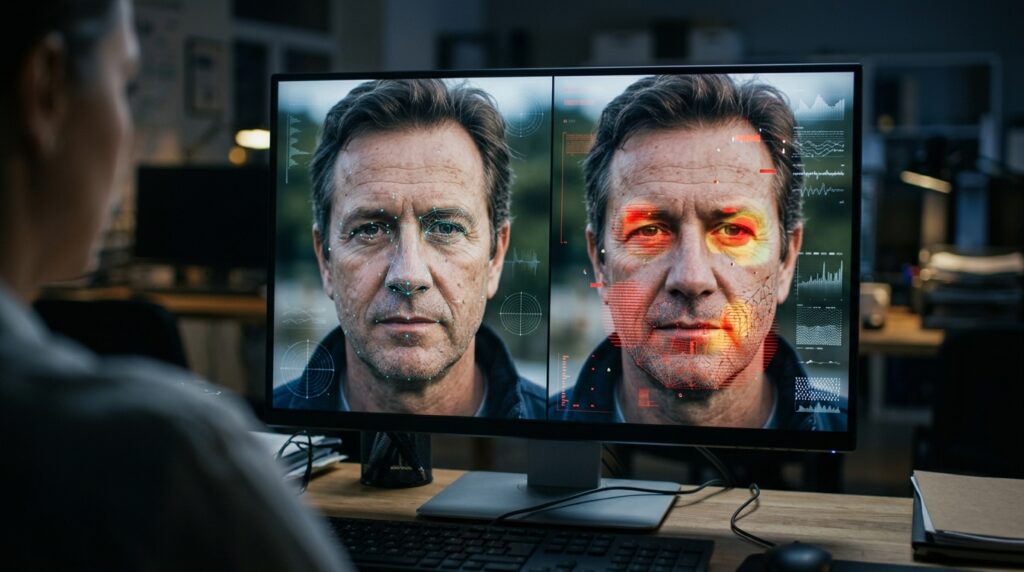
The Harm Goes Beyond Celebrity Gossip
The consequences of celebrity AI deepfakes can be much more serious than a misleading entertainment story.
Reputational damage: A fabricated image or video can make a person appear to endorse a product, express a political opinion or behave in a way that conflicts with their actual beliefs. Even after a correction, the original post may continue circulating.
Sexual exploitation and harassment: AI-generated intimate imagery can depict people in sexual situations without their consent. Women in entertainment and public life have repeatedly faced this form of abuse. The harm can include humiliation, threats, unwanted attention and long-term damage to personal and professional life.
Financial fraud: Criminals can imitate a celebrity’s voice or face to promote fake investment opportunities, counterfeit products and fraudulent giveaways. A recognizable face can make an otherwise suspicious offer seem more trustworthy.
Misinformation: A fake endorsement or fabricated political statement can distort public understanding, particularly when it appears during a breaking news event or a heated public debate.
Commercial exploitation: Some accounts use recognizable faces to attract followers, sell subscriptions or direct users to external services without the depicted person’s approval.
These risks are not limited to famous people. The same underlying technology can be used against ordinary individuals, whose photographs may be publicly available even if they have never chosen to become public figures.
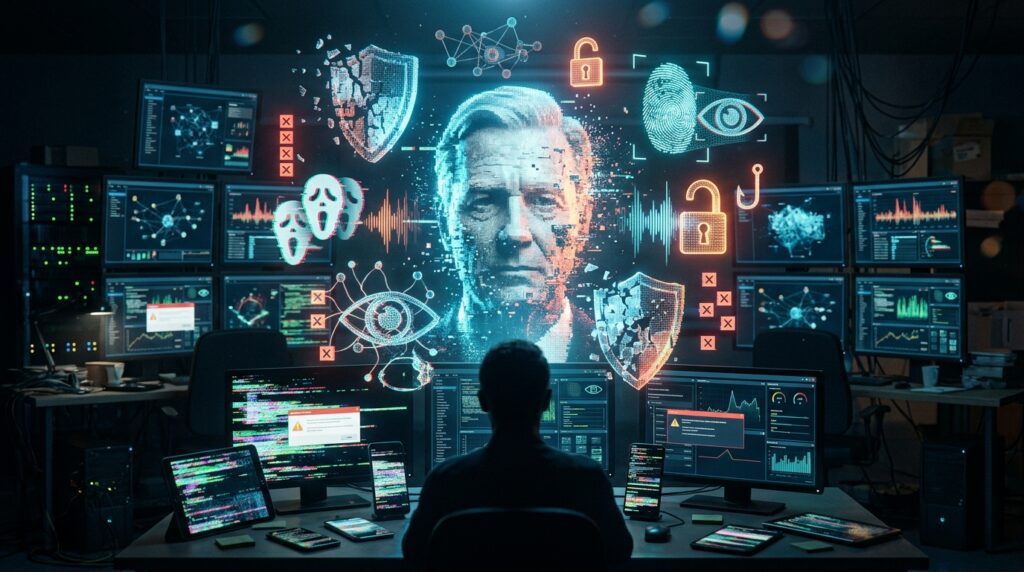
Why Social Media Platforms Struggle to Stop Deepfakes
Social platforms have several challenges to overcome. First, AI-generated content is produced at scale, and new accounts can appear quickly after existing ones are removed. Second, the content may be mixed with genuine photographs and videos, making it difficult for users and automated moderation systems to identify what has been manipulated.
Third, engagement can reward sensational material. A fabricated image connected to a celebrity breakup, scandal or controversial statement may attract rapid attention before verification catches up.
Verification badges can add to the confusion when users interpret them as proof that an account is officially operated by the person depicted. A badge may indicate that an account has passed a platform’s verification process, but users should still check whether the account is the person’s genuine official profile.
Celebrity AI deepfakes also expose a gap between labeling policies and practical protection. Some platforms apply disclosures to certain AI-generated videos or audio, while the rules for still images may differ. A label can help users understand the origin of content, but labeling alone does not prevent impersonation, harassment or misleading claims.
The Verge report describes YouTube’s likeness detection system, which allows eligible people to request reviews of content that resembles their appearance or voice. The company said it removed more than 95 percent of videos reported through that program for takedowns during the first half of 2026. That figure relates to the videos reported through the program, not every deepfake uploaded to YouTube.
No single detection system can guarantee that every manipulated image will be found or removed.
Can Laws and AI Detection Tools Solve the Problem?
Legal protections are evolving, but the rules differ by country and by the type of content involved. Some laws address non-consensual intimate imagery, fraud, defamation, privacy or unauthorized commercial use of a person’s likeness. Other proposals focus specifically on digital replicas of a person’s voice or appearance.
In the United States, the Take It Down Act, signed into law in 2025, addresses the publication of non-consensual intimate imagery, including qualifying AI-generated material, and establishes removal obligations for covered platforms. Its scope is specific; it should not be interpreted as a universal ban on every AI-generated depiction of a public figure.
Legal remedies can also be complicated when content is posted anonymously, shared across borders or repeatedly uploaded to different services. Removing one post does not necessarily erase copies already downloaded or redistributed elsewhere.
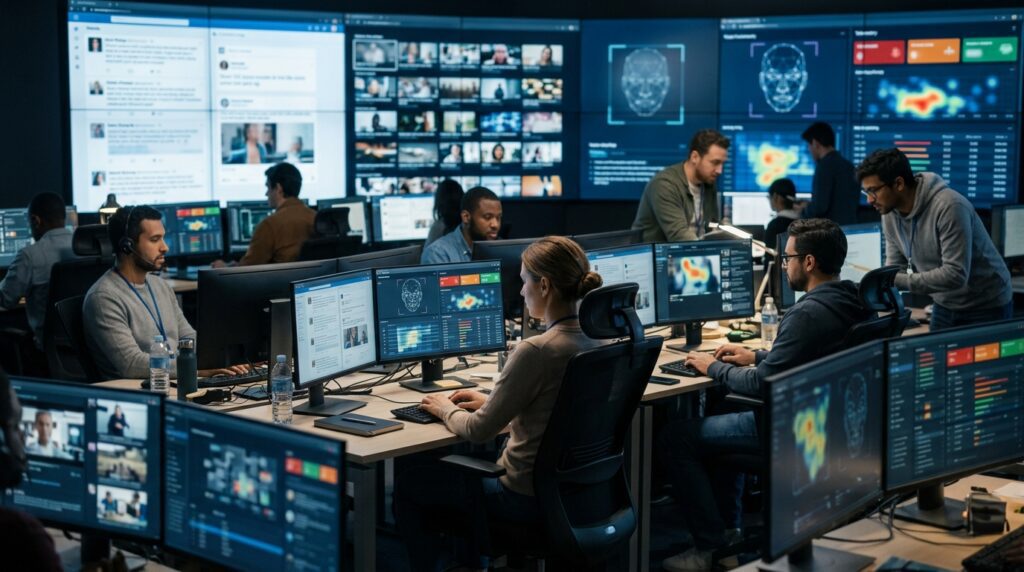
Technical tools may help. Image provenance systems can attach information about how media was created or edited. Watermarks and content credentials can offer clues about an image’s origin. AI detection tools may identify signs of manipulation, and likeness-monitoring services can help people locate material that resembles them.
However, these approaches have limitations. Metadata can be stripped, watermarks can be removed or obscured, and detection systems can produce false positives or miss sophisticated manipulations. A tool’s result should therefore be treated as one piece of evidence rather than an automatic verdict.
Effective protection requires several layers: responsible AI development, clear platform rules, accessible reporting systems, timely investigations, legal accountability and better media literacy.
How to Spot and Report a Possible Celebrity Deepfake
Users do not need advanced technical skills to take sensible precautions when encountering suspicious content.
Check the original source. Look for the person’s official account, website or a statement from their representative. Do not rely solely on a repost or fan page.
Look for independent confirmation. If a celebrity supposedly made a major announcement, check whether credible news organizations or other reliable sources report it.
Examine the context. An image may be genuine but presented with a false caption, date or explanation. Search for the original photograph or video when possible.
Be cautious with voice and video. Strange lip movements, unnatural audio or inconsistent lighting may be clues, but sophisticated AI content can avoid obvious visual errors.
Avoid sharing unverified material. Reposting a fake with a warning can still help it reach a larger audience. Verify it first, and avoid spreading intimate or humiliating content.
Report impersonation. Use the platform’s reporting tools for fake accounts, manipulated media, harassment or non-consensual intimate imagery. Save relevant links and evidence when safe and appropriate.
These steps will not identify every fake. Their purpose is to reduce the chance of treating manipulated media as fact and helping it spread further.
What This Means for the Future of Digital Identity
Celebrity AI deepfakes are part of a wider challenge: society is losing the assumption that a convincing photograph, video or voice recording necessarily represents a real event.
That does not mean all digital media should be distrusted. It means the standards for verifying important claims need to improve. News organizations may need stronger provenance checks, platforms need more consistent responses to impersonation, and AI developers need safeguards that make abusive uses harder.
Public figures may increasingly use monitoring services, registered digital likenesses and legal agreements to protect their image and voice. Those measures can help in some circumstances, but they will not be equally available to everyone.
The more important goal is to make protections work for ordinary people as well as celebrities. A person should not need millions of followers, a legal team or a public relations agency to get help when their identity is misused.
The future of digital trust will depend on whether technology companies can make reporting and removal effective, whether laws keep pace with synthetic media, and whether users learn to verify sensational content before sharing it.
Frequently Asked Questions
What are celebrity AI deepfakes?
Celebrity AI deepfakes are images, videos or audio recordings generated or manipulated with artificial intelligence to make a real public figure appear to say or do something that did not happen. They can be created for entertainment, deception, fraud, harassment or unauthorized commercial use.
Can AI-generated celebrity images be mistaken for real photographs?
Yes. Modern image generators can produce highly realistic images. A picture’s visual quality is not proof of authenticity, so viewers should check its source and context before believing or sharing it.
Are celebrity AI deepfakes illegal?
Their legal status depends on the country, the content and how it is used. Non-consensual intimate imagery, fraud, defamation and certain unauthorized commercial uses may violate applicable laws. Not every synthetic depiction is automatically illegal.
How can celebrities get fake content removed?
They or their representatives can report impersonation to the platform, submit relevant evidence and pursue available legal remedies. Some services also provide tools to detect or report content that resembles a person’s face or voice. Results vary by platform and case.
How can ordinary users avoid spreading AI misinformation?
Check the original source, seek independent confirmation, question sensational claims and avoid sharing content whose authenticity is uncertain. Report harmful impersonation through the relevant platform rather than amplifying it.
Conclusion: Digital Trust Needs Stronger Protection
Celebrity AI deepfakes demonstrate how easily fabricated media can cross from online entertainment into misinformation, fraud and personal harm. The Mia Goth incident described by The Verge is a reminder that a popular account, a verification badge and thousands of likes do not establish that a post is genuine.
AI detection tools, provenance technology and legal protections can help, but none is sufficient on its own. Platforms need to respond consistently, developers need to build stronger safeguards, and users need reliable ways to verify what they see.
Ultimately, protecting digital identity should not depend on fame or financial resources. As synthetic media becomes more convincing, protecting people’s likenesses, reputations and consent must become a basic part of online safety.
Explore our IT services: Progressive Robot helps businesses explore software development, AI solutions, cybersecurity and wider IT services.
References
The Verge: Nobody Is Safe From Celebrity AI Deepfakes
Australian eSafety Commissioner: Deepfakes
Office of the Privacy Commissioner of Canada: Findings on AI-generated sexualized deepfakes
More AI coverage: explore Progressive Robot's AI Models, Tools & Releases hub — hands-on reviews, setup guides and benchmarks in one place.










