

EU AI Strategy is becoming a major priority as European policymakers seek to strengthen the region’s artificial intelligence industry, attract technology investment and compete with the United States and China. Ireland’s experience offers valuable lessons in building a technology ecosystem, expanding digital infrastructure and encouraging businesses to adopt AI. However, it also highlights challenges involving electricity demand, data centre expansion, workforce disruption and dependence on foreign technology providers.
Ireland has attracted major international technology companies and established itself as an important digital hub within the European market. Its experience is now relevant to discussions about how Europe can turn AI investment into sustainable economic growth.
The challenge for the EU is to build on Ireland’s strengths while addressing the problems that can arise when infrastructure expands faster than energy capacity, workforce preparation and business adoption.
A successful EU AI Strategy must go beyond data centres and investment announcements. Europe also needs businesses that can use AI effectively, workers who can adapt to changing job requirements, reliable energy infrastructure and clear regulations that support responsible innovation.
Ireland provides a valuable case study for understanding these opportunities and trade-offs.
Table of Contents
What Is the EU's AI Strategy?

The EU’s AI strategy involves building the infrastructure, investment environment, skills and regulatory framework needed to develop and deploy artificial intelligence across Europe.
Rather than treating AI solely as a research topic or a consumer technology, European policymakers increasingly view it as an economic and strategic priority. AI could improve productivity, support scientific discovery, strengthen manufacturing and transform public services. However, capturing those benefits requires more than access to AI applications.
Businesses also need suitable computing infrastructure, skilled employees, reliable energy supplies and the ability to integrate AI into existing operations.
The European Commission has pursued initiatives to expand AI infrastructure and adoption, including plans for AI gigafactories and programmes designed to encourage businesses to implement AI in practical settings.
The EU’s wider ambition is to reduce the risk of falling behind the United States and China, where investment in computing infrastructure and advanced AI development has been substantial.
At the same time, Europe has established a regulatory approach intended to promote trustworthy AI and protect fundamental rights. The challenge is to make these safeguards work alongside innovation rather than allowing regulatory uncertainty or inadequate investment to prevent useful technology from reaching businesses.
Ireland’s experience provides an opportunity to examine how these goals interact in practice.
EU AI Strategy: Why Europe Is Looking to Ireland
The EU AI Strategy can draw important lessons from Ireland’s experience attracting international technology companies and developing a strong digital economy. Ireland demonstrates how investment, access to skilled workers and supportive business conditions can help establish a competitive technology hub. However, the EU AI Strategy must also consider energy availability, infrastructure costs and the long-term economic benefits of AI investment.
Ireland has spent years attracting international technology companies through its business environment, skilled workforce, access to the European market and established technology ecosystem.
The country hosts major operations for US technology firms, making it an important location for digital services, cloud infrastructure and related activities. Its experience gives European policymakers a practical example of how investment-friendly conditions can help establish a technology sector with international reach.
Ireland also wants to move beyond hosting technology companies and become a place where AI is adopted, developed and applied across the economy.
The Irish government’s stated ambition is to build an economy in which businesses of different sizes can use AI to improve productivity and competitiveness. Its October 2026 international AI summit is intended to encourage cooperation among government, industry, researchers and innovators.
According to the Irish government’s announcement of the International AI Summit 2026, the event focuses on areas such as AI adoption, research and innovation, workforce skills, infrastructure and trusted regulation.
Ireland’s Strengths as an AI Hub
Ireland offers several advantages for AI development and adoption:
International technology investment: Established relationships with major technology companies provide access to infrastructure, expertise and global markets.
A developed technology ecosystem: Existing technology operations create opportunities for suppliers, researchers and other businesses.
European market access: Companies operating in Ireland can serve customers across the EU.
Policy experience: Ireland’s efforts to coordinate AI regulation and encourage adoption provide lessons for other European countries.
A focus on applied AI: Policymakers want businesses to use AI in real operational settings rather than limiting adoption to experiments and demonstrations.
These advantages help explain why Ireland has become an important reference point in Europe’s AI debate.
However, attracting investment is only one part of the challenge. The next question is whether the benefits justify the infrastructure costs, energy demands and social consequences associated with rapid expansion.
EU AI Strategy and the Data Centre Challenge
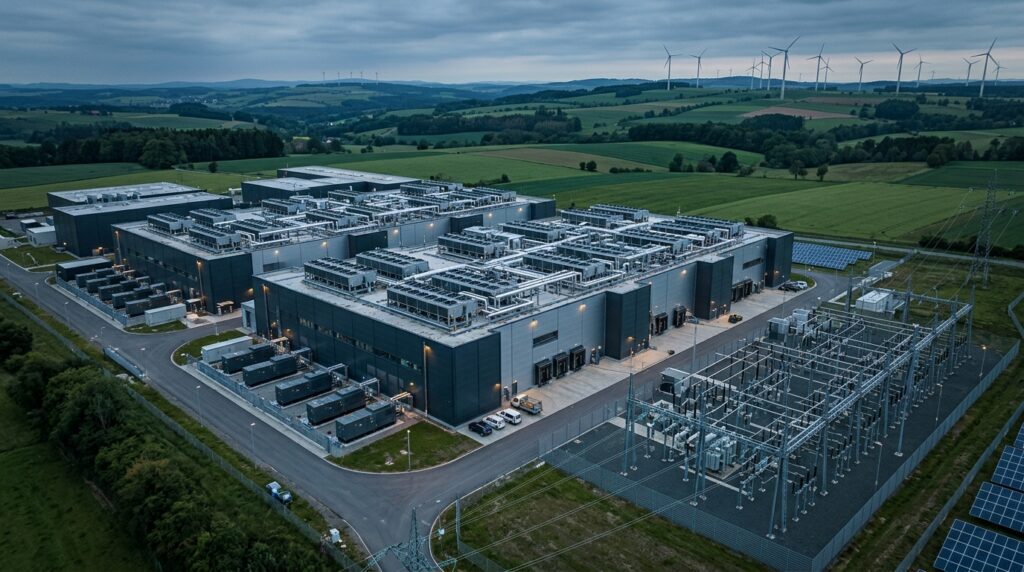
A key priority for the EU AI Strategy is expanding access to advanced computing infrastructure without creating unsustainable pressure on electricity networks. Europe’s ability to support AI development will depend on reliable energy supplies, efficient data centres and infrastructure that meets the needs of businesses and researchers. These considerations will influence how effectively the EU AI Strategy translates investment into practical AI capabilities.
AI systems depend on computing infrastructure. Training and operating advanced models can require powerful processors, high-capacity networks, cooling systems and reliable electricity.
As AI adoption increases, demand for this infrastructure is expected to grow. Europe therefore wants to expand its ability to host AI workloads rather than depending entirely on computing capacity located elsewhere.
However, Ireland’s experience demonstrates that building more data centres also creates local challenges.
Europe’s Infrastructure Gap
The October 14 TechXplore report, based on AFP reporting, cites figures from Andrea Renda of the Centre for European Policy Studies suggesting that Europe accounts for approximately 5% of global data centre capacity, compared with around 75% for the United States and 15% for China.
These figures illustrate the scale of the infrastructure challenge facing Europe, although global capacity estimates can vary depending on how facilities and computing resources are measured.
The EU is responding with investment initiatives that include AI gigafactories, which are intended to provide advanced computing resources for companies and research organisations.
The objective is not simply to build more buildings filled with servers. Europe also needs infrastructure that businesses and researchers can access and use effectively.
Ireland’s Electricity Challenge
Ireland’s rapid data centre expansion has placed growing pressure on electricity infrastructure.
According to the country’s Central Statistics Office, data centres accounted for 23% of Ireland’s metered electricity consumption in 2024. That figure illustrates how energy-intensive the sector has become and why further expansion has generated public debate.
Data centres require electricity for computing, cooling and supporting infrastructure. Their expansion can increase pressure on electricity networks, complicate planning and raise questions about how new demand should be balanced against the needs of households and other industries.
If AI infrastructure grows faster than electricity generation and grid capacity, the result could be delays, higher infrastructure costs or competition for limited resources.
The Environmental and Community Debate
The benefits of additional data centre capacity must be weighed against its environmental and social costs.
Local communities may question whether new facilities deliver sufficient employment and economic value relative to their energy use, land requirements and infrastructure demands.
At the Dublin summit, these concerns form part of a broader discussion about what a sustainable AI economy should look like. Critics have argued that governments should reconsider the pace of data centre development and assess whether the resulting benefits justify the costs.
This does not mean that data centres have no economic value. They can support cloud services, AI development, digital businesses and wider economic activity. The key question is how to ensure that infrastructure development aligns with realistic demand, available energy resources and broader public interests.
Why AI Adoption Matters More Than Infrastructure Alone
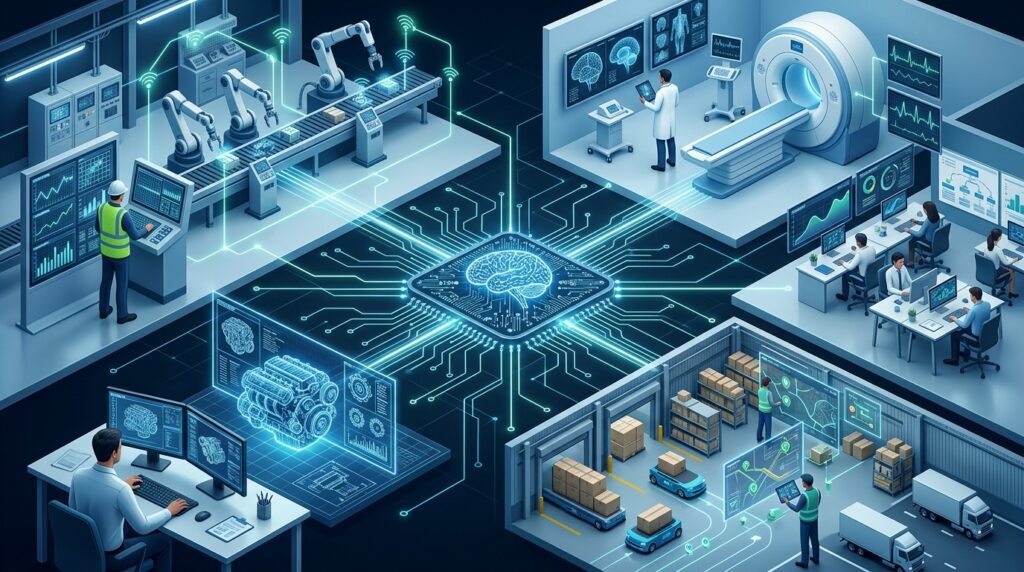
The EU AI Strategy must encourage businesses of all sizes to move beyond AI experimentation and adopt useful solutions in their everyday operations. Small and medium-sized enterprises need access to appropriate tools, technical expertise and workforce training. By making AI adoption more accessible, the EU AI Strategy could help more European businesses improve productivity and compete in international markets.
One of the central questions in Europe’s AI debate is whether the continent can convert infrastructure investment into widespread economic benefits.
Building data centres creates computing capacity, but it does not automatically mean businesses will use AI effectively. Organisations still need suitable software, trained employees, clear implementation plans and reliable ways to measure the value of AI projects.
AI Adoption Remains Uneven
The TechXplore report states that approximately 20% of companies across the EU’s 27 member states used AI in 2025, with adoption reaching around 55% among the largest businesses.
The figures highlight a significant gap between large enterprises and the wider business community. Smaller organisations may lack the technical expertise, budget or time needed to evaluate and deploy AI solutions.
Some companies are already integrating AI into core operations, while others use it for relatively simple tasks such as drafting documents, summarising information or generating basic content.
Moving beyond these initial applications requires more deliberate planning.
From AI Experiments to Practical Results
Businesses need to identify where AI can address genuine operational problems.
For example, a manufacturer might use AI-assisted quality inspection to identify product defects. A logistics company could use predictive analytics to improve demand planning, while a professional services firm might automate document classification or internal knowledge retrieval.
The value of these projects depends on the quality of the data, the suitability of the technology and the ability to integrate it into existing workflows.
Organisations also need to evaluate accuracy, security, operating costs and the impact on employees before expanding an AI system across the business.
Why Dedicated Support Matters
Infrastructure and AI applications do not deliver value in isolation. Businesses may need help with data preparation, software integration, cybersecurity, employee training and ongoing system management.
This is one reason European policymakers are discussing AI adoption alongside infrastructure investment.
If the EU wants to improve competitiveness, it needs an ecosystem in which organisations can access the computing resources, technical expertise and implementation support necessary to turn AI into measurable productivity improvements.
EU AI Strategy, AI Regulation and Digital Sovereignty

Responsible regulation is another important part of the EU AI Strategy. European businesses need clarity about their obligations when developing or deploying AI systems, while researchers and technology companies need an environment that supports innovation. Balancing these priorities will help determine whether the EU AI Strategy can promote trustworthy AI while strengthening Europe’s technological independence.
Europe’s approach to AI combines investment and adoption with a strong emphasis on governance.
The EU AI Act establishes a risk-based framework for artificial intelligence, with requirements that depend on the type of system and its intended use. The regulation aims to protect health, safety and fundamental rights while supporting the development and use of trustworthy AI.
Businesses deploying AI in Europe need to understand which obligations apply to their systems, particularly when they use AI in sensitive or high-impact settings.
Read the European Commission’s official overview of the AI Act for further information about the regulatory framework.
Ireland’s Approach to Implementation
Ireland has pursued a distributed approach to implementing the EU AI Act, drawing on existing sectoral regulators while establishing central coordination through the AI Office of Ireland.
This model is intended to use the expertise of regulators that already understand areas such as finance, healthcare and other regulated sectors, while providing a central point for coordination and cooperation.
Details are available through the Irish government’s official AI Act guidance.
Ireland’s approach illustrates one of the practical challenges of AI governance: regulations need to be implemented consistently, but different industries may require specialised knowledge and oversight.
The Question of Digital Sovereignty
Digital sovereignty is another important part of the EU’s AI ambitions. It broadly concerns Europe’s ability to maintain meaningful control over critical digital infrastructure, data, technologies and capabilities.
Ireland’s reliance on major US technology companies presents a complicated picture. International investment has helped develop its technology ecosystem, but heavy dependence on foreign providers can create strategic vulnerabilities if Europe lacks alternative infrastructure or sufficient domestic capabilities.
Expanding European AI infrastructure could provide more options for businesses and researchers. However, building data centres alone does not guarantee independence.
Europe also needs access to advanced processors, energy, technical talent, software platforms, research capabilities and competitive AI models.
The goal is not necessarily to eliminate international partnerships. Rather, it is to ensure that Europe has sufficient capacity and choice to pursue its economic and strategic objectives.
The Impact of AI on Jobs and Workers

AI investment is often discussed in terms of productivity, economic growth and technological competitiveness. However, the transition also has direct consequences for employees.
The Dublin AI debate has included concerns about workers whose jobs have been affected by automation. The TechXplore report describes Neil Bennett, a former translator who lost his job to AI and subsequently took work as a data operator, only to find that AI later affected that role as well.
His experience illustrates a difficult question: how can governments encourage innovation while helping workers adapt when the technology changes the tasks employers need?
Automation Can Change Jobs, Not Just Eliminate Them
AI can automate certain tasks within a role without necessarily eliminating the entire job. For example, it may help employees draft documents, analyse information or process routine requests.
In other cases, businesses may decide that fewer employees are needed for particular activities. The effects depend on the industry, the tasks involved and how employers reorganise their operations.
Some workers may benefit from new opportunities, while others may need to retrain or move into different occupations.
The overall impact will not be uniform across the economy.
Reskilling and Workforce Preparation
Governments, employers and educational institutions have an important role in preparing workers for AI-driven change.
Useful measures include digital skills training, access to recognised qualifications, employer-supported learning and practical education in AI-assisted workflows.
Workers also need opportunities to develop skills that complement automation, including critical thinking, communication, domain expertise and the ability to evaluate AI-generated information.
Businesses introducing AI should communicate clearly with employees and consider how new systems will affect responsibilities, training needs and working conditions.
Measuring the Human Benefits of AI
A successful AI strategy should not be judged solely by the number of data centres built or the amount of investment attracted.
It should also consider whether productivity gains improve services, support better working conditions, create sustainable employment opportunities and distribute benefits across society.
Ireland’s experience highlights why these questions need to be part of the policy discussion from the beginning, rather than addressed only after infrastructure and automation decisions have been made.
What Businesses Can Learn From Europe's AI Plans

Although Europe’s AI strategy is a policy initiative, its central lessons are relevant to businesses of all sizes.
Companies do not need to build their own data centres or develop large AI models to benefit from the technology. They do, however, need a practical strategy that connects AI investment to business objectives.
Start With a Clear Business Problem
Identify processes where AI could reduce repetitive work, improve accuracy or help employees make better-informed decisions.
Potential starting points include customer support, document processing, internal search, software development assistance and business reporting.
A clearly defined problem makes it easier to assess whether an AI solution delivers meaningful value.
Evaluate Security and Data Protection
Before adopting an AI service, determine what information it will access, how data is processed and whether the provider’s security controls meet your requirements.
Sensitive customer information, financial records and confidential business documents may require additional safeguards.
Businesses should also consider access permissions, retention policies, auditability and the risks associated with inaccurate or misleading AI outputs.
Invest in People as Well as Technology
AI adoption requires employees who understand how to use the tools appropriately and recognise their limitations.
Training should cover practical workflows, verification of AI-generated results, privacy and security considerations, and escalation procedures for high-impact decisions.
A technically capable system may still deliver poor results if employees do not understand when and how to use it.
Measure Outcomes Before Scaling
Businesses should define success criteria before launching an AI project. Relevant measures might include time saved, error rates, customer satisfaction, operating costs or service quality.
Start with a limited pilot, review the results and address weaknesses before expanding deployment.
This approach reduces the risk of spending money on AI tools that generate impressive demonstrations but fail to solve real business problems.
Build a Reliable Digital Foundation
AI systems depend on the wider IT environment in which they operate. Weak cybersecurity, poor data quality and unreliable infrastructure can undermine an otherwise promising implementation.
Businesses should review their networks, software, data management practices and access controls before connecting AI to sensitive systems.
For organisations that need support, working with an experienced IT services provider can help bring these elements together into a coherent implementation plan.
The Future of the EU AI Strategy

The long-term success of the EU AI Strategy will depend on more than investment announcements or new data centre capacity. Europe will need effective AI adoption, a skilled workforce, sustainable energy infrastructure and competitive research capabilities. If these elements develop together, the EU AI Strategy could help create a stronger and more resilient European AI ecosystem. The EU’s AI strategy is entering a stage in which implementation matters as much as ambition.
Europe wants to expand computing infrastructure, encourage businesses to use AI and maintain safeguards that protect citizens. Ireland’s experience offers lessons about both the opportunities and the trade-offs involved.
The International AI Summit in Dublin provides a platform for discussing these priorities, from applied AI in industry to infrastructure investment and the skills needed for future economic growth.
Several factors will influence whether Europe succeeds.
First, investment in computing capacity must be matched by practical demand and access for businesses and researchers. Second, infrastructure development must account for electricity availability, environmental considerations and the needs of local communities. Third, governments need policies that encourage AI adoption beyond the largest companies.
Finally, Europe must continue developing the skills, research capabilities and technological options required to compete internationally while supporting workers affected by automation.
Ireland demonstrates that attracting major technology investment can establish a strong position in the digital economy. It also shows that infrastructure growth can create difficult questions about energy, employment and reliance on foreign technology providers.
The next stage of Europe’s AI journey will depend on how effectively policymakers balance these competing priorities.
Frequently Asked Questions
Why is the EU looking to Ireland’s AI strategy?
Ireland has attracted major international technology companies and developed significant digital infrastructure. Its experience offers lessons for Europe on investment, AI adoption and technology-sector growth, while also revealing challenges related to energy use and employment.
What is the EU trying to achieve with its AI strategy?
The EU aims to strengthen its global AI competitiveness by expanding infrastructure, encouraging business adoption, supporting research and developing skills, while maintaining rules intended to promote safe and trustworthy AI.
Why are data centres important for artificial intelligence?
Data centres provide computing power, storage and networking capabilities needed to train and operate many AI systems. Expanding this infrastructure can improve access to computing resources, but it also increases demand for electricity, cooling and supporting infrastructure.
What challenges does Ireland face from AI infrastructure growth?
Ireland faces concerns about electricity demand, pressure on grid infrastructure, environmental impacts and the distribution of economic benefits. Its reliance on major US technology companies also raises questions about Europe’s long-term digital sovereignty.
How does the EU AI Act affect businesses?
The EU AI Act establishes rules for AI systems based on their risk and use. Depending on the system, businesses may need to meet requirements involving transparency, documentation, risk management and other safeguards. Organisations should review the rules applicable to their particular activities.
Will AI replace jobs in Europe?
AI may automate some tasks, change existing roles and create new opportunities. The impact will vary by occupation and industry. Reskilling, workforce preparation and responsible implementation can help workers adapt to changing requirements.
How can small businesses benefit from AI?
Small businesses can use AI for tasks such as document processing, customer support, research, reporting and workflow automation. Successful adoption requires clear objectives, suitable tools, data protection, employee training and a way to measure results.
Conclusion
Europe’s decision to take lessons from Ireland’s AI playbook reflects the growing importance of artificial intelligence to economic competitiveness and digital independence.
Ireland’s technology ecosystem demonstrates the benefits of attracting investment and building digital infrastructure. Its experience also shows why governments must consider electricity demand, environmental pressures, dependence on foreign technology providers and the effects of automation on workers.
For the EU, the challenge is to translate infrastructure investment into widespread and sustainable AI adoption. That means helping businesses implement useful applications, developing local skills and research capabilities, and maintaining a regulatory environment that supports innovation and public trust.
Ultimately, Europe’s AI success will depend not just on how much computing power it builds, but on how effectively that capacity improves businesses, public services and people’s lives.
Need Expert IT Support for Your Business?
Progressive Robot helps businesses make the most of technology through software development, IT consulting, cybersecurity and digital solutions. Whether you are exploring AI-enabled workflows or strengthening your IT infrastructure, a practical technology strategy can help your organisation improve efficiency while managing risk.
More AI coverage: explore Progressive Robot's AI Models, Tools & Releases hub — hands-on reviews, setup guides and benchmarks in one place.










