
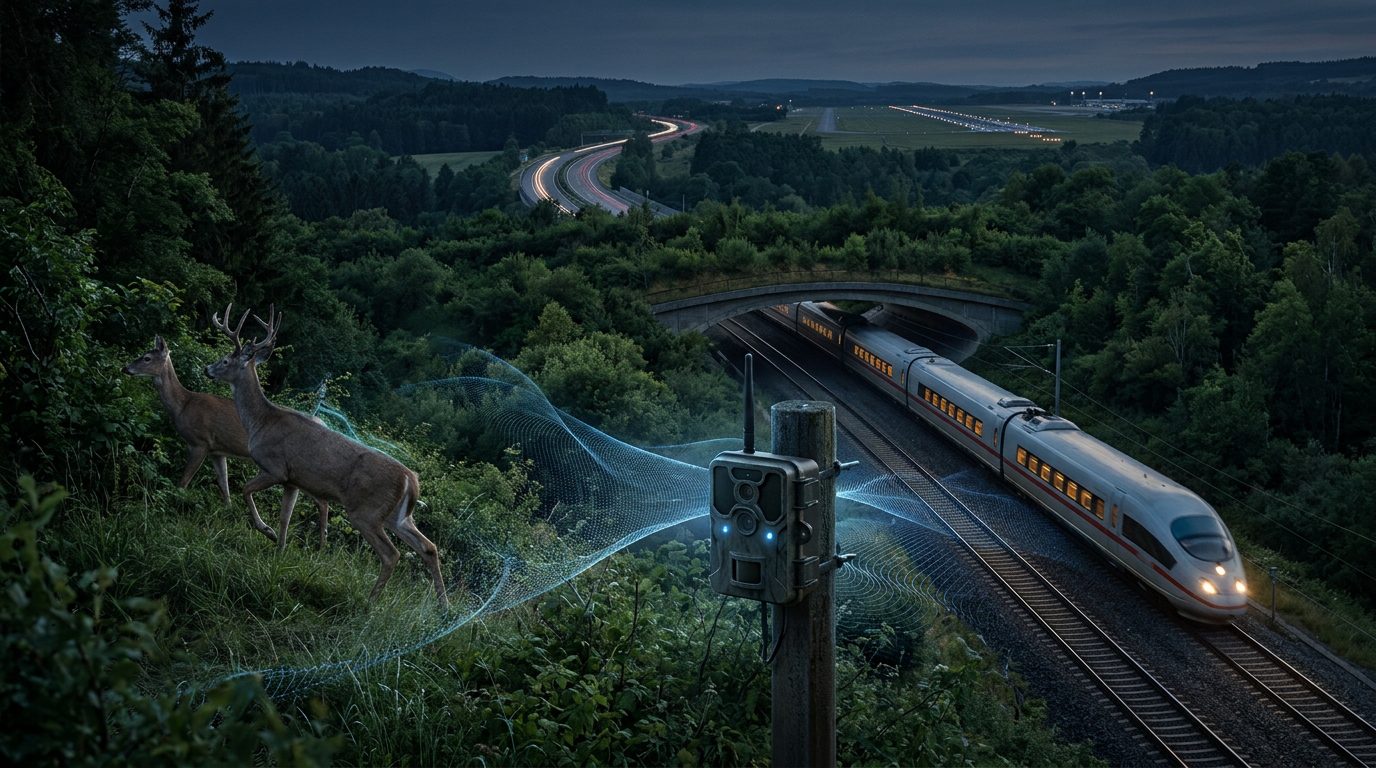
Wildlife collisions are a persistent problem for transportation operators. Animals wandering onto railway tracks can cause delays and damage trains, while birds and other wildlife near airports create aviation safety risks. Roads present another challenge, with animals crossing traffic corridors and sometimes becoming trapped between fences, highways and other infrastructure.
Traditional prevention methods include physical fencing, warning systems, lights, alarms and other deterrents. Although these techniques can help, they do not always respond to the specific animal or circumstances involved.
Flox Intelligence is developing an alternative that combines artificial intelligence, bioacoustics and wildlife science to detect animals and encourage them to move away from dangerous areas. Rather than relying solely on a fixed sound or alarm, its technology attempts to identify the animal and select a response suited to the species and situation.
The company emerged from research at Sweden’s KTH Royal Institute of Technology and was spun out in 2020. It now develops autonomous, edge-AI-powered devices and software intended for airports, railways, roads, agricultural land and other locations where human activity intersects with wildlife. <Cite refs={[“turn915596view0″,”turn665110view0”]}/>
In an October 13, 2026, report, TechCrunch described the company’s technology, its growing deployments and plans to raise a $10 million Series A round. The capital would primarily help Flox scale from approximately 150 deployed devices to several thousand and extend its underlying technology to additional applications. <Cite refs={[“turn915596view0”]}/>
The idea is significant because it applies AI beyond chatbots and software applications. Flox’s systems operate in the physical world, where they must detect movement, understand changing conditions and respond quickly without depending on continuous cloud connectivity.
Table of Contents
What Is Flox Intelligence?
How Does Flox Intelligence AI Work?
How Flox Is Being Used Around Trains, Airports and Roads
Key Features of Flox Intelligence
Why Wildlife Collisions Are a Serious Problem
Benefits for Transportation Operators and Wildlife
Funding, Deployment and Business Expansion
Challenges and Limitations
The Future of AI-Powered Wildlife Protection
Frequently Asked Questions
Conclusion
What Is Flox Intelligence?
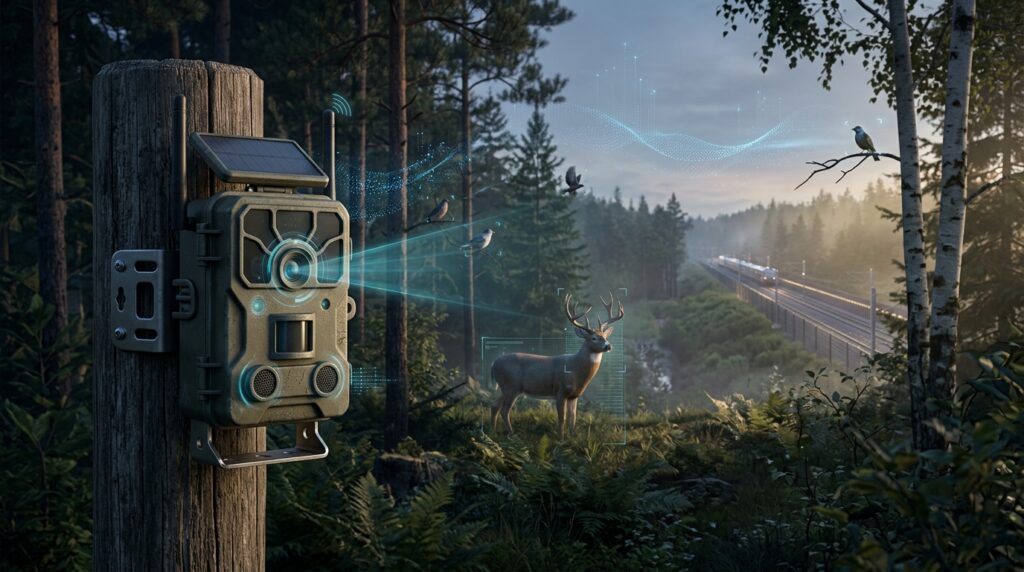
Flox Intelligence is a wildlife technology company developing AI-powered systems to help reduce conflicts between animals and human infrastructure.
Its approach combines computer vision, edge AI, bioacoustics and knowledge of animal behavior. The devices monitor an area, identify nearby wildlife and use species-specific acoustic responses to encourage animals to move away from a potential hazard.
The distinction is important. A conventional alarm may broadcast the same sound whenever movement is detected. Flox aims to make the response more context-aware by considering which animal is present and how it is behaving.
For example, the appropriate response near an airport perimeter may differ from the response needed along a railway corridor. Different species can react differently to the same stimulus, and animals may eventually become accustomed to repeated signals that do not pose a meaningful threat.
Flox’s system is designed to adapt its responses rather than depend entirely on a single, repeated deterrent.
From AI Research to Wildlife Infrastructure
The company was spun out of an AI research lab at KTH Royal Institute of Technology in Stockholm in 2020. Co-founders Sára Nožková and Tomas Becklin have built the business around the idea that machines working outdoors need a better understanding of the natural environments around them.
AI systems are often developed for controlled environments, such as offices, warehouses or software platforms. Wildlife environments are less predictable. Animals move in groups, respond differently to noise and light, change their behavior over time and interact with changing weather and terrain.
Flox’s focus is to combine automated sensing with wildlife science so that machines can make more informed decisions in these conditions.
The company’s first commercial product, Flox Edge, is designed for autonomous wildlife detection and deterrence in difficult outdoor environments. A companion software platform helps operators review animal activity and generate reports from deployed devices.
What Makes Flox Different?
Flox is not primarily trying to build another camera that alerts a human whenever an animal appears. The company’s objective is to connect detection, interpretation, response and reporting in one operational system.
This means a device can identify an animal, select a targeted acoustic response and record the event. Operators can then use the accompanying platform to understand wildlife activity and assess where incidents may be occurring.
The system is designed to operate autonomously, including at remote locations where reliable connectivity and continuous human supervision may not be available.
How Does Flox Intelligence AI Work?
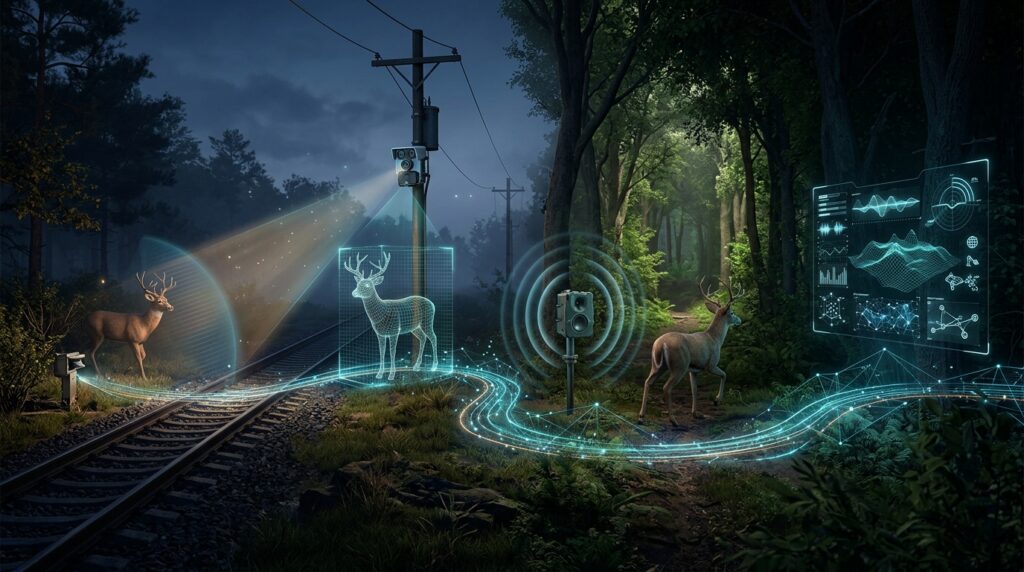
Flox Edge combines motion detection, camera-based perception, on-device AI and an acoustic deterrent. According to the company’s published product specifications, the device is designed to detect wildlife, identify species and assess relevant behavior before delivering a targeted acoustic response.
The system also records detection and deterrence events so operators can review what is happening around a deployment site.
1. Detecting Animal Movement
The process begins when the device detects movement in its monitored area. A passive infrared motion sensor activates the detection process, triggering a camera to examine the area.
The camera uses infrared illumination to support monitoring when light levels are low. This is important because wildlife activity does not follow human working hours. Some animals are more active at dawn, dusk or during the night.
Activating the device in response to movement can also help reduce unnecessary activity compared with continuously running every component at full capacity.
The product is designed for locations such as railway boundaries, airport perimeters, fence gaps, wildlife crossings and roads where animals entering a restricted area can create a safety risk.
2. Identifying Species and Context
Once movement has been detected, on-device AI models analyze the camera feed to identify the animal.
Flox says its system can consider species, group size and behavior when determining an appropriate response. This context is important because an animal’s identity may influence whether deterrence is necessary and what type of response is appropriate.
For example, an operator might want to discourage deer from approaching railway tracks while avoiding unnecessary disturbance to other wildlife within the surrounding habitat.
Species recognition is not inherently perfect, however. Detection accuracy can vary with lighting, distance, vegetation, weather and the characteristics of the animal. The system’s effectiveness therefore depends on its perception models and how well the device is positioned for the environment.
3. Selecting an Acoustic Response
After assessing an animal, the device selects a species-specific acoustic response intended to guide it away from a hazardous area.
Flox’s approach draws on bioacoustics, the study of sound in animal communication and behavior. Instead of depending exclusively on generic alarms, the technology aims to use sounds that are relevant to the species and circumstances.
The objective is to influence animal movement without relying on physical contact or lethal intervention. Depending on the deployment, the intended response may encourage an animal to move away from a railway line, airport boundary or road hazard.
The company also describes adaptive responses intended to reduce habituation. Habituation occurs when animals become accustomed to a repeated stimulus and gradually stop reacting to it.
Changing responses may help address this challenge, although it cannot guarantee that every species will continue responding indefinitely. Long-term effectiveness needs to be evaluated under actual field conditions.
4. Responding Locally With Edge AI
Flox Edge processes its primary detections on the device rather than depending entirely on a remote cloud service.
The company’s specifications state that the device can respond in under two seconds from detection to deterrence. This is a published product specification, not a guarantee of identical performance for every species or installation.
Local processing is useful in areas where network connectivity is inconsistent. A railway corridor, rural road or remote industrial site may not have reliable access to high-speed connectivity at all times.
Flox says the device can continue detecting and deterring wildlife when a network connection is unavailable. Recorded information can synchronize when connectivity returns.
This architecture reduces reliance on cloud availability for the device’s immediate response. It does not eliminate the need for maintenance, monitoring or suitable deployment planning.
5. Recording Activity and Reporting Results
After a detection or deterrence event, the device records relevant information for the Flox software platform.
Operators can use the platform to review device deployments, monitor wildlife activity and generate reports. These records may support operational decisions, regulatory documentation or biodiversity monitoring.
For instance, repeated detections at a particular fence gap could suggest that an area needs additional protection or a better-designed wildlife crossing. A pattern of activity near a runway could also help airport teams review their existing wildlife hazard management procedures.
The system’s value is therefore not limited to the immediate deterrent. Recorded events can help operators understand where wildlife is appearing and whether further action is warranted.
How Flox Is Being Used Around Trains, Airports and Roads
Flox’s technology is designed for multiple types of infrastructure where wildlife can create safety, operational or environmental challenges. The appropriate installation and response depend on the location and the animal species involved.
Railway Tracks and Train Operations
Wildlife on railway tracks can cause collisions, delays, equipment damage and safety risks. Even when a collision does not cause major mechanical damage, railway operators may need to stop trains, inspect equipment and reorganize services.
Flox has developed systems for monitoring and deterring animals near railway infrastructure. Potential installation points include trackside boundaries, gaps in fencing and locations where wildlife corridors intersect with rail routes.
The company has also partnered with train manufacturer Alstom. In a May 2026 announcement, the companies described successful trials of AI-based onboard technology intended to detect wildlife near railway tracks and activate appropriate deterrents.
The project is intended to help reduce wildlife collisions, improve punctuality and support safer conditions for train drivers. More details are available in the official Flox and Alstom railway safety announcement.
An important distinction is that a stationary Flox Edge unit is different from installing the underlying intelligence directly on a moving vehicle. The onboard approach represents an additional deployment pathway, with its own technical requirements and operational constraints.
According to TechCrunch’s October 2026 report, making the software suitable for machines that work outdoors—including trains, cars and drones—is part of the company’s longer-term strategy.
Airports and Runways
Wildlife near airports can create hazards for aircraft, particularly when birds or other animals enter runways, taxiways or other restricted areas.
Flox’s airport solutions are intended for locations such as airfield perimeters, fence gates and areas where wildlife gathers. Its materials also identify jet bridges, hangars and equipment zones as potential use cases.
By detecting animals and applying targeted deterrents, the technology aims to help airport operators reduce wildlife incursions without relying exclusively on manual observation or generic alarms.
The platform also records activity that can help operational teams review incidents and support their wildlife hazard management programs.
These devices should complement—not replace—an airport’s wider safety measures, including habitat management, routine inspections, risk assessments and established wildlife-control procedures. More information is available in Flox’s airport wildlife management overview.
Roads and Highways
Roads often cut across wildlife habitats and migration routes. Animals may approach roadways near fence endings, wildlife crossings, underpasses, overpasses or other points where barriers do not fully guide them toward a safer route.
Flox says its technology can be deployed at known wildlife hotspots, the ends of fences and near wildlife crossing structures. Depending on the installation, operators can configure whether particular species should be deterred or simply detected.
This distinction is important for conservation. The goal is not necessarily to remove all wildlife from a landscape, but to reduce dangerous encounters and encourage animals toward safer routes where suitable crossings exist.
The approach may be useful where animals repeatedly approach highways or where existing barriers leave gaps that are difficult to manage through fencing alone. More information is provided in Flox’s road and highway solutions.
Farms, Industrial Sites and Critical Infrastructure
The same detection-and-deterrence approach can apply to agricultural land, mining sites, electrical infrastructure, industrial properties and other places where animals and equipment share space.
In agricultural settings, operators may need to protect crops or particular areas from wildlife while avoiding unnecessary disturbance to animals elsewhere. Industrial sites may want to discourage wildlife from entering dangerous equipment zones.
Flox reports deployments across a range of environments, including national parks, agricultural land, urban areas, mining sites and critical infrastructure such as electrical substations.
These use cases illustrate the broader aim of the technology: to provide a reusable wildlife intelligence layer that can be adapted to different environments rather than designing a completely separate detection system for every type of site.
Key Features of Flox Intelligence
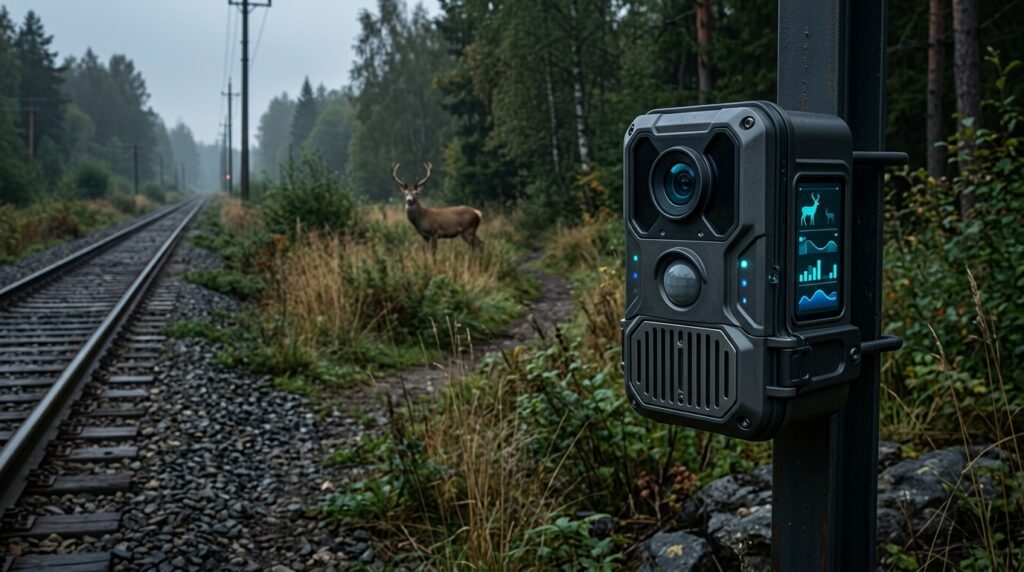
1. On-Device AI Processing
Flox Edge performs its primary detection and deterrence work locally. This can make rapid responses possible even where network connectivity is limited or unreliable.
The device is designed to operate autonomously in outdoor environments, reducing the need for an operator to manually trigger each response.
Local processing is particularly relevant for long railway corridors, remote roads and other sites where infrastructure cannot easily support continuous cloud communication.
2. Species-Specific Bioacoustics
The company uses species- and context-specific sounds to influence animal movement. The system aims to choose a response suited to the detected wildlife instead of relying exclusively on a generic noise.
Its adaptive approach is intended to reduce habituation by varying responses over repeated encounters.
The effectiveness of this method depends on the species involved, surrounding conditions and how the system is configured and maintained. It should be understood as an adaptive deterrence strategy rather than a guarantee that every animal will respond predictably.
3. Rapid Detection-to-Deterrence Response
Flox lists a response time of under two seconds from detection to deterrence for its Edge device. The figure appears in the official Flox Edge specifications.
A rapid response can be useful where wildlife is moving toward a hazardous area and there may be limited time for human intervention.
The published response time is a product specification. Actual results in the field can depend on environmental conditions, animal size, detection reliability and the particular installation.
4. Operation Without Continuous Network Access
Flox says its device can continue detecting and deterring wildlife offline and synchronize recorded information when connectivity returns.
This allows it to operate at sites where a reliable internet connection may not always be available. Network connectivity is still relevant for synchronization, remote management and software updates, but the primary field response does not rely entirely on a live cloud connection.
5. Reporting and Wildlife Intelligence
Flox’s software provides a view of deployed devices and recorded wildlife activity. Operators can review patterns, manage installations and generate reports for operational or environmental purposes.
These records may help organizations identify recurring wildlife hotspots, compare activity across different areas and decide where additional interventions may be useful.
The reliability of such insights depends on detection quality, data completeness and the way the results are interpreted. Automated reports should support, rather than replace, appropriate environmental and operational judgment.
6. Rugged Hardware for Outdoor Conditions
The company’s published Flox Edge specifications include a detection range of up to 40 metres, adjustable acoustic output up to 100 decibels and approximately 1,800 deterrence events per charge.
The device uses a camera with infrared illumination and is designed for autonomous operation in outdoor environments. The company also describes its hardware as capable of operating without continuous network connectivity.
These specifications can be useful when assessing installation requirements, but they should not be interpreted as universal guarantees. Detection range varies with animal size and conditions, while battery performance depends on the actual usage pattern and environment.
The latest product details are available on the Flox Edge technical specifications page.
7. Adaptability Across Different Infrastructure Types
Flox’s approach can support different deployment scenarios, including airports, roads, railway infrastructure and industrial areas.
Operators can configure which species should be deterred and which should simply be detected, according to the company’s road and highway documentation.
This flexibility matters when the objective is to manage a particular hazard without unnecessarily disturbing other wildlife in the surrounding habitat.
Why Wildlife Collisions Are a Serious Problem
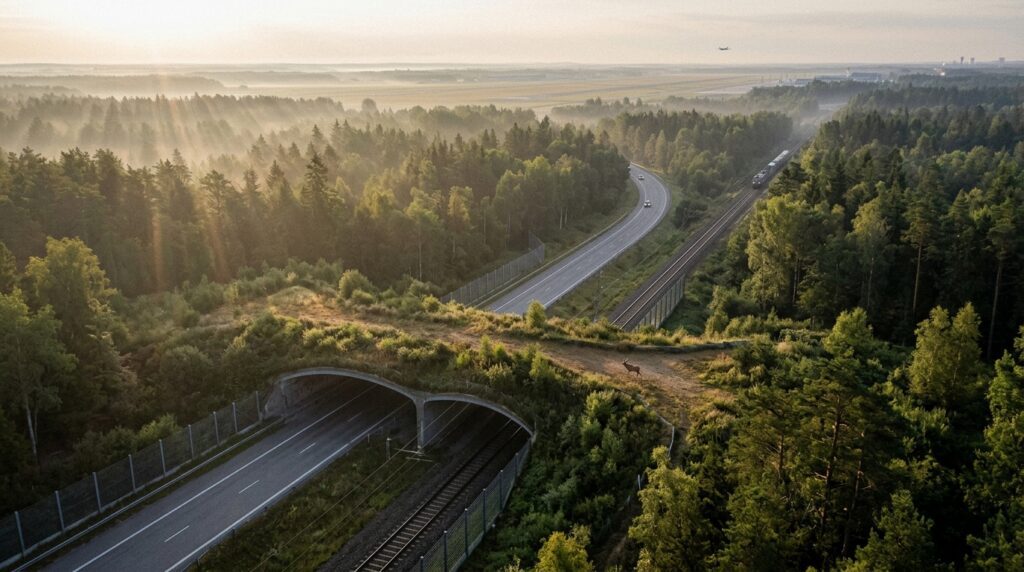
Wildlife collisions can cause animal deaths, equipment damage, transport delays and risks to people. The problem affects multiple industries, and the financial consequences can be substantial.
In aviation, the Federal Aviation Administration’s wildlife strike statistics and FAQs report approximately 344,000 recorded wildlife strikes involving U.S. civil aircraft from 1990 through 2025. The FAA estimates that projected costs averaged about $272 million per year over that period.
Wildlife strikes are not limited to birds, although birds account for the majority of reported incidents. The FAA also records strikes involving animals such as deer, coyotes, turtles, skunks and bats.
Railway operators face similar operational disruption. According to SNCF Bretagne’s report on animal collisions, wandering animals affect more than 8,000 trains across France each year and rank among the five leading causes of delays. In Brittany, 120 trains struck animals in 2023, affecting 660 train services and causing more than 15,000 minutes of disruption.
These incidents can create consequences beyond the initial collision. Trains may need inspections and repairs, aircraft may require damage assessments, and operators may have to close or restrict sections of infrastructure while dealing with an incident.
Why Traditional Deterrents Can Fall Short
Physical barriers and conventional deterrents remain important parts of wildlife management, but they may not be sufficient in every location.
Fences can have gaps, particularly where roads and railway corridors intersect with wildlife movement routes. Generic alarms may have limited effectiveness when animals become accustomed to repeated sounds. Manual monitoring can also require substantial resources when operators are responsible for large or remote areas.
A fixed deterrent may fail to account for differences between species, animal behavior or changing conditions. An animal may approach a site at night, during a particular season or along a path that was not anticipated during installation.
AI-powered detection offers a way to make responses more selective and to record activity over time. Instead of relying exclusively on fixed responses, the system can attempt to identify an animal and apply a more targeted intervention.
However, AI is not a universal replacement for existing methods. Effective wildlife management is likely to require a combination of appropriate barriers, habitat management, monitoring, human expertise and targeted interventions suited to the location.
Benefits for Transportation Operators and Wildlife
Improved Safety Around Infrastructure
By detecting animals near high-risk areas, Flox aims to give operators an additional way to prevent encounters that could cause accidents or operational disruption.
A system that identifies wildlife and responds quickly could be useful at locations where animal movement is frequent and monitoring resources are limited.
The potential benefit is not limited to preventing a collision. Better information about animal movement may also help operators decide where fencing, vegetation management or additional monitoring is necessary.
However, the impact must be evaluated against real incident rates and operating conditions. A device detecting animals does not automatically mean every collision can be prevented.
Potentially Fewer Delays and Repairs
Animal collisions can trigger vehicle inspections, line closures, repairs and service disruptions. If targeted deterrence reduces the number of animals entering dangerous areas, operators could potentially avoid some of those costs.
For railway companies, even a relatively small reduction in disruptive incidents could be valuable where wildlife collisions occur regularly. Airports can also benefit from measures that help manage animals around runways and other sensitive areas.
The actual financial benefit will depend on the deployment site, species involved, frequency of incidents and the effectiveness of the system.
A Non-Lethal Approach to Wildlife Management
Flox positions its technology as a way to guide animals away from dangerous areas using targeted sounds rather than relying solely on removal or lethal control.
The intended outcome is to reduce conflict while allowing wildlife to remain in the broader environment. This is especially relevant when infrastructure crosses established habitats or animal movement routes.
Nevertheless, non-lethal deterrence still needs appropriate ecological oversight. Repeatedly redirecting an animal can affect its movement and may simply shift a problem to a different location if the alternative route is not safe.
Better Data for Wildlife Management
Conventional interventions may not always produce a detailed record of which animals visited a location, when they appeared or how they responded.
Flox’s reporting platform is designed to capture detections and deterrence events, helping operators review activity and identify recurring patterns.
For example, a concentration of detections around a fence gap may indicate where a targeted barrier or crossing improvement is required. Seasonal changes in animal activity may also inform maintenance schedules and risk planning.
Such data may support operational planning, research and biodiversity reporting when collected, interpreted and managed appropriately.
Greater Flexibility at Remote Sites
The system’s on-device processing and offline capability are designed for locations where staff cannot supervise equipment continuously or where network access is unreliable.
Automated detection and response could reduce the need for constant manual monitoring, particularly across long transport corridors or isolated infrastructure sites.
Devices still require appropriate installation, maintenance and periodic review. Automation changes the way an operation is managed; it does not remove the responsibility to ensure that equipment remains reliable and suitable for its environment.
Funding, Deployment and Business Expansion
Flox Intelligence is moving from research and early deployment toward broader commercialization.
According to TechCrunch’s October 13, 2026, report, approximately 150 devices were deployed across North America, Europe and Australia at the time of reporting.
The company expects to finish 2026 with approximately $1.5 million in revenue, according to comments reported by TechCrunch. It is opening a $10 million Series A round, with most of the planned investment intended to expand deployment to several thousand devices and extend the underlying technology to additional use cases.
These figures reflect the company’s reported position and targets, not guarantees of future results.
Previous Investment and Commercial Traction
In February 2026, Flox announced a $4 million seed round led by Tilia Impact Ventures. The funding was intended to help support expansion in North America and additional deployments across airports, railway corridors, road networks and industrial sites. Details are available in the official seed funding announcement.
TechCrunch reported that the company had raised approximately $5 million across its pre-seed and seed rounds, including participation from investors such as Unconventional Ventures, Tilia Impact Ventures, GENIUS NY, Norrsken, Satgana and angel investors.
Flox also reports that its technology has logged more than 60,000 wildlife events across 27 species. These are company-reported activity figures. They indicate usage of the system but should not be interpreted as independent evidence that every event prevented a collision.
The company lists transportation operators, airports and infrastructure organizations among its customers and partners. Its collaboration with Alstom is particularly relevant because it could extend wildlife intelligence from stationary devices to railway equipment.
A Device-and-Software Business Model
TechCrunch reports that Flox sells its hardware upfront and charges an annual software and AI subscription after the first year.
The company also works through original equipment manufacturer partnerships. Under these arrangements, equipment manufacturers can pay an annual fee to deploy Flox’s software on their vehicles.
The collaboration with Alstom provides an example of how this model could extend beyond individual roadside or trackside installations. Instead of placing a separate device at every point of concern, some capabilities may eventually be integrated into vehicles that travel through wildlife-sensitive areas.
A hardware-and-subscription model can provide recurring revenue as the installed base grows. It also makes ongoing software updates, reporting and other services part of the relationship with customers.
However, the model requires the company to support hardware deployments, maintain reliable software and demonstrate that the combined service delivers continuing value to customers.
Why the $10 Million Series A Matters
The planned Series A would support a substantial increase in the number of deployed devices, alongside work on expanding the underlying technology beyond its current applications.
Growing from approximately 150 deployed devices to several thousand would require additional manufacturing, installation, maintenance, customer support and operational management capacity.
A wider installed base could also provide more field data and more opportunities to test the technology across different environments and species. This could help Flox refine its perception models and assess how its deterrence methods perform under different conditions.
The funding round is therefore important not simply because of the amount being raised, but because it is connected to the company’s next phase of deployment.
The key question is whether Flox can scale its technology while maintaining reliability and demonstrating enough safety or operational value to justify the investment made by customers.
More AI coverage: explore Progressive Robot's AI Models, Tools & Releases hub — hands-on reviews, setup guides and benchmarks in one place.










