

Scalable web applications are the foundation of lasting digital success, yet many fail to reach their potential. In April 2025, there are over 1.5 billion web solutions in existence—but fewer than 200 million are active. The harsh reality: many web applications never reach full potential. A user forms an impression of a site in about 50 milliseconds, and 76 % of consumers abandon a web experience if they cannot quickly find what they want.
In the race to launch, many startups focus on speed to market and feature sets, neglecting architecture that can grow. Yet as users multiply, performance issues creep in: slow page loads, timeout errors during peaks, or slow iterations when adding new features. Simply throwing more hardware at the problem is a short-term patch. To truly endure, you must build scalable web applications from day one.
What Scalability Really Means in Web Architecture
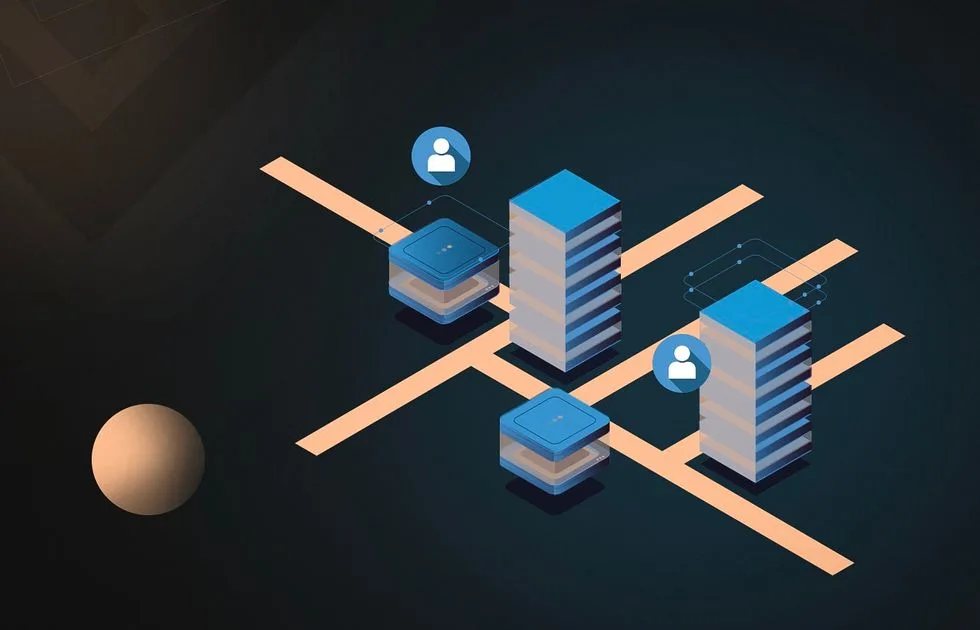
Scalability is the property of a system that allows it to gracefully handle growth—in traffic, data, or operations—without compromising performance or availability. It’s not enough to survive occasional spikes (a viral event or Black Friday); a truly scalable web application provides consistent performance whether you have 100 or 10 million users. Scalability is fundamentally about anticipating growth, not just patching problems as they arise.
Two primary strategies exist. Vertical scaling (scale-up) means increasing the resources (CPU, RAM, storage) of a single machine. It’s simple and often effective when traffic is modest, but it quickly reaches physical and cost limits. Horizontal scaling (scale-out) involves adding more machines and distributing the work.
Combined with load balancing, redundancy, and distributed data patterns, horizontal scaling is the backbone of most large systems. In practice, a robust architecture uses both approaches but is built so that no single point of failure or central choke point can disable the system.
Why Investing in Scalability Early Pays Off

Designing for scale upfront is not about paranoia—it’s a strategic investment. A scalable platform maintains responsiveness even under high traffic, providing a smooth experience for users globally. It also allows your infrastructure to grow with usage, paying only for what you consume, avoiding overprovisioning. Scalable architecture promotes fault tolerance—reducing downtime or data loss under strain.
For your development team, it means new features can be introduced without tearing down the system. In short: your app remains fast, stable, and extensible as your business grows.
Of course, scalability also increases architectural and operational complexity. You’ll pay a premium in design discipline, monitoring, and infrastructure decisions. But failing to plan is often more expensive: massive refactors, outages, or user attrition.
Building Blocks of a Scalable Web Architecture

To build scalable web applications, you need to assemble several crucial architectural pieces. Each one helps the system absorb load, isolate failure, and maintain performance.
Traffic Management & Load Distribution
A load balancer is the traffic cop of your architecture—routing user requests across servers so that no machine is overwhelmed. It ensures high availability: if one server fails, requests simply move to others. In a scalable system, each incoming request should be stateless or idempotent, tracked via correlation IDs so you can trace progress across microservices.
Security context (authentication/authorization) should be validated early (often at an API gateway) to reduce overhead downstream. Network latency is unavoidable, so your design must tolerate timeouts, retries, and transient failures. Decoupling components and graceful degradation (serving partial responses when some service is unavailable) are essential.
Caching Strategy
Caching is vital to reduce load and accelerate responses. Local in-memory cache (per service), distributed caching (shared across services), and content delivery networks (CDNs) for static content all play roles. But caching brings thorny problems—chief among them cache invalidation (knowing when to evict or refresh stale data). It’s best to separate static from dynamic content, set time-to-live (TTL) on items, and design your cache so that hot data lives in constant time (O(1) lookups). Consider network latency, cache hit ratios, and consistency trade-offs.
Database Design & Scaling
Your database is often the most critical bottleneck. To scale it properly, you’ll use techniques like replication (copying data across read replicas), sharding (dividing data across multiple nodes), partitioning, and indexing. But beware: more indexes help reads but can slow writes. Use partitioning when table sizes grow huge. Logs, analytics, or telemetry should live in separate systems (e.g. ELK stack, time-series DBs) so they don’t burden the core database. Even with NoSQL, preserving transactional integrity for key operations often calls for relational databases or hybrid approaches.
Modular Services & Microservices
Splitting your app into modular services—such as user auth, payments, search, or messaging—lets each one scale independently. The principle of single responsibility helps you avoid monolithic code. Communication between services is often done via APIs, message buses, or event queues. Transparent logging, request tracing, and consistent data propagation are needed to maintain observability. Use of eventual consistency needs care; some operations require ACID semantics—so the service boundary and data ownership must be clear.
Background & Asynchronous Processing
Never block the user-facing thread with heavy work. Use job queues or message brokers (RabbitMQ, Kafka, SQS) to offload tasks like sending emails, generating reports, or processing images. Worker pools process these jobs. Support retries, graceful cancellation, and make sure your queueing system isn’t a single point of failure. This asynchronous model decouples front-end response time from slow background tasks.
Content Delivery Networks (CDNs)
Using a CDN means serving static assets (images, CSS, JavaScript) from servers near the user. That reduces latency and takes load off your origin servers. For dynamic content, some CDNs support edge caching or caching rules, but only if security and freshness constraints are well defined. CDNs also provide DDoS protection and improve availability.
Security, Authentication & API Gateway
An API gateway handles routing, authentication, authorization, rate limiting, and building a security boundary. Everything behind it trusts that the gateway has already validated the request. The request context (user roles, permissions) must propagate across services. Use proven identity systems (OAuth, OpenID, IAM platforms) instead of building your own. Perform security checks early to minimise wasted cycles on invalid requests.
Approach: How to Build a Scalable Web App from Scratch
With the building blocks in mind, here’s how to architect a truly scalable web application from the ground up—without using bullet lists.
You begin by selecting a modular architecture: define clear service boundaries around capabilities like authentication, payments, logging, and analytics. Even if you start with a monolith, structure it so that you can later extract domains into services. The database should be modelled consciously: choose relational or NoSQL based on your workload, and plan for indexing, partitioning, or eventual sharding.
Next you build caching early: wrap frequent data access in Redis or Memcached layers, isolate static assets behind CDNs, and plan cache invalidation paths. At that point, introduce a load balancer so multiple nodes can handle traffic. Make sure your application is stateless so nodes can be added or removed dynamically without sticky sessions.
Then incorporate an API gateway that centralizes routing and security. Behind it, each microservice handles its domain, communicating over HTTP, gRPC, or message buses. Use asynchronous background processing for tasks that don’t require immediate responses. Archive logs and metrics in centralised systems. Use observability tools so you can monitor latency, resource usage, error rates, and request traces.
Use deployment tools like Kubernetes or container orchestration to roll out new versions without downtime, and enable auto-scaling—so new service instances spin up under load. Always prepare for failure: replicate data across regions, design circuits that disable noncritical functionality, and fallback gracefully.
Choosing the Right Frameworks and Tech Stack
Your technology stack significantly impacts how scalable web applications will evolve. At Progressive Robot, we often recommend frameworks that balance performance, developer productivity, and ecosystem maturity.
For the backend, Spring Boot (Java) is a strong choice when you require robust, enterprise-grade services. ASP.NET Core (C#) gives cross-platform performance and scalability on Microsoft stacks. Node.js is ideal for I/O bound workloads thanks to its event-driven architecture—companies like Netflix and LinkedIn rely on it. Django (Python) offers built-in tooling for security and database interaction, while Ruby on Rails accelerates development speed in the early stages.
On the frontend, React with Next.js shines: it supports server-side rendering and static generation, making your user interface faster and more scalable. Each tool has trade-offs. What matters most is structuring your app and making architectural decisions to allow growth. As many in developer forums have noted, “the best stack is the one you already understand.” Reddit
Real-world Examples of Scalable Applications
Scalable web applications power the digital giants we rely on every day. Facebook, initially a simple social site, expanded into a global platform using microservices, caching layers, and distributed data centers. Netflix streams video across 190+ countries using cloud infrastructure, CDNs, and auto-scaling services. Amazon processes massive transactional load and product catalogue complexity by scaling services and databases horizontally.
Instagram, built on Django, scaled to billions of users through load balancing, caching, and sharding. Airbnb’s booking engine, payment systems, and search infrastructure scale independently. Uber matches thousands of riders and drivers in real time via event-driven systems. Spotify streams to over 600 million users through intelligent caching, microservices, and content delivery.
Planning for a Scalable Future
Scalability is never “done.” Every decision—from how you write a query to how you deploy containers—should consider future growth. Monitor your system with logs, tracing, and alerts. Stress test under simulated peak traffic to uncover weak points early. Incrementally improve—cache more, break monoliths into services, rearchitect hot paths. Remain flexible so new tech (serverless, edge computing, AI workloads) can plug in. Scale with demand—don’t overbuild too early, but be ready to grow when usage surges.
Frequently Asked Questions (FAQs)
What does “scalable web applications” mean?
It refers to applications that maintain performance, responsiveness, and reliability even as load, data, or user count increase.
Is one programming language better than others for scalable apps?
No single language is inherently superior. Java, JavaScript, Python, C#, or Ruby all work—what matters is your architectural discipline.
How do cloud platforms help with scalability?
They offer auto-scaling, managed databases, serverless options, and global infrastructure, letting you scale without managing servers.
How can I test scalability?
Use load tests, stress tests, and simulate spikes early so you spot performance issues before users see them.
Is it expensive to build scalable apps?
Initial investment in architecture and monitoring is higher, but the long-term cost of fixing a failed system is far greater.










