
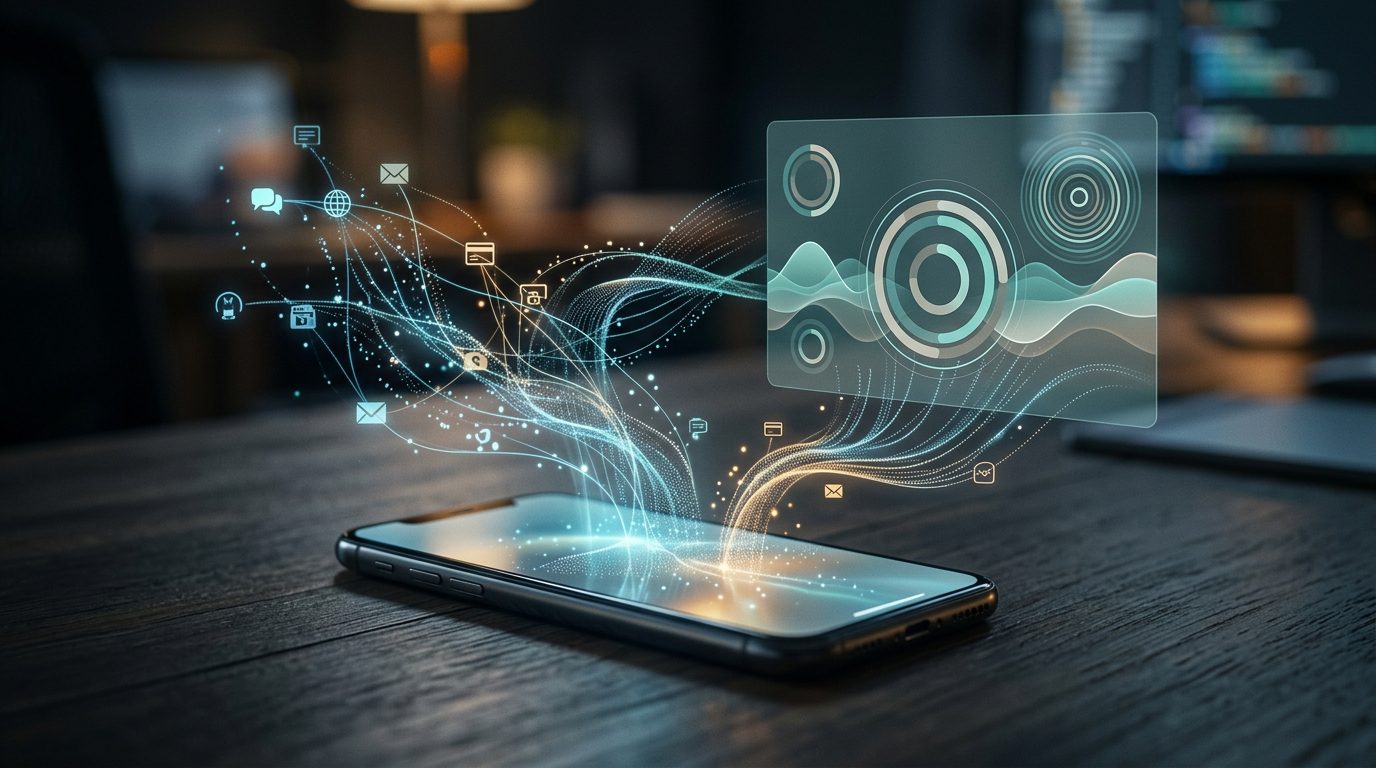
AI stress detection is taking a new direction as researchers explore how everyday smartphone activities can reveal changes in a person’s daily stress levels. A study from the Korea Advanced Institute of Science and Technology (KAIST) suggests that patterns such as messaging, web browsing and financial payments may provide useful clues about how someone is feeling. Instead of focusing mainly on total screen time or the apps a person opens, the researchers developed a system that examines recurring activities across different applications.
Published in Proceedings of the ACM on Interactive, Mobile, Wearable and Ubiquitous Technologies, the research introduces a method for identifying routine smartphone behaviours and using them to estimate whether a person is experiencing stress on a particular day. The findings are promising, but the study involved only 26 participants, and the researchers caution that smartphone behaviour does not prove what causes stress.
What Is AI Stress Detection?
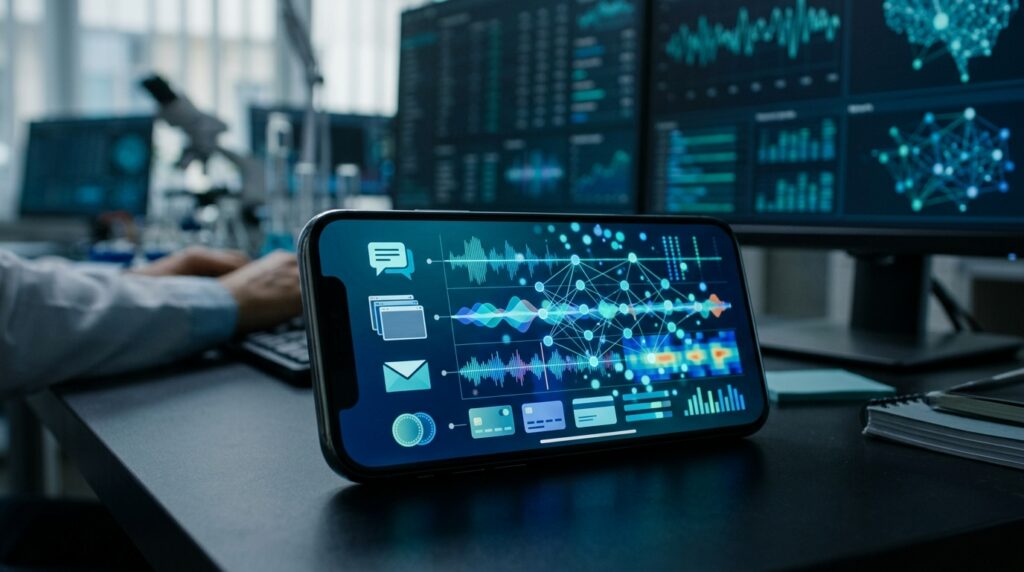
AI stress detection uses data and computational models to estimate whether a person may be experiencing stress. Depending on the system, it can analyse information such as movement, sleep, heart rate, typing behaviour or patterns of digital activity. The KAIST research takes a behavioural approach, examining what people repeatedly do on their smartphones rather than relying primarily on how long they use particular applications.
For example, sending messages, searching the web and making payments are different activities, even when they take place on the same device. The researchers wanted to identify these recurring behaviours in a way that remains useful when people switch between apps or when an application’s interface changes.
This distinction matters because a person might use KakaoTalk, LINE or WhatsApp for essentially the same purpose: communicating with other people. A model that recognises the underlying activity could remain useful even when the specific application changes.
The goal is not to read someone’s mind through their phone. Instead, AI stress detection attempts to identify behavioural patterns associated with a person’s self-reported stress. Those patterns could eventually support personal wellness tools, provided the technology is validated and used responsibly.
How Researchers Identified Smartphone Behaviour Patterns
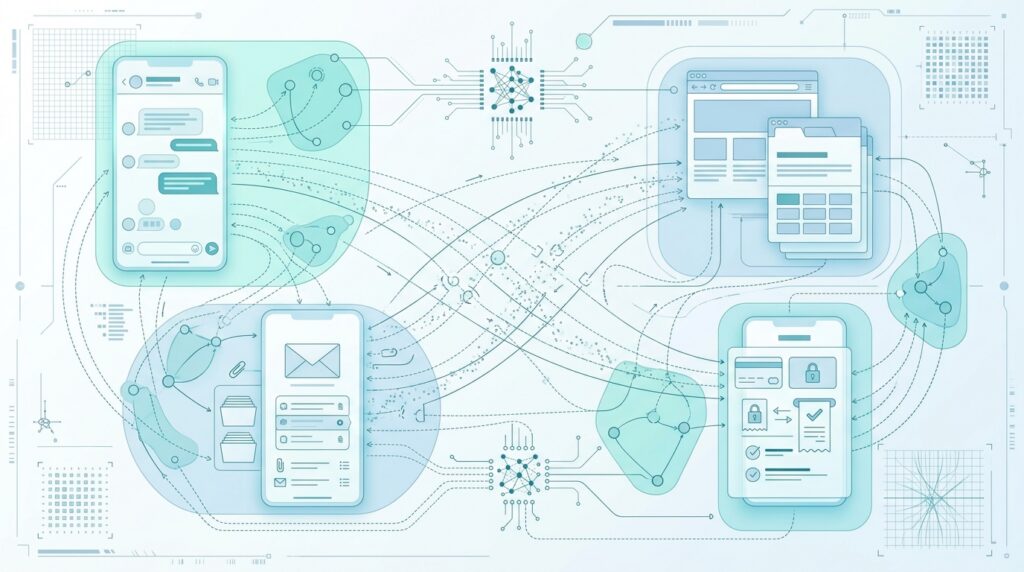
The researchers developed a method called Smartphone Human Interaction Routine Behavior Tasks (SHIRBTs). It describes recurring smartphone activities in terms of what a person is doing, rather than simply recording the name of the app being used.
To identify these activities, the team used a technique called Multi-Level Sequential Pattern Mining, or ML-SPM. It examines repeated sequences of screen transitions across multiple days to identify patterns that appear consistently in everyday smartphone use.
A large language model was then used to assign understandable labels to the identified patterns. These labels included messenger chatting, web browsing, financial payment and reading or writing email.
In tests involving different messaging, browser and email applications, the system achieved more than 95% accuracy when classifying the same behaviour across different apps. This result relates to behaviour classification, not to the accuracy of the stress prediction itself.
That distinction is important. Recognising that a person is chatting is one task; estimating whether that person’s day is stressful is another. The researchers combined behavioural information with personalised AI models to investigate the second task.
Why Chatting and Financial Payments Matter
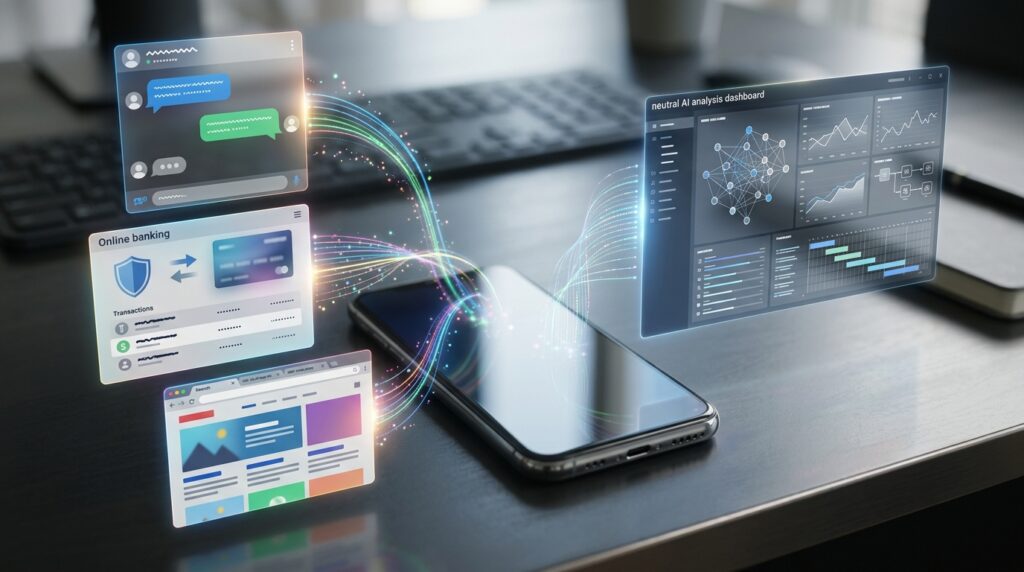
Messaging and financial payments are common parts of daily life, which makes them potentially useful sources of behavioural information. Changes in how frequently someone chats, how they move between screens or how they interact with digital services may provide clues about changes in their routine.
The KAIST team identified 29 types of repeated behaviours among participants, with each person routinely performing an average of around seven. Rather than applying one identical behavioural profile to everyone, the researchers trained personalised models using participants’ patterns and daily self-assessments.
One notable result was that a model using only messenger chatting and financial payment behaviours could achieve higher average stress-classification accuracy than the conventional app-usage approach. Even messenger chatting alone performed better than that comparison method in the reported experiments.
This does not mean that chatting or making payments automatically indicates stress. People may message more because of work, family commitments or social events, while financial activity may increase for ordinary reasons such as paying bills. The meaning of these behaviours depends on the individual and their circumstances.
The value of AI stress detection lies in learning personal patterns over time, not treating a single payment or message as proof that someone is struggling.
How Accurate Was the AI Stress Detection System?
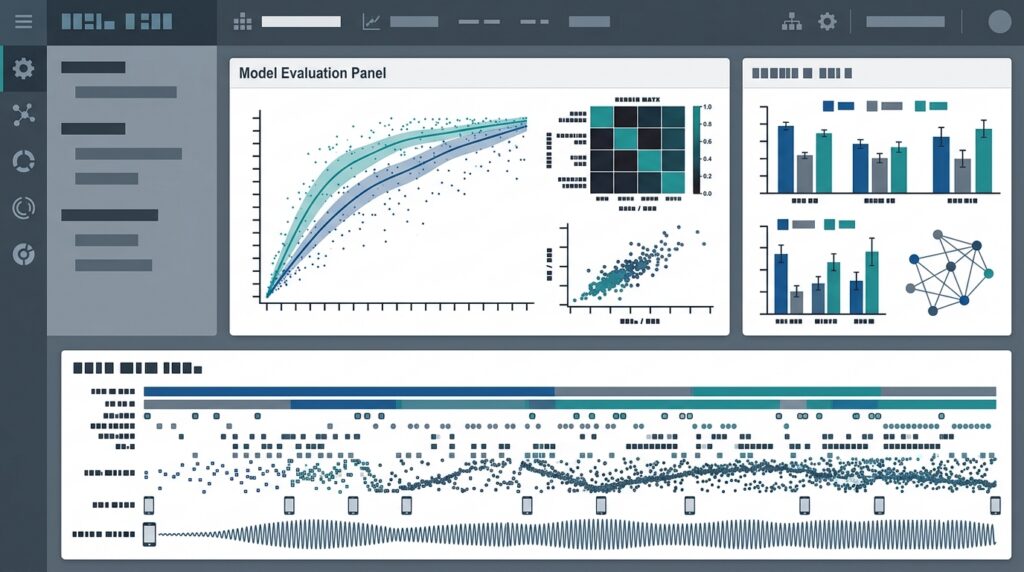
The study analysed real-world smartphone records from 26 university students and office workers in their 20s and 30s. The dataset included two groups: 16 short-term participants provided an average of 30.5 days of data, while 10 long-term participants provided an average of 105.1 days.
The best-performing personalised model achieved the following average results:
75.9% accuracy among short-term participants.
73.8% accuracy among long-term participants.
These results were respectively 5.5 and 3.5 percentage points higher than the conventional approach, which analysed app usage using the same AI technique.
In practical terms, the model classified stress status correctly roughly three out of four times in these evaluations. That is an encouraging result for early-stage research, but it also means that mistakes occurred.
The reported accuracy should not be interpreted as proof that the system is ready for clinical use. The sample was small and drawn from a limited age range, and performance may differ among people with different occupations, routines, cultures or smartphone habits.
For AI stress detection to become a dependable real-world tool, future studies will need to test the method with larger and more diverse populations, examine false positives and false negatives, and establish how well the models generalise beyond the original participants.
Privacy: Does the System Need to Read Your Messages?

Mental health monitoring raises important privacy questions, particularly when it relies on personal devices. A system that analyses digital behaviour could become intrusive if it collects more information than necessary or if the data is shared without meaningful consent.
The KAIST study took steps to limit the sensitivity of the information collected. According to the report, the system did not store the actual text or message contents entered by participants. Instead, it recorded behavioural details such as whether text was entered, how often it was entered and the sequence of screen transitions.
Information about message recipients or call partners was also processed using hashing, which converts original information into values that do not directly reveal the underlying details.
These safeguards are relevant, but they do not mean that behavioural data is automatically anonymous or risk-free. Patterns of activity can still reveal information about people’s routines, and hashed information may remain sensitive depending on how it is stored and whether it can be linked with other datasets.
Any future commercial implementation of AI stress detection would need clear consent, strong security, limited data retention and transparency about how predictions are used. Users should also be able to understand and control whether their behavioural information is collected.
Potential Applications for Digital Mental Health

More AI coverage: explore Progressive Robot's AI Models, Tools & Releases hub — hands-on reviews, setup guides and benchmarks in one place.










