
Two of the biggest frontier AI labs have just made one of the boldest claims in the history of computer science, and it targets a conjecture about the Exponential Time Hypothesis itself. On 26 October 2026, OpenAI published a preprint saying an internal model had produced a proof that the Exponential Time Hypothesis is false, together with a machine-checkable formalization of the argument in the Lean proof assistant. Only hours later, Anthropic announced that an internal Claude model had independently refuted the same hypothesis, and pushed its construction to GitHub.
The Exponential Time Hypothesis, usually called ETH, has been one of the most load-bearing assumptions in complexity theory since 1999. Textbooks have quietly treated it as true for decades.
If the claim survives expert review, it rewrites a chapter of every algorithms course and invalidates a large family of conditional lower bounds that researchers lean on every day. If it collapses under scrutiny, it is still a landmark moment: this is the first time frontier labs have aimed AI-generated proofs at a central open conjecture of theoretical computer science, released them publicly before peer review, and invited the community to settle the question.
This guide explains what the Exponential Time Hypothesis actually says, what the models claim, what a refutation changes and does not change, and where the verification effort stands right now.
Table of contents
- What the Frontier AI Labs Actually Announced
- What Is the Exponential Time Hypothesis?
- Why the Exponential Time Hypothesis Matters So Much
- How AI Models Claim to Refute the Exponential Time Hypothesis
- What the Exponential Time Hypothesis Refutation Does Not Mean
- Who Is Checking the Proof
- What Happens Next for Research and Industry
- Frequently Asked Questions About the Exponential Time Hypothesis
- References
What the Frontier AI Labs Actually Announced

The announcement arrived as part of a broader OpenAI release covering three results in mathematics, computer science and physics, published under the title “Working with academic communities to build scientific understanding”. The computer science item was the ETH refutation. OpenAI described a deterministic algorithm, discovered by an internal model, that exactly counts the satisfying assignments of fixed-width CNF formulas in subexponential time and polynomial space. Because 3-SAT is the flagship case, that construction would refute the Exponential Time Hypothesis outright.
OpenAI’s GitHub Release
OpenAI posted the 67-page paper, written as model output, to its public math repository alongside a Lean formalization of the argument. At the request of the working group that will examine the proof, the materials went public immediately rather than through a private review channel. The named shepherds are three of the people who spent their careers building ETH: Russell Impagliazzo and Ramamohan Paturi of UC San Diego, who formulated the hypothesis in 1999, and MIT’s Ryan Williams, whose lower-bound work is woven through the field.
Anthropic’s Follow-Hours-Later Claim
The twist came the same day. Anthropic said an internal Claude model had independently refuted the Exponential Time Hypothesis on 16 October, before OpenAI’s release existed, and published the details in its formal-math repository on GitHub, with the write-up “A 2^o(n) Time Algorithm for 3-SAT” appearing on the Hexagon mathematics server. Two labs, two model families, the same result within ten days: that coincidence is now itself part of the evidence, and part of the debate about how such claims should be credited and checked.
What Is the Exponential Time Hypothesis?
The Exponential Time Hypothesis is a conjecture about how hard one specific problem is: deciding whether a Boolean formula can be made true. More precisely, ETH says that 3-SAT cannot be solved in subexponential time. Every algorithm for the worst case must take at least 2^(s3 x n) steps for some constant s3 greater than zero, where n is the number of variables. “Subexponential” means anything of the form 2^o(n), so ETH claims no such algorithm exists.
The Satisfiability Problem in Plain English
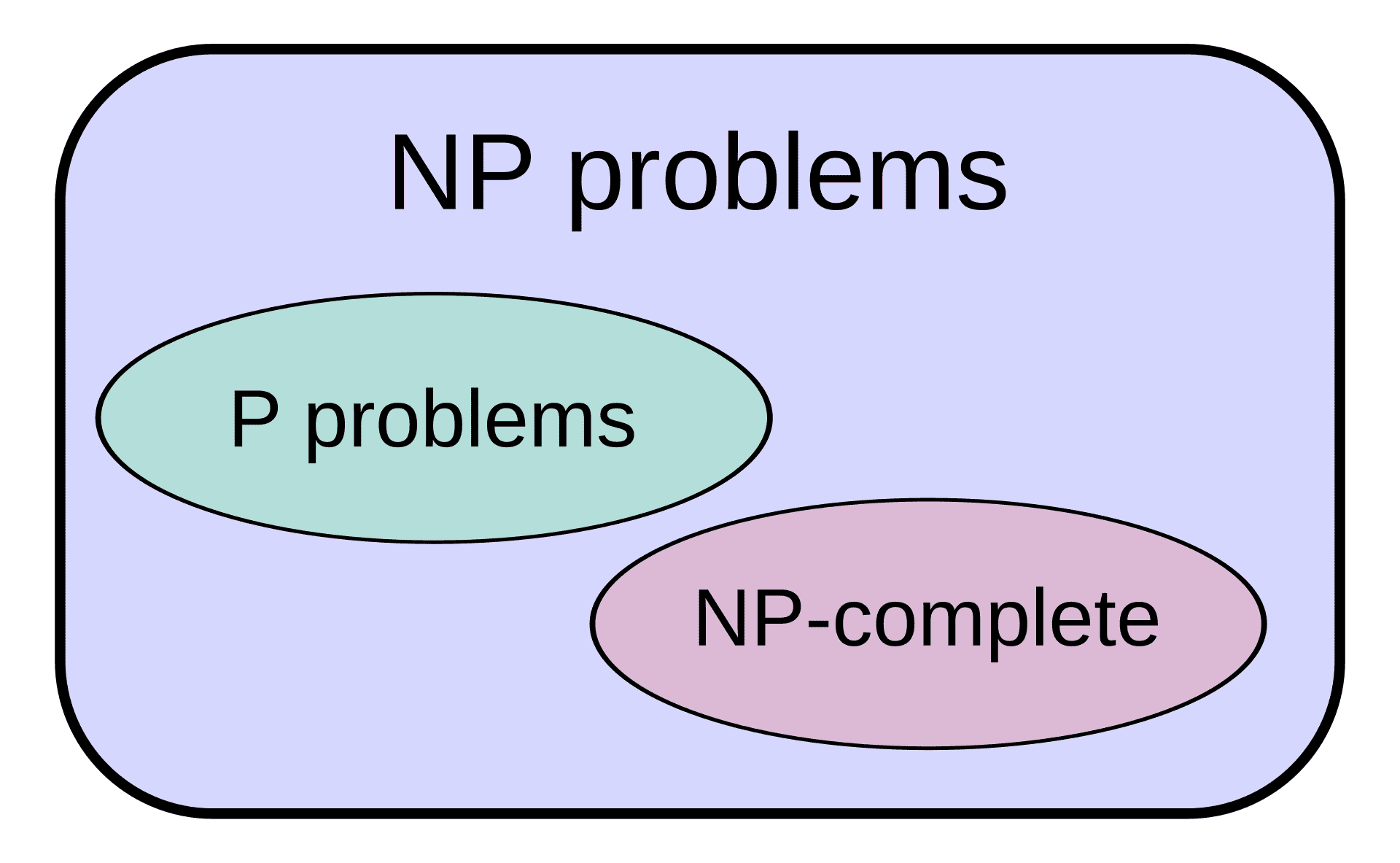
A Boolean formula is built from variables that take values true or false, joined by AND, OR and NOT. Satisfiability, or SAT, asks whether any assignment of values makes the whole formula true. In 3-SAT, the formula is a list of clauses, each clause an OR of exactly three literals, and the formula is true when every clause is true. It sounds like a puzzle, but SAT was the first problem proven NP-complete: if you find a fast algorithm for SAT, you get fast algorithms for thousands of problems at once, from scheduling to chip design to protein folding.
What ETH Claims, Formally
Impagliazzo and Paturi defined ETH through the numbers sk, the infimum of exponents such that k-SAT can be solved in time 2^(sk x n + o(n)). Because harder k cannot have smaller exponents, s3 is at most s4, which is at most s5, and so on, and ETH is exactly the statement that s3 is strictly positive. The hypothesis implies P ≠ NP, but the converse fails: P ≠ NP could be true while ETH fails. A stronger sibling, the Strong Exponential Time Hypothesis, conjectures s-infinity = 1, and is untouched by the current claims.
| Assumption | What it asserts | Status after 26 October 2026 |
|---|---|---|
| P ≠ NP | No polynomial-time algorithm for NP-complete problems | Open; unaffected either way |
| ETH | 3-SAT needs 2^(s3 x n) time for some s3 greater than zero | Claimed refuted by OpenAI and Anthropic models; under review |
| SETH | s-infinity equals 1; k-SAT has no (2 minus epsilon)^n algorithm | Still open; the refutation of ETH does not settle SETH |
Why the Exponential Time Hypothesis Matters So Much
Complexity theorists have struggled for decades to prove unconditional lower bounds: statements that no algorithm, ever, can beat some speed limit for a concrete problem. Such results are rare and mostly weak. So the field built a second floor underneath itself. Researchers prove conditional lower bounds: if a problem were faster than X, then ETH would fail. Because ETH felt obviously true, those results functioned as practical proof that algorithms like Dijkstra’s shortest path, or exact dynamic programs over subsets, were basically optimal.
Conditional Lower Bounds Built on the Exponential Time Hypothesis
Hundreds of papers state their impossibility results in the form “unless ETH fails, no algorithm solves this in O(2^(n minus sqrt n)) or similar”. The assumption spreads across parameterized complexity, fine-grained complexity, approximation hardness and even the analysis of heuristics. If the Exponential Time Hypothesis is genuinely false, every theorem of that shape silently loses its foundation. The proofs do not become wrong; the assumptions that made them persuasive do.
Researchers now ask which of those results can be recovered under weaker hypotheses, and which fall open again as research problems. The Exponential Time Hypothesis has functioned for two decades exactly where the field most wanted certainty: a floor under exponential time, quoted confidently in lectures, grant proposals and PhD defenses alike.
A Map Drawn on Sand
Textbook chapters on exact algorithms present ETH as the working truth about exponential time. Practitioners who choose between algorithms rely on the same map. A refutation means the boundary between “hard” and “merely exponential” was drawn in the wrong place. Some problems long believed unreachable in subexponential time now have a template for beating them. The intellectual shock is comparable to discovering, in the middle of a war, that one side had quietly invented a better engine years earlier.
How AI Models Claim to Refute the Exponential Time Hypothesis
A hypothesis of the strength of ETH is refuted by a single counterexample: one explicit, provably correct algorithm that solves 3-SAT in 2^o(n) time. Both labs report that their models produced such an algorithm. OpenAI describes a deterministic procedure that exactly counts satisfying assignments of fixed-width CNF formulas using subexponential time and polynomial space. Anthropic’s write-up gives a 2^o(n)-time algorithm for 3-SAT directly.
The Subexponential Algorithm That Would Kill the Exponential Time Hypothesis
The reported running time, as summarized in public discussions of the result, is roughly of the shape 2^O(n x (log log n)^2 / sqrt(log n)). The exponent is n multiplied by a factor that shrinks toward zero as n grows, so the algorithm is asymptotically faster than 2^(c x n) for every fixed constant c. That is precisely the definition of subexponential time, and precisely what the Exponential Time Hypothesis forbids. Brute force tries all 2^n assignments. WalkSAT, a famous heuristic, averages about (4/3)^n on random instances. The claimed construction beats every fixed exponential base.
| Algorithm family | Exponent per variable (base 2) |
|---|---|
| Brute-force search over all assignments | 1.000 |
| WalkSAT-style local search (average case) | ~0.415 |
| Claimed model-found algorithm | tends to 0 as n grows |
The chart below shows why the claimed exponent collapse is so startling: every known exact method sits at a fixed exponent above zero, and ETH says the line can never reach the axis.
The Lean Formalization
What makes this release unlike a normal math preprint is the machine-checked component: OpenAI shipped a Lean formalization, a proof written in a language a proof assistant can verify step by step, independent of human patience. Lean checking does not certify that the algorithm solves real 3-SAT on real inputs; it certifies that the stated theorem follows from the stated axioms with no gaps. For a community bracing to audit hundreds of pages of model output, an executable certificate is a genuinely new kind of reassurance, and the reason many veterans call this the most interesting AI mathematics result yet.
What the Exponential Time Hypothesis Refutation Does Not Mean
The headlines write themselves, and most of them would be wrong. A refuted Exponential Time Hypothesis does not mean P = NP, does not mean hard problems are now easy, and does not mean your bank’s encryption failed this morning. The claimed algorithm is super-polynomial: it still takes n written in the exponent, multiplied by a shrinking factor. For every realistic input size you will ever run, it can be slower than plain brute force. The result is asymptotic, deep and almost useless in exactly the way many famous theorems are.
It Is Not a Proof That P Equals NP, Only That the Exponential Time Hypothesis Fails
ETH failing and P equalling NP live at different scales. The new algorithms beat 2^(c x n) only in the limit, while polynomial time means n raised to any fixed power for all inputs. The distance between 2^(n / polylog) and n^100 remains astronomical. Complexity classes do not collapse. The refutation redraws the exponential landscape, not the frontier between polynomial and exponential time.
It Does Not Break Cryptography Today
Most deployed cryptography does not reduce to SAT. RSA and elliptic-curve systems rest on factoring and discrete logarithms; symmetric ciphers are attacked through algebraic and statistical routes, not generic SAT solvers. Encoding an AES key search as a CNF formula and running a subexponential 3-SAT algorithm on it is asymptotically cute and practically hopeless: the instance size explodes long before the shrinking exponent matters. Security teams should track the review outcome as science, not patch against it as a threat.
| A refuted ETH changes | A refuted ETH does not change |
|---|---|
| Validity of ETH-based conditional lower bounds | The open status of P versus NP |
| The believed boundary of exact-algorithm speed | Practical speed of SAT solvers in production |
| How proofs of hardness must be stated going forward | Security of RSA, AES or elliptic-curve systems today |
| The credibility of AI-generated mathematics | The exponential wall for realistic input sizes |
Who Is Checking the Proof
The verification of the Exponential Time Hypothesis refutation is being led by the people who built the assumption. Impagliazzo, Paturi and Williams accepted OpenAI’s invitation to shepherd the computer science result, and then published an open letter to the theoretical computer science community asking for help examining the claim and, unusually, asking meta-questions: what expectations should govern early access to AI-generated results, how should credit be shared between discovery and checking, and how should the field support researchers as methods change.
A Community Audit, Not a Peer Review
The working group’s plan is closer to a public audit than a journal review. The materials sit on GitHub with full history. The Lean file gives a mechanically checkable backbone. Researchers worldwide can attack the construction, look for the flaw, or extend it. Expect the verdict to arrive as a patchwork: partial confirmations, identified gaps, fixes proposed by rival groups, and slowly hardening consensus. Anthropic’s parallel result adds pressure and corroboration; two independent model families converging on a working algorithm would make a total collapse less likely, though not impossible.
Realistic Timelines
Complexity theory has seen spectacular claimed breakthroughs before, and most died in review. But this class of result, an explicit algorithm with a machine-checked proof, resolves faster than a hand-written 200-page proof of a structural conjecture would. The timeline of this episode so far shows how compressed the news cycle has been:
| Date | Event |
|---|---|
| 1999 | Impagliazzo and Paturi formulate the Exponential Time Hypothesis |
| 6 October 2026 | OpenAI releases hundreds of model-generated mathematics manuscripts |
| 16 October 2026 | Anthropic’s internal Claude model independently refutes ETH |
| 25-26 October 2026 | OpenAI publishes the ETH paper and Lean proof; Anthropic follows hours later on GitHub |
| 27 October 2026 | Impagliazzo, Paturi and Williams publish an open letter to the TCS community |
| As of 28 October 2026 | No peer-reviewed verdict; community audit in progress |
A first credible report from the shepherd group in weeks, not years, is plausible. Until that report exists, the correct stance is agnostic curiosity: the Exponential Time Hypothesis is on probation, not dead.
What Happens Next for Research and Industry
If the refutation of the Exponential Time Hypothesis survives, the effects split along predictable lines. Theory absorbs a shock: parameterized complexity re-audits its hardness map, and a burst of follow-up work asks whether the same technique pushes further, toward SETH itself, which remains open and is the true speed limit of the field. Algorithms engineering changes little in the short run; production SAT and optimization tools will keep their battle-tested solvers, because asymptotic wins with enormous hidden constants do not move practical benchmarks.
If the Proof Falls
If a gap is found and cannot be repaired, the field repairs itself quickly, and a different question takes over: what do frontier models’ failure modes look like at this depth, and how much Lean formalization would have caught the error? A failed refutation of the Exponential Time Hypothesis would not restore complacency either; the attempt itself shows the assumption is now a target, and the next attempt may come from a third lab before the community finishes grading this one.
Either way, the episode sets precedent. Labs released before review, shepherds published the open letter, and repositories carry the artifacts. The norms for AI-generated science are being written in public, and this is now the template every future claim will be held against. Our roundup of the wider OpenAI discoveries in mathematics, computer science and physics covers the two sibling results, and our earlier report on OpenAI posting hundreds more results on major math problems shows how quickly the labs’ mathematical output scaled to this moment.
Frequently Asked Questions About the Exponential Time Hypothesis
Is the Exponential Time Hypothesis officially false?
No. As of 28 October 2026 the claim has not been peer reviewed. Two frontier labs independently assert that their models refuted the Exponential Time Hypothesis, and a working group led by the hypothesis’s own creators is examining the proofs. Until that group reports, ETH is contested, not settled.
Did an AI really solve an open problem in theoretical computer science?
Possibly, twice. OpenAI says an internal model produced the refutation, and Anthropic says an internal Claude model found one on 16 October without seeing OpenAI’s work. The convergence of two independent model families is striking evidence, but the mathematical community, not the labs, decides what counts as a solution.
Does the refutation mean P equals NP?
No. ETH implies P ≠ NP, so refuting ETH does not prove P = NP; the two statements live at different scales. A subexponential algorithm for 3-SAT is still far outside polynomial time, and every standard complexity-class separation remains open.
Will this break encryption?
Not in any practical sense. Deployed cryptography does not depend on the hardness of 3-SAT, and the claimed algorithms are asymptotic constructions whose advantages appear only at input sizes far beyond anything the world can run. Watch the review for theory value, not for a security emergency.
Where can I read the proof?
OpenAI published the paper and its Lean formalization in its public math repository on GitHub, and Anthropic published its construction in its own formal-math repository with a write-up on the Hexagon server. Both sets of materials are free to read, run and attack, and the shepherd group’s open letter links the community discussion around them.
References
Working with academic communities to build scientific understanding
The Exponential Time Hypothesis Is False (OpenAI preprint PDF)
Lean formalization of the ETH refutation (openai/math)
Anthropic formal-math: a 2^o(n) time algorithm for 3-SAT
A 2^o(n) Time Algorithm for 3-SAT (Hexagon)
OpenAI announces three big science discoveries and a new way to work with academics (The Verge)
OpenAI trumpets three more math and science results (Gizmodo)
Message to the TCS community on ETH (Impagliazzo, Paturi, Williams)
More AI coverage: explore Progressive Robot's AI Models, Tools & Releases hub — hands-on reviews, setup guides and benchmarks in one place.










