

Perceptron Mk1 is a reminder that the next AI cost war may not be fought only in chatbots. It may be fought in video, robotics, industrial inspection, sports clipping, security operations, and every workflow where a model has to understand what is happening across time.
The headline is striking because video analysis is usually expensive, slow, and awkward to operationalize. VentureBeat reports that Perceptron Inc. released Perceptron Mk1 as a proprietary video and embodied-reasoning model priced at $0.15 per million input tokens and $1.50 per million output tokens, roughly 80-90% below named frontier rivals including Anthropic Claude Sonnet 4.5, OpenAI GPT-5, and Google Gemini 3.1 Pro.
That does not make the model automatically better for every enterprise task. It does make the launch worth studying. Perceptron Mk1 is a closed API product, not an open-weights release, but the company is positioning it as a production layer for physical AI: models that can interpret live or recorded video, reason over objects and events, return timecodes, and connect visual evidence to business action.
For CIOs, AI product teams, operations leaders, and security teams, the useful question is not whether the launch is impressive. The useful question is where lower-cost video reasoning could change the business case for automated review, and where governance still has to slow the rollout down.
Perceptron Mk1 at a glance

Perceptron Mk1 is described by Perceptron’s official launch post as a model purpose-built for video understanding and embodied reasoning. It accepts image and video inputs with natural language queries and returns natural-language or structured responses. OpenRouter’s model page lists the model as perceptron/perceptron-mk1, with image and video input, text output, 32.8K total context, 8.2K max output, and the same $0.15/$1.50 per million token pricing.
The company says the model analyzes video at a dynamic frame rate up to 2 FPS across a 32K-token context window. That is not the same as watching every frame in a high-frame-rate stream, but it is enough to make a different class of applications possible: event detection, clip retrieval, inventory checks, equipment inspection, sports summaries, and task-outcome review.
Perceptron also offers a public demo, which is useful for orientation but should not be confused with a production evaluation. Enterprise teams still need private tests, procurement review, and workflow-specific success criteria.
Here is the practical executive view.
| Question | Current answer | Enterprise implication |
|---|---|---|
| What is it? | A proprietary video and embodied-reasoning model | Evaluate it as a production API, not an open model to self-host |
| What does it cost? | $0.15/M input tokens and $1.50/M output tokens | Lower unit cost could make recurring video review more viable |
| What can it process? | Images, video, and text prompts | Useful for workflows that combine footage, instructions, and context |
| What does it return? | Text, timecodes, and structured spatial annotations when requested | Easier integration into clipping, QA, robotics, and inspection pipelines |
| What is still unproven? | Independent benchmark validation, enterprise reliability at scale, and governance fit | Run pilots with your own footage and human review |
This is why Perceptron Mk1 belongs beside broader Multimodal AI planning. The promise is not a smarter chatbot. The promise is software that can reason over evidence that was previously trapped in video files and camera feeds.
Why the pricing claim matters

The price claim matters because video AI has a brutal scaling problem. A team can afford to test a few clips with a premium model. It is much harder to afford constant analysis of factory cameras, warehouse aisles, retail shelves, sports feeds, training footage, construction sites, or inspection rounds.
Perceptron Mk1 changes the conversation if the pricing and reliability hold in real deployments. Instead of asking whether one analyst can upload one video, a business can ask whether thousands of short checks, clips, and summaries can become part of daily operations. Lower token prices do not remove engineering, storage, retrieval, privacy, and review costs, but they can move the model call from the blocker column to the design column.
This is also a classic Inference Economics issue. The model price is only one line item. A useful cost model should include video preprocessing, clip storage, prompt size, retry rates, latency tier, human review time, logging, and any downstream workflow automation. A cheap model call can still create an expensive process if it produces noisy alerts or long outputs that people must clean up.
The right benchmark for Perceptron Mk1 pricing is not only cost per million tokens. It is cost per useful event found, cost per reviewed clip, cost per avoided manual inspection hour, cost per flagged defect, and cost per correctly summarized task. The 80-90% headline is compelling, but the business case has to be measured against outcomes.
What the model is built to understand

Perceptron’s central claim is temporal reasoning. In plain language, Perceptron Mk1 is meant to understand events across time rather than treating a video as unrelated still images. The company says the model can return structured timecodes, reason through sports or cooking sequences, and maintain object identity across frames, including through occlusion.
That matters because many enterprise questions are temporal. Did the worker put on protective equipment before entering the zone? Did the robot grasp the object successfully? When did the package leave the shelf? Did the machine gauge cross a threshold before or after the alarm? Which moment in a two-hour recording shows the defect? Which shot should a sports editor clip?
VentureBeat’s report highlights examples around basketball timing, pixel-precise pointing, dense counting, analog gauges, clocks, and object dynamics. Those are important because they move beyond generic image captions. A model that can read instruments, count objects, track items through a scene, and return time windows can fit into real operating procedures.
Perceptron Mk1 will still need careful validation against domain-specific footage. Camera angle, lighting, motion blur, compression, uniforms, instrument types, occlusion, language in prompts, and local process rules can all change performance. The production question is not whether the demo works. It is whether the model is reliable on the footage that your business actually owns.
Benchmarks need context, not hype
Perceptron reports strong numbers across video and embodied-reasoning benchmarks. VentureBeat cites EmbSpatialBench at 85.1, RefSpatialBench at 72.4, EgoSchema Hard Subset at 41.4, and VSI-Bench at 88.5. The official launch post also says the comparison excludes some saturated general visual-language results so the chart focuses on video and embodied reasoning signals.
Those claims are promising, but they need adult supervision. Perceptron Mk1 is new, proprietary, and benchmark results are being presented by the company and early reporting. Enterprise buyers should treat the published results as a reason to test, not a replacement for testing.
The evaluation plan should include three layers. First, use public benchmarks and published comparisons to decide whether the model is worth a pilot. Second, build a private test set from representative footage, with ground truth labels created by people who understand the workflow. Third, test operational behavior: latency, failure modes, hallucinated events, missed events, false alerts, explainability, cost per result, and how the model behaves when the video is ambiguous.
This is especially important for physical AI. A wrong answer in a content search tool is annoying. A wrong answer in a safety, robotics, security, or quality-control workflow can create real-world risk. Perceptron Mk1 may be impressive, but benchmark leadership is not the same as permission to automate decisions without review.
Developer platform and deployment paths
Perceptron is not launching only a model name. The company says Perceptron Mk1 is available through the Perceptron Platform and an updated SDK, with capabilities such as Focus, Counting, and In-Context Learning. OpenRouter also lists the model for API access, with optional reasoning and annotation formats for points, boxes, polygons, and clips.
That developer packaging matters because video AI often fails at the integration layer. A model has to fit into media pipelines, camera systems, robotics logs, inspection apps, ticketing systems, analytics stores, and review queues. Structured outputs make that easier. A timecode can become a clip. A point or bounding box can become a review overlay. A count can become an exception report.
Perceptron Mk1 is closed-source, so the deployment model is different from Perceptron’s Isaac series. The Isaac 0.2 post describes smaller open-weight vision-language models with reasoning traces, tool calling, Focus, structured outputs, and edge-oriented performance. The PerceptronAI Hugging Face organization lists Isaac models, while the flagship video model remains an API product.
That split creates a practical choice. Use the API when the highest available video reasoning matters and data can leave the environment under the right contract. Explore open-weight or licensed models when latency, offline operation, on-premise control, or regulatory boundaries matter more than peak capability.
Use cases that could move first
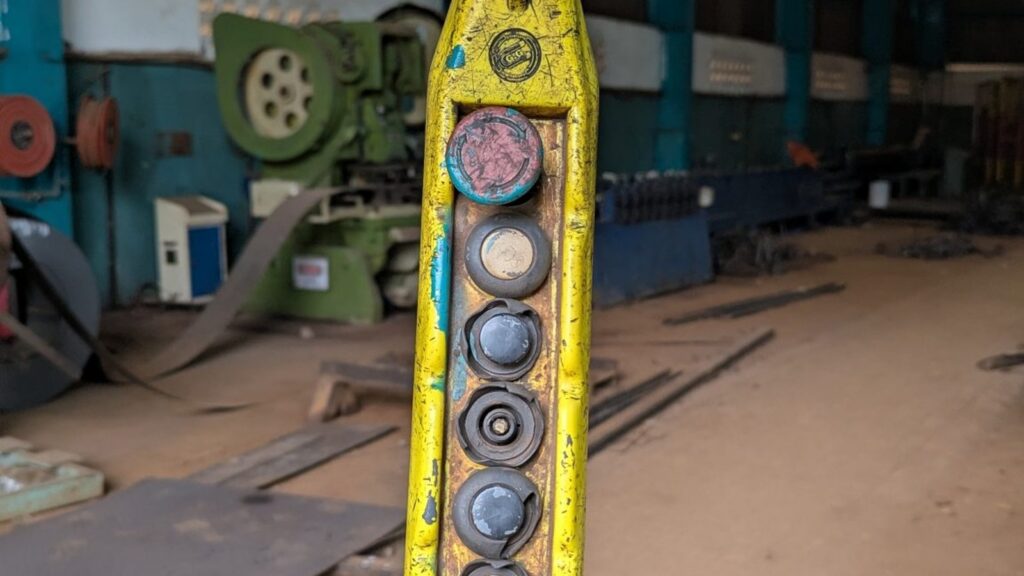
The first wave of Perceptron Mk1 adoption will probably come from workflows where humans already review footage and the cost of missing an event is clear. Manufacturing quality control is an obvious candidate: defect checks, assembly verification, gauge reading, PPE checks, line observations, and audit trails.
Media and sports are another natural fit. A model that can identify meaningful moments and return timecodes could help editors search long recordings, auto-clip highlights, summarize events, and flag brand-safety or policy issues. The model does not need to replace editors to create value. It only needs to reduce the time they spend finding the right moment.
Robotics is where the launch gets more strategic. Perceptron says the model can turn teleoperation footage into supervised data, identify task boundaries, label success and failure, and provide spatial primitives that downstream policies can consume. That connects the model to training data curation, not only runtime perception.
Security and surveillance will attract attention too, but this is the area where enterprises should be most careful. Perceptron Mk1 could help reduce alert fatigue by separating meaningful events from background motion. It could also expand monitoring in ways that create privacy, labor, and compliance concerns. The safer path is narrow, auditable use cases with retention limits and human escalation.
For SMEs and larger enterprises alike, this belongs inside AI Process Redesign. Start with the workflow, not the demo. Decide what evidence the model reviews, what it may recommend, who approves action, and what records must be kept.
Risks, privacy, and governance questions

Perceptron Mk1 raises the same governance questions that follow every powerful perception system, but video makes them sharper. A model that can reason across streams can be useful in a warehouse, a plant, or a content pipeline. It can also be misused for excessive monitoring, opaque worker scoring, invasive surveillance, or decisions that people cannot easily challenge.
Before deployment, teams should define the data boundary. What footage is processed? Is it live or stored? Are people identifiable? Is consent required? Are there union, workplace, education, healthcare, or public-space rules? How long are clips retained? Can prompts or outputs leak sensitive information? Where are logs stored? Who can search them?
Perceptron Mk1 deployment also needs model-risk controls. Keep humans in the loop for safety-critical, employment-impacting, security-escalation, medical, legal, or customer-impacting decisions. Track false positives and false negatives. Store enough evidence for review. Make it easy for operators to say the model was wrong. Build an escalation process before the first alert lands in a team chat.
The failure pattern is predictable: a strong demo leads to a broad rollout, a broad rollout creates noisy output, noisy output trains people to ignore alerts, and one serious event exposes the lack of ownership. That is the same governance lesson covered in Agentic AI Failure Rate: capability does not rescue a system if process design and accountability are weak.
What enterprise teams should do next

Perceptron Mk1 belongs on the shortlist for teams evaluating video-native AI, but the right next step is a controlled pilot. Choose one high-value workflow where video review already happens and where there is a clear way to judge success. Avoid starting with the most sensitive use case.
Build the pilot around measurement. Create a representative sample of videos. Define ground truth. Compare the model against human review and existing tools. Measure accuracy, missed events, false alerts, time saved, latency, cost per useful result, and review burden. Document where the model fails, not only where it shines.
Then make the business case concrete. If Perceptron Mk1 reduces review time by 60% but still requires expert approval, that may be a good result. If it catches more defects but creates too many false alarms, the workflow may need tighter prompts, narrower triggers, or a different review queue. If the API price is low but the surrounding process is expensive, revisit the design.
Finally, run an AI Readiness Assessment before production. Video AI touches data governance, privacy, storage, employee communication, model evaluation, vendor risk, incident response, and cost control. The tool may be new, but the rollout discipline should be familiar.
FAQ
What is Perceptron Mk1?
Perceptron Mk1 is a proprietary video and embodied-reasoning model from Perceptron Inc. It is designed to analyze images and video with natural language prompts, then return text, timecodes, and structured annotations when requested.
How much does Perceptron Mk1 cost?
The listed API pricing is $0.15 per million input tokens and $1.50 per million output tokens. VentureBeat reports that this is roughly 80-90% lower than selected proprietary frontier rivals named in its coverage.
Is Perceptron Mk1 open source?
No. Perceptron Mk1 is a closed-source API model. Perceptron also maintains the Isaac family of smaller open-weight vision-language models, which are available through Hugging Face.
What makes it different from ordinary computer vision?
Traditional computer vision often focuses on detection, classification, or segmentation in still images or narrow video tasks. This model is positioned as a broader reasoning layer that can understand events across time, return clips, track objects, count dense scenes, read instruments, and combine visual evidence with instructions.
Should enterprises use it for security cameras?
Security is a plausible use case, but it needs tight governance. Start with narrow, auditable scenarios, human review, clear retention limits, and privacy checks. Do not turn video AI into broad surveillance without legal, HR, security, and employee consultation.
Final thought
Perceptron Mk1 is interesting because it attacks two barriers at once: capability and cost. If the model can deliver reliable video reasoning at the published price, more businesses will be able to justify workflows that were previously too manual or too expensive to automate.
The sober view is better than the hype view. Perceptron Mk1 should be tested, measured, governed, and compared against real footage before it is trusted. The opportunity is large, but the organisations that benefit most will be the ones that pair lower-cost video AI with disciplined workflow design, human oversight, and clear economics.
More AI coverage: explore Progressive Robot's AI Models, Tools & Releases hub — hands-on reviews, setup guides and benchmarks in one place.










