

Predictive self-healing is changing what it means to be on call. For years, the classic emergency outage began with a 3:00 AM pager alert, a half-awake engineer, a noisy dashboard, and a scramble to decide whether the real issue was traffic, latency, storage, configuration, deployment, networking, or a dependency nobody owned. AIOps does not make production risk disappear, but it can turn many of those emergencies into predicted, diagnosed, and remediated events before customers feel them.
The shift matters because modern systems are too distributed, dynamic, and fast-changing for manual triage alone. Microservices, cloud infrastructure, APIs, queues, databases, identity services, edge components, and agentic workflows all produce telemetry. A human can read an alert. AIOps can correlate patterns across logs, metrics, traces, tickets, deployments, and dependency maps in real time.
Predictive self-healing is the operating model that connects those insights to safe action. The system notices a likely failure, identifies the probable cause, chooses an approved runbook, performs a bounded fix, verifies the result, and escalates if confidence is low. The goal is not blind automation. The goal is fewer preventable pages, faster recovery, and a healthier engineering team.
For enterprises already exploring Zero-Touch IT, self-healing is the infrastructure side of the same movement. Routine support tickets should not always need humans, and routine operational failures should not always wake them up.
| Old outage model | Predictive self-healing model |
|---|---|
| Alert fires after users feel pain | Signals predict failure before impact spreads |
| Engineers manually search dashboards | AIOps correlates telemetry, incidents, and changes |
| Runbooks depend on human memory | Approved workflows execute with guardrails |
| Every fix is an emergency | Low-risk fixes run automatically and verify outcomes |
| Success is closing an incident | Success is avoided pages, avoided downtime, and lower MTTR |
Predictive self-healing is strongest when it is built gradually. Start with the alerts that already have rote, repeatable responses. If the same page always leads to the same safe action, that page is a candidate for automation.
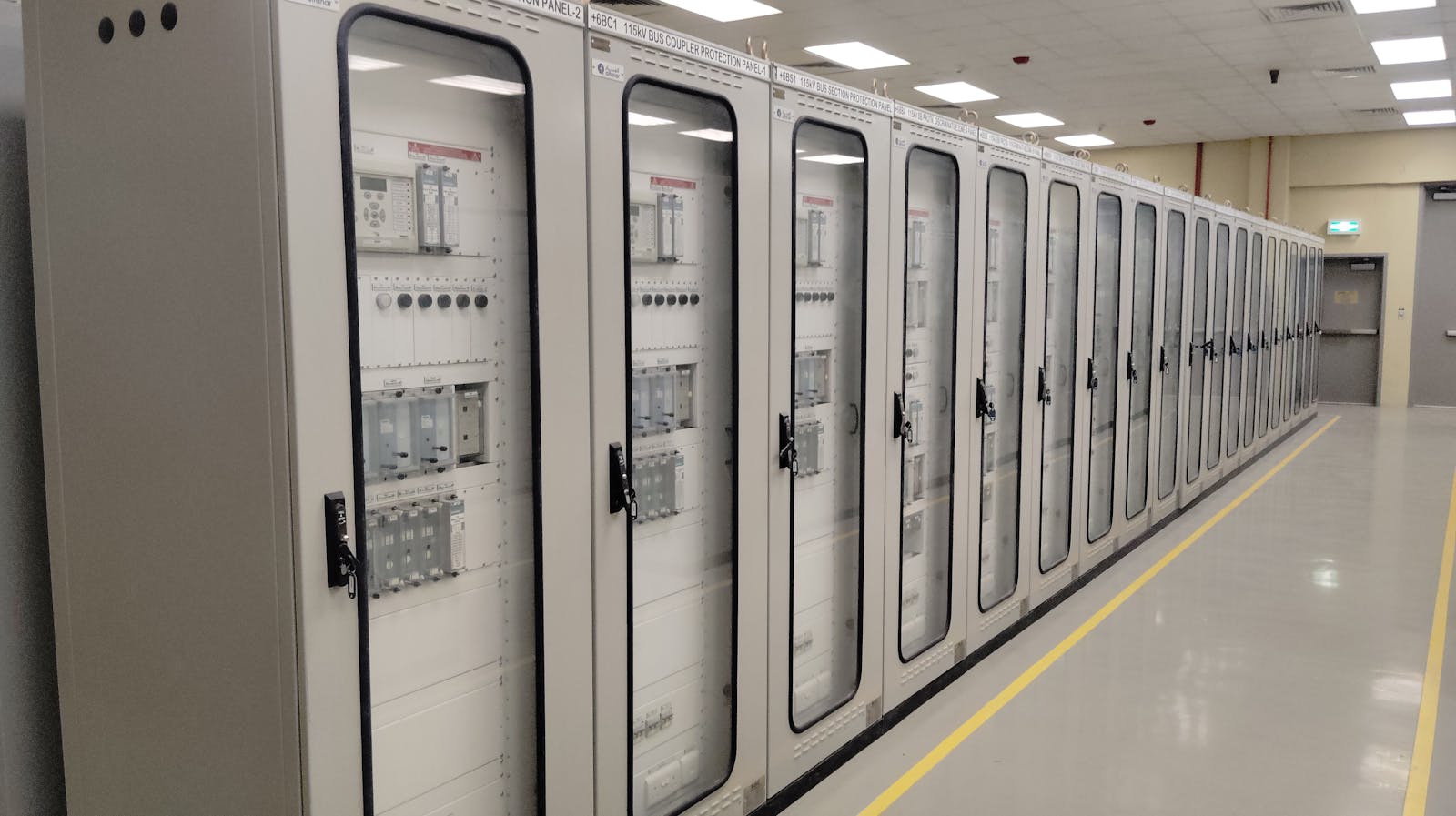
Predictive self-healing at a glance
Predictive self-healing combines observability, machine learning, event correlation, service topology, runbook automation, and policy controls. It watches system behavior, predicts when a failure is likely, triggers safe remediation, and confirms whether the system returned to a healthy state.
A practical example is capacity saturation. If database storage is trending toward exhaustion, the platform can forecast when the limit will be reached, check whether the growth pattern is normal, expand capacity within policy, open a ticket for review, or page a human only if the risk cannot be handled automatically.
Another example is a failing service instance. If a node starts returning elevated errors after a deployment, the system can compare the behavior with prior releases, drain traffic, restart the instance, roll back a feature flag, or escalate with evidence. The engineer receives context instead of a mystery.
IBM describes AIOps as applying AI capabilities to automate, streamline, and optimize IT service management and operational workflows. It can ingest large volumes of operations data, separate signal from noise, diagnose root causes, and in some cases automatically resolve issues without human intervention.
Predictive self-healing adds a stronger design requirement: the automated action must be safe, observable, reversible, and measured. A system that restarts a service repeatedly without understanding why is not self-healing. It is hiding pain. A mature system fixes the symptom, gathers evidence, and pushes teams toward the root cause.

Why the 3:00 AM outage still happens
The 3:00 AM outage survives because production systems fail at the intersection of complexity, timing, and ownership. A deployment changes one service. A dependency slows down. A cache warms unevenly. A certificate nears expiration. A queue grows. A region loses capacity. Each signal may look manageable in isolation, but together they create customer-visible failure.
Traditional alerting often detects the symptom after the failure has already crossed a threshold. That is better than no alert, but it still places the burden on the human to decide what changed, what matters, who owns it, and which action is safe. During off-hours, that cognitive load is even higher.
Noise makes the problem worse. If teams are paged for non-urgent, non-actionable, or duplicate alerts, they become slower to trust the pager. Google’s SRE guidance emphasizes that pages are expensive interruptions and that every page should be urgent, actionable, and worthy of human intelligence. If a page merely requires a robotic response, it should probably not be a page.
Predictive self-healing attacks the problem before the pager fires. It watches leading indicators such as saturation, tail latency, error-rate drift, retry storms, queue depth, disk growth, memory pressure, and deployment anomalies. It also looks at context: recent changes, known incidents, service dependencies, and historical behavior.
The 3:00 AM emergency does not vanish overnight. But it becomes rarer when systems can handle predictable failure modes without waiting for a tired engineer to repeat a known procedure.

Build observability before automation
Predictive self-healing begins with observability, not automation. If the system cannot explain what is happening, it should not be trusted to fix what is happening. The telemetry foundation needs logs, metrics, traces, events, deployment markers, dependency maps, configuration changes, and business-impact signals.
IBM defines observability as the ability to understand the internal state of a complex system based on external outputs, especially telemetry. That matters because self-healing depends on seeing more than a single alert. The platform needs enough context to distinguish a real incident from a noisy metric and enough history to know whether the current pattern is abnormal.
Start with the four golden signals: latency, traffic, errors, and saturation. Then connect them to service ownership, dependencies, change events, and customer journeys. A sudden latency increase after a deployment should not be treated the same way as a gradual saturation trend before a traffic peak.
Predictive self-healing also requires clean service topology. If the platform cannot map how the checkout service depends on identity, payments, inventory, databases, caches, and external APIs, automated remediation can target the wrong layer. Good topology reduces guesswork and helps the system choose the least risky fix.
This is where hybrid AI architectures matter. Sensitive telemetry may need private processing, while lower-risk analytics can use managed services. The architecture should support fast analysis without exposing operational data unnecessarily.

Detect symptoms and root causes earlier
The next step is moving from reactive alerting to predictive detection. Predictive self-healing relies on models that learn baseline behavior, identify abnormal drift, and connect symptoms to probable causes. The goal is not to replace all alert rules with magic. The goal is to give operations teams earlier, clearer, and more actionable signals.
A good AIOps system separates “what is broken” from “why it may be broken.” The symptom might be rising checkout latency. The cause might be database saturation, a slow dependency, a bad deployment, a regional network issue, or an overloaded queue. The fix depends on that distinction.
Event correlation is essential. A single warning may not justify action. Ten related warnings across a service map may point to a real incident. The system should correlate logs, traces, metrics, tickets, alerts, and change records so humans do not have to assemble the timeline manually.
Predictive self-healing should also detect imminent problems. Saturation is especially useful because it often gives time to act. If disk space will run out in four hours, queue depth will breach an SLA in 30 minutes, or memory pressure is trending toward failure after a release, the system can intervene before users experience an outage.
However, prediction must remain explainable. Engineers should see the evidence behind the model’s conclusion: which signals changed, which services are affected, what similar incidents occurred before, what confidence score was assigned, and which remediation was selected. Black-box confidence is not enough for production operations.
Turn runbooks into safe remediation
Predictive self-healing becomes real when insights trigger safe remediation. The best starting point is the runbook library. If teams already follow a known sequence when an alert fires, convert that sequence into a tested workflow with clear preconditions, permissions, rollback, and verification.
Good candidates include restarting unhealthy instances, draining traffic from bad nodes, scaling a service, clearing stuck queues, rotating a known-bad pod, expanding storage within limits, rolling back a feature flag, refreshing a certificate, or opening a pre-filled incident ticket with evidence. These actions are useful because they are repeatable and bounded.
Runbooks should be idempotent whenever possible. Running the same fix twice should not create additional damage. They should also check dependencies before acting. A workflow that expands capacity should confirm policy limits. A workflow that drains traffic should confirm there is enough healthy capacity elsewhere.
Google’s SRE automation guidance highlights the value of automation for consistency, faster repairs, and platform leverage, while warning that poorly scoped automation can make failures worse at scale. That warning belongs at the center of every self-healing program.
Predictive self-healing should therefore use guardrails: rate limits, blast-radius controls, canary remediation, change windows, approval thresholds, dry-run mode, and automatic rollback. The system should act quickly where risk is low and ask for human approval where the consequences are high.

Use AIOps to predict capacity and saturation
Capacity and saturation are excellent early use cases for predictive self-healing because they often provide measurable warning time. Systems rarely fail only because something is broken. They also fail because demand grows, queues back up, storage fills, caches miss, threads saturate, and dependencies run out of headroom.
AIOps can learn normal patterns by time of day, day of week, season, business event, release cycle, or customer segment. It can detect when a service is behaving abnormally before a hard threshold is breached. That turns operations from “the disk is full” to “this disk will likely breach policy during the next traffic peak.”
The automated response can be modest. Add capacity, shift traffic, lower a noncritical batch workload, throttle expensive background jobs, resize a queue, or notify an owner before the customer-facing system is affected. The key is acting before the incident becomes urgent.
Predictive self-healing should also connect capacity actions to cost. Automatic scaling can prevent outages, but it can also create waste if it expands resources without limits. Tie remediation to budgets, quotas, utilization targets, and business priority so resilience does not become uncontrolled spend.
This is directly connected to AI compute costs. AI-driven operations should reduce emergency work without creating a hidden infrastructure bill. Measure the cost of prediction, telemetry, model inference, and automated scaling against avoided downtime and saved labor.

Keep humans in the loop for risky fixes
AIOps should reduce unnecessary pages, not remove accountability. Predictive self-healing needs human-in-the-loop controls for actions that can affect data, security, compliance, customer experience, or production stability at scale.
Use risk tiers. Low-risk actions can run automatically: restart a known stateless service, collect diagnostics, open a ticket, or suppress duplicate noise after validation. Medium-risk actions can require approval in chat or the incident platform. High-risk actions should provide recommendations, evidence, and rollback plans but leave execution to a human.
Transparency is critical. Every automated action should record what triggered it, what evidence was used, which policy allowed it, what tool calls ran, what changed, and whether the verification passed. Teams need auditability for trust, debugging, compliance, and continuous improvement.
Predictive self-healing should also protect engineers from skill erosion. If automation handles every routine incident, humans may become less familiar with manual recovery paths. Run game days, review automated incidents, and rotate engineers through reliability improvements so the team keeps a strong mental model of the system.
This is where AI governance platforms can help. Governance should track which self-healing workflows exist, who owns them, what data they use, what actions they can take, and which controls apply.

Measure MTTR, avoided pages, and business impact
The business case for predictive self-healing should be measured in operational and financial terms. The first metrics are familiar: mean time to detect, mean time to acknowledge, mean time to repair, incident count, customer-impacting minutes, SLA or SLO attainment, and reopen rate.
But the most important metrics are often avoided events. How many pages did not fire because the system fixed an issue early? How many incidents were downgraded from emergency to business-hours review? How many customers avoided failed transactions? How many engineer hours moved from firefighting to reliability improvements?
Measure false positives and false actions too. If the system predicts incidents that never matter, engineers will stop trusting it. If it performs remediations that create churn, it may reduce one type of risk while increasing another. Precision, recall, rollback rate, and human override rate should be part of the scorecard.
Predictive self-healing should connect to business outcomes. Reduced downtime matters because it protects revenue, employee productivity, customer trust, support cost, and contractual commitments. The value is not merely that engineers sleep better, although that matters. The value is that resilience becomes a measurable operating capability.
This connects to the AI ROI gap conversation. AIOps should not be justified by dashboard sophistication. It should be justified by fewer incidents, faster recovery, less toil, lower operational cost, and better customer experience.

A 90-day predictive self-healing roadmap
In the first 30 days, inventory the on-call pain. List the most frequent pages, the noisiest alerts, the longest outages, the most common manual runbooks, and the incidents with clear repeatable responses. Identify which alerts are urgent and actionable, which should be tickets, and which should be removed.
In days 31 to 60, build the data and workflow baseline. Improve telemetry, service topology, ownership metadata, deployment markers, and incident labels. Convert three to five runbooks into tested workflows. Start in supervised mode where AIOps recommends action and humans approve.
In days 61 to 90, enable controlled autonomy for low-risk workflows. Let the system remediate bounded issues such as stateless restarts, traffic drain, disk cleanup, routine scaling, queue recovery, or diagnostic collection. Require verification after every action and route failures to humans with context.
Predictive self-healing should then expand by evidence, not enthusiasm. Add a workflow only when the signal is reliable, the action is safe, the owner is clear, and the result is measurable. Retire workflows that create rework. Improve observability where the model lacks context.
By the end of 90 days, the organization should have fewer noisy pages, several automated remediations, stronger incident data, and a clear operating model for scaling self-healing safely.

Predictive self-healing FAQ
What is predictive self-healing?
Predictive self-healing is an AIOps operating model where systems use telemetry, anomaly detection, event correlation, and approved automation to predict and remediate likely failures before they become customer-impacting outages.
How is predictive self-healing different from auto-scaling?
Auto-scaling usually reacts to resource demand. Predictive self-healing is broader. It can detect incidents, correlate root causes, execute runbooks, drain traffic, roll back changes, open tickets, verify recovery, and escalate when confidence is low.
Does predictive self-healing replace on-call engineers?
No. It reduces preventable pages and repetitive responses so engineers can focus on complex incidents, architecture improvements, reliability engineering, and business-critical decisions. Humans still own risk, policy, and high-impact remediation.
What should be automated first?
Start with frequent alerts that already have safe, repeatable responses. Good examples include stateless service restarts, capacity expansion within limits, traffic draining, diagnostic collection, duplicate alert suppression, and low-risk rollback workflows.
What are the biggest risks?
The biggest risks are poor telemetry, wrong root-cause assumptions, unsafe permissions, hidden blast radius, noisy predictions, weak audit trails, and automation that masks recurring problems instead of driving permanent fixes.
Which metrics prove value?
Track avoided pages, avoided downtime, MTTR, MTTD, autonomous resolution rate, rollback rate, false-positive rate, human override rate, customer-impacting minutes, SLO attainment, and engineering hours redirected from firefighting to improvement.
What is the main takeaway?
The main takeaway is that predictive self-healing is not magic. It is disciplined reliability engineering powered by AIOps, observability, automation, and governance. The best systems prevent routine failures from becoming emergency pages.
Predictive self-healing will not kill every 3:00 AM outage. Some failures are novel, ambiguous, or too risky for autonomous repair. But it can eliminate many of the predictable emergencies that drain teams and frustrate customers.
The winning pattern is clear: instrument the system, reduce alert noise, correlate signals, automate safe runbooks, keep humans in control of risky decisions, and measure business impact. AIOps becomes valuable when it turns operational knowledge into repeatable action. That is how emergency response evolves into resilient, self-healing operations.
Sources: IBM on AIOps, IBM on observability, and Google SRE guidance on monitoring distributed systems and automation at Google.
More AI coverage: explore Progressive Robot's AI Models, Tools & Releases hub — hands-on reviews, setup guides and benchmarks in one place.