
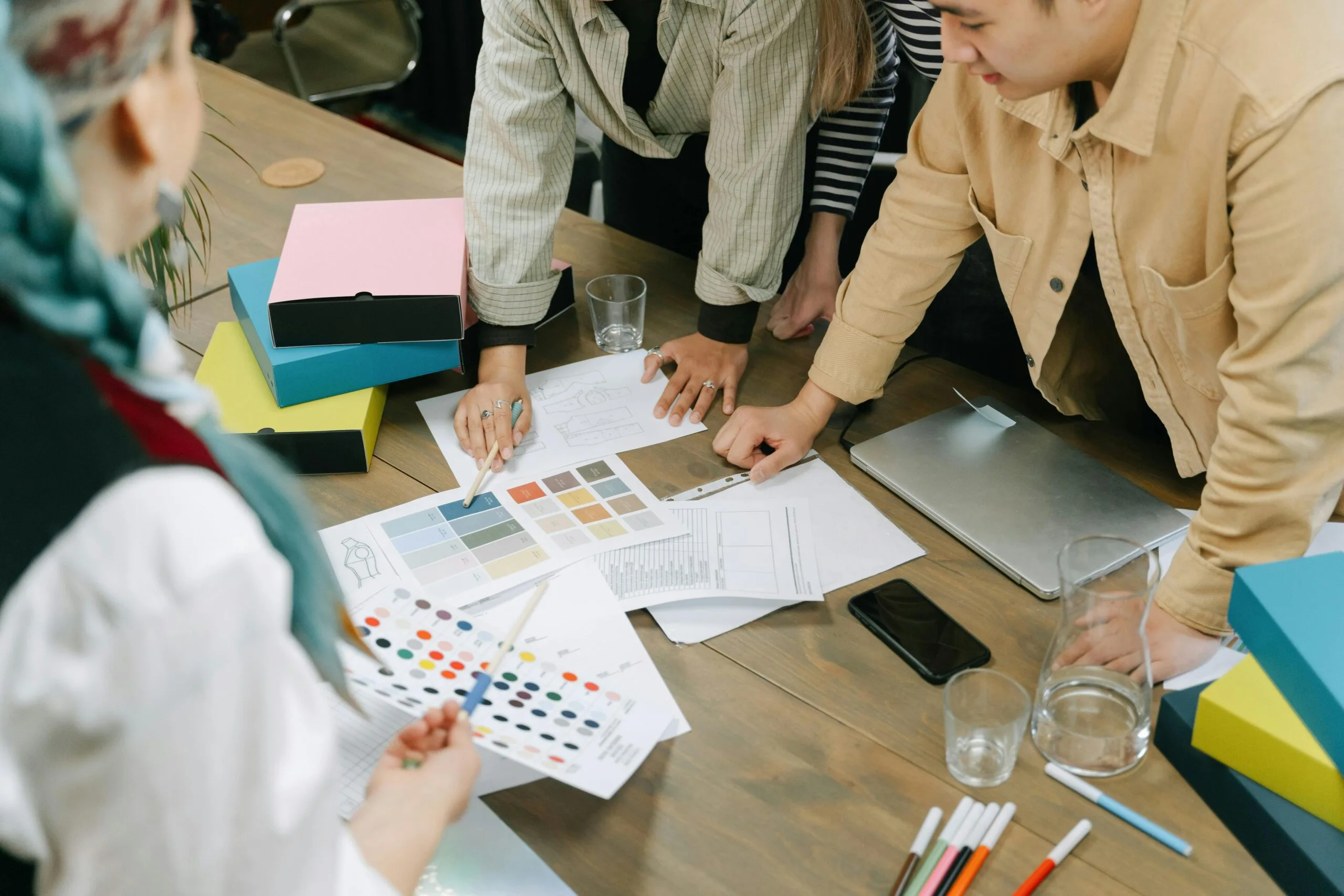
Anthropic launches Claude Design with a product release that answers an open question from the design-software market: Anthropic is not only improving Claude’s models. It is also packaging those capabilities into a dedicated visual-work product.
On April 17, 2026, Anthropic said Claude Design is a new Anthropic Labs product that lets users collaborate with Claude to create polished visual work such as designs, prototypes, slides, one-pagers, and more. The company says Claude Design is powered by Claude Opus 4.7 and is rolling out in research preview for Claude Pro, Max, Team, and Enterprise subscribers.
That makes this more than another “AI can generate mockups” announcement. Anthropic is trying to connect ideation, brand consistency, editing, collaboration, export, and implementation in one workflow that sits closer to real product and marketing work.
This article draws on Anthropic’s official Introducing Claude Design by Anthropic Labs, Anthropic’s official Introducing Labs, Anthropic’s official Introducing Claude Opus 4.7, and Investing.com’s report on the launch as the main references.
The short version is this: Anthropic launches Claude Design as a research-preview workspace for visual work, and the most strategic detail is not the pretty mockups. It is the way the product tries to compress design direction, company design systems, and Claude Code handoff into one Claude-native loop.

Anthropic launches Claude Design in a story that breaks down into a few clear points.

- Claude Design launched on April 17, 2026.
- Anthropic describes it as a new Anthropic Labs product rather than a standalone new model.
- It is powered by Claude Opus 4.7.
- It is available in research preview for Claude Pro, Max, Team, and Enterprise subscribers.
- Access is included with those plans and uses existing subscription limits, with optional extra usage beyond limits.
- Enterprise access is off by default and must be enabled by admins.
- Claude Design can create designs, prototypes, slides, one-pagers, and other visual work.
- It can read codebases and design files to build a team design system.
- It supports export to Canva, PDF, PPTX, and standalone HTML, plus a handoff bundle for Claude Code.

Anthropic launches Claude Design matters because it shows Anthropic moving further up the stack from model company to workflow company.
There is a big difference between shipping a more capable model and shipping a product that aims to own part of the creative process. Claude Design is not being pitched as a general-purpose chatbot feature. It is being pitched as a place where designers, founders, product managers, marketers, and engineers can move from a rough brief to something shareable and closer to implementation.

That is important because the most valuable AI products are increasingly not just about output quality. They are about reducing the number of handoffs between idea, review, revision, and execution. That is the same shift behind broader workflow automation, where the real gain comes from compressing multi-step work rather than adding another generation button.
Anthropic launches Claude Design also matters because the product tries to join visual work to code work. The handoff bundle into Claude Code is not a side detail. It is the clearest sign that Anthropic wants design exploration and implementation to live in the same product family. If you look at the wider move toward autonomous AI agents, that combination makes sense: the more work AI can carry across departments, the more valuable the system becomes.
The category angle matters too. Anthropic is not explicitly calling Claude Design a Figma replacement, a Canva replacement, or a PowerPoint replacement. But the official use cases clearly overlap with all three kinds of software, and that makes the launch strategically bigger than a normal design-feature update.

1. Claude Design is a Labs product, which means Anthropic is still treating it as an experimental frontier application
The first important fact is where Claude Design sits inside Anthropic.
Anthropic says Claude Design is a new Anthropic Labs product. That matters because Labs was introduced in January 2026 as the part of Anthropic focused on incubating experimental products at the frontier of Claude’s capabilities, testing rough versions with early users, and scaling the ones that work.
So when Anthropic launches Claude Design, it is not presenting the product as fully mature infrastructure. It is presenting it as a research-preview application that may evolve quickly depending on how teams use it.
2. Claude Design is powered by Claude Opus 4.7, not by a separate design-specific model
The next fact is what powers the product.
Anthropic says Claude Design runs on Claude Opus 4.7, the company’s latest flagship generally available model. That matters because Anthropic’s Opus 4.7 announcement emphasised not only coding and long-running agentic work, but also stronger vision, better interface quality, and higher-quality slides and documents.
In other words, Anthropic launches Claude Design by productizing capabilities it says Opus 4.7 already improved. The model is the engine, but the product is the workflow wrapped around it.
3. Anthropic is explicitly positioning Claude Design for both designers and non-designers
Anthropic’s framing is careful.
The company says “Claude Design gives designers room to explore widely and everyone else a way to produce visual work.” That is a strategic sentence. It means Anthropic is not only chasing professional designers. It is also targeting founders, product managers, marketers, account executives, and other people who often need to communicate visually without owning a full design skill set.
That dual audience matters because it broadens the market. Anthropic launches Claude Design as both a creativity multiplier for designers and a capability bridge for teams that usually depend on designers for every visual artifact.
4. The product scope is much wider than simple mockup generation
Claude Design is not described as a narrow UI generator.
Anthropic says teams are using it for realistic prototypes, product wireframes and mockups, design explorations, pitch decks and presentations, marketing collateral, and “frontier design” that can include voice, video, shaders, 3D, and built-in AI.
That breadth is important because it shows Anthropic launches Claude Design as a general visual-work surface, not a single-purpose feature. The overlap reaches across product design, internal communications, sales decks, marketing assets, and interactive demos.
5. One of the most important features is the automatic design-system layer
The most operationally meaningful feature may be the onboarding flow.
Anthropic says Claude Design can build a design system for a team by reading its codebase and design files, then apply that system to later projects automatically. According to the announcement, that includes colors, typography, and components, and teams can refine the system over time or maintain more than one design system.
That is a bigger deal than it might sound. Many AI design tools can produce something attractive once. Far fewer can stay on-brand across repeated work. Anthropic launches Claude Design with the promise that brand consistency can be learned and reused, which is much closer to how real teams work.
6. Claude Design supports a more structured creative workflow than a simple prompt box
Anthropic’s input and editing model is another important detail.
Users can start from a text prompt, upload images and documents in DOCX, PPTX, and XLSX formats, or point Claude at a codebase. Anthropic also says there is a web capture tool that lets users grab elements directly from websites. After that, users can refine results through conversation, inline comments on specific elements, direct text edits, or adjustment knobs that Claude creates for things like spacing, color, and layout.
That means Anthropic launches Claude Design as a mixed-interface editor, not just a one-shot generator. The company is trying to make the product feel more like collaborative creative software and less like an image model with extra UI.
7. Anthropic built collaboration, export, and implementation handoff directly into the core pitch
The last fact is what happens after a design is good enough.
Anthropic says designs support organisation-scoped sharing, so users can keep a document private, share view access via a link inside the organisation, or grant edit access so colleagues can modify the design and chat with Claude together. It also says users can export to Canva, PDF, PPTX, or standalone HTML files, or save designs as folders and internal URLs.
Most importantly, Anthropic says Claude Design can package work into a handoff bundle for Claude Code. That closes the loop from concept to build in a way that most creative-tool announcements do not. Anthropic launches Claude Design with collaboration and downstream execution already built into the story.


Anthropic launches Claude Design means the company is no longer content to win only at the model layer.
The official announcement does not say Anthropic wants to replace designers. In fact, the product positioning goes out of its way to include designers as primary users. But the practical effect is still clear: Anthropic is entering the territory where visual thinking, product mockups, presentations, and implementation planning overlap.
That matters because the most defensible AI products may be the ones that remove friction between adjacent tasks. Claude Design is interesting not because it can make a landing page mockup. Many tools can do that. It is interesting because Anthropic is trying to connect prompt, design system, live editing, collaboration, export, and code handoff in one continuous loop.
If that loop works well, the launch will matter beyond design. It will be another sign that frontier AI labs are increasingly shipping domain-specific workspaces, not only general assistants or APIs.
What is Claude Design?
Claude Design is a new Anthropic Labs product that lets users collaborate with Claude to create visual work such as designs, prototypes, slides, one-pagers, and other polished assets.
Who can use Claude Design right now?
Anthropic says Claude Design is in research preview for Claude Pro, Max, Team, and Enterprise subscribers. Access is rolling out gradually, and Enterprise admins need to enable it manually because it is off by default for Enterprise organisations.
Does Claude Design cost extra?
Anthropic says access is included with eligible paid Claude plans and uses existing subscription limits. Users who want to go beyond those limits can enable extra usage.
Is Claude Design a direct Figma replacement?
Anthropic does not describe it that way. But the official use cases clearly overlap with design, presentation, prototype, and marketing tools, so it is fair to say Claude Design is entering adjacent territory that companies like Figma, Canva, and presentation-software vendors also serve.
How does Claude Design connect to Claude Code?
Anthropic says Claude Design can package a completed design into a handoff bundle for Claude Code. The idea is that once a prototype or visual direction is ready, the implementation context can move into Claude Code with a single instruction.
More AI coverage: explore Progressive Robot's AI Models, Tools & Releases hub — hands-on reviews, setup guides and benchmarks in one place.










