
AI Coding Mistakes have become one of the most important discussions in modern software engineering as developers increasingly rely on large language models (LLMs), AI coding assistants, and autonomous programming tools to accelerate application development. Artificial intelligence can dramatically improve developer productivity by generating boilerplate code, explaining unfamiliar APIs, writing unit tests, producing documentation, suggesting algorithms, and accelerating prototyping. However, despite these impressive capabilities, AI-generated code often fails when confronted with the complexity, ambiguity, and operational requirements of real-world software engineering.
The rapid growth of AI-assisted development has transformed how engineering teams approach programming. Instead of writing every function manually, developers increasingly collaborate with AI systems that can generate code within seconds. Modern coding assistants can complete functions, recommend refactoring opportunities, translate between programming languages, identify syntax errors, and explain complex software architectures. These capabilities reduce repetitive work while allowing engineers to focus on higher-level design decisions.
Despite these advantages, organizations have also discovered that AI-generated software is not automatically production-ready. Large language models generate code by predicting statistically likely patterns learned from massive datasets rather than reasoning about complete software systems with full contextual understanding. As a result, AI may produce code that appears correct while containing subtle architectural flaws, security vulnerabilities, scalability limitations, hidden performance problems, incorrect assumptions, or incomplete business logic.
Understanding AI Coding Mistakes has therefore become essential for software engineers, technical architects, engineering managers, cybersecurity professionals, DevOps teams, and enterprise technology leaders. Rather than replacing experienced developers, AI functions most effectively as an intelligent programming assistant whose output still requires human validation, architectural review, security analysis, testing, and operational governance.
Real engineering projects involve far more than writing syntactically correct source code. Successful software development requires understanding business requirements, regulatory compliance, distributed architectures, infrastructure constraints, maintainability, scalability, performance optimization, operational monitoring, testing strategies, documentation, version control, deployment automation, and long-term software evolution. AI currently struggles to consistently manage these broader engineering responsibilities without experienced human oversight.
This comprehensive guide explores AI Coding Mistakes, explains why AI-generated code often fails in production environments, examines the most common technical shortcomings, discusses governance strategies for AI-assisted software engineering, and provides practical recommendations for safely integrating AI into modern development workflows.
Key Takeaways
- AI-generated code requires human review.
- Production software demands architectural thinking.
- Security validation remains essential.
- Testing cannot be skipped.
- Context limitations cause many AI Coding Mistakes.
- Governance improves AI-assisted development quality.
- AI complements developers rather than replacing them.
- Engineering judgment remains critical.
What Are AI Coding Mistakes?
AI Coding Mistakes refer to software defects, architectural weaknesses, security vulnerabilities, logical errors, or operational shortcomings introduced when developers rely too heavily on AI-generated code without sufficient engineering review.
These mistakes often involve:
- Incorrect business logic.
- Weak security practices.
- Poor scalability.
- Performance inefficiencies.
- Incomplete error handling.
- Architecture inconsistencies.
- Dependency problems.
- Maintainability issues.
Although AI produces syntactically correct code remarkably well, correctness alone does not guarantee production readiness.
Why AI Coding Is Growing Rapidly
AI-assisted programming continues expanding because modern language models significantly improve developer productivity.
Developers increasingly use AI for:
- Code generation.
- Documentation.
- Unit testing.
- Debugging.
- Refactoring.
- API exploration.
- Learning new frameworks.
- Rapid prototyping.
These capabilities reduce repetitive development tasks while accelerating software delivery. Learn more through the OpenAI Developer Resources.
Why AI-Generated Code Sometimes Fails
Software engineering involves understanding far more than syntax.
Real production systems require:
- Business requirements.
- Infrastructure awareness.
- Security controls.
- Operational reliability.
- Regulatory compliance.
- System integration.
- Long-term maintenance.
- Architectural consistency.
AI models often lack complete project context, leading to common AI Coding Mistakes when generated code is accepted without sufficient validation.
Common AI Coding Mistakes
Understanding AI Coding Mistakes requires examining where AI-generated software most frequently breaks down in real engineering environments. While modern language models excel at generating syntactically correct code, production software demands far more than syntactic accuracy. Enterprise applications operate within complex ecosystems involving business requirements, distributed infrastructure, cybersecurity controls, regulatory compliance, scalability objectives, operational monitoring, and long-term maintenance.
Many engineering teams initially assume that AI-generated code can move directly into production after minimal review. In practice, however, experienced developers consistently discover subtle issues that may remain invisible during simple testing but become significant problems under production workloads.
Incorrect Business Logic
One of the most common AI Coding Mistakes involves misunderstanding business requirements.
Large language models frequently generate technically correct code that solves the wrong problem because they lack complete organizational context.
Examples include:
- Incorrect calculations.
- Missing validation rules.
- Faulty workflows.
- Incomplete business processes.
- Incorrect assumptions.
- Missing edge cases.
- Regulatory omissions.
- Poor requirement interpretation.
Human engineers remain responsible for ensuring software aligns with business objectives.
Security Vulnerabilities
AI can unintentionally introduce security weaknesses into otherwise functional applications.
Common security-related AI Coding Mistakes include:
- SQL injection risks.
- Cross-site scripting.
- Insecure authentication.
- Weak authorization.
- Hardcoded credentials.
- Unsafe file handling.
- Missing encryption.
- Improper input validation.
Security review should always accompany AI-assisted software development.
Poor Error Handling
Many AI-generated programs perform well during ideal execution paths but fail under unexpected conditions.
Typical issues include:
- Missing exception handling.
- Weak recovery logic.
- Unhandled failures.
- Resource leaks.
- Silent failures.
- Infinite retries.
- Improper logging.
- Incomplete validation.
Robust production systems require comprehensive failure management strategies.
Performance Problems
Performance optimization often requires workload-specific engineering knowledge that AI lacks.
Developers commonly encounter AI Coding Mistakes involving:
- Inefficient algorithms.
- Excessive database queries.
- Duplicate computations.
- Memory inefficiencies.
- Unnecessary object creation.
- Blocking operations.
- Poor concurrency.
- Inefficient caching.
Applications performing well in small demonstrations may degrade significantly under enterprise workloads.
Scalability Limitations
Enterprise software frequently serves thousands or millions of users.
AI-generated implementations may overlook scalability considerations involving:
- Horizontal scaling.
- Stateless architecture.
- Load balancing.
- Session management.
- Distributed caching.
- Database optimization.
- Queue management.
- Service orchestration.
Experienced architects typically redesign AI-generated prototypes before production deployment.
Dependency Problems
AI frequently recommends outdated, deprecated, or incompatible software libraries.
Dependency-related AI Coding Mistakes include:
- Unsupported packages.
- Version conflicts.
- Security vulnerabilities.
- Abandoned frameworks.
- License conflicts.
- Excessive dependencies.
- Incompatible APIs.
- Missing maintenance.
Dependency governance remains essential throughout software development.
Architecture Inconsistency
Large software systems require consistent architectural standards.
AI-generated code may violate established engineering principles by introducing:
- Mixed design patterns.
- Duplicate logic.
- Tight coupling.
- Poor modularity.
- Inconsistent abstractions.
- Conflicting naming conventions.
- Weak separation of concerns.
- Difficult maintenance.
Architecture review remains a critical engineering responsibility.
Incomplete Testing
AI can generate unit tests, but automatically generated tests often provide incomplete coverage.
Developers should evaluate:
- Edge cases.
- Integration testing.
- Regression testing.
- Performance testing.
- Security testing.
- Load testing.
- User acceptance testing.
- Operational testing.
Testing quality remains more important than testing quantity.
Hallucinated APIs
Language models occasionally generate APIs or software functions that appear legitimate but do not actually exist.
These AI Coding Mistakes may include:
- Invalid library methods.
- Nonexistent framework features.
- Incorrect parameters.
- Fabricated documentation.
- Unsupported configuration.
- Deprecated functionality.
- Wrong syntax.
- Incorrect implementation guidance.
Official documentation should always verify AI-generated recommendations.
Weak Documentation
Although AI generates documentation quickly, it may fail to capture architectural intent.
Documentation shortcomings include:
- Missing assumptions.
- Incorrect explanations.
- Outdated references.
- Generic comments.
- Missing operational guidance.
- Incomplete deployment instructions.
- Weak maintenance information.
- Poor developer onboarding.
Effective documentation requires engineering context beyond code generation.
Why Human Review Remains Essential
Every successful software organization combines AI productivity with experienced engineering judgment.
Human developers continue providing:
- Architectural reasoning.
- Security expertise.
- Business understanding.
- Performance optimization.
- Scalability planning.
- Risk assessment.
- Code review.
- Long-term maintenance strategy.
AI accelerates development, but experienced engineers remain responsible for delivering reliable production software.
Challenges and Limitations of AI Coding Mistakes
Although artificial intelligence has transformed software development by accelerating coding, documentation, testing, and debugging, AI Coding Mistakes remain one of the biggest obstacles preventing fully autonomous software engineering. Modern large language models generate impressive code within seconds, but they still lack the deep contextual understanding, architectural judgment, operational experience, and business reasoning required for building reliable enterprise systems. As organizations increasingly integrate AI into development workflows, understanding these limitations becomes essential for maintaining software quality, security, scalability, and long-term maintainability.
AI should therefore be viewed as a highly capable engineering assistant rather than a replacement for experienced software developers. Successful organizations combine AI-generated productivity with disciplined governance, rigorous code reviews, comprehensive testing, architectural oversight, and continuous quality assurance.
Limited Project Context
One of the most significant AI Coding Mistakes arises from incomplete context.
Large language models usually analyze only the information provided within the prompt rather than understanding the entire software ecosystem.
This limitation may result in:
- Incorrect assumptions.
- Missing dependencies.
- Inconsistent architecture.
- Duplicate functionality.
- Incomplete workflows.
- Incorrect integrations.
- Business logic gaps.
- Poor system alignment.
Human engineers remain responsible for ensuring generated code fits the broader application.
Lack of Architectural Judgment
Software architecture requires long-term thinking that extends beyond individual functions.
AI frequently struggles with decisions involving:
- System modularity.
- Service boundaries.
- Data ownership.
- Scalability planning.
- Infrastructure design.
- Reliability.
- Maintainability.
- Evolution strategy.
These architectural decisions often determine whether software succeeds over many years.
Difficulty Handling Edge Cases
Enterprise software rarely operates under ideal conditions.
Many AI Coding Mistakes occur because generated solutions fail to anticipate unusual situations such as:
- Invalid inputs.
- Partial failures.
- Network interruptions.
- Data corruption.
- Concurrency conflicts.
- Resource exhaustion.
- Security attacks.
- Unexpected user behavior.
Experienced engineers intentionally design for these scenarios.
Security Risks Continue Evolving
Cybersecurity changes continuously.
Even if AI generates secure code today, emerging threats may quickly introduce new risks.
Organizations must continually evaluate:
- Authentication.
- Authorization.
- Encryption.
- Dependency security.
- Infrastructure protection.
- Secure configuration.
- API security.
- Compliance requirements.
Security remains an ongoing engineering discipline rather than a one-time implementation.
Maintenance Challenges
Generated software often prioritizes immediate functionality instead of long-term maintainability.
Maintenance difficulties may include:
- Poor readability.
- Excessive abstraction.
- Duplicate logic.
- Weak documentation.
- Complex dependencies.
- Inconsistent naming.
- Limited extensibility.
- Technical debt.
Code intended for production should remain understandable years after initial development.
Testing Remains Essential
AI-generated code should never bypass engineering quality assurance.
Organizations should continue performing:
- Unit testing.
- Integration testing.
- End-to-end testing.
- Security testing.
- Performance testing.
- Regression testing.
- Load testing.
- Acceptance testing.
Testing verifies software behavior rather than trusting generated output.
Regulatory Compliance
Many industries operate under strict regulatory frameworks.
AI Coding Mistakes may inadvertently violate:
- Privacy regulations.
- Financial standards.
- Healthcare requirements.
- Government compliance.
- Data retention policies.
- Accessibility standards.
- Security frameworks.
- Internal governance rules.
Compliance review remains a human responsibility.
Developer Skill Degradation
Excessive dependence on AI may gradually reduce engineering expertise.
Potential concerns include:
- Reduced debugging ability.
- Weaker architectural thinking.
- Limited problem-solving skills.
- Poor algorithm knowledge.
- Declining code review quality.
- Reduced learning.
- Lower software craftsmanship.
- Overreliance on automation.
Engineering education remains essential despite increasing AI assistance.
Governance Becomes More Important
As AI adoption grows, governance becomes increasingly valuable.
Organizations should establish standards covering:
- Prompt usage.
- Code ownership.
- Review requirements.
- Testing policies.
- Security validation.
- Documentation.
- Deployment approval.
- AI usage auditing.
Governance ensures AI strengthens engineering rather than weakening it.
Best Practices for Avoiding AI Coding Mistakes
Organizations can significantly reduce AI Coding Mistakes through disciplined engineering practices.
Always Review AI-Generated Code
Every generated change should undergo peer review before production deployment.
Validate Business Requirements
Ensure generated software satisfies actual business objectives rather than merely producing technically correct output.
Maintain Strong Testing Standards
Never reduce testing simply because code was generated by AI.
Continuously Monitor Production Systems
Observability helps identify hidden issues introduced during AI-assisted development.
Keep Developers in Control
Engineers should remain responsible for architectural decisions, security, deployment, and long-term maintenance.
The Future of AI Coding Mistakes
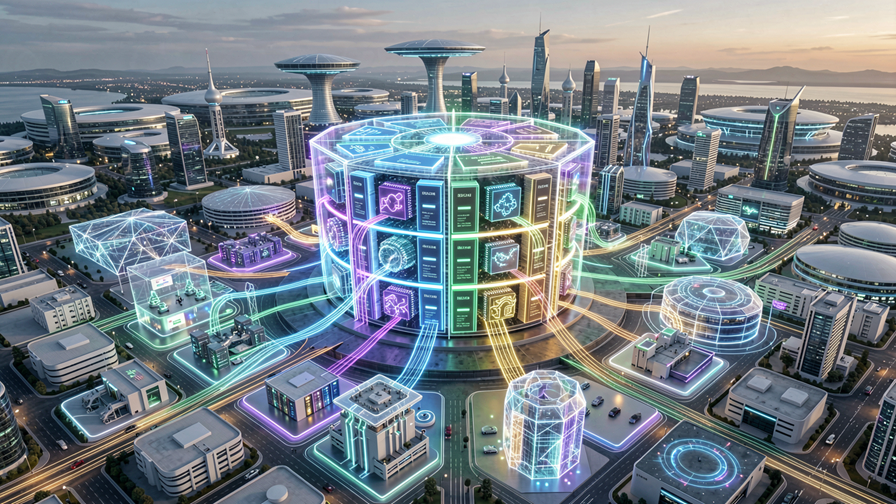
The future of AI Coding Mistakes will be closely tied to the evolution of large language models, autonomous software engineering platforms, enterprise governance, and developer workflows. Artificial intelligence will continue becoming more capable of generating, reviewing, testing, documenting, and optimizing software, but production engineering will still require experienced professionals who understand architecture, security, business requirements, scalability, and operational reliability. Rather than eliminating software engineers, AI is expected to redefine how developers work by automating repetitive implementation tasks while increasing the importance of higher-level engineering judgment.
Future AI coding systems will likely possess significantly larger context windows, stronger reasoning capabilities, improved repository awareness, better dependency analysis, and deeper understanding of enterprise architectures. Instead of generating isolated functions, next-generation development assistants may analyze entire codebases, infrastructure configurations, testing pipelines, documentation, deployment environments, and business requirements simultaneously. These improvements should reduce many common AI Coding Mistakes caused by limited contextual understanding.
Artificial intelligence itself will increasingly participate in software quality assurance. AI-powered code review platforms, automated security scanners, vulnerability detection systems, performance optimization engines, dependency monitoring platforms, architectural compliance tools, and intelligent testing frameworks will continuously evaluate software throughout the development lifecycle. Rather than detecting problems only after deployment, organizations will increasingly identify potential AI Coding Mistakes during code generation itself.
Software governance will become even more important as AI adoption accelerates. Organizations are expected to establish comprehensive AI development policies covering prompt management, code ownership, security validation, testing requirements, architectural compliance, intellectual property review, regulatory oversight, and auditability. Engineering teams that successfully combine AI productivity with disciplined governance will likely achieve both faster delivery and higher software quality.
Several trends are expected to shape the future of AI Coding Mistakes:
- Repository-aware AI assistants.
- AI-powered code review.
- Autonomous testing systems.
- Intelligent security validation.
- AI-assisted architecture analysis.
- Continuous software quality monitoring.
- Hybrid human-AI engineering.
- Responsible AI governance.
These developments suggest that AI-generated code will become increasingly reliable, but human expertise will remain indispensable for complex engineering decisions.
Strategic Takeaways
Organizations adopting AI-assisted software development should focus on long-term engineering quality rather than short-term coding speed.
Important lessons include:
- AI improves developer productivity.
- Human review remains essential.
- Governance reduces software risk.
- Security validation cannot be automated entirely.
- Testing remains mandatory.
- Architecture determines long-term success.
- Developers continue providing critical judgment.
- Responsible AI adoption delivers the greatest value.
Organizations should treat AI as an engineering accelerator rather than an autonomous software developer.
Conclusion
Artificial intelligence has fundamentally changed software development by enabling developers to generate code, explain unfamiliar technologies, automate repetitive tasks, accelerate debugging, produce documentation, and rapidly prototype applications. These capabilities significantly improve productivity and allow engineering teams to deliver software more efficiently than ever before. However, the rise of AI-assisted development has also demonstrated that software engineering involves far more than simply generating syntactically correct code.
The most significant AI Coding Mistakes occur when organizations assume that AI-generated software is automatically suitable for production environments without sufficient human oversight. Real engineering work requires understanding business requirements, designing scalable architectures, implementing robust security controls, validating regulatory compliance, optimizing performance, maintaining long-term software quality, and planning for continuous evolution. These responsibilities continue requiring experienced engineers who can evaluate trade-offs beyond the capabilities of current language models.
Rather than viewing AI as a replacement for developers, successful organizations increasingly recognize that the strongest engineering outcomes emerge from effective collaboration between artificial intelligence and human expertise. AI excels at accelerating implementation, while engineers provide architectural reasoning, security judgment, operational understanding, business context, and long-term strategic thinking.
As AI systems continue improving, many routine coding tasks will become increasingly automated. Nevertheless, software engineering itself will likely become more valuable rather than less important. Developers who understand how to supervise AI responsibly, review generated software critically, and integrate automation into disciplined engineering practices will remain essential contributors to enterprise technology for many years to come.
Frequently Asked Questions (FAQs)
What are AI Coding Mistakes?
AI Coding Mistakes are software defects, security vulnerabilities, architectural weaknesses, performance problems, or logical errors introduced when AI-generated code is accepted without proper engineering review.
Why does AI generate incorrect code?
Large language models generate code based on learned statistical patterns rather than complete understanding of business requirements, enterprise architecture, or operational environments.
Can AI replace software developers?
No. AI currently serves as a highly capable development assistant, but experienced engineers remain responsible for architecture, security, testing, deployment, governance, and long-term maintenance.
How can organizations reduce AI Coding Mistakes?
Organizations should implement code reviews, automated testing, security validation, architectural governance, documentation standards, and continuous monitoring throughout development.
Is AI-generated code safe for production?
AI-generated code can be production-ready after thorough validation, testing, security review, performance optimization, and architectural verification by experienced developers.
Build Reliable Software with Responsible AI Development
Whether you’re integrating AI coding assistants into your development workflow, strengthening software governance, improving code quality, or modernizing enterprise engineering practices, our experienced software architects can help you implement AI safely without compromising engineering standards.
Contact Us Today to Improve Your AI-Assisted Development Process
More AI coverage: explore Progressive Robot's AI Models, Tools & Releases hub — hands-on reviews, setup guides and benchmarks in one place.