
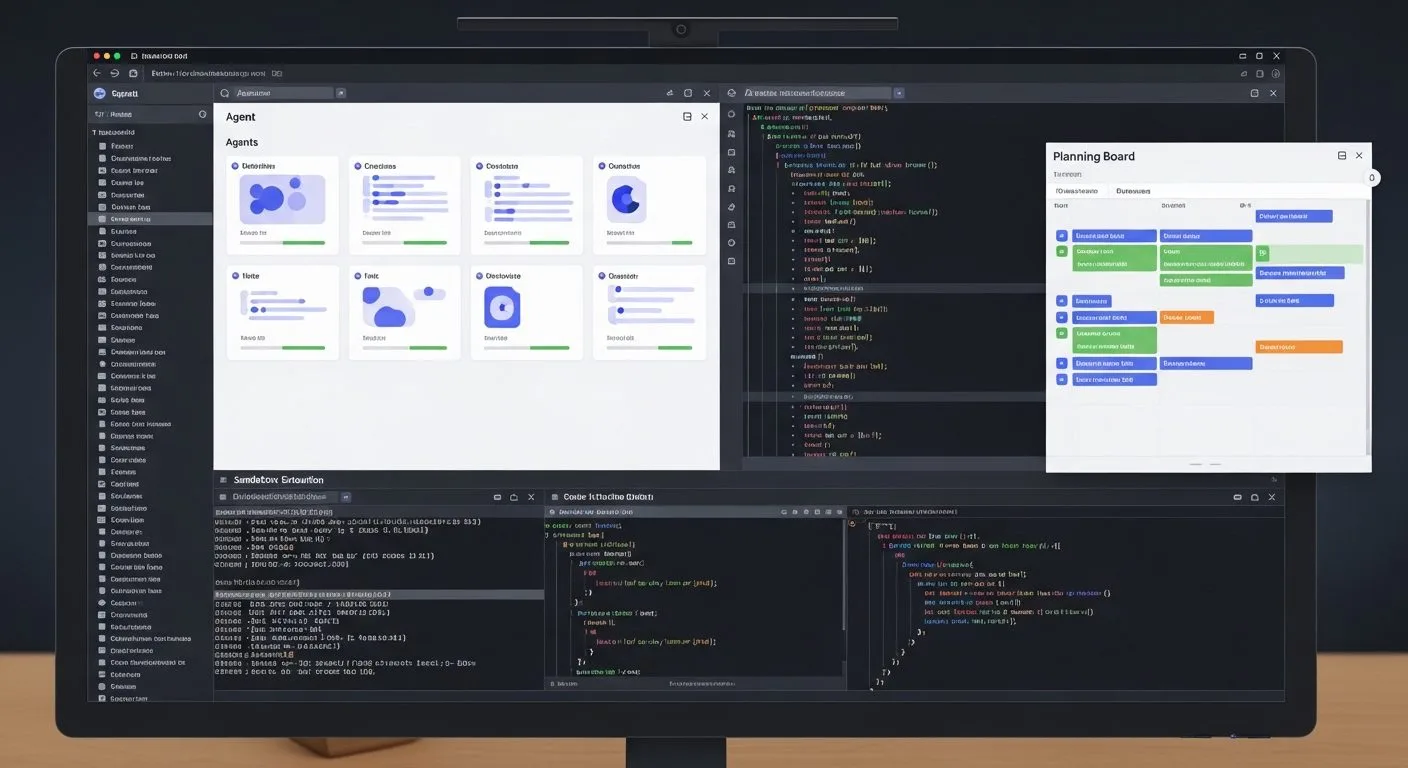
If you are asking what is DeerFlow 2.0, the short answer is that it is ByteDance’s open-source super agent harness for long-horizon AI work. Instead of acting like a single chatbot, DeerFlow 2.0 orchestrates sub-agents, memory, sandboxes, files, and extensible skills so one system can research, code, create assets, and manage multi-step tasks that may take minutes or hours.
DeerFlow 2.0 is designed as infrastructure, not just an interface. The official project frames it as a batteries-included runtime for agents that need to plan, delegate, execute, and deliver work across real tools and files.
This guide uses the official DeerFlow GitHub repository and the DeerFlow website as the main sources.
If you want to understand what is DeerFlow 2.0 in current terms, the key point is simple: DeerFlow has moved beyond its original deep-research framing and is now positioned as a full super agent harness built for execution.
But what does that mean in practice?
6 key facts at a glance
What is DeerFlow 2.0 at a glance? It is ByteDance’s MIT-licensed open-source super agent harness for long-running, multi-step AI work.
DeerFlow 2.0 is a ground-up rewrite that shares no code with v1.
ByteDance positions it as a super agent harness rather than a framework you have to assemble yourself.
Core features include skills and tools, sub-agents, sandboxed execution, file-system access, context engineering, and long-term memory.
DeerFlow is built on LangGraph and LangChain and is designed to work with model providers that expose OpenAI-compatible APIs.
The official project supports Docker-based sandboxing, MCP servers, observability, messaging channels, and an embedded Python client.
DeerFlow is self-hosted and MIT licensed, but the project also warns that improper deployment can introduce serious security risks.
Why understanding what is DeerFlow 2.0 matters
If you want a better answer to what is DeerFlow 2.0, it helps to look at the product shift it represents. Many AI tools still behave like prompt-response assistants: they answer a question, maybe call a tool, and stop. DeerFlow 2.0 is built for a different operating model. It assumes tasks may need planning, decomposition, execution environments, filesystem work, multiple agents, and outputs that look more like deliverables than chat replies.
That matters because the practical value of AI often depends on whether it can finish work across a chain of steps rather than produce one clever paragraph. If you are tracking how AI becomes repeatable operating infrastructure rather than one-off experimentation, Progressive Robot’s guide to workflow automation is useful background.
What is DeerFlow 2.0 in simple terms

What is DeerFlow 2.0 in plain English? It is an open-source runtime for AI agents that gives them a working environment with tools, files, memory, planning, and sub-agents, so they can handle more complex tasks than a normal chat assistant.
The easiest way to think about DeerFlow 2.0 is as a system for giving agents a computer and a workflow. Instead of only sending prompts to a model, developers can run agents that search the web, read and write files, execute code in a sandbox, spawn helpers, and assemble outputs such as reports, slides, web pages, or other structured deliverables.
So what changed with version 2?
What is DeerFlow 2.0 in the DeerFlow ecosystem

What is DeerFlow 2.0 inside the project’s broader story? It is the full rewrite that turns DeerFlow from a deep-research framework into a more complete super agent harness.
1. What is DeerFlow 2.0 as a rewrite of v1?
The first thing to know about what is DeerFlow 2.0 is that ByteDance does not present it as a small upgrade. The official repo says version 2.0 is a ground-up rewrite that shares no code with v1. If users want the older Deep Research framework, it remains on the 1.x branch, while active development has moved to 2.0.
That is important because it tells you the project changed direction, not just feature count. ByteDance says the community pushed DeerFlow far beyond research use cases into data pipelines, dashboards, slide decks, and content automation, and that led the team to rebuild it as a broader execution harness.
2. What is DeerFlow 2.0 for skills and tools?
The second piece of what is DeerFlow 2.0 is extensibility. DeerFlow ships with built-in skills for research, report generation, slide creation, web pages, image generation, video generation, and more. The official docs describe skills as structured Markdown capability modules that define workflows, best practices, and supporting resources.
That matters because the system is not locked into one preset behaviour. DeerFlow can load skills progressively when needed, keep the context window leaner, and let developers add or replace skills as their workflows change. It also supports core tools such as web search, web fetch, file operations, and bash execution, plus extension through MCP servers and Python functions.
3. What is DeerFlow 2.0 for sub-agents, planning, and memory?
Another big part of what is DeerFlow 2.0 is task decomposition. The official README says DeerFlow can spawn sub-agents with scoped context, tools, and termination conditions. Those sub-agents can run in parallel when needed and return structured results to the lead agent, which then synthesizes a final output.
This matters because DeerFlow is built for long-horizon work. The project also emphasizes context engineering and long-term memory. Within a session, DeerFlow summarizes completed subtasks and offloads intermediate results so it can stay focused during long runs. Across sessions, it can build persistent local memory about preferences, workflows, and recurring context under user control.
4. What is DeerFlow 2.0 for sandboxed execution and real file work?
The most practical part of what is DeerFlow 2.0 may be its execution model. DeerFlow does not stop at planning. It gives agents a filesystem and a sandbox-aware runtime where they can read, write, and edit files and, when configured safely, execute commands.
The official project supports local execution, Docker execution, and Docker plus Kubernetes execution through a provisioner service. DeerFlow’s own docs recommend Docker-based sandboxing and treat Linux plus Docker as the preferred target for persistent deployment. That is a serious clue about how the project wants to be used: as an actual agent runtime, not just a prompt wrapper.
What is DeerFlow 2.0 good at

What is DeerFlow 2.0 in day-to-day use? It is strongest where tasks are multi-step, tool-heavy, and output-driven.
What is DeerFlow 2.0 for research and long tasks?
DeerFlow remains strong for deep research, but that is no longer the whole story. The official site shows it being used to collect data, summarize podcasts, analyse videos, and forecast market or technology trends. The important point is not just that it can research. It is that it can keep working across longer task chains.
What is DeerFlow 2.0 for creating outputs?
The DeerFlow site and repo show the system being used for reports, slide decks, web pages, generated media, and other created artifacts. That makes the answer to what is DeerFlow 2.0 more practical than “an agent framework.” It is a harness for turning research and execution into usable outputs.
What is DeerFlow 2.0 for developer customisation?
DeerFlow is also built for developers who want control. It supports OpenAI-compatible models, optional tracing with LangSmith and Langfuse, configurable MCP servers, messaging channels such as Slack and Telegram, and even an embedded Python client for in-process use without the full HTTP stack.
The project also includes a Claude Code integration skill that lets users talk to a running DeerFlow instance from the terminal. That fits the broader pattern: DeerFlow is trying to become an agent runtime that can plug into multiple interfaces instead of living in one UI only.
What is DeerFlow 2.0 access today
What is DeerFlow 2.0 access today? It is an MIT-licensed open-source project that developers can self-host, configure, and extend.
The official quick start centers on cloning the repo, running `make setup`, choosing an LLM provider and safety preferences, and then starting the system through Docker or local development. Docker is the recommended path, and the repo exposes the app at `http://localhost:2026` by default.
The project is model-agnostic in principle, but the official materials recommend strong long-context, reasoning-capable, and tool-using models. ByteDance also highlights specific model options such as Doubao-Seed-2.0-Code, DeepSeek v3.2, and Kimi 2.5. So the real access story is two-layered: DeerFlow itself is open source, but the experience you get depends on the model provider and runtime setup you choose.
What is DeerFlow 2.0 still limited by

What is DeerFlow 2.0 not perfect at? The official materials make several constraints clear.
- It is more complex than a simple AI chat app.
- It is designed for trusted local or carefully secured environments, not careless public exposure.
- Safe deployment depends on sandbox mode, networking decisions, and access control.
- The strongest results depend on capable underlying models with long context and reliable tool use.
- Teams still need engineering judgment, security review, and workflow design rather than assuming the harness solves everything by itself.
The repo’s security notice is especially important. DeerFlow can execute commands, manage files, and invoke high-privilege logic, which means improper deployment can create real risk. ByteDance explicitly recommends strict security measures if the system must be exposed beyond a trusted local environment.
Frequently asked questions
What is DeerFlow 2.0 in FAQ form? These short answers cover the main practical questions.
Is DeerFlow 2.0 just a research agent?
No. DeerFlow started with a deep-research identity, but version 2.0 is positioned as a broader super agent harness for research, coding, generation, and multi-step execution.
Is DeerFlow 2.0 open source?
Yes. DeerFlow 2.0 is MIT licensed and available as a self-hosted open-source project on GitHub.
Does DeerFlow 2.0 support only one model provider?
No. The project is designed around OpenAI-compatible APIs and the official site highlights multi-model support across providers such as Doubao, DeepSeek, OpenAI, and Gemini.
What is DeerFlow 2.0 best understood as right now?
The clearest answer is that it is ByteDance’s open-source super agent harness for long-horizon AI work, with built-in support for skills, sub-agents, memory, sandboxes, and output-oriented execution.
Final thoughts
If you came here asking what is DeerFlow 2.0, the most useful answer is that it is not just another agent demo. It is ByteDance’s attempt to provide a more complete runtime for AI systems that need to plan, delegate, use tools, work with files, and keep going until a task is actually finished.
That makes DeerFlow 2.0 interesting for developers not because it promises generic magic, but because it treats agent work as infrastructure. It gives AI a filesystem, a sandbox, memory, skills, and coordination patterns that look much closer to real execution than normal chatbot behaviour.
Whether it becomes a dominant agent harness or just an influential open-source reference, DeerFlow 2.0 matters because it shows where the agent tooling market is heading: away from isolated prompts and toward systems built to do work.
More AI coverage: explore Progressive Robot's AI Models, Tools & Releases hub — hands-on reviews, setup guides and benchmarks in one place.










