

Artificial intelligence is rapidly evolving from simple conversational chatbots into intelligent digital assistants capable of performing specialized tasks across business, education, software development, and personal productivity. As AI systems become increasingly powerful, users expect greater control over how these assistants work and the capabilities they provide. Google appears to be addressing this demand by preparing a new Skills Management section for the Gemini Web Version, marking another significant step in the evolution of its AI ecosystem.
Recent discoveries within the latest Gemini development builds indicate that Google is working on a dedicated interface where users may eventually be able to manage various AI skills available within Gemini. Although the feature has not yet been officially announced, references found during application teardowns suggest that Google is laying the foundation for a more modular and personalized AI experience.
The introduction of Skills Management reflects a broader industry trend toward modular artificial intelligence. Instead of relying on one general-purpose AI model to handle every request, modern AI assistants are increasingly being designed around specialized capabilities that can be enabled, organized, and optimized for different workflows. This allows users to tailor their AI experience according to their individual needs while making advanced functionality easier to discover and use.
For Google, this represents another important milestone in transforming Gemini from a standalone chatbot into a complete AI productivity platform. Over the past year, Gemini has expanded beyond text conversations to include coding assistance, document analysis, multimodal understanding, Workspace integration, image generation, research capabilities, and intelligent automation. Adding Skills Management could unify these capabilities under a centralized management system, making Gemini more adaptable for both personal and enterprise use.
Businesses are also expected to benefit from this evolution. Organizations increasingly rely on AI to automate repetitive work, improve collaboration, analyze business data, generate reports, assist with software development, and streamline customer interactions. A centralized Skills Management interface could simplify deployment while allowing teams to configure Gemini according to departmental requirements, security policies, and productivity goals.
Developers, researchers, educators, marketers, analysts, and enterprise users all have different expectations from an AI assistant. A modular architecture enables Google to deliver specialized experiences without overwhelming users with unnecessary complexity. Instead of presenting every capability within a single interface, users may soon be able to activate the tools most relevant to their work while keeping the overall experience clean and intuitive.
Although Google has not yet shared an official release date, the appearance of the Skills Management section demonstrates the company’s continued investment in expanding Gemini’s capabilities. As AI assistants become central to modern digital workflows, personalization, flexibility, and intelligent task organization will play an increasingly important role in determining which platforms deliver the greatest value.
In this article, we’ll explore what the Gemini Web Version Skills Management section is, how it could work, its expected features, enterprise applications, benefits, challenges, future developments, and why it may represent one of Google’s most important AI improvements this year.
Key Takeaways
- Google is developing a Skills Management section for the Gemini Web Version.
- The feature could allow users to organize and manage specialized AI capabilities.
- Skills Management supports Google’s vision of a modular AI ecosystem.
- Businesses may gain greater control over productivity and workflow automation.
- Developers could benefit from dedicated programming and coding skills.
- Enterprise AI adoption may become easier through centralized capability management.
- The feature is currently under development and has not yet been officially released.
What Is the Gemini Web Version Skills Management Section?

The Skills Management section is an upcoming feature being developed for the Gemini Web Version that is expected to provide users with a centralized location for managing the assistant’s specialized capabilities. Rather than treating Gemini as a single AI chatbot, Google appears to be evolving it into a flexible platform composed of multiple intelligent skills that can support different workflows and use cases.
While Google has not officially confirmed how the interface will function, development findings suggest that users may eventually be able to browse available skills, configure their behavior, enable or disable specific capabilities, and personalize how Gemini responds to different types of requests.
This modular design reflects an important shift in AI development. As artificial intelligence becomes more capable, organizing functionality into dedicated skills makes the platform easier to understand, maintain, and expand. Instead of introducing every new capability into one increasingly complex interface, Google can continue adding specialized tools without disrupting the overall user experience.
For everyday users, Skills Management could simplify access to Gemini’s growing feature set. For professionals and enterprise organizations, it could provide greater control over which AI capabilities are available for specific workflows, departments, or business processes.
How the Gemini Skills Management Section Could Work
Although the feature remains under development, several aspects of its potential functionality can be inferred from Google’s current AI strategy and the modular architecture already being adopted across the industry.
Users may eventually access a dedicated Skills Management dashboard from within the Gemini Web Version. From this interface, they could view all available AI skills, organize them into categories, customize their behavior, and activate only those required for their daily work.
Instead of forcing every request through one generalized AI assistant, Gemini could intelligently route tasks to specialized capabilities optimized for writing, coding, research, scheduling, document analysis, brainstorming, or business productivity. This would improve both response quality and overall efficiency while reducing unnecessary complexity.
The modular design would also make future updates easier for Google. New AI skills could be introduced independently without requiring major redesigns of the Gemini interface. As Google’s AI ecosystem continues expanding, users would gain access to additional functionality simply by enabling newly released skills.
For enterprise customers, centralized management could also simplify administration by allowing organizations to control which AI capabilities employees are permitted to use while maintaining security and governance requirements.
Why Skills Management Is an Important Upgrade
The introduction of Skills Management represents more than just another settings page. It signals Google’s long-term strategy of transforming Gemini into a comprehensive AI operating platform rather than a traditional chatbot.
Today’s AI assistants perform hundreds of different tasks ranging from document summarization and software development to project planning, data analysis, customer support, and creative content generation. As these capabilities continue growing, managing them effectively becomes increasingly important.
A centralized Skills Management interface allows users to personalize their AI experience while helping Google deliver new functionality in a structured and scalable manner. Instead of overwhelming users with countless options, individual skills can remain organized, discoverable, and optimized for specific tasks.
This approach also positions Gemini to compete more effectively with other AI platforms that are increasingly adopting agent-based architectures and specialized AI workflows.
Key Features Expected in the Gemini Skills Management Section
Although Google has not officially revealed the final feature set, current development suggests several capabilities that may become part of the new system.
Centralized Skill Organization
Users could manage all available Gemini capabilities from one dedicated interface instead of navigating multiple settings pages. This would simplify personalization while improving accessibility.
Personalized AI Workflows
Different users require different AI capabilities. A software engineer may prioritize programming tools, while a researcher focuses on document analysis and literature review. Skills Management could allow each user to build a customized AI environment.
Intelligent Task Routing
Gemini may automatically identify which specialized skill should handle a particular request. Instead of relying entirely on one general-purpose model, specialized AI components could improve accuracy and efficiency for different workflows.
Easier Feature Discovery
As Google continues releasing new Gemini capabilities, Skills Management could become the primary location for discovering recently added features without requiring users to search through documentation or announcements.
Better Enterprise Administration
Organizations deploying Gemini across multiple teams could eventually manage AI capabilities according to business requirements, improving governance while ensuring employees have access only to approved tools.
Enterprise Applications
The introduction of a Skills Management section in the Gemini Web Version has the potential to significantly expand how organizations use artificial intelligence across different business functions. Rather than offering a one-size-fits-all AI assistant, Google appears to be moving toward a modular platform where specialized skills can support industry-specific workflows, improve operational efficiency, and enhance collaboration.
As enterprises continue investing in AI-powered productivity tools, centralized skills management could simplify deployment while giving organizations greater control over how Gemini is used by different teams. From software development and research to marketing and customer support, specialized AI capabilities could become an integral part of everyday business operations.
Software Development
Development teams are among the biggest adopters of generative AI, using intelligent assistants to accelerate coding, debugging, documentation, and testing. A dedicated Skills Management interface could allow organizations to enable programming-focused AI capabilities while limiting unnecessary features that are unrelated to software engineering.
Developers could access specialized coding skills for multiple programming languages, framework recommendations, API documentation, bug detection, code optimization, and automated testing assistance. Managing these capabilities from a centralized interface would simplify onboarding while ensuring consistent development workflows across engineering teams.
Business Productivity
Modern organizations depend on AI to improve workplace productivity and reduce repetitive administrative work. Skills designed for document creation, spreadsheet analysis, report generation, meeting summaries, project planning, and workflow automation could help employees complete routine tasks more efficiently.
Instead of switching between multiple AI tools, business users may eventually configure Gemini to prioritize productivity-related skills that align with their daily responsibilities. This would create a more personalized assistant capable of supporting individual work styles while increasing overall organizational efficiency.
Research and Knowledge Management
Research-intensive organizations often manage thousands of documents, technical reports, research papers, and internal knowledge resources. Specialized research skills within Gemini could simplify information discovery by allowing users to analyze documents, summarize findings, compare multiple sources, and answer complex questions using conversational AI.
A centralized Skills Management section could also help organizations standardize research workflows by providing controlled access to approved AI capabilities while maintaining consistency across different teams.
Customer Support
Customer service departments increasingly rely on artificial intelligence to improve response times and enhance customer experiences. Gemini skills focused on customer support could assist agents by generating responses, summarizing previous conversations, retrieving knowledge base articles, and suggesting solutions to common issues.
Organizations could selectively enable customer service skills while maintaining strict governance over sensitive business information. This flexibility would allow businesses to tailor Gemini according to operational requirements without exposing unnecessary AI capabilities.
Education and Training
Educational institutions and corporate training departments can also benefit from modular AI capabilities. Skills focused on tutoring, lesson planning, assessment generation, learning assistance, and knowledge organization could support both instructors and learners.
Training organizations may configure Gemini to provide educational guidance while disabling unrelated enterprise features, creating a more focused learning environment that improves both engagement and productivity.
Benefits for Businesses

The addition of Skills Management to the Gemini Web Version offers several potential advantages for organizations adopting artificial intelligence at scale. By allowing businesses to organize and personalize AI capabilities, Google could make Gemini more practical for enterprise deployment while improving user adoption and operational efficiency.
One of the primary benefits is increased flexibility. Different departments within an organization often require different AI capabilities. Marketing teams focus on content creation, software developers require programming assistance, legal teams analyze contracts, while executives prioritize reporting and decision support. Skills Management enables organizations to tailor the AI experience according to these unique requirements.
Another important advantage is improved governance. Centralized management allows administrators to determine which AI capabilities employees can access, reducing unnecessary complexity while supporting organizational security and compliance policies. As businesses continue integrating AI into sensitive workflows, governance will become increasingly important.
Personalized workflows also improve productivity. Employees spend less time navigating unnecessary features and more time working with AI capabilities specifically designed for their responsibilities. This targeted approach reduces learning curves while increasing the overall effectiveness of AI-assisted work.
The modular architecture also benefits Google by making Gemini easier to expand over time. New skills can be introduced independently without requiring major interface redesigns, ensuring businesses always have access to the latest AI innovations while maintaining a familiar user experience.
Organizations may also experience better collaboration. Standardized AI skills can encourage consistent workflows across departments, making it easier to share knowledge, automate repetitive tasks, and improve cross-functional communication.
As enterprise AI adoption accelerates, centralized Skills Management could become one of the defining features that separates professional AI platforms from general-purpose conversational assistants.
Challenges and Limitations of Gemini Skills Management

While the upcoming Skills Management section has the potential to make the Gemini Web Version significantly more powerful, it also introduces new challenges that both individual users and enterprise organizations should consider. As artificial intelligence platforms become increasingly modular, managing specialized capabilities requires thoughtful governance, strong security practices, and continuous evaluation to ensure AI remains reliable, secure, and aligned with organizational objectives.
Like other generative AI technologies, Gemini’s effectiveness will continue to depend on the quality of its underlying models, the accuracy of available information, and the way users interact with the platform. Although Skills Management can improve personalization, it does not eliminate the need for human oversight or responsible AI practices.
Managing Increasing Complexity
As Google continues adding new AI capabilities, the number of available skills could grow substantially. While a centralized management interface helps organize these features, organizations may still face challenges determining which skills should be enabled for different users or departments.
Without clear governance policies, employees could become overwhelmed by unnecessary capabilities or unintentionally use AI features that are not appropriate for their specific roles. Establishing standardized AI configurations will become increasingly important as Gemini expands.
Security and Access Control
Enterprise organizations frequently work with confidential information, intellectual property, financial records, customer data, and proprietary business processes. Skills that interact with sensitive information must operate within strict security controls to prevent unauthorized access or accidental data exposure.
Administrators will likely require granular permission controls to determine which employees can access specific AI capabilities. Organizations should also continue implementing strong authentication, encryption, audit logging, and compliance monitoring as AI becomes integrated into daily business operations.
Information Accuracy
Specialized AI skills may improve task performance, but they cannot guarantee perfect accuracy. Like all generative AI systems, Gemini may occasionally produce incomplete responses, misunderstand user intent, or generate incorrect information.
Users should continue verifying AI-generated content before relying on it for legal, financial, healthcare, scientific, or strategic business decisions. Human expertise remains essential when evaluating critical information.
Integration Across Multiple Services
Gemini is increasingly connected to Google’s expanding ecosystem of products, including Workspace applications, cloud services, productivity tools, and enterprise platforms. As additional skills become available, maintaining consistent performance across these services may become more challenging.
Organizations deploying Gemini at scale will need to evaluate how different AI capabilities interact with existing business applications while ensuring stable workflows and maintaining compliance with internal policies.
User Adoption and Training
Introducing advanced AI capabilities does not automatically improve productivity. Employees must understand when and how to use specialized skills effectively.
Organizations that invest in AI literacy, employee training, prompt engineering guidance, and responsible AI policies are likely to achieve significantly better outcomes than those that simply enable new features without proper education.
Best Practices for Using Gemini Skills Management
Whether used by individuals or enterprise organizations, adopting Skills Management successfully will require thoughtful planning and ongoing evaluation. Following several best practices can help maximize productivity while reducing operational risks.
Configure Skills Based on User Roles
Different users have different responsibilities. Software developers, researchers, marketers, analysts, and executives all require different AI capabilities. Organizations should configure Gemini according to job functions rather than enabling every available skill for every employee.
Review AI Responses Carefully
Although specialized skills may improve accuracy, AI-generated responses should always be reviewed before making important business decisions. Human oversight remains essential for validating information and ensuring high-quality outcomes.
Maintain Strong Security Policies
Organizations should continue enforcing data governance policies, user authentication, access controls, and compliance requirements when deploying AI across enterprise environments. Sensitive information should only be processed according to established organizational security standards.
Monitor Skill Performance
As new AI capabilities are introduced, organizations should regularly evaluate how effectively each skill contributes to productivity. Monitoring usage patterns, response quality, employee satisfaction, and workflow improvements can help businesses optimize their AI strategy over time.
Stay Updated with New Features
Google continues expanding the Gemini ecosystem at a rapid pace. Regularly reviewing newly released skills allows organizations to take advantage of improved capabilities while ensuring employees have access to the latest AI innovations.
The Evolution of AI Skill-Based Assistants
Artificial intelligence assistants are rapidly evolving from conversational interfaces into intelligent platforms capable of performing specialized business functions. Early AI chatbots focused primarily on answering questions, but modern systems increasingly support software development, research, automation, creative work, data analysis, customer service, and enterprise collaboration.
The emergence of Skills Management reflects this broader evolution.
Rather than attempting to solve every problem using one generalized AI model, technology companies are increasingly adopting modular architectures where specialized capabilities work together within a unified ecosystem. This approach improves scalability while allowing new functionality to be introduced much more efficiently.
Future AI assistants are expected to combine intelligent reasoning, autonomous task execution, multimodal understanding, workflow automation, enterprise knowledge management, and personalized digital assistants into a single coordinated platform. Skills Management may become the foundation that enables these increasingly sophisticated experiences.
The Future of Gemini Web Version
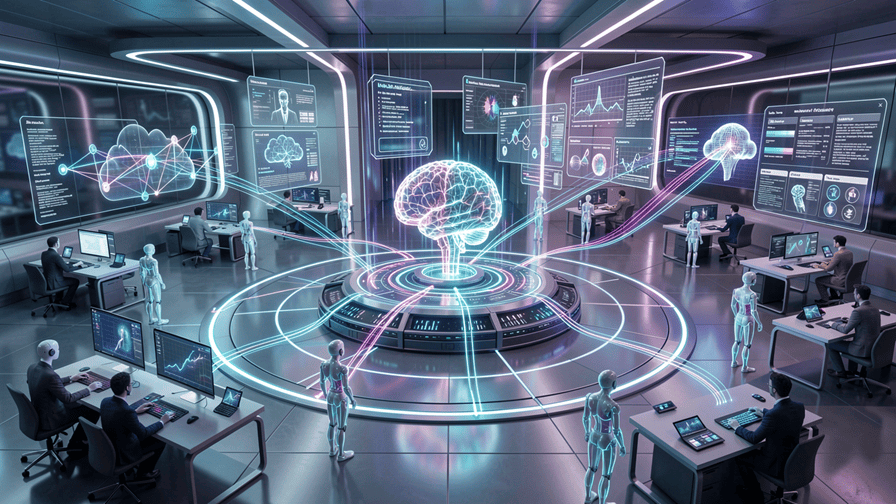
The development of Skills Management signals Google’s long-term vision for the Gemini Web Version as more than just a conversational AI assistant. Instead, Gemini is steadily evolving into a comprehensive productivity platform capable of supporting both individuals and enterprise organizations through specialized AI capabilities.
Future updates are expected to expand the number of available skills while introducing deeper integration with Google Workspace, Google Cloud, Android, Chrome, and additional third-party services. As artificial intelligence becomes more deeply embedded within digital workflows, centralized management will become increasingly important for maintaining simplicity without sacrificing functionality.
Several trends are likely to shape the future of the Gemini Web Version:
- More specialized AI skills.
- Smarter autonomous AI agents.
- Deeper Google Workspace integration.
- Improved enterprise administration tools.
- Advanced multimodal capabilities.
- Better workflow automation.
- Enhanced personalization.
- Stronger security and governance controls.
As Google’s AI ecosystem continues growing, Skills Management could become one of the core components that enables Gemini to adapt intelligently to different users, industries, and professional workflows.
Strategic Takeaways
The upcoming Skills Management section represents an important milestone in Google’s broader artificial intelligence strategy.
Key insights include:
- Gemini is evolving into a modular AI platform rather than a traditional chatbot.
- Skills Management will improve personalization and workflow efficiency.
- Enterprise organizations will gain greater control over AI capabilities.
- Specialized AI skills can improve productivity across multiple industries.
- Responsible governance remains essential for successful AI adoption.
- Google’s continued investment demonstrates its commitment to building a comprehensive AI ecosystem.
- Modular AI architectures are likely to become the industry standard for next-generation intelligent assistants.
- Organizations that adopt structured AI strategies today will be better positioned for future workplace automation.
Conclusion
The upcoming Skills Management section for the Gemini Web Version represents another significant step in Google’s ongoing effort to transform Gemini into a fully featured AI productivity platform. By introducing a centralized location for organizing specialized capabilities, Google is moving beyond the traditional chatbot model toward a more flexible, modular, and personalized artificial intelligence experience.
Although the feature remains under development, its discovery highlights Google’s long-term vision of creating an AI assistant that adapts to individual users, professional workflows, and enterprise requirements. From software development and research to business productivity and customer support, specialized skills have the potential to make Gemini more efficient, more intuitive, and better suited to modern digital work.
For organizations, the ability to manage AI capabilities centrally could simplify governance, strengthen security, improve employee productivity, and support broader AI adoption across departments. Combined with Google’s rapidly expanding ecosystem of AI-powered products and services, Skills Management may become one of the defining features of future Gemini releases.
As artificial intelligence continues to reshape how people work, learn, and collaborate, modular AI platforms like Gemini are expected to play an increasingly important role in helping users transform information into meaningful action while maintaining flexibility, control, and responsible AI practices.
Frequently Asked Questions (FAQs)
What is the Gemini Skills Management section?
The Skills Management section is an upcoming feature for the Gemini Web Version that is expected to allow users to organize, manage, and personalize specialized AI capabilities from a centralized interface.
Is Skills Management available now?
No. The feature has been discovered in development builds but has not yet been officially released by Google.
Why is Google adding Skills Management?
Google is working toward a modular AI platform where specialized capabilities can be managed more efficiently, improving personalization, productivity, and scalability.
Who will benefit from this feature?
Developers, researchers, educators, businesses, enterprise organizations, content creators, and everyday users are all expected to benefit from more personalized AI workflows.
Will Skills Management improve enterprise AI adoption?
Yes. A centralized management system can simplify governance, security, user administration, and deployment while allowing organizations to customize Gemini according to business requirements.
Build Smarter AI Workflows with Progressive Robot
Artificial intelligence is transforming how organizations automate workflows, manage knowledge, and improve productivity. Whether you’re exploring Google Gemini, implementing enterprise AI solutions, or developing intelligent automation strategies, Progressive Robot can help you deploy secure, scalable, and business-focused AI technologies that deliver measurable results.










