
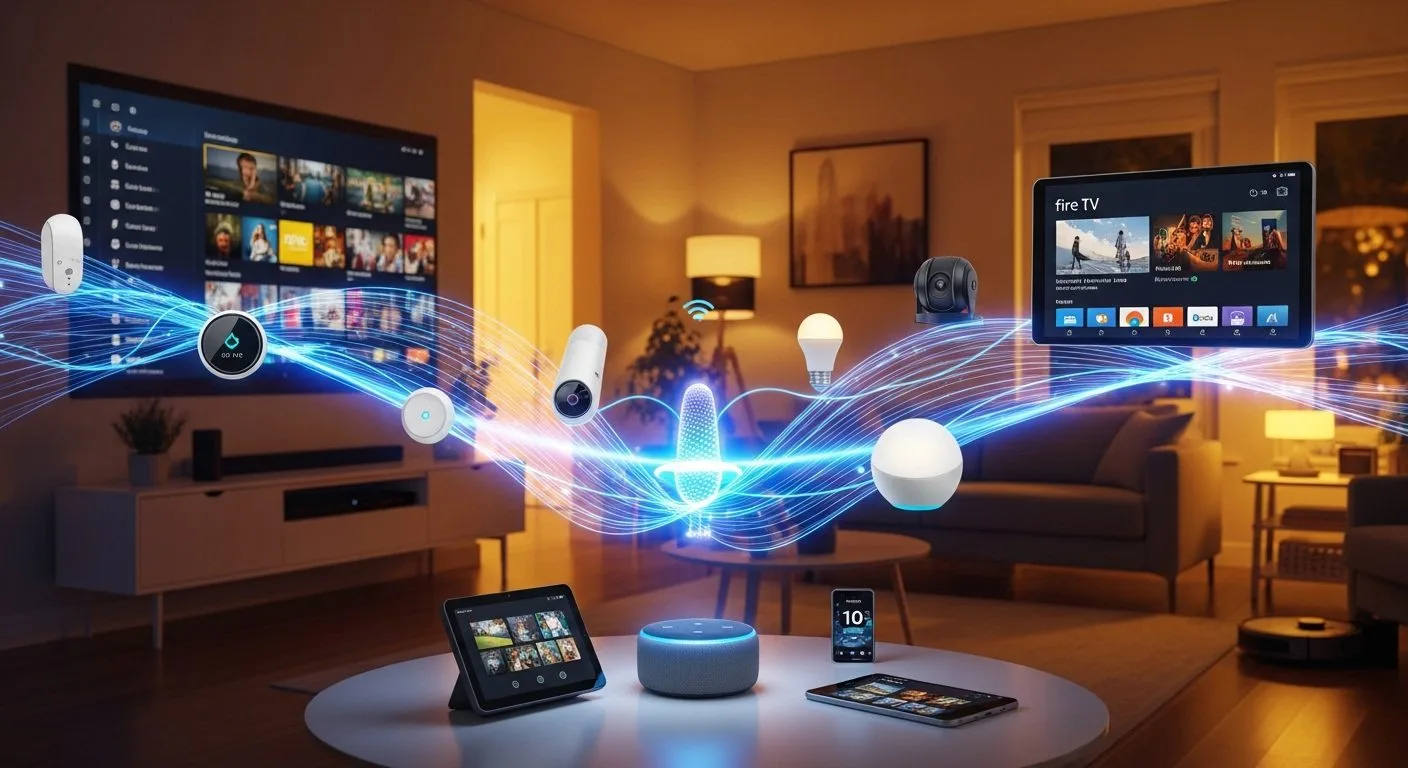
If you are asking what is Amazon Alexa, the short answer is that it is Amazon’s voice assistant for Echo devices, Fire TV, Fire tablets, the Alexa app, and many third-party products with Alexa built in.
Amazon Alexa helps people play music, answer questions, control smart home devices, set routines, manage shopping, and handle everyday requests by voice or text.
This guide uses Amazon’s official Amazon Alexa pages and Amazon developer materials as the main references. If you want to understand what is Amazon Alexa in current terms, the key point is simple: Alexa is still Amazon’s core assistant platform, while Amazon now also promotes Alexa+ as its newer, more advanced AI experience.
But what exactly is Alexa?
5 key facts at a glance
What is Amazon Alexa at a glance? It is Amazon’s cloud-based assistant across Amazon devices and Alexa-enabled products.
- Amazon says Alexa is its cloud-based voice service available on hundreds of millions of devices from Amazon and third-party manufacturers.
- Amazon Alexa supports everyday requests such as music, timers, questions, smart home control, shopping, and routines.
- Amazon now positions Alexa+ as a more advanced assistant experience, but also says the original Alexa remains available on supported devices.
- Alexa is spread across Echo devices, Fire TV, Fire tablets, the Alexa app, Alexa.com, and many Alexa built-in products.
- Amazon continues to treat Alexa as both a consumer assistant and a platform for developers, device makers, and service integrations.
Why understanding what is Amazon Alexa matters
If you want a better answer to what is Amazon Alexa, it helps to see why it matters in practice. Alexa is not just a smart speaker feature. It is Amazon’s assistant layer across home devices, media experiences, shopping flows, and connected services.
That matters because Alexa has become part of how many households run daily routines. People use it for quick questions, kitchen timers, lights, TV controls, reminders, and hands-free tasks that need to happen fast.
If you are tracking how assistants become practical infrastructure, Progressive Robot’s article on AI in project management is useful background on how AI moves from novelty into regular workflow.
What is Amazon Alexa in simple terms

What is Amazon Alexa in plain English? It is Amazon’s assistant for getting things done through voice, and now in some cases chat-style interfaces too. You ask Alexa for help, and it responds through supported devices or apps.
The simplest way to think about Alexa is as Amazon’s always-available command layer. Instead of opening apps or pressing through menus, users can speak a request like turning on lights, starting music, adding items to a shopping list, or checking the weather.
So what does Alexa mean in practice?
What is Amazon Alexa in Amazon's ecosystem

What is Amazon Alexa inside Amazon’s wider product strategy? It is Amazon’s assistant platform across devices, services, smart home workflows, and partner integrations.
1. What is Amazon Alexa as a voice assistant?
The first thing to know about what is Amazon Alexa is that Amazon defines it as a cloud-based voice service. That matters because Alexa is not tied to one device. It can appear on Echo speakers, smart displays, Fire TV products, Fire tablets, the Alexa app, and third-party hardware with Alexa built in.
Amazon also presents Alexa as a cross-device experience. Conversations and tasks can move between home devices and mobile surfaces, which helps explain why Alexa remains bigger than any single smart speaker product line.
2. What is Amazon Alexa for everyday use?
Amazon’s public Alexa pages focus heavily on daily convenience. Alexa is shown helping users ask questions, play entertainment, manage lists, control smart home devices, create routines, discover deals, and access services from connected brands.
This is still the clearest answer to what is Amazon Alexa for most people. It is a practical assistant for short requests and recurring routines around the home, on the couch, in the kitchen, or while moving between devices.
3. What is Amazon Alexa in the Alexa+ era?
Amazon now gives a second layer to the answer about what is Amazon Alexa. The company is actively promoting Alexa+, which it describes as a more advanced AI assistant experience with more natural conversation, better context handling, personalisation, shopping help, and broader task support.
At the same time, Amazon explicitly says the original Alexa remains available on devices for people who prefer it. That means the clean answer is not that Alexa disappeared. It is that Amazon Alexa now sits inside a broader assistant strategy where classic Alexa and Alexa+ can both matter.
So where does Alexa stand today?
4. What is Amazon Alexa for developers and device makers?
Amazon’s developer site makes another point clear. Alexa is also a platform. Amazon says developers can build Alexa skills, device makers can put Alexa into products, and businesses can use Alexa-related tools in sectors such as hospitality and enterprise settings.
That matters because Alexa is not only an end-user assistant. It is also part of Amazon’s ecosystem strategy for voice interfaces, smart home control, and partner experiences.
What is Amazon Alexa good at

What is Amazon Alexa in practical daily use? It is a fast assistant for hands-free household tasks, media control, smart home actions, and short information requests.
If you are still asking what is Amazon Alexa useful for, Amazon’s own examples point to several strong use cases.
What is Amazon Alexa for smart home control?
One of the most consistent answers to what is Amazon Alexa is that it is a smart home assistant. Amazon highlights lighting control, routines, camera views, home updates, and device coordination across the house.
This is where Alexa often feels most valuable. A voice request can trigger multiple actions without the user needing to unlock a phone or open several apps.
What is Amazon Alexa for media and entertainment?
Amazon also positions Alexa heavily around music, shows, and entertainment discovery. On Fire TV and Echo devices, Alexa can help users find movies, play songs, jump into streaming, and control playback with quick commands.
That makes Alexa useful when the goal is speed. Instead of navigating menus, users can say what they want and move on.
What is Amazon Alexa for shopping and lists?
Amazon’s latest Alexa pages put strong emphasis on shopping help, deal tracking, and list management. That is an important part of the answer to what is Amazon Alexa because Amazon sees the assistant as closely connected to its retail and Prime ecosystem.
In practice, that means Alexa can work as a lightweight household organizer. It helps with shopping lists, reminders, item lookups, and simple buying-related tasks that fit Amazon’s services.
What is Amazon Alexa for safety and home awareness?
Amazon also markets Alexa-related safety features such as Alexa Emergency Assist, which can connect users to urgent response support, notify contacts, and detect certain alarms or glass break events when enabled.
That does not make Alexa a full emergency system by itself, but it does show that Amazon wants Alexa to play a bigger role in home awareness and assistance beyond media and trivia.
What is Amazon Alexa access right now

What is Amazon Alexa access today? It is broad, but the experience depends on which version of Alexa you mean and which device you are using.
But what does that mean for users?
Amazon says Alexa is available across Echo devices, the Alexa app, Fire TV, Fire tablets, Alexa.com, and many Alexa built-in devices. Amazon also says Alexa+ can be available across Alexa.com, the Alexa app, Echo, Fire TV, Fire tablets, and compatible Alexa built-in devices, depending on plan, region, language, and device support.
Amazon is also clear that original Alexa still remains available on devices even as Alexa+ expands. So the cleanest answer is that Alexa is widely available, but the newest Alexa+ experience is not identical everywhere and does not replace every older setup at once.
What is Amazon Alexa still limited by
- The newest Alexa+ experience has plan, device, language, and region limits.
- Some newer capabilities depend on compatible Echo, Fire TV, Fire tablet, or Alexa built-in hardware.
- The original Alexa and Alexa+ are not the same experience, so user expectations can vary depending on what device is in front of them.
- Many useful actions still depend on connected services, supported devices, subscriptions, or partner integrations.
- Real-world performance still depends on internet access, device setup, account state, and request clarity.
That means the most accurate way to think about Alexa is as a mature assistant platform that is being upgraded, not as one perfectly uniform AI product across every Amazon surface.
Frequently asked questions
What is Amazon Alexa in FAQ form? These short answers cover the main practical questions.
So what is Amazon Alexa?
Is Amazon Alexa the same as Alexa+?
No. Alexa is Amazon’s assistant platform, while Alexa+ is Amazon’s newer, more advanced AI assistant experience layered on top of that broader Alexa world.
Can Amazon Alexa still be used without Alexa+?
Yes. Amazon says the original Alexa remains available on devices for users who prefer it.
Is Amazon Alexa only on Echo speakers?
No. Amazon Alexa also appears in the Alexa app, Fire TV, Fire tablets, Alexa.com, and many third-party or Alexa built-in products.
What is Amazon Alexa best understood as right now?
The clearest answer is that it is Amazon’s voice-first assistant platform across home, media, shopping, and device-control experiences, now expanding into a more advanced Alexa+ era.
Final thoughts
If you came here asking what is Amazon Alexa, the most useful answer is that it is Amazon’s assistant platform across devices, services, and home routines. It matters because Alexa is not just a speaker feature.
It is Amazon’s interface for voice control, media access, shopping help, smart home coordination, and connected services.
Whether Amazon Alexa becomes much more capable will depend on how well Alexa+ rolls out, how clearly Amazon separates classic Alexa from premium AI features, and how useful the assistant becomes across real household tasks.
But even now, Amazon Alexa remains one of the most important voice-assistant ecosystems because of its device reach, smart home position, and service integrations.
More AI coverage: explore Progressive Robot's AI Models, Tools & Releases hub — hands-on reviews, setup guides and benchmarks in one place.










