
People are finding an unexpected use for artificial intelligence: making their smart televisions less smart. Instead of adding more AI features, some television owners are using coding assistants to remove unwanted advertisements, disable unnecessary software, simplify home screens, and make sluggish interfaces more responsive.
The trend, described in a TechCrunch report published on October 19, 2026, highlights growing frustration with modern television software. Many smart TVs now promote sponsored content, recommend shows, collect viewing-related data, and include applications that owners rarely use.
AI smart TV debloating is emerging as a way to address those complaints without necessarily buying a different television. Developers and technology enthusiasts are using AI coding agents to examine their devices, disable selected software packages, and build cleaner interfaces tailored to their needs.
The idea is simple: people want their televisions to display the content they choose without making them navigate advertisements and unwanted software first. However, these modifications are still evolving, and using an AI agent to change a television’s system software carries risks.
Why People Want to Make Their Smart TVs Dumb Again
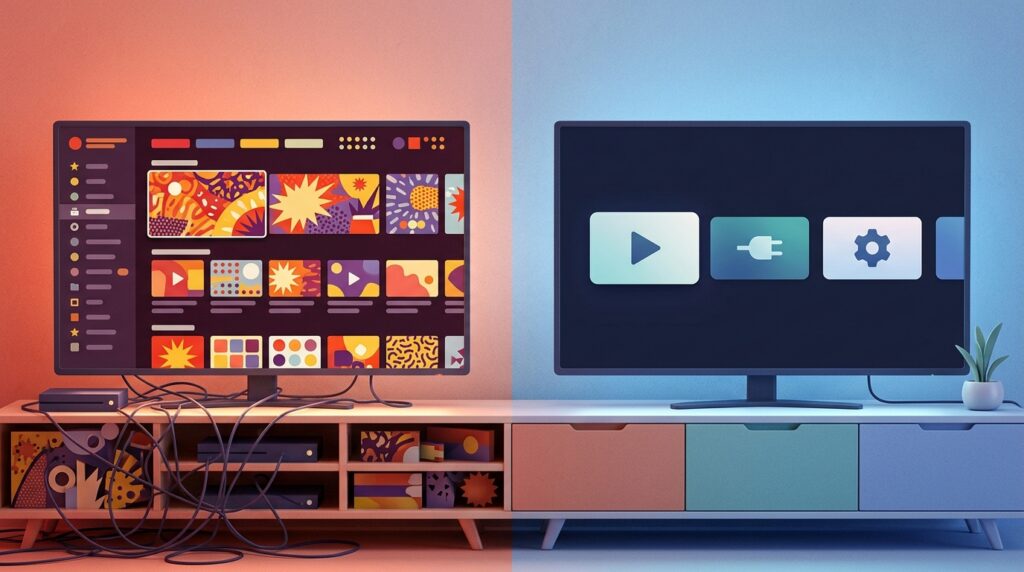
Smart televisions offer convenient access to streaming platforms, online video, games, and other connected services. The problem is that manufacturers increasingly use the home screen as a place to promote content, display sponsored recommendations, and encourage users to explore services beyond the applications they originally wanted.
For some owners, switching on the television means navigating multiple rows of recommendations before reaching a preferred streaming service. On lower-powered devices, background processes and a heavy launcher can also contribute to slow menus and delayed responses.
This frustration is helping drive AI smart TV debloating. Rather than accepting the default interface, users are experimenting with ways to disable unwanted components and replace the home screen with something simpler.
Privacy is another motivation. Some connected televisions use Automatic Content Recognition (ACR) technology, which can identify what is playing by analysing visual or audio signals. Depending on the device, settings, and applicable policies, viewing information may be used for recommendations, analytics, or advertising.
Removing a few applications does not automatically disable every form of data collection. However, simplifying a television’s software and reviewing its privacy settings can give owners more control over their viewing experience.
How AI Coding Agents Are Changing TV Customisation

Traditionally, modifying a television’s software required familiarity with Android debugging tools, application packages, system settings, and launcher development. These technical barriers discouraged many users from attempting even relatively straightforward customisations.
AI coding assistants can reduce some of that complexity. A user can describe the desired outcome, provide the television’s model information, and ask an agent to help inspect the system and plan changes. Depending on the device and the tools available, the agent may assist with identifying packages, writing scripts, or creating a replacement launcher.
TechCrunch highlighted examples involving Claude Code, Anthropic’s coding assistant. In one case, developer Gathin T. used it to clean up his parents’ Xiaomi television, reportedly disabling 25 packages and creating a new home screen. Other users shared similar experiments involving different television brands and platforms.
This is an example of AI smart TV debloating moving beyond specialist development work and into consumer experimentation. Users can describe what they want in ordinary language while the coding agent handles parts of the technical process.
That does not mean every television can be modified in the same way. The available tools and permissions depend on its operating system, firmware, manufacturer restrictions, and hardware. AI can assist with the work, but it cannot automatically overcome every technical limitation.
DumbTV and CleanYourTV Are Leading Examples
Two community projects have helped bring attention to the trend: DumbTV and CleanYourTV.
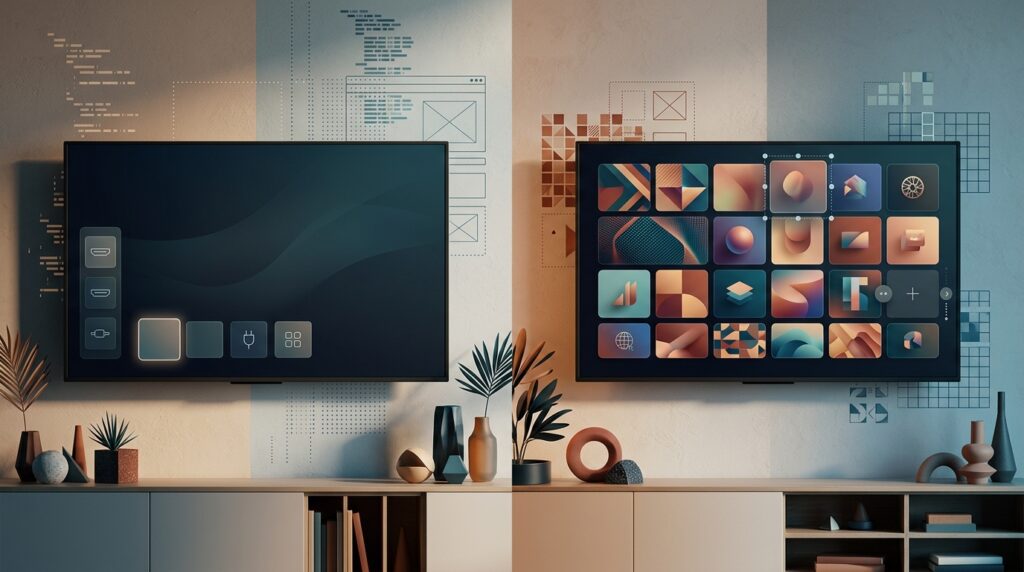
DumbTV on GitHub is presented as an effort to reduce unwanted television advertising and tracking while giving users more control over their device. Its central idea is that a television should prioritise the owner’s applications and connected inputs rather than manufacturer-sponsored content.
CleanYourTV, meanwhile, focuses on debloating Android TV and Google TV devices and replacing the standard home screen with a cleaner launcher. Its project documentation describes a workflow for examining a compatible television, disabling selected packages, and installing a lightweight alternative interface.
These projects illustrate different parts of AI smart TV debloating. Removing unwanted software can reduce clutter, while changing the launcher can give users a simpler way to navigate their installed applications.
CleanYourTV’s documentation also describes backup and restoration steps, allowing supported changes to be reversed. Nevertheless, users should read the instructions for their exact device before proceeding. A procedure that works on one television may not work on another, even if both use Android-based software.
Community projects are also works in progress. Compatibility lists, user reports, and testing can change over time, so owners should check the latest documentation rather than assume every model is supported.
Can AI Remove Smart TV Ads and Tracking?

Advertisements and tracking are major reasons some owners want to customise their televisions. However, it is important to distinguish between removing sponsored content from the home screen and disabling the data collection that may support advertising.
AI smart TV debloating can target manufacturer-installed applications, promotional rows, or selected background packages, depending on the device. Replacing the default launcher may also reduce the visibility of sponsored recommendations.
Tracking is more complicated. Automatic Content Recognition can operate separately from the home screen, and privacy-related services may be integrated into system components. Disabling one application does not prove that all viewing analytics have stopped.
Owners should therefore review the television’s privacy settings, advertising preferences, and connected-service permissions. Where available, they can disable viewing-information collection and limit optional data sharing. Disconnecting a television from the internet can also reduce its network activity, although this sacrifices internet-dependent features unless streaming is handled through another connected device.
No custom launcher should be treated as a complete privacy solution without evidence. The actual outcome depends on the television’s operating system, its settings, and the specific changes made.
The Risks of Using AI to Modify a Television

Although AI smart TV debloating can make a television feel faster and cleaner, it is not risk-free. AI coding agents can misunderstand package names, recommend inappropriate changes, or execute commands that affect more than the user intended.
Disabling a system component could break voice controls, casting, application updates, HDMI-related features, or other functions. In more serious cases, incorrect changes can leave a device unresponsive or require a factory reset or technical recovery.
Compatibility is another concern. Samsung televisions generally use Tizen, while LG smart TVs use webOS. Android TV and Google TV devices have different software structures and permissions from those platforms. A launcher designed for Android TV should not be assumed to work on Samsung or LG televisions.
There is also a difference between disabling an application and permanently removing system software. Some projects use reversible changes, but reversibility depends on the procedure, whether backups were made, and whether the device remains accessible.
Before using an AI agent to modify a television, owners should confirm their exact model and operating-system version, read the project’s documentation, back up relevant settings or package lists, and understand how to restore the original configuration. They should review proposed commands before allowing the agent to execute them.
For most users, preserving a working television is more important than removing every unwanted package. A smaller, carefully tested change is preferable to an aggressive modification that could disable essential functions.
Simpler Alternatives for a Cleaner Smart TV Experience
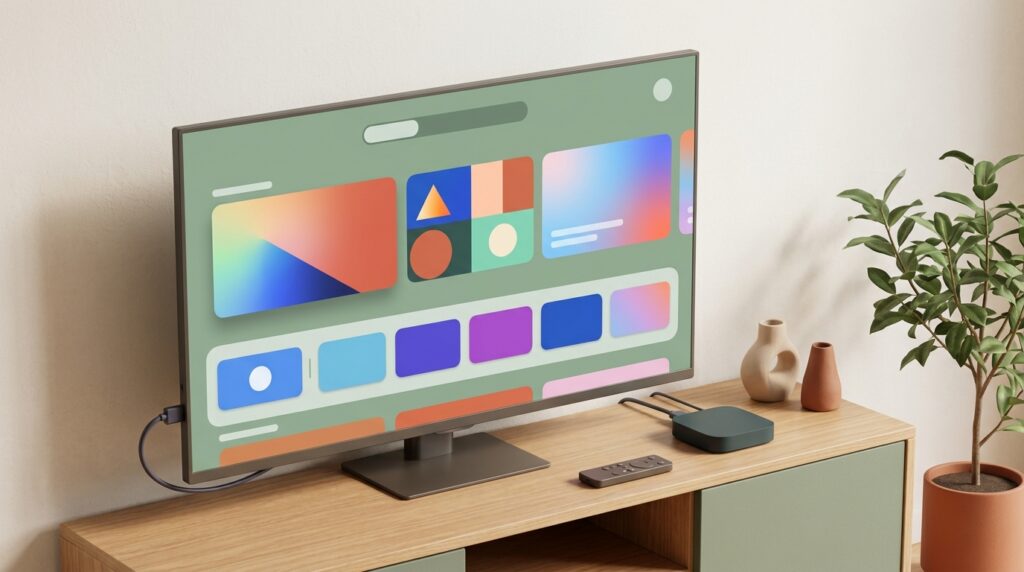
Not every television owner needs an AI coding agent to achieve a simpler experience. Depending on the device, less invasive options may offer most of the benefits with fewer risks.
For compatible Android TV and Google TV devices, launcher applications such as Projectivy Launcher, ATV Launcher, and FLauncher can provide alternative home-screen layouts. Availability and compatibility vary, and these launchers do not necessarily remove manufacturer tracking or every advertisement.
Users can also review privacy settings, disable optional recommendations where supported, uninstall applications that the system allows them to remove, and avoid connecting the television to the internet if its smart features are not needed.
Another option is to connect an external streaming device to an HDMI port. This allows users to rely on the external device’s interface for streaming while using the television primarily as a display. It does not automatically eliminate every smart TV feature or privacy concern, but it can reduce the need to interact with the built-in platform.
The best approach depends on the goal. Someone who mainly wants a cleaner home screen may not need system-level changes. Someone trying to disable specific background services will need to understand the device’s operating system and the limitations of available privacy controls.
Could AI Smart TV Debloating Challenge the TV Advertising Business?
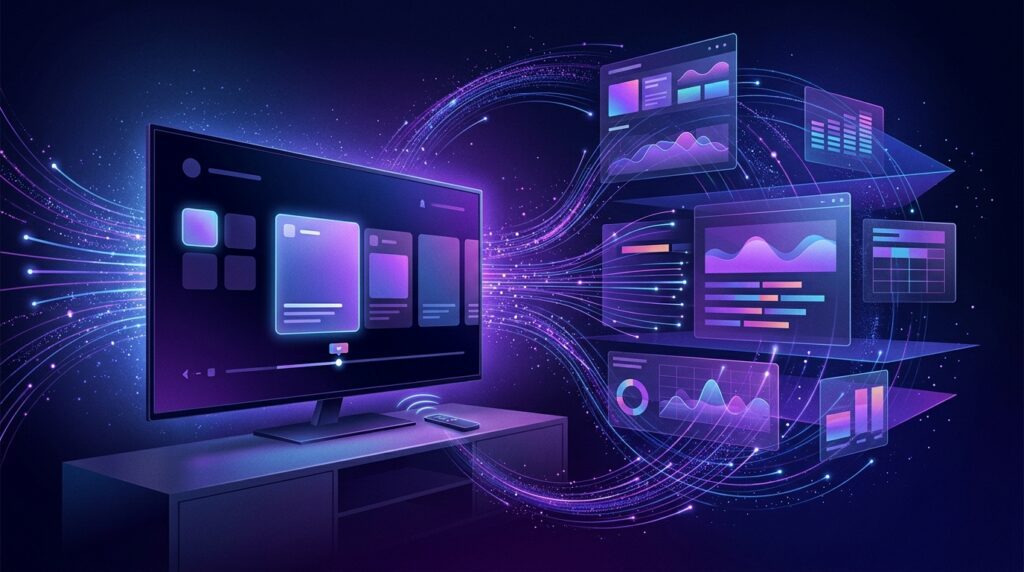
The growing interest in AI smart TV debloating raises questions about the business model behind connected televisions. Manufacturers can use their home screens to promote streaming services, display sponsored recommendations, and encourage users to engage with advertising-supported features.
If more owners replace those interfaces or disable selected promotional components, manufacturers could lose some of the visibility they expect from their software platforms. Widespread changes to tracking settings could also affect the availability of viewing data used for personalised advertising.
However, the trend is still emerging, and there is not enough evidence to conclude that it will significantly disrupt the television advertising industry. The projects remain under development, and many owners may prefer the convenience of built-in smart features over the technical work involved in customisation.
The more immediate impact may be cultural. AI coding agents are making it easier for technically curious users to question default software and experiment with devices they previously treated as fixed products.
That could encourage manufacturers to offer cleaner interfaces, more transparent privacy controls, and greater choice over sponsored content. Whether the industry responds will depend on how widely these tools are adopted and whether consumer expectations change.
Final Thoughts
AI smart TV debloating is an unusual example of people using artificial intelligence to remove technology rather than add more of it. Through coding agents and community projects, some television owners are simplifying interfaces, disabling selected packages, and attempting to reduce unwanted advertising.
Projects such as DumbTV and CleanYourTV demonstrate how AI can help make device customisation more accessible. They also show why compatibility, reversibility, and careful testing matter: an AI assistant can make technical work easier, but it cannot guarantee that every modification is safe.
For users frustrated by sluggish menus and crowded home screens, a custom launcher or a review of privacy settings may be enough. More extensive software changes should be approached cautiously and only with device-specific instructions.
Ultimately, the trend reflects a straightforward demand: people want their televisions to serve their needs, not force them through unnecessary software. AI is giving some users a new way to pursue that control.
Sources
TechCrunch: People are using AI to make their smart TVs dumb again — reporting on AI-assisted TV customisation, DumbTV, CleanYourTV, and associated risks.
CleanYourTV on GitHub — project documentation, supported devices, launcher features, and restoration guidance.
CleanYourTV prompt and compatibility notes — requirements and platform limitations for the project’s AI-assisted workflow.
RTINGS: How to Use a Smart TV Offline — background on smart TV privacy and offline alternatives.
More AI coverage: explore Progressive Robot's AI Models, Tools & Releases hub — hands-on reviews, setup guides and benchmarks in one place.










