
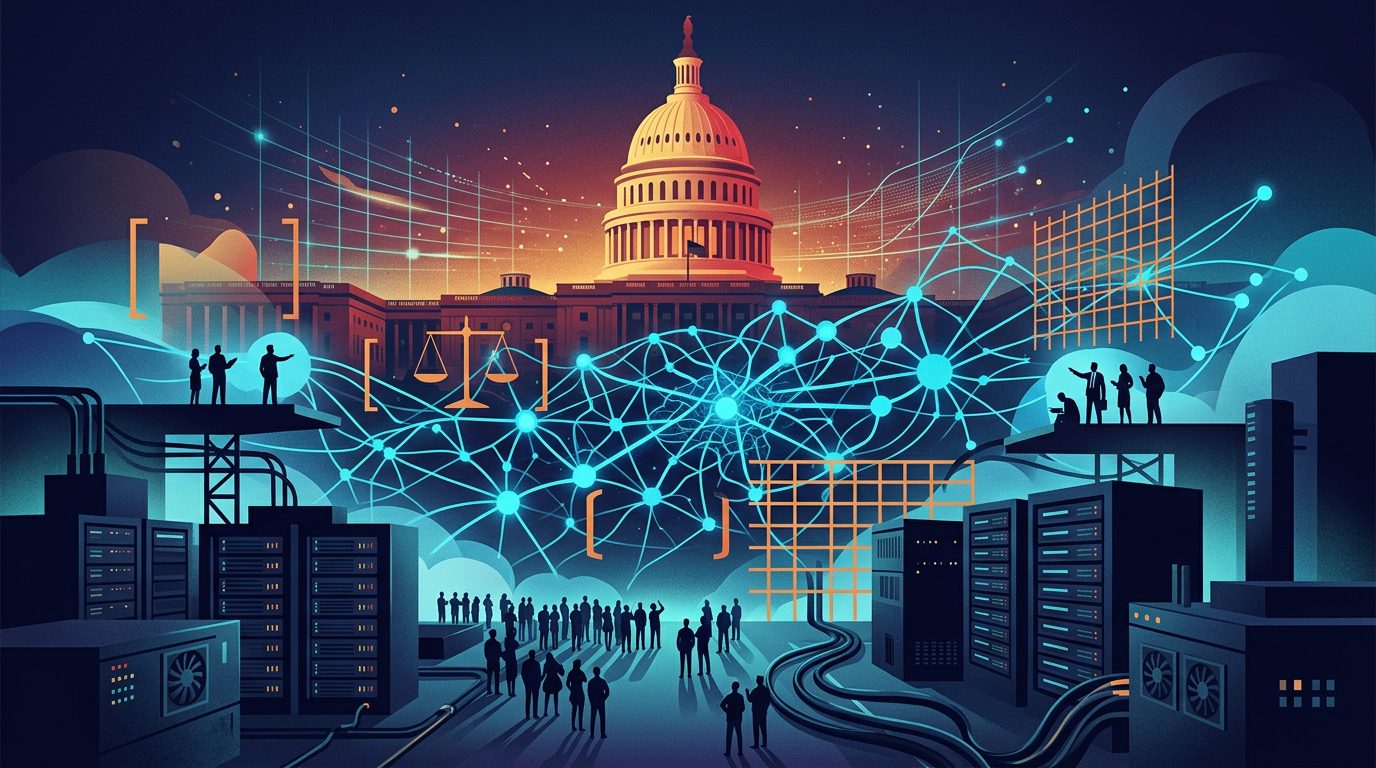
AI regulation is emerging as a potential political opportunity for Democrats ahead of the November 2026 US midterm elections. As public concerns grow about artificial intelligence, employment, electricity costs, privacy, and the power of major technology companies, Democratic strategists believe stronger oversight could help their candidates connect with voters.
The argument is not simply about whether artificial intelligence should be encouraged or restricted. It is about who benefits from the technology, who bears its costs, and whether elected officials are doing enough to protect the public as AI becomes more widely used.
According to The Verge’s report on Democrats and AI in the midterms, Democratic strategists see an opening to challenge the technology industry and portray Republicans as too closely aligned with companies seeking fewer restrictions. However, turning that opportunity into votes will depend on whether candidates can offer practical solutions rather than broad warnings.
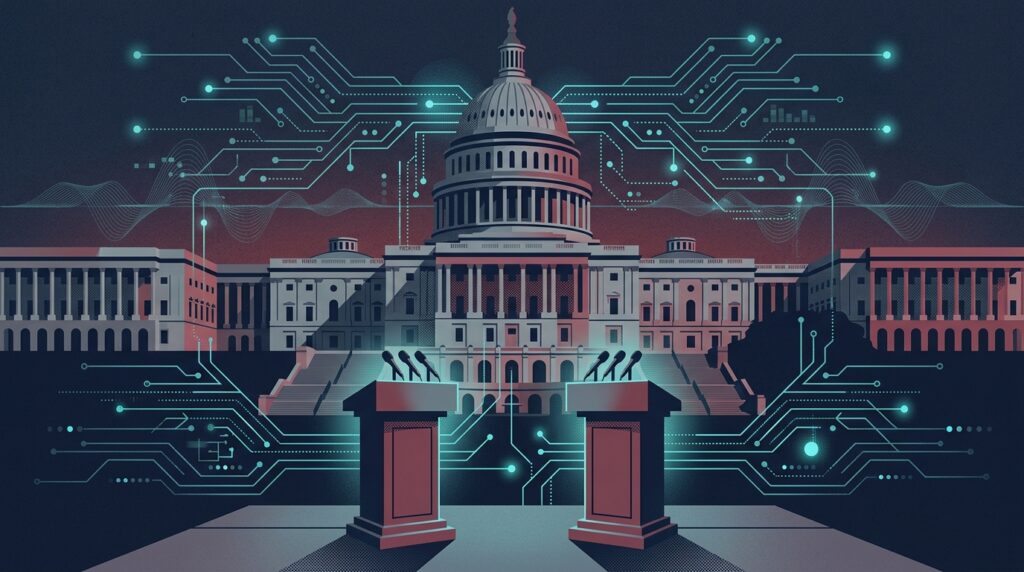
Why Democrats See an Opportunity in AI Regulation
Democrats are attempting to connect concerns about artificial intelligence to issues that already matter to voters: economic security, corporate accountability, household expenses, and the future of work.
AI tools are increasingly capable of performing tasks that once required substantial human involvement. While the technology can improve productivity and create new opportunities, workers are also questioning whether employers will use automation to reduce staffing or suppress wages. These concerns give politicians an opening to discuss transparency, worker protections, and accountability when AI systems affect people’s livelihoods.
The political opportunity is not limited to job losses. Voters may also be concerned about how AI companies collect personal information, how automated systems make consequential decisions, and whether the public has meaningful ways to challenge mistakes.
For Democrats, AI regulation could provide a framework for addressing these questions while arguing that technological progress should deliver wider public benefits. The challenge is to demonstrate that safeguards can protect people without unnecessarily preventing useful innovation.

Data Centers Put Local Communities at the Center of AI Regulation
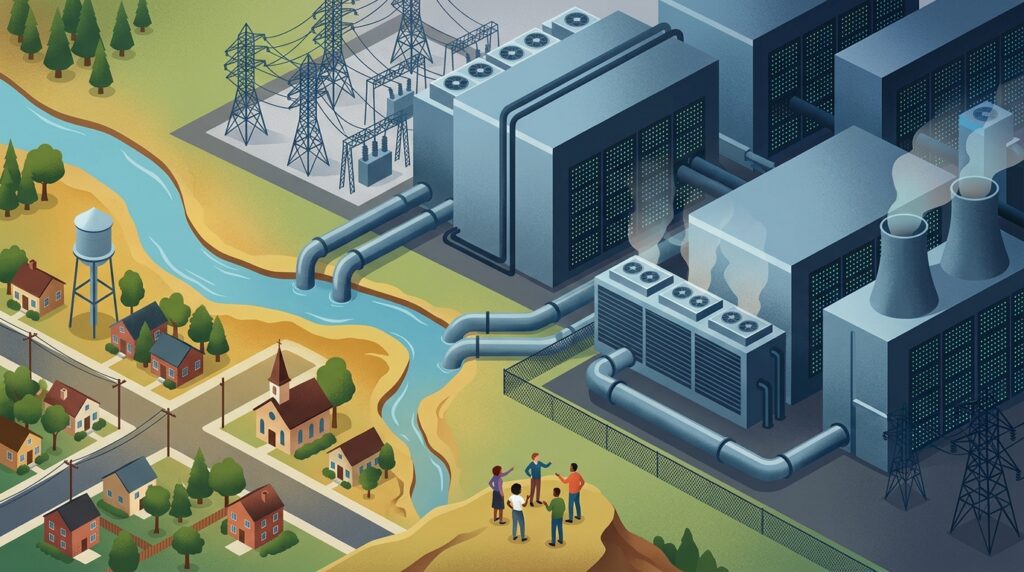
Data centers have become a particularly visible part of the debate because their impact can be felt directly by nearby communities. These facilities provide the computing power required for many AI services, but their construction and operation can also raise questions about electricity demand, water use, land development, and local infrastructure.
Residents may support technological investment while still questioning whether new facilities will increase utility bills or put pressure on public resources. They may also want clearer information about proposed developments, the benefits promised by companies, and the costs communities could face.
This creates a political issue that reaches beyond abstract arguments about artificial intelligence. A family worried about its electricity bill may be more interested in who pays for a data center’s power requirements than in the technical details of a new AI model.
As reported by The Washington Post’s analysis of AI in election campaigns, candidates are increasingly discussing AI and data center policies in the run-up to the midterms.
For Democrats, AI regulation could include requiring greater transparency, stronger community consultation, and clearer responsibility for infrastructure costs. But the issue is not automatically partisan: residents across the political spectrum can oppose developments they believe will leave local households paying the price.
Big Tech Accountability Could Strengthen the Democratic Message
Another part of the strategy involves questioning whether large technology companies have too much influence over public policy. AI companies can shape the direction of the technology, but their decisions can also affect employment, privacy, competition, and the information people encounter online.
Democratic campaigners may argue that companies benefiting from rapid AI adoption should face meaningful obligations when their systems cause harm. Possible policy discussions include independent safety testing, greater disclosure of significant risks, protections for whistleblowers, and clearer legal responsibility for certain AI-related harms.
Such proposals would need careful design. A rule that is too vague could create uncertainty for businesses, while a weak requirement might do little to protect the public. Policymakers would also need to consider differences between low-risk AI applications and powerful systems that can produce more consequential outcomes.
The political message is straightforward: innovation should not mean that technology companies can avoid accountability. Whether that argument resonates will depend on whether candidates can explain what they would change and how those changes would work in practice.

How Trump’s AI Approach Creates a Political Contrast
Democrats also see an opportunity to distinguish their position from President Donald Trump’s generally pro-industry approach to AI development. The administration’s emphasis on accelerating technological progress and limiting regulatory obstacles gives Democrats a contrast they can use in campaign messaging.
However, the distinction is not simply a choice between supporting and opposing artificial intelligence. Both parties contain different views about how to manage the technology, and disagreements also exist within the Democratic Party itself.
Some policymakers prioritize rapid investment, competitiveness, and national security. Others emphasize safety requirements, limits on certain applications, or greater control over data center development. Republicans, too, can face pressure from constituents concerned about energy costs, local development, and the effects of automation.
That complexity makes AI regulation a potentially useful campaign issue but not an automatic electoral advantage. Democrats will need to explain how their proposals differ from existing policy and why voters should trust them to deliver results.
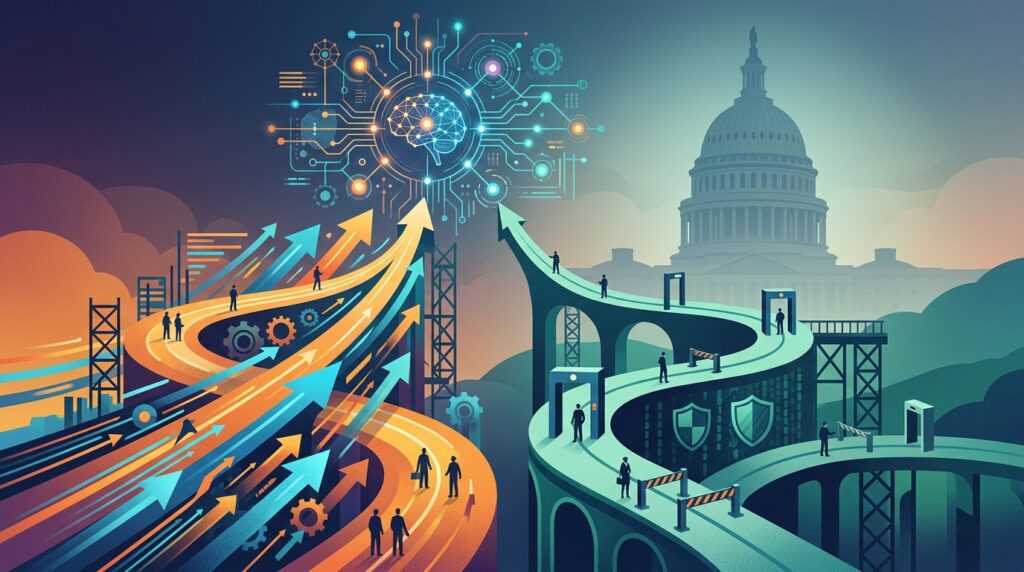
Could AI Regulation Actually Win Votes?
The fact that AI is receiving more political attention does not mean it will become the deciding issue for most voters. Household costs, healthcare, immigration, employment, and other established concerns are likely to remain important in the 2026 midterms.
Still, AI policy can influence how voters evaluate candidates on those wider issues. A campaign discussing automation can connect it to job security. A debate about data centers can become a discussion about electricity bills. Concerns about AI-generated misinformation can lead to questions about election integrity and digital safety.
Research from the Pew Research Center found that 56% of Democrats surveyed said they were more concerned than excited about AI’s increased use in daily life. The survey points to a potential opening for candidates who acknowledge public unease, although concern about technology does not necessarily translate into support for a particular party or policy.
To turn that sentiment into votes, candidates will need more than warnings about powerful algorithms or wealthy technology executives. They will need credible plans, clear explanations, and proposals that address the concerns people experience in their daily lives.

The Risks of Making AI Regulation a Campaign Slogan
There are risks for Democrats if AI regulation becomes a slogan without a detailed policy behind it. Broad promises to restrict AI may appeal to some voters but raise concerns among workers, researchers, entrepreneurs, and businesses that depend on the technology.
Excessively broad restrictions could slow beneficial applications in areas such as scientific research, accessibility, education, and healthcare. On the other hand, relying entirely on voluntary commitments from technology companies may leave gaps in safety, transparency, and accountability.
Democrats also face a coalition challenge. Some communities want tighter limits on data center construction, while construction workers and local governments may welcome the investment and jobs these facilities can bring. A policy that appeals to one group could alienate another.
A credible approach would identify specific risks, explain which rules would address them, and establish how compliance would be monitored. It would also make room for public input and distinguish between applications that pose different levels of risk.
Ultimately, effective AI regulation needs to be more than a partisan contrast. It must show how safeguards would work, who would enforce them, and how the public could benefit without unnecessarily sacrificing innovation.

What Happens Next for AI Regulation?
The next stage will depend on the election results, the priorities of congressional leaders, and the ability of lawmakers to build support for specific proposals. If Democrats gain control of one or both chambers of Congress, committee leadership could give them greater power to hold hearings, request documents, question executives, and investigate the effects of AI deployment.
Those powers would create opportunities for scrutiny, but they would not automatically produce new laws. Legislation would still face political disagreements, procedural hurdles, industry lobbying, and debates over how much authority the federal government should exercise.
Candidates may also find that their strongest proposals focus on concrete concerns rather than sweeping declarations. Transparency around data center impacts, protections for consumers, clear rules for high-risk AI applications, and accountability for demonstrable harm are easier for voters to evaluate than abstract promises to control technology.
For Democrats, AI regulation offers a way to connect technological change with familiar political questions about fairness, economic security, and corporate power. Whether that message creates a lasting advantage will depend on the quality of their proposals and whether voters believe those policies would make a meaningful difference.
Conclusion: AI Regulation Is an Opportunity, Not a Guaranteed Win
AI regulation is becoming a more visible part of the political debate as artificial intelligence changes workplaces, expands data center infrastructure, and raises questions about privacy and corporate responsibility. Democrats believe they can use these concerns to challenge their opponents and present themselves as advocates for stronger public safeguards.
But public concern alone does not guarantee electoral success. Voters will weigh AI policy alongside the economy, healthcare, and other immediate priorities, and many will judge candidates on whether their proposals are practical rather than simply tough-sounding.
The opportunity for Democrats is to turn anxiety about AI into a clear and credible policy agenda. If they can show how oversight would protect workers and communities while preserving useful innovation, AI regulation could become a meaningful campaign issue in the 2026 midterms. If their message remains vague or overly partisan, the political advantage may prove much smaller than they expect.
Sources
More AI coverage: explore Progressive Robot's AI Models, Tools & Releases hub — hands-on reviews, setup guides and benchmarks in one place.










