

Apple Intelligence approved for launch in China marks a significant milestone for both Apple and the global artificial intelligence industry. After months of speculation surrounding Apple’s AI rollout in one of the world’s largest smartphone markets, reports indicate that Apple has received approval to introduce its AI features in China through a partnership with Alibaba and its Qwen large language model. This development has the potential to reshape Apple’s AI strategy while providing millions of Chinese users with access to intelligent features tailored to local regulatory requirements.
The announcement that Apple Intelligence approved for launch in China is particularly important because China has unique regulations governing artificial intelligence services, cloud infrastructure, and generative AI. International technology companies must comply with these requirements before launching AI-powered features, making local partnerships essential for successful deployment.
Alibaba’s Qwen AI has emerged as one of China’s leading large language models, offering advanced natural language understanding, reasoning, multilingual capabilities, and enterprise AI solutions. By integrating Qwen AI into Apple’s ecosystem for the Chinese market, Apple can deliver intelligent experiences while complying with local policies and data governance standards.
The fact that Apple Intelligence approved for launch in China also reflects Apple’s broader strategy of adapting its AI services to regional requirements rather than deploying a single global solution. This localized approach allows Apple to maintain its premium user experience while respecting regulatory frameworks and leveraging trusted domestic AI technologies.
Beyond consumers, the partnership could create new opportunities for developers, businesses, educators, and enterprises that rely on Apple’s ecosystem. AI-powered writing assistance, productivity tools, image generation, intelligent notifications, language translation, and contextual recommendations may become increasingly accessible to users throughout China.
In this article, we’ll explore why Apple Intelligence approved for launch in China is such an important development, examine Alibaba’s Qwen AI, discuss the potential impact on Apple’s ecosystem, compare regional AI strategies, analyze challenges, and look at what this partnership could mean for the future of artificial intelligence.
Key Takeaways
- Apple Intelligence approved for launch in China represents a major expansion of Apple’s AI ecosystem.
- Alibaba’s Qwen AI is expected to power key AI capabilities for Chinese users.
- Local partnerships help Apple comply with China’s AI regulations.
- The rollout could strengthen Apple’s position in the Chinese smartphone market.
- Developers and enterprises may gain access to new AI-powered opportunities.
- Regional AI partnerships are becoming increasingly important for global technology companies.
What Is Apple Intelligence?

Before understanding why Apple Intelligence approved for launch in China is significant, it’s important to understand what Apple Intelligence actually is.
Apple Intelligence is Apple’s personal artificial intelligence platform designed to integrate AI directly into iPhone, iPad, Mac, and other Apple devices.
Rather than functioning as a standalone chatbot, Apple Intelligence enhances existing applications through intelligent features such as:
- Writing assistance.
- Text summarization.
- Email composition.
- Notification prioritization.
- Smart image generation.
- Context-aware recommendations.
- Productivity enhancements.
- Natural language interactions.
Apple’s approach emphasizes seamless integration into everyday workflows instead of requiring users to switch between separate AI applications.
Why Apple Intelligence Approved for Launch in China Matters
The news that Apple Intelligence approved for launch in China is important for several reasons.
China represents one of Apple’s largest and most strategically important markets.
However, deploying AI services within China requires compliance with strict regulations governing:
- Artificial intelligence.
- Data security.
- Cloud computing.
- User privacy.
- Content moderation.
- Cross-border data handling.
By partnering with Alibaba, Apple can provide AI features while aligning with local regulatory requirements.
This approval may also strengthen Apple’s competitive position as domestic smartphone manufacturers continue expanding their own AI capabilities.
Alibaba’s Qwen AI and Its Role
One of the biggest reasons Apple Intelligence approved for launch in China has attracted attention is the involvement of Alibaba’s Qwen AI.
Qwen is one of China’s leading large language models and supports numerous AI applications including:
- Conversational AI.
- Document analysis.
- Code generation.
- Translation.
- Enterprise automation.
- Knowledge retrieval.
- Content creation.
- Intelligent assistants.
Instead of building an entirely separate AI infrastructure for China, Apple appears to be leveraging Alibaba’s established AI capabilities to deliver localized intelligence.
This collaboration allows Apple to accelerate deployment while ensuring compatibility with China’s evolving AI ecosystem.
How the Partnership Benefits Apple and Chinese Users
The announcement that Apple Intelligence approved for launch in China offers advantages for both Apple and consumers.
For Apple, the partnership provides:
- Faster market entry.
- Regulatory compliance.
- Local AI expertise.
- Stronger ecosystem integration.
- Improved competitiveness.
For users, potential benefits include:
- Native-language AI interactions.
- Faster AI responses.
- Better regional knowledge.
- Enhanced productivity.
- Improved personalization.
- Seamless integration with Apple devices.
Together, Apple and Alibaba may deliver an AI experience specifically optimized for Chinese users.
Apple’s Regional AI Strategy
Unlike some global AI deployments, Apple’s approach recognizes that different regions have different regulatory environments.
The fact that Apple Intelligence approved for launch in China demonstrates Apple’s willingness to adapt its technology rather than applying identical AI systems worldwide.
This strategy may become increasingly common as governments establish unique AI regulations and data governance frameworks.
Localized AI partnerships could become an important competitive advantage for multinational technology companies.
Potential Benefits for Developers
Developers working within Apple’s ecosystem may also benefit from Apple Intelligence approved for launch in China.
Potential opportunities include:
- AI-enhanced applications.
- Intelligent productivity tools.
- Localized AI experiences.
- Enterprise software.
- Educational applications.
- Customer support automation.
- Smart content generation.
- AI-powered business workflows.
As Apple’s AI platform expands, developers may gain access to new APIs and intelligent services optimized for regional markets.
The Growing Importance of Local AI Partnerships
The reports that Apple Intelligence approved for launch in China reflect a broader trend throughout the technology industry.
Rather than attempting to deploy identical AI services globally, international companies increasingly collaborate with trusted regional AI providers.
These partnerships help organizations:
- Meet regulatory requirements.
- Improve localization.
- Enhance user experiences.
- Reduce deployment complexity.
- Accelerate innovation.
- Expand market access.
As artificial intelligence continues evolving, regional collaboration may become one of the defining characteristics of successful global AI strategies.
Features Expected for Chinese Users
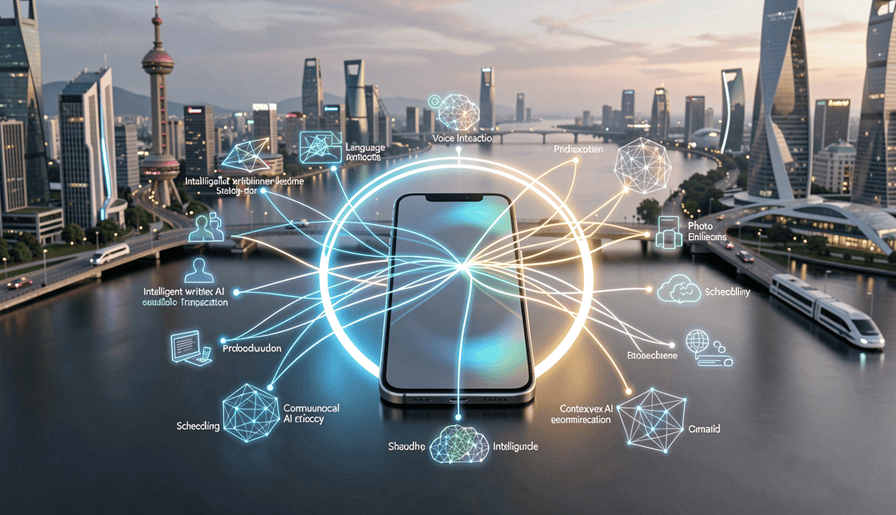
Now that Apple Intelligence approved for launch in China has reportedly received regulatory approval, many users are wondering which AI capabilities will be available. While Apple has not announced every feature for the Chinese market, the partnership with Alibaba’s Qwen AI suggests that many core Apple Intelligence experiences could be adapted for local users while complying with regional regulations.
Potential features may include:
- AI-powered writing assistance.
- Intelligent email summaries.
- Smart notification prioritization.
- Natural language search.
- Voice assistance enhancements.
- AI-assisted photo organization.
- Text rewriting and proofreading.
- Context-aware productivity tools.
These features are expected to integrate directly into Apple’s ecosystem rather than functioning as separate AI applications.
Privacy and Regulatory Compliance
One reason Apple Intelligence approved for launch in China has generated considerable attention is its approach to privacy and regulatory compliance.
Apple has consistently emphasized privacy as one of its core principles, while China’s AI regulations require technology providers to comply with local standards regarding data handling, cloud infrastructure, and content governance.
Working with Alibaba allows Apple to align its AI services with these requirements while continuing to offer a premium user experience.
Key areas of focus include:
- Data security.
- User privacy.
- Local regulatory compliance.
- Secure cloud processing.
- Responsible AI deployment.
- Transparent AI governance.
Balancing privacy with regulatory obligations will remain a critical factor in the success of Apple’s AI strategy in China.
Comparison with Apple Intelligence in Other Regions
Although Apple Intelligence approved for launch in China introduces many of the same concepts available in other markets, regional implementation may differ.
Outside China, Apple Intelligence primarily relies on Apple’s own AI technologies and partnerships where appropriate. In China, however, integrating Alibaba’s Qwen AI enables Apple to meet local regulatory requirements while providing advanced AI functionality.
Users can still expect Apple’s familiar design philosophy, but some AI models, cloud services, and content handling processes may vary depending on local regulations and infrastructure.
This regional adaptation demonstrates how global technology companies increasingly tailor AI services for individual markets instead of offering a single universal solution.
Business Opportunities
The approval of Apple Intelligence approved for launch in China could create significant opportunities for businesses operating within Apple’s ecosystem.
Organizations may benefit from AI-powered features that improve:
- Workplace productivity.
- Customer communication.
- Content creation.
- Document management.
- Team collaboration.
- Translation.
- Administrative workflows.
- Knowledge management.
Companies already invested in Apple hardware could gain access to intelligent tools that simplify everyday business operations while maintaining a familiar user experience.
Opportunities for Developers
Developers stand to benefit as Apple Intelligence approved for launch in China expands the capabilities of Apple’s software ecosystem.
Potential opportunities include:
- AI-enhanced mobile applications.
- Intelligent writing features.
- Productivity integrations.
- Enterprise software solutions.
- AI-assisted accessibility tools.
- Smart educational applications.
- Localized customer experiences.
- Workflow automation.
As Apple expands its AI platform, developers may gain access to additional APIs and frameworks that support more sophisticated AI-powered applications.
Strengthening Apple’s Position in China
China remains one of Apple’s most important markets.
The fact that Apple Intelligence approved for launch in China could strengthen Apple’s competitive position against domestic smartphone manufacturers that have already introduced advanced AI capabilities into their devices.
Offering localized AI experiences may help Apple:
- Increase customer satisfaction.
- Improve ecosystem engagement.
- Encourage device upgrades.
- Expand enterprise adoption.
- Strengthen developer support.
- Enhance long-term competitiveness.
AI is becoming a major factor influencing smartphone purchasing decisions, making this rollout strategically significant.
Impact on China’s AI Ecosystem
The reports that Apple Intelligence approved for launch in China also demonstrate the maturity of China’s artificial intelligence industry.
Domestic AI companies have developed highly capable language models that are increasingly supporting both enterprise and consumer applications.
Partnerships between international technology companies and Chinese AI providers may accelerate:
- AI innovation.
- Software development.
- Enterprise digital transformation.
- Research collaboration.
- Consumer AI adoption.
- Intelligent productivity tools.
These collaborations contribute to a more diverse and competitive global AI ecosystem.
Why Localization Matters
Artificial intelligence performs best when it understands local languages, culture, regulations, and user expectations.
The approval that Apple Intelligence approved for launch in China received reflects the importance of tailoring AI experiences to regional markets.
Localized AI may provide:
- Better language understanding.
- More relevant recommendations.
- Improved cultural awareness.
- Greater regulatory compliance.
- Enhanced user trust.
- Higher overall accuracy.
As AI adoption grows worldwide, localization will likely become an essential component of successful AI deployment strategies.
The Growing Role of AI Partnerships
The partnership behind Apple Intelligence approved for launch in China reflects an industry-wide trend toward collaboration.
Rather than building every AI component independently, technology companies increasingly combine their strengths through strategic partnerships.
Apple contributes:
- Premium hardware.
- Integrated software.
- User experience expertise.
- Ecosystem design.
Alibaba contributes:
- Advanced regional AI models.
- Local infrastructure.
- Regulatory expertise.
- Language optimization.
Together, these strengths create a more localized AI experience for Chinese consumers.
Challenges and Limitations

Although Apple Intelligence approved for launch in China represents a significant milestone, the rollout also comes with technical, regulatory, and strategic challenges. Launching AI services in one of the world’s most regulated technology markets requires more than simply deploying advanced language models. Apple and Alibaba must ensure that performance, privacy, compliance, and user experience remain consistent while meeting local requirements.
Successfully balancing these priorities will determine how well Apple Intelligence is received by consumers and enterprises across China.
Regulatory Compliance Remains a Key Challenge
One of the primary reasons Apple Intelligence approved for launch in China required a local partnership is China’s regulatory framework for artificial intelligence.
AI providers must comply with regulations covering:
- Data governance.
- Cloud infrastructure.
- User privacy.
- Content moderation.
- Cybersecurity.
- AI service registration.
Working alongside Alibaba allows Apple to address these requirements more effectively, but regulatory policies continue to evolve, requiring ongoing collaboration and adaptation.
Balancing Privacy with Local Requirements
Apple has built its reputation around protecting user privacy.
As Apple Intelligence approved for launch in China expands, maintaining Apple’s privacy standards while complying with regional regulations will remain an important balancing act.
Users increasingly expect AI systems to provide:
- Secure data handling.
- Transparent privacy controls.
- Responsible AI processing.
- Strong encryption.
- User consent mechanisms.
- Reliable security protections.
Maintaining user trust will be just as important as introducing new AI features.
Competition in China’s AI Market
The announcement that Apple Intelligence approved for launch in China places Apple in one of the world’s most competitive AI markets.
Chinese technology companies have invested heavily in artificial intelligence across smartphones, cloud computing, enterprise software, and consumer applications.
Apple will compete with companies offering AI-powered features such as:
- Intelligent assistants.
- AI photography.
- Productivity automation.
- Voice interaction.
- Smart recommendations.
- Enterprise AI services.
Delivering a seamless, high-quality user experience will be essential for standing out in this competitive landscape.
Technical Integration Challenges
Integrating Apple’s software ecosystem with Alibaba’s Qwen AI involves significant technical complexity.
The success of Apple Intelligence approved for launch in China depends on ensuring smooth interaction between:
- Apple devices.
- AI language models.
- Cloud infrastructure.
- Security systems.
- Developer frameworks.
- Productivity applications.
Users expect AI responses to be fast, accurate, and consistent across iPhone, iPad, Mac, and other Apple devices.
Achieving this level of integration requires continuous optimization.
Enterprise Implications
Businesses operating in China may benefit considerably from Apple Intelligence approved for launch in China.
Organizations could leverage AI-powered features for:
- Employee productivity.
- Document creation.
- Customer communication.
- Knowledge management.
- Translation.
- Administrative automation.
- Meeting summaries.
- Workflow optimization.
However, enterprises will also need governance policies that define how AI should be used while maintaining compliance with internal security requirements.
Consumer Benefits
For everyday users, Apple Intelligence approved for launch in China could make Apple devices significantly more intelligent and productive.
Consumers may benefit from:
- Faster writing assistance.
- Smarter notifications.
- Improved search capabilities.
- AI-assisted photo organization.
- Natural language interactions.
- Personalized recommendations.
- Better multilingual communication.
- Enhanced accessibility.
These capabilities have the potential to improve both personal and professional productivity.
Best Practices for Using Apple Intelligence
As Apple Intelligence approved for launch in China becomes available, users can maximize its value by following several best practices.
Protect Sensitive Information
Avoid entering highly confidential personal, financial, or business information unless appropriate security protections are in place.
Verify AI-Generated Content
Although Apple Intelligence can improve productivity, important documents, emails, and business communications should still be reviewed before publication or distribution.
Keep Devices Updated
Installing the latest software updates helps ensure access to new AI features, security improvements, and performance enhancements.
Explore AI Features Gradually
Rather than relying on every feature immediately, users should become familiar with individual capabilities before incorporating them into critical workflows.
Combine AI with Human Judgment
The most effective use of Apple Intelligence approved for launch in China will come from combining AI-powered efficiency with human expertise, creativity, and decision-making.
The Future of Apple Intelligence in China
The approval that Apple Intelligence approved for launch in China received represents only the beginning of Apple’s AI journey in the region.
Future updates may introduce:
- More advanced reasoning capabilities.
- Expanded language support.
- Additional productivity tools.
- Better personalization.
- Improved developer APIs.
- Enhanced enterprise integrations.
- Stronger on-device AI processing.
- Deeper ecosystem connectivity.
As both Apple and Alibaba continue investing in artificial intelligence, Chinese users can expect increasingly sophisticated AI experiences integrated throughout Apple’s product lineup.
The Future of Apple Intelligence in China

The approval that Apple Intelligence approved for launch in China has received represents more than a regional product launch—it signals a broader shift in how global technology companies deploy artificial intelligence. Rather than relying on a one-size-fits-all strategy, AI providers are increasingly adapting their technologies to meet local regulations, languages, infrastructure, and user expectations.
As Apple Intelligence approved for launch in China becomes available to more users, Apple is expected to continue expanding AI capabilities across its ecosystem. Future updates may include more advanced writing tools, richer voice interactions, improved image intelligence, enhanced productivity features, and tighter integration between iPhone, iPad, Mac, Apple Watch, and other Apple devices.
Advances in on-device AI processing will likely play an increasingly important role. Processing more AI tasks directly on users’ devices can improve response times, reduce dependence on cloud services, strengthen privacy, and deliver a more seamless user experience.
The collaboration with Alibaba may also evolve over time, allowing both companies to introduce additional AI services designed specifically for Chinese consumers, developers, and enterprises.
Strategic Takeaways
The announcement that Apple Intelligence approved for launch in China provides several important insights into the future of artificial intelligence.
First, regional AI partnerships are becoming essential for global technology companies seeking to expand into regulated markets.
Second, localization is now a competitive advantage. AI systems perform better when they understand local languages, cultural expectations, and regulatory environments.
Third, privacy and compliance remain central to successful AI adoption. Users increasingly expect intelligent features without sacrificing transparency or data protection.
Finally, Apple Intelligence approved for launch in China demonstrates that AI innovation increasingly depends on collaboration between hardware manufacturers, software developers, cloud providers, and regional AI specialists rather than isolated development.
Conclusion
The approval that Apple Intelligence approved for launch in China has received marks an important milestone for both Apple and the broader artificial intelligence industry. By partnering with Alibaba and leveraging Qwen AI, Apple is creating a localized AI experience that aligns with China’s regulatory framework while maintaining the seamless user experience for which its products are known.
This partnership illustrates how artificial intelligence is becoming more regionally customized as governments, businesses, and technology providers establish unique approaches to AI deployment. Rather than treating every market identically, Apple is demonstrating that localization can improve both compliance and user experience.
For consumers, Apple Intelligence approved for launch in China could introduce smarter writing assistance, enhanced productivity tools, improved language understanding, and more intelligent device interactions. For developers and enterprises, the rollout may create new opportunities to build AI-powered applications and business solutions within Apple’s ecosystem.
Although challenges related to regulation, privacy, competition, and technical integration remain, the collaboration between Apple and Alibaba highlights the growing importance of strategic partnerships in the future of artificial intelligence.
As AI continues transforming smartphones, personal computing, and enterprise technology, Apple Intelligence approved for launch in China may become one of the most significant examples of how global AI innovation can be successfully adapted for regional markets.
Frequently Asked Questions (FAQs)
What is Apple Intelligence?
Apple Intelligence is Apple’s integrated artificial intelligence platform that brings AI-powered features such as writing assistance, notification summaries, image intelligence, and productivity tools to supported Apple devices.
Why is Apple Intelligence approved for launch in China significant?
Apple Intelligence approved for launch in China is significant because it enables Apple to offer AI features in one of its largest markets while complying with local regulations through its partnership with Alibaba’s Qwen AI.
What role does Alibaba’s Qwen AI play?
Alibaba’s Qwen AI is expected to provide localized large language model capabilities that help Apple deliver intelligent AI experiences tailored for Chinese users and regulatory requirements.
Will Apple Intelligence in China differ from other regions?
Some AI infrastructure, cloud processing, and language model integrations may differ due to local regulations, but Apple aims to maintain a consistent user experience across its ecosystem.
What are the benefits for users?
Users may benefit from AI-powered writing assistance, smarter notifications, productivity improvements, multilingual support, enhanced search capabilities, and more personalized experiences across Apple devices.
Accelerate Your Business with AI Solutions
Artificial intelligence is reshaping mobile experiences, enterprise productivity, and digital transformation. Whether you’re planning to integrate AI into your applications, automate business processes, or build intelligent software solutions, our experts can help you develop secure, scalable, and future-ready AI systems.
More AI coverage: explore Progressive Robot's AI Models, Tools & Releases hub — hands-on reviews, setup guides and benchmarks in one place.










