
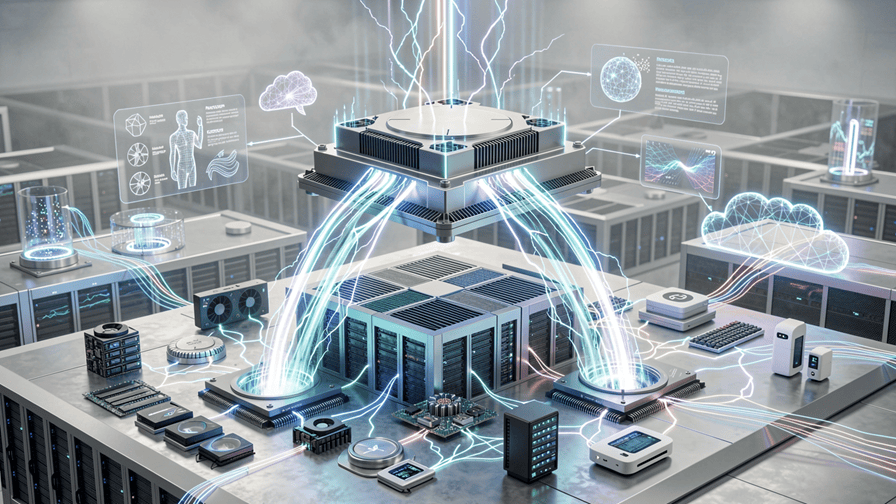
Performance per Watt has rapidly become one of the most important benchmarks for evaluating modern artificial intelligence infrastructure. As AI models continue to grow in size and complexity, organizations are no longer focused solely on raw computing power. Instead, they are increasingly measuring how efficiently hardware converts electrical energy into useful computational work. Whether deploying large language models, training foundation models, or running AI inference at scale, Performance per Watt directly influences operational costs, sustainability goals, infrastructure design, and long-term return on investment.
The explosive growth of generative AI has dramatically increased demand for high-performance computing resources. AI workloads require enormous amounts of processing power, memory bandwidth, and networking capabilities. As organizations expand AI deployments across cloud platforms, enterprise data centers, and edge environments, electricity consumption has become one of the largest operating expenses. Simply adding more GPUs or AI accelerators is no longer a sustainable strategy. Instead, organizations are prioritizing Performance per Watt to maximize computational output while minimizing energy consumption.
Major technology companies, hyperscale cloud providers, semiconductor manufacturers, and enterprise AI developers are investing heavily in improving hardware efficiency. Modern AI chips are designed not only to deliver higher throughput but also to consume less power during both training and inference. This shift reflects an industry-wide recognition that efficient infrastructure enables faster AI deployment, lower operating costs, improved sustainability, and greater scalability.
In this article, we’ll explore why Performance per Watt has become the defining metric for AI infrastructure efficiency, examine how it is measured, discuss its role in modern AI hardware, and analyze why it will shape the future of artificial intelligence computing.
Key Takeaways
- Performance per Watt measures how efficiently AI hardware converts electrical energy into computational performance.
- Energy efficiency is becoming as important as raw processing power.
- AI data centers increasingly optimize infrastructure around power efficiency.
- Higher Performance per Watt reduces operating costs and improves scalability.
- Efficient AI hardware supports sustainability and environmental goals.
- Modern chip manufacturers prioritize energy-efficient AI architectures.
What Is Performance per Watt?
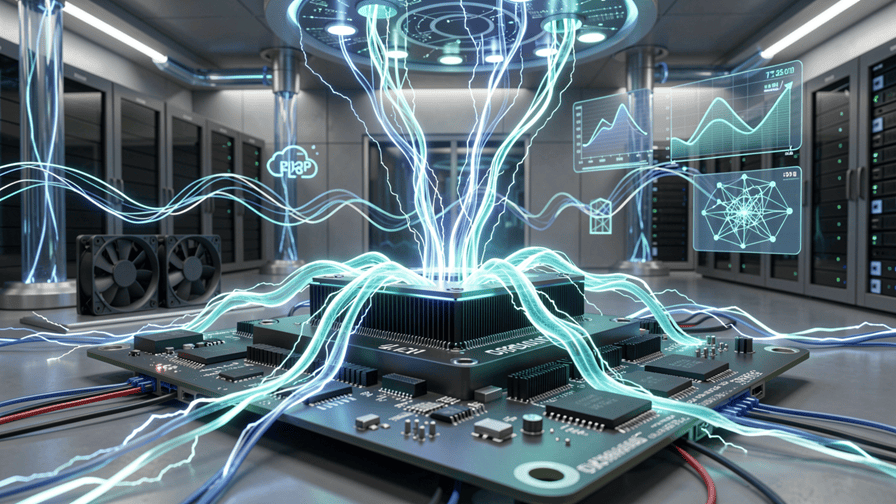
At its simplest, Performance per Watt measures the amount of computational work a processor, accelerator, or complete computing system performs for every watt of electricity consumed.
Rather than evaluating hardware based solely on speed, organizations increasingly compare how efficiently different systems deliver performance under realistic workloads.
A processor capable of completing twice as much AI computation while consuming the same amount of power offers significantly better Performance per Watt than a less efficient alternative.
This metric has become especially important in artificial intelligence because AI workloads often run continuously across thousands of servers, making even small efficiency improvements translate into substantial operational savings.
Why Performance per Watt Matters in AI Infrastructure
Artificial intelligence differs from traditional enterprise computing.
Training modern AI models involves processing enormous datasets through billions or even trillions of mathematical operations. These computations require specialized hardware operating for days or even weeks.
As Performance per Watt improves, organizations gain several advantages:
- Lower electricity costs.
- Reduced cooling requirements.
- Higher server density.
- Better infrastructure scalability.
- Smaller environmental footprint.
- Improved return on hardware investment.
Rather than purchasing additional hardware to increase performance, organizations can often achieve better outcomes by deploying more energy-efficient systems.
The Growing Energy Demands of Artificial Intelligence
The rapid expansion of generative AI has significantly increased global electricity consumption.
Training frontier AI models requires thousands of GPUs operating simultaneously within massive data centers. Even after deployment, inference workloads continue consuming substantial computing resources as millions of users interact with AI applications every day.
This growing demand has elevated Performance per Watt from a technical benchmark to a strategic business metric.
Energy costs now influence:
- AI infrastructure budgets.
- Data center expansion.
- Cloud service pricing.
- Hardware procurement.
- Sustainability reporting.
- Corporate environmental commitments.
Organizations that ignore energy efficiency may face rising operational costs as AI adoption continues to accelerate.
Understanding AI Hardware Efficiency
Several components influence overall Performance per Watt across AI infrastructure.
Processor Architecture
Modern AI processors are specifically designed to execute matrix multiplication, tensor operations, and parallel computation far more efficiently than traditional CPUs.
Architectural innovations reduce unnecessary power consumption while increasing computational throughput.
Memory Bandwidth
Artificial intelligence requires moving enormous volumes of data between processors and memory.
High-bandwidth memory technologies reduce bottlenecks, allowing processors to spend more time performing useful computation rather than waiting for data transfers.
Efficient memory systems directly improve Performance per Watt.
Specialized AI Accelerators
Dedicated AI accelerators optimize hardware specifically for neural network workloads.
Rather than supporting every type of computing task equally, these processors focus on operations commonly used in deep learning, improving both speed and energy efficiency.
Examples include tensor processors, neural processing units (NPUs), and custom AI inference chips.
Advanced Manufacturing Processes
Semiconductor fabrication technologies continue improving transistor density while reducing power consumption.
Smaller manufacturing nodes enable manufacturers to produce chips that deliver greater computational capability within similar power envelopes.
This continuous innovation contributes significantly to improved Performance per Watt across successive hardware generations.
Why AI Infrastructure Efficiency Is Becoming a Competitive Advantage
Organizations deploying artificial intelligence at scale increasingly recognize that hardware efficiency affects far more than electricity bills.
Higher Performance per Watt enables businesses to:
- Deploy more AI workloads within existing power budgets.
- Reduce infrastructure operating expenses.
- Increase profitability.
- Improve environmental sustainability.
- Expand AI services without proportional increases in energy consumption.
For hyperscale cloud providers, efficient infrastructure also improves pricing competitiveness while supporting continued global expansion.
Beyond Raw Performance
Historically, technology companies competed primarily on processing speed.
Today, AI infrastructure decisions increasingly balance multiple considerations including computational performance, acquisition cost, scalability, reliability, and Performance per Watt.
A slightly slower processor may ultimately deliver greater business value if it consumes significantly less electricity over several years of continuous operation.
Consequently, enterprise infrastructure teams evaluate total cost of ownership rather than benchmark performance alone.
The Relationship Between AI Growth and Energy Consumption
Artificial intelligence adoption shows no signs of slowing.
Organizations across healthcare, finance, manufacturing, cybersecurity, education, scientific research, and software development continue deploying increasingly sophisticated AI models.
Without improvements in Performance per Watt, the electricity required to support global AI growth could become economically and environmentally unsustainable.
This reality explains why governments, cloud providers, semiconductor companies, and enterprise customers all prioritize energy-efficient computing architectures.
Performance per Watt Across GPUs, CPUs, and AI Accelerators

As artificial intelligence workloads become increasingly demanding, organizations must carefully evaluate the hardware powering their AI infrastructure. While CPUs remain essential for general-purpose computing, GPUs and specialized AI accelerators have become the preferred choice for training and deploying modern AI models because they deliver significantly higher Performance per Watt for parallel computing tasks.
Each processor type plays a distinct role in AI infrastructure, and understanding their strengths helps organizations build more efficient computing environments.
CPUs: The Foundation of AI Infrastructure
Central Processing Units (CPUs) remain indispensable in AI environments. They manage operating systems, coordinate workloads, process sequential tasks, and support data preparation before information reaches AI accelerators.
Although CPUs have become increasingly energy efficient over the years, they are not optimized for the massive parallel computations required by deep learning models.
Consequently, CPUs typically deliver lower Performance per Watt for AI training compared with GPUs and dedicated AI accelerators. Their greatest value lies in orchestrating workloads rather than executing billions of neural network calculations simultaneously.
GPUs: The Engine Behind Modern AI
Graphics Processing Units (GPUs) have transformed artificial intelligence by providing thousands of processing cores capable of executing mathematical operations in parallel.
Modern generative AI models—including large language models, image generation systems, and multimodal AI—depend heavily on GPUs because they offer exceptional computational throughput while maintaining strong Performance per Watt under AI workloads.
GPU manufacturers continuously improve:
- Tensor processing capabilities.
- Memory bandwidth.
- Interconnect technologies.
- Thermal efficiency.
- Energy management.
- Mixed-precision computing.
These innovations enable organizations to process larger AI models while consuming proportionally less energy than previous hardware generations.
Specialized AI Accelerators
Dedicated AI accelerators are purpose-built processors designed specifically for artificial intelligence workloads.
Unlike CPUs or general-purpose GPUs, these chips focus almost exclusively on neural network operations such as tensor multiplication, inference optimization, and machine learning acceleration.
Because unnecessary circuitry is eliminated, specialized accelerators often achieve outstanding Performance per Watt, particularly during inference where efficiency is critical.
Examples include:
- Neural Processing Units (NPUs)
- Tensor Processing Units (TPUs)
- AI inference accelerators
- Edge AI processors
- Custom enterprise AI chips
As AI adoption expands, organizations increasingly deploy these processors alongside traditional CPUs and GPUs to optimize infrastructure efficiency.
Why Hyperscale Data Centers Prioritize Performance per Watt
The world’s largest cloud providers operate AI infrastructure containing hundreds of thousands of processors.
Even modest improvements in Performance per Watt can translate into enormous reductions in electricity consumption and operational costs.
For hyperscale operators, efficient hardware delivers several strategic advantages:
- Lower utility expenses.
- Reduced cooling requirements.
- Greater rack density.
- Improved infrastructure utilization.
- Higher profit margins.
- Easier scalability.
Because electricity represents one of the largest long-term operating expenses, improving efficiency has become a major competitive differentiator.
Cooling Infrastructure and Energy Efficiency
AI servers generate significant amounts of heat.
As processing power increases, traditional air-cooling systems often become insufficient for maintaining safe operating temperatures.
Organizations pursuing higher Performance per Watt frequently combine efficient processors with advanced cooling technologies such as:
- Direct liquid cooling.
- Immersion cooling.
- Intelligent airflow optimization.
- AI-powered thermal management.
- Dynamic power allocation.
Reducing heat generation not only lowers cooling costs but also extends hardware lifespan and improves system reliability.
Sustainability and Environmental Impact
Energy-efficient computing has become an important component of corporate sustainability strategies.
Many organizations have committed to reducing greenhouse gas emissions while expanding digital services.
Improving Performance per Watt contributes directly to these objectives by reducing electricity consumption across AI infrastructure.
Benefits include:
- Lower carbon emissions.
- Reduced environmental impact.
- Improved sustainability reporting.
- More efficient resource utilization.
- Better compliance with environmental initiatives.
As governments introduce stricter environmental regulations, energy-efficient AI infrastructure will become increasingly valuable.
Measuring AI Infrastructure Efficiency
Accurately evaluating Performance per Watt requires more than measuring processor speed alone.
Organizations typically assess multiple factors when comparing AI hardware.
AI Throughput
The amount of useful AI computation completed within a given period.
Higher throughput generally indicates more productive hardware.
Power Consumption
Electricity usage is measured under realistic workloads rather than idle conditions.
Real-world power measurements provide a more accurate representation of long-term operating costs.
Total System Efficiency
Servers consist of more than processors.
Memory, networking equipment, storage systems, cooling infrastructure, and power supplies all contribute to overall Performance per Watt.
Efficient system design requires optimizing every component.
AI Workload Benchmarks
Hardware performance varies depending on the workload.
Organizations often evaluate processors using representative AI tasks such as:
- Large language model training.
- Image generation.
- Recommendation systems.
- Natural language processing.
- Computer vision.
- AI inference.
Benchmarking multiple workloads helps identify the most efficient hardware for specific business requirements.
Real-World Applications
Improving Performance per Watt delivers measurable benefits across many industries.
Healthcare
Hospitals and research organizations use AI for medical imaging, diagnostics, drug discovery, and clinical decision support.
Efficient hardware enables larger AI deployments while controlling operating costs.
Financial Services
Banks rely on AI for fraud detection, algorithmic trading, customer support, and risk management.
Higher efficiency reduces infrastructure expenses while supporting real-time decision-making.
Manufacturing
Manufacturers deploy AI for predictive maintenance, quality inspection, robotics, and supply chain optimization.
Energy-efficient processors allow continuous AI operation without excessive electricity consumption.
Autonomous Systems
Self-driving vehicles, drones, and industrial robots require compact processors capable of delivering exceptional Performance per Watt because onboard power resources are limited.
Efficient AI hardware extends operating time while supporting advanced decision-making.
Edge Computing
Edge AI devices operate outside traditional data centers.
Because these systems frequently rely on battery power or constrained electrical resources, maximizing Performance per Watt becomes essential for long-term reliability and practical deployment.
Why Businesses Are Investing in Efficient AI Infrastructure
Organizations increasingly recognize that AI infrastructure represents a long-term investment rather than a one-time hardware purchase.
Efficient computing platforms provide benefits throughout their operational lifecycle, including:
- Lower electricity costs.
- Reduced cooling expenses.
- Improved hardware longevity.
- Greater infrastructure scalability.
- Faster AI deployment.
- Stronger sustainability performance.
As AI workloads continue expanding, businesses that prioritize Performance per Watt will be better positioned to control costs while supporting future growth.
Challenges and Limitations of Improving Performance per Watt
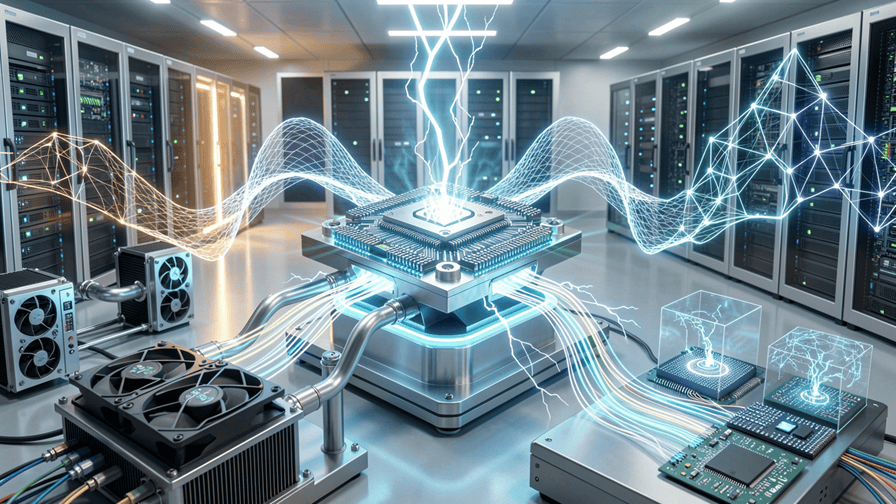
Although Performance per Watt has become a defining benchmark for AI infrastructure, maximizing energy efficiency is not without challenges. Modern AI systems are becoming increasingly complex, requiring greater computational power, larger memory capacities, and faster networking technologies. Improving one aspect of hardware efficiency can sometimes introduce trade-offs in cost, system complexity, or application flexibility.
Organizations therefore need to evaluate Performance per Watt alongside scalability, reliability, acquisition costs, and workload requirements when designing AI infrastructure.
Balancing Performance and Power Consumption
One of the biggest engineering challenges is balancing maximum computational performance with acceptable energy usage.
Increasing processor frequency or adding more computing cores can improve raw performance, but these improvements often result in higher electricity consumption and greater heat generation.
Chip designers continuously optimize processor architectures to increase Performance per Watt without simply increasing power usage. Achieving this balance requires innovations in semiconductor design, memory technologies, power management, and software optimization.
Heat Management Remains a Major Challenge
Power consumption and heat generation are closely connected.
As AI processors become more powerful, they generate greater amounts of thermal energy that must be removed efficiently to maintain stable operation.
Without effective cooling systems:
- Hardware performance may decrease.
- Component lifespan can be reduced.
- Energy costs increase.
- System reliability declines.
- Infrastructure density becomes limited.
Organizations investing in high-performance AI clusters increasingly deploy liquid cooling, immersion cooling, and intelligent thermal management systems to support higher Performance per Watt while maintaining reliability.
Software Optimization Is Equally Important
Hardware alone cannot maximize Performance per Watt.
AI software frameworks, compilers, libraries, and workload scheduling algorithms play an equally important role in determining overall efficiency.
Optimized software enables processors to:
- Execute computations more efficiently.
- Reduce unnecessary memory transfers.
- Minimize idle hardware.
- Improve workload distribution.
- Lower energy consumption.
As AI models become more sophisticated, software optimization will remain essential for maximizing infrastructure performance.
The Future of AI Chip Design
Semiconductor manufacturers are investing billions of dollars to improve Performance per Watt through next-generation processor architectures.
Future AI chips are expected to deliver significantly greater computational capability while consuming less energy through several technological advancements.
Smaller Manufacturing Processes
Advanced fabrication technologies continue reducing transistor sizes.
Smaller transistors generally require less power while enabling greater processing density, contributing directly to higher Performance per Watt.
Chiplet Architectures
Instead of manufacturing one large processor, many modern AI chips combine multiple smaller chiplets into a single package.
This design approach improves manufacturing efficiency, scalability, thermal performance, and overall energy efficiency.
Integrated AI Accelerators
Future CPUs are increasingly incorporating dedicated AI acceleration hardware directly into the processor.
This integration reduces data movement between components and improves Performance per Watt for everyday AI workloads.
Smarter Power Management
Modern processors dynamically adjust voltage, clock speeds, and resource allocation based on workload demands.
These intelligent power management techniques reduce unnecessary energy consumption without sacrificing performance.
Emerging Industry Trends
The importance of Performance per Watt continues growing across the technology industry.
Several trends are driving increased investment in energy-efficient AI infrastructure.
Hyperscale AI Expansion
Cloud providers continue building massive AI data centers capable of supporting millions of users simultaneously.
Efficient infrastructure allows these facilities to scale while controlling long-term operating costs.
Enterprise AI Adoption
Businesses across healthcare, finance, manufacturing, retail, logistics, education, and cybersecurity are deploying AI more broadly than ever before.
As enterprise AI workloads expand, energy efficiency becomes a major purchasing consideration.
Edge Artificial Intelligence
Many AI applications now operate directly on smartphones, autonomous vehicles, industrial equipment, medical devices, and Internet of Things (IoT) systems.
These environments often have limited power availability, making Performance per Watt one of the most important hardware characteristics.
Sustainable Computing
Environmental sustainability is becoming a core business objective.
Organizations increasingly evaluate AI infrastructure based not only on computational capability but also on electricity usage, carbon emissions, and long-term environmental impact.
Best Practices for Improving Performance per Watt
Organizations seeking more efficient AI infrastructure should adopt a comprehensive optimization strategy.
Select Hardware Based on Workload
Different AI applications require different processor architectures.
Matching hardware to specific workloads helps maximize Performance per Watt while avoiding unnecessary resource consumption.
Optimize AI Models
Smaller, well-optimized models frequently deliver comparable results with significantly lower energy requirements.
Techniques such as quantization, pruning, and knowledge distillation improve efficiency without sacrificing substantial accuracy.
Improve Cooling Systems
Advanced cooling technologies reduce thermal constraints and allow processors to operate more efficiently over extended periods.
Monitor Infrastructure Continuously
Regular monitoring of power consumption, utilization, and thermal performance helps organizations identify opportunities to improve Performance per Watt across existing infrastructure.
Upgrade Legacy Hardware
Older processors often consume substantially more electricity while delivering lower computational throughput.
Replacing outdated hardware with modern AI accelerators can significantly improve efficiency and reduce operating expenses.
Business Benefits of Higher Performance per Watt
Improving Performance per Watt provides measurable advantages beyond reducing electricity bills.
Organizations that deploy energy-efficient AI infrastructure often experience:
- Lower total cost of ownership.
- Faster return on investment.
- Greater infrastructure scalability.
- Reduced cooling requirements.
- Improved operational resilience.
- Better environmental performance.
- Stronger competitiveness.
For organizations operating AI workloads continuously, even modest efficiency gains can generate substantial long-term financial savings.
Why Performance per Watt Will Continue to Shape AI Infrastructure
Artificial intelligence workloads continue growing in size and complexity.
Future foundation models, autonomous systems, scientific simulations, and enterprise AI applications will demand even greater computational resources.
Meeting these requirements sustainably will depend on continued improvements in Performance per Watt across processors, networking, memory, storage, and complete data center architectures.
Rather than measuring success solely by peak performance, the industry increasingly recognizes energy efficiency as the foundation of scalable artificial intelligence.
The Future of Performance per Watt in AI Infrastructure
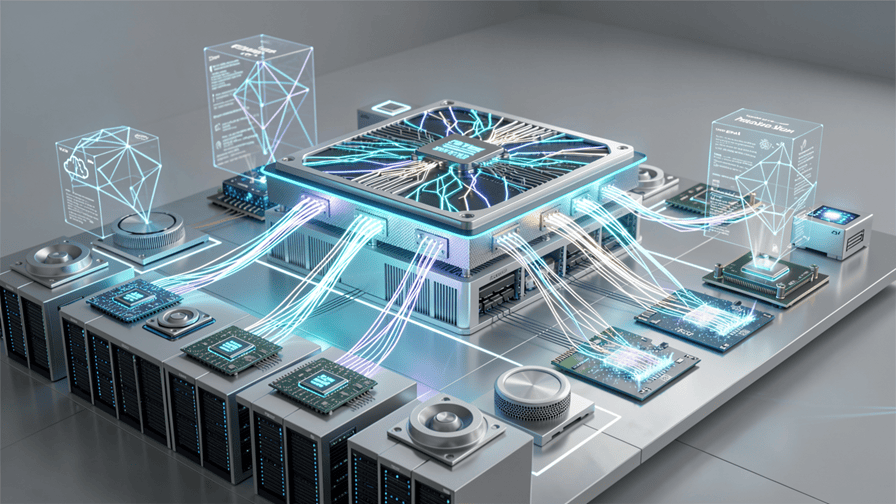
Performance per Watt will continue to shape the evolution of artificial intelligence infrastructure as organizations strive to build faster, more sustainable, and cost-effective computing environments. Future AI systems will require unprecedented levels of computational power to support increasingly sophisticated large language models, multimodal AI, robotics, autonomous systems, and scientific research.
Meeting these demands without dramatically increasing electricity consumption will require continuous improvements in processor architecture, semiconductor manufacturing, cooling technologies, and software optimization.
Chip manufacturers are already investing heavily in next-generation AI processors that deliver greater computational throughput while operating within tighter power budgets. At the same time, hyperscale cloud providers are redesigning data centers with energy efficiency as a primary objective rather than an afterthought.
As AI adoption accelerates across industries, Performance per Watt will increasingly become a key purchasing criterion for enterprises, governments, research institutions, and cloud service providers.
Strategic Takeaways for Technology Leaders
The growing importance of Performance per Watt provides several important lessons for organizations investing in artificial intelligence infrastructure.
First, infrastructure decisions should focus on total cost of ownership rather than peak benchmark performance alone. Electricity consumption, cooling requirements, maintenance costs, and scalability all influence long-term return on investment.
Second, organizations should evaluate AI infrastructure as an integrated ecosystem. Efficient processors, optimized software, advanced cooling systems, high-bandwidth networking, and intelligent workload management all contribute to improving Performance per Watt.
Third, sustainability should become part of infrastructure planning from the beginning. Energy-efficient AI deployments reduce operating costs while helping organizations meet environmental goals and regulatory expectations.
Finally, continuous monitoring and optimization remain essential. AI workloads evolve rapidly, making regular performance analysis and infrastructure upgrades critical for maintaining efficiency over time.
Conclusion
Performance per Watt has evolved from a technical engineering metric into one of the most important indicators of AI infrastructure efficiency. As artificial intelligence models become larger and more computationally intensive, organizations must optimize not only for speed but also for energy consumption.
Modern AI infrastructure is expected to deliver exceptional computational performance while minimizing electricity usage, reducing cooling demands, and supporting long-term scalability. Improvements in processor architectures, specialized AI accelerators, advanced memory technologies, software optimization, and innovative cooling systems are all contributing to higher Performance per Watt across the industry.
For enterprises, cloud providers, research organizations, and government institutions, prioritizing energy efficiency delivers tangible business benefits. Lower operating costs, improved sustainability, greater infrastructure utilization, and stronger long-term competitiveness all stem from efficient AI computing environments.
Looking ahead, Performance per Watt will remain a defining factor in the design of future AI systems. Organizations that prioritize efficient infrastructure today will be better prepared to support increasingly complex AI workloads while maintaining economic viability and environmental responsibility.
Frequently Asked Questions (FAQs)
What does Performance per Watt mean?
Performance per Watt measures how much computational work a processor or computing system performs for every watt of electricity it consumes. It is widely used to evaluate the energy efficiency of AI hardware and data center infrastructure.
Why is Performance per Watt important for AI?
Artificial intelligence workloads consume significant computing resources. Higher Performance per Watt enables organizations to process more AI tasks while using less electricity, reducing operational costs and improving infrastructure scalability.
Which hardware provides the best Performance per Watt?
The answer depends on the workload. GPUs, specialized AI accelerators, and neural processing units (NPUs) generally deliver higher Performance per Watt for AI training and inference than traditional CPUs, although CPUs remain essential for system management and general-purpose computing.
How can organizations improve Performance per Watt?
Businesses can improve Performance per Watt by deploying modern AI hardware, optimizing AI models, implementing efficient cooling systems, upgrading legacy infrastructure, and continuously monitoring power consumption and workload utilization.
Does higher Performance per Watt reduce AI costs?
Yes. Improved Performance per Watt lowers electricity consumption, reduces cooling expenses, increases hardware utilization, and decreases the total cost of operating AI infrastructure over its lifecycle.
Build Smarter AI Infrastructure with Maximum Efficiency
As AI workloads continue to grow, optimizing Performance per Watt is essential for reducing costs, improving scalability, and achieving long-term sustainability. Whether you’re modernizing a data center, deploying AI applications, or designing enterprise AI infrastructure, our experts can help you implement energy-efficient solutions tailored to your business objectives.
More AI coverage: explore Progressive Robot's AI Models, Tools & Releases hub — hands-on reviews, setup guides and benchmarks in one place.










