

Anthropic launches Claude for Teachers to expand the role of artificial intelligence in education, introducing a dedicated AI solution designed specifically for K-12 educators across the United States. The initiative reflects the growing adoption of generative AI in schools, where teachers are increasingly seeking tools that can reduce administrative workloads, enhance lesson planning, personalize learning experiences, and support classroom instruction. By tailoring Claude to the needs of educators, Anthropic aims to provide a secure and responsible AI assistant that complements teaching rather than replacing the expertise and judgment of teachers.
The announcement that Anthropic launches Claude for Teachers comes at a time when educational institutions are evaluating how artificial intelligence can improve learning outcomes while maintaining student privacy, academic integrity, and responsible technology use. Schools face mounting pressure to deliver personalized instruction, manage increasing administrative responsibilities, and prepare students for a workforce where AI literacy is becoming an essential skill. Claude for Teachers is positioned as a productivity tool that helps educators spend less time on repetitive tasks and more time engaging with students.
Unlike general-purpose AI assistants, Claude for Teachers has been developed with educational workflows in mind. Teachers can use the platform to generate lesson plans, create classroom activities, develop quizzes, summarize educational resources, explain complex concepts in age-appropriate language, and draft communication for parents or school administrators. By integrating AI into everyday teaching tasks, Anthropic hopes to make classrooms more efficient while supporting educators in delivering high-quality instruction.
In this article, we’ll explore why Anthropic launches Claude for Teachers, examine its features, discuss its potential impact on K-12 education in the US, compare it with other AI-powered education platforms, and analyze what this development means for teachers, students, school districts, and the future of artificial intelligence in education.
Key Takeaways
- Anthropic launches Claude for Teachers to support K-12 educators across the United States.
- The platform is designed to simplify lesson planning, classroom preparation, and administrative work.
- Claude helps teachers generate educational content while encouraging responsible AI use.
- Anthropic emphasizes privacy, safety, and human oversight in educational settings.
- The launch reflects the growing adoption of generative AI in schools and classrooms.
What Is Claude for Teachers?
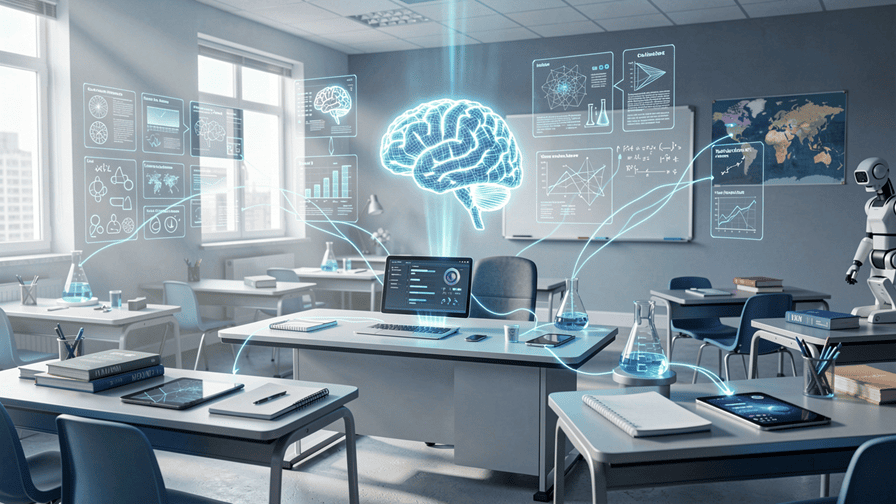
The announcement that Anthropic launches Claude for Teachers introduces a specialized version of Claude designed to address the everyday challenges faced by educators.
Teaching involves far more than classroom instruction. Educators spend significant time preparing lesson plans, grading assignments, developing learning materials, responding to emails, communicating with parents, and meeting curriculum standards.
Claude for Teachers aims to streamline many of these responsibilities by serving as an AI-powered assistant that helps teachers complete routine tasks more efficiently.
Rather than replacing educators, the platform is intended to enhance productivity while allowing teachers to focus on student engagement, critical thinking, and individualized instruction.
Why Anthropic Launched Claude for Teachers
The decision that Anthropic launches Claude for Teachers reflects several major trends shaping modern education.
Schools are increasingly embracing digital technologies to improve learning experiences and administrative efficiency. At the same time, educators face growing workloads, teacher shortages, evolving curriculum requirements, and increasing expectations from parents and school leaders.
Artificial intelligence offers an opportunity to reduce administrative burdens while helping teachers deliver more personalized learning experiences.
Anthropic’s education-focused initiative seeks to address these challenges by providing responsible AI tools specifically designed for classroom environments.
Key objectives include:
- Reducing time spent on repetitive administrative tasks.
- Supporting curriculum planning.
- Enhancing classroom creativity.
- Improving educational resource development.
- Encouraging responsible AI literacy.
- Assisting differentiated instruction.
How Claude for Teachers Works
As Anthropic launches Claude for Teachers, educators gain access to an AI assistant capable of supporting a wide range of teaching activities.
Teachers interact with Claude using natural language, allowing them to describe the task they need assistance with instead of learning complex software.
For example, educators can ask Claude to:
- Generate lesson plans aligned with learning objectives.
- Create classroom discussion questions.
- Develop quizzes and assessments.
- Explain difficult concepts at different grade levels.
- Produce classroom worksheets.
- Summarize educational articles.
- Draft parent newsletters.
- Brainstorm engaging classroom activities.
This conversational interface makes the platform accessible even for teachers with limited technical experience.
Key Features of Claude for Teachers
The announcement that Anthropic launches Claude for Teachers includes several features designed specifically for educational environments.
AI-Assisted Lesson Planning
Teachers can quickly generate structured lesson plans that align with curriculum goals, saving valuable preparation time while maintaining flexibility for classroom customization.
Classroom Resource Creation
Claude assists educators in creating:
- Worksheets
- Reading materials
- Discussion prompts
- Writing assignments
- Classroom projects
- Review activities
These resources can be adapted for different grade levels and learning objectives.
Personalized Learning Support
Every classroom contains students with different learning styles and academic abilities.
Claude helps teachers adapt explanations and educational materials to meet varying student needs while supporting differentiated instruction.
Communication Assistance
Teachers spend considerable time communicating with parents, administrators, and colleagues.
Claude can help draft:
- Parent emails
- Classroom newsletters
- Progress updates
- School announcements
- Professional correspondence
This reduces administrative workload while allowing teachers to personalize final communications.
Content Summarization
Educational research, policy updates, and curriculum documents can be lengthy.
Claude helps summarize complex materials into concise, understandable formats that teachers can review more efficiently.
Supporting Modern Classroom Workflows
The fact that Anthropic launches Claude for Teachers reflects the changing nature of classroom instruction.
Today’s educators balance in-person teaching, digital learning platforms, curriculum planning, student assessments, professional development, and administrative responsibilities.
AI can assist across many of these activities by reducing repetitive work while allowing teachers to devote more attention to meaningful student interactions.
Importantly, Claude is designed to function as a collaborative assistant rather than an autonomous decision-maker.
Teachers remain responsible for reviewing, adapting, and approving AI-generated materials before using them in the classroom.
Why Responsible AI Matters in Education
Artificial intelligence introduces significant opportunities for education, but it also raises important questions regarding ethics, privacy, accuracy, and student safety.
The announcement that Anthropic launches Claude for Teachers emphasizes responsible AI principles that prioritize human oversight and educational integrity.
Teachers should view AI as a productivity tool that enhances instruction rather than replaces professional expertise.
Maintaining transparency, verifying AI-generated content, and ensuring age-appropriate educational materials remain essential responsibilities for educators using generative AI.
How Claude Improves Teacher Productivity

The announcement that Anthropic launches Claude for Teachers is particularly significant because it addresses one of the biggest challenges facing educators today: time. Beyond classroom instruction, teachers devote countless hours to planning lessons, creating learning materials, grading assignments, communicating with parents, and completing administrative tasks.
Claude for Teachers is designed to reduce this workload by automating routine activities while leaving instructional decisions in the hands of educators. By saving time on repetitive work, teachers can dedicate more energy to student engagement, individualized support, and classroom innovation.
AI-Assisted Lesson Planning
Lesson planning is one of the most time-intensive responsibilities for educators.
As Anthropic launches Claude for Teachers, educators can generate structured lesson plans within minutes by describing learning objectives, grade levels, subject areas, and classroom requirements using natural language prompts.
Claude can assist with creating:
- Daily lesson plans
- Weekly teaching schedules
- Unit outlines
- Learning objectives
- Classroom activities
- Homework assignments
- Discussion questions
- Assessment ideas
Teachers retain complete control over the final lesson, using AI-generated suggestions as a starting point rather than a finished product.
Creating High-Quality Educational Resources
Developing classroom resources often requires significant preparation.
The fact that Anthropic launches Claude for Teachers allows educators to generate supporting materials much more efficiently.
Examples include:
- Reading comprehension exercises
- Vocabulary activities
- Science experiments
- Mathematics practice questions
- Writing prompts
- Historical discussion topics
- Classroom debate ideas
- Interactive learning exercises
Instead of creating every resource from scratch, teachers can adapt AI-generated content to meet curriculum standards and the specific needs of their students.
Supporting Personalized Learning
Every classroom contains students with different learning abilities, interests, and educational needs.
One of the most valuable aspects of the announcement that Anthropic launches Claude for Teachers is its ability to support differentiated instruction.
Teachers can request multiple versions of the same lesson at varying levels of complexity.
For example, Claude can produce:
- Simplified explanations for younger learners.
- More detailed content for advanced students.
- Alternative examples for different learning styles.
- Additional practice activities for struggling learners.
- Extension exercises for gifted students.
This flexibility helps teachers provide more personalized instruction without dramatically increasing preparation time.
Encouraging Student Engagement
Student engagement remains one of the strongest predictors of successful learning outcomes.
Traditional teaching materials sometimes struggle to capture students’ attention, particularly in increasingly digital learning environments.
As Anthropic launches Claude for Teachers, educators gain access to AI-assisted brainstorming that can generate more interactive classroom experiences.
Teachers can develop:
- Classroom games
- Group activities
- Project-based learning ideas
- Debate topics
- Critical thinking exercises
- Scenario-based discussions
- Creative writing assignments
- Inquiry-based learning activities
These resources help create more dynamic learning environments while encouraging active participation.
Improving Administrative Efficiency
Teachers often spend substantial time on administrative responsibilities that reduce the time available for direct instruction.
The announcement that Anthropic launches Claude for Teachers recognizes this challenge by providing AI assistance for everyday administrative work.
Examples include:
- Drafting emails to parents.
- Preparing classroom newsletters.
- Creating meeting summaries.
- Organizing classroom schedules.
- Writing progress reports.
- Preparing presentation materials.
- Summarizing educational policies.
- Creating professional development notes.
Reducing these repetitive tasks allows educators to focus more directly on student success.
Helping Teachers Explain Complex Topics
Students frequently require multiple explanations before fully understanding difficult concepts.
Because Anthropic launches Claude for Teachers, educators can quickly generate alternative explanations tailored to different age groups and learning styles.
For example, teachers may ask Claude to explain:
- Fractions using real-world examples.
- Scientific concepts with simple analogies.
- Historical events from multiple perspectives.
- Grammar rules using engaging exercises.
- Coding concepts through practical demonstrations.
This adaptability supports more inclusive and accessible instruction.
Professional Development Support
Teachers continuously update their knowledge through professional learning and curriculum development.
Claude can assist educators by summarizing educational research, highlighting teaching strategies, comparing instructional methods, and organizing professional development materials.
As Anthropic launches Claude for Teachers, schools may increasingly integrate AI into teacher training programs to help educators learn new instructional approaches more efficiently.
Rather than replacing professional development, AI serves as a research assistant that helps teachers locate and understand relevant information more quickly.
Supporting Collaboration Among Educators
Teaching is often a collaborative profession.
Departments, grade-level teams, and curriculum committees regularly work together to develop instructional resources and improve teaching practices.
The fact that Anthropic launches Claude for Teachers creates new opportunities for collaborative content creation.
Teaching teams can use AI to:
- Brainstorm curriculum ideas.
- Develop shared lesson plans.
- Create consistent assessment materials.
- Prepare interdisciplinary projects.
- Generate classroom resources aligned with school objectives.
AI becomes a collaborative assistant that supports teamwork while allowing educators to apply their professional expertise.
Why Schools Are Exploring AI Adoption
Educational institutions across the United States are evaluating how artificial intelligence can improve both teaching and administrative operations.
The announcement that Anthropic launches Claude for Teachers aligns with several long-term trends driving AI adoption in schools:
- Growing teacher workloads.
- Increasing demand for personalized learning.
- Expansion of digital classrooms.
- Rising administrative responsibilities.
- Greater emphasis on AI literacy.
- Ongoing digital transformation in education.
By addressing these challenges, Claude for Teachers has the potential to become an important productivity tool for educators while maintaining the central role of teachers in the learning process.
Privacy, Safety, and Responsible AI in Education
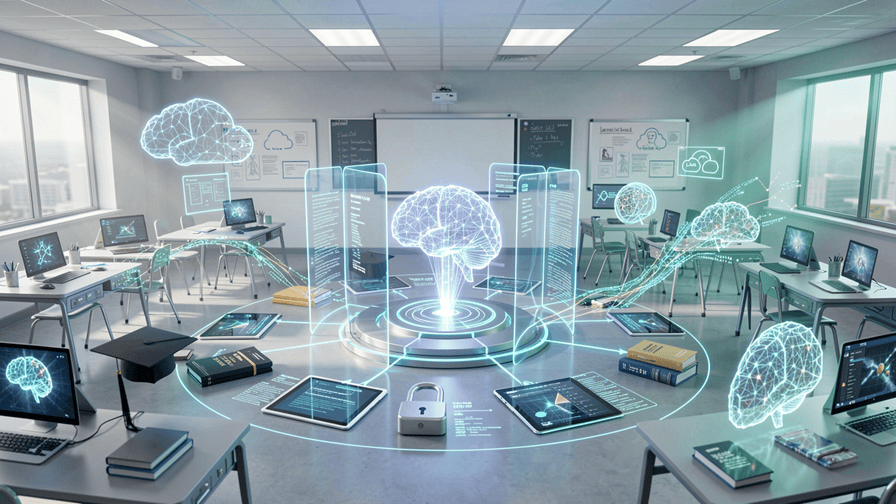
As Anthropic launches Claude for Teachers, privacy and safety become central considerations for schools, educators, and parents. Unlike many other industries, K-12 education involves sensitive student information that must be handled responsibly and in accordance with applicable privacy regulations and school policies.
Generative AI can significantly improve productivity, but educators should avoid entering confidential student records, personally identifiable information, or protected educational data into AI systems unless their school district has approved such use. Establishing clear AI governance policies helps schools maximize the benefits of artificial intelligence while protecting student privacy.
Anthropic has consistently emphasized the development of responsible AI systems, and Claude for Teachers reflects that approach by encouraging educators to use AI as a supportive classroom assistant rather than an autonomous decision-maker.
Maintaining Human Oversight
Although Anthropic launches Claude for Teachers to simplify many classroom tasks, human oversight remains essential.
Artificial intelligence can generate lesson plans, classroom activities, quizzes, and summaries, but teachers are ultimately responsible for reviewing, editing, and approving all materials before they are used with students.
Educators should verify:
- Factual accuracy.
- Curriculum alignment.
- Age appropriateness.
- Inclusive language.
- Cultural sensitivity.
- Academic standards.
AI should enhance professional judgment—not replace it.
Promoting Responsible AI Literacy
One of the broader implications of Anthropic launches Claude for Teachers is the opportunity to introduce responsible AI literacy into classrooms.
As artificial intelligence becomes increasingly common across workplaces and industries, students will benefit from understanding how AI systems work, what their limitations are, and how to use them responsibly.
Teachers can use Claude to encourage discussions about:
- Ethical AI use.
- Critical thinking.
- Information verification.
- Digital citizenship.
- Academic integrity.
- Responsible technology adoption.
Helping students develop these skills prepares them for a future in which AI will play an important role across many professions.
Comparing Claude with Other AI Education Platforms
The announcement that Anthropic launches Claude for Teachers comes at a time when several major technology companies are expanding AI solutions for education.
While many AI assistants support educational tasks, each platform approaches classroom productivity differently.
Claude vs. ChatGPT
Both Claude and ChatGPT assist with lesson planning, educational content creation, writing support, and classroom resource development.
However, Claude places a strong emphasis on thoughtful reasoning, long-form document generation, and responsible AI practices.
Teachers working on detailed lesson plans, curriculum documents, or classroom communications may appreciate Claude’s ability to produce structured, coherent educational materials.
Claude vs. Google Gemini
Google Gemini integrates closely with Google Workspace for Education, making it attractive for schools already using Google Classroom, Docs, Drive, and Gmail.
Claude focuses more directly on conversational content generation, document development, and AI-assisted teaching workflows.
For educators seeking a dedicated AI writing and planning assistant, Claude provides a streamlined experience centered on educational productivity.
Claude vs. Microsoft Copilot
Microsoft Copilot is deeply integrated into Microsoft 365 applications such as Word, PowerPoint, Excel, Outlook, and Teams.
Claude offers an AI-first experience where teachers can brainstorm, draft, revise, and organize educational content through natural conversation before exporting it into other productivity tools if needed.
The choice often depends on an individual school’s existing technology ecosystem.
Challenges and Current Limitations
Although Anthropic launches Claude for Teachers introduces valuable new capabilities, educators should recognize that AI remains an evolving technology.
Several practical considerations should be addressed before widespread classroom adoption.
Accuracy
AI-generated content should always be reviewed for correctness, particularly when teaching scientific facts, historical events, mathematics, or legal concepts.
Teachers remain responsible for ensuring instructional quality.
Curriculum Alignment
Educational standards vary across states, school districts, and grade levels.
AI-generated lesson plans often require modification to match local curriculum requirements and learning objectives.
Digital Equity
Not every school has equal access to modern technology or reliable internet connectivity.
Successful AI implementation depends on adequate infrastructure, teacher training, and equitable access to digital tools.
Professional Development
Teachers need opportunities to learn how to use AI effectively.
Training programs should focus on prompt writing, content evaluation, responsible AI practices, privacy protection, and classroom integration strategies.
Industry-Wide Implications
The decision that Anthropic launches Claude for Teachers reflects a broader transformation taking place across the education sector.
Artificial intelligence is increasingly becoming part of everyday teaching, curriculum development, student support, and school administration.
This trend is expected to influence several areas.
Classroom Innovation
AI enables teachers to experiment with more engaging instructional approaches while reducing preparation time.
Educational Technology
EdTech companies are likely to accelerate AI integration across learning management systems, assessment platforms, tutoring applications, and digital classrooms.
Workforce Readiness
Students entering future careers will increasingly encounter AI-powered tools across healthcare, finance, engineering, software development, marketing, manufacturing, and business.
Responsible AI education helps prepare them for this evolving workplace.
School Operations
Administrative departments may also adopt AI to improve scheduling, communication, reporting, policy management, and operational efficiency.
Strategic Value for Schools
The announcement that Anthropic launches Claude for Teachers highlights an important shift in educational technology.
Rather than viewing AI solely as a classroom novelty, schools are beginning to recognize it as a long-term productivity platform that supports teachers, administrators, and students alike.
Institutions that establish clear governance policies, invest in professional development, and encourage responsible AI usage will be better positioned to realize the benefits of generative AI while maintaining educational quality and student trust.
The Future of AI in K-12 Education

The announcement that Anthropic launches Claude for Teachers signals a broader shift in how artificial intelligence will be integrated into classrooms over the coming years. Rather than functioning as standalone chatbots, AI systems are evolving into comprehensive teaching assistants that help educators plan lessons, create instructional resources, personalize learning experiences, and manage administrative responsibilities more efficiently.
As AI technology continues to improve, schools are expected to adopt increasingly sophisticated tools that support both educators and students. However, successful implementation will depend on balancing technological innovation with responsible governance, teacher training, and ongoing human oversight.
The future of education is unlikely to involve AI replacing teachers. Instead, AI will become a trusted assistant that helps educators devote more time to teaching, mentoring, and building meaningful relationships with students.
Strategic Takeaways for Educators and School Leaders
The fact that Anthropic launches Claude for Teachers offers several important lessons for schools considering AI adoption.
First, artificial intelligence should be viewed as a productivity tool rather than a replacement for educators. Teachers remain central to instructional planning, classroom management, student assessment, and educational decision-making.
Second, schools should establish clear AI usage policies that define acceptable classroom practices, privacy protections, content review procedures, and professional responsibilities.
Third, investing in teacher training is essential. Educators who understand both the capabilities and limitations of AI will be better equipped to integrate these tools effectively into their teaching practices.
Finally, schools should continuously evaluate AI technologies to ensure they align with curriculum standards, student learning objectives, and institutional values.
What This Means for Students
As Anthropic launches Claude for Teachers, students also stand to benefit from more personalized and engaging learning experiences.
Teachers can use AI to provide differentiated instruction, create additional practice materials, generate alternative explanations, and support students with varying learning styles and academic abilities.
Beyond classroom instruction, responsible exposure to AI technologies helps students develop valuable digital literacy skills.
Understanding how artificial intelligence works, how to evaluate AI-generated information, and how to use AI responsibly will become increasingly important as graduates enter a workforce where AI is integrated across nearly every industry.
Conclusion
Anthropic launches Claude for Teachers as part of a growing movement to integrate artificial intelligence into education in a responsible and practical way. Designed specifically for K-12 educators in the United States, Claude for Teachers aims to reduce administrative workloads, simplify lesson planning, support personalized instruction, and improve overall classroom productivity.
Unlike general-purpose AI assistants, Claude for Teachers focuses on the everyday needs of educators while emphasizing responsible AI practices, privacy considerations, and human oversight. By assisting with lesson plans, classroom resources, educational communication, and curriculum development, the platform enables teachers to spend less time on repetitive administrative work and more time supporting student learning.
The launch also reflects a broader transformation taking place across education. Schools are increasingly exploring how artificial intelligence can improve teaching efficiency, enhance learning experiences, and prepare students for an AI-driven future. While challenges related to privacy, accuracy, equity, and governance remain important, thoughtful implementation can help schools realize the benefits of AI without compromising educational quality.
As artificial intelligence becomes a permanent part of the educational landscape, Anthropic launches Claude for Teachers as an example of how technology can empower educators rather than replace them. Schools that combine innovative AI tools with skilled teachers, strong governance, and responsible implementation will be best positioned to create engaging, effective, and future-ready learning environments.
Frequently Asked Questions (FAQs)
What is Claude for Teachers?
Claude for Teachers is a specialized version of Anthropic’s Claude AI designed to help K-12 educators with lesson planning, classroom resource creation, educational content generation, administrative tasks, and instructional support.
Why did Anthropic launch Claude for Teachers?
Anthropic launches Claude for Teachers to reduce teacher workloads, improve classroom productivity, encourage responsible AI adoption, and support educators with AI-assisted teaching tools tailored for K-12 education.
Can Claude replace teachers?
No. Claude is intended to assist teachers by automating repetitive tasks and generating educational materials. Teachers remain responsible for instructional decisions, classroom management, student assessment, and reviewing AI-generated content.
Is Claude for Teachers suitable for all grade levels?
The platform is designed to support K-12 educators and can generate age-appropriate educational materials for different subjects and grade levels, although teachers should always review content before classroom use.
What are the main benefits of Claude for Teachers?
Key benefits include faster lesson planning, personalized learning support, classroom resource generation, administrative efficiency, improved communication, and increased teacher productivity.
Empower Your School with AI-Powered Education Solutions
Artificial intelligence is transforming education by helping teachers save time, personalize learning, and improve classroom productivity. Whether you’re exploring AI integration for your school, developing custom educational solutions, or implementing responsible AI strategies, our experts can help you build secure and scalable AI solutions tailored to your educational goals.
More AI coverage: explore Progressive Robot's AI Models, Tools & Releases hub — hands-on reviews, setup guides and benchmarks in one place.










