
Anthropic enables public artifact sharing and team editing in Claude, introducing a major enhancement that transforms the AI assistant from a conversational chatbot into a collaborative workspace for individuals and organizations. The latest update expands Claude’s Artifacts feature, allowing users to share AI-generated projects through public links while enabling teams to collaborate on documents, code, applications, and other digital assets in a persistent environment. As businesses increasingly integrate artificial intelligence into their daily operations, this development represents an important step toward making AI a central platform for collaborative work rather than simply a tool for answering questions.
Since launching Claude Artifacts, Anthropic has focused on creating an environment where AI-generated content remains editable and interactive instead of disappearing within a conversation. Users can generate reports, websites, code snippets, educational materials, diagrams, and business documents that live independently from the chat. With public sharing and collaborative editing now available, these artifacts become easier to distribute, improve, and reuse across teams, departments, and organizations.
The announcement also reflects a broader trend across the artificial intelligence industry. Leading AI platforms are rapidly evolving beyond text generation into complete productivity ecosystems. Rather than asking AI for isolated responses, users increasingly expect intelligent workspaces that support brainstorming, drafting, coding, reviewing, collaboration, and continuous refinement throughout an entire project lifecycle.
In this article, we’ll explore how Anthropic enables public artifact sharing, examine the new collaboration capabilities inside Claude, discuss the business and enterprise benefits, compare Claude with competing AI platforms, and analyze how these updates could shape the future of AI-powered productivity.
Key Takeaways
- Anthropic enables public artifact sharing through secure shareable links for Claude Artifacts.
- Team editing allows multiple users to collaborate on AI-generated content.
- Claude Artifacts function as persistent workspaces instead of temporary chat responses.
- Businesses can improve collaboration, documentation, software development, and knowledge management.
- The update positions Claude as a serious competitor in the AI productivity software market.
- Collaborative AI workspaces are becoming an essential component of modern digital transformation.
What Are Claude Artifacts?
To understand why Anthropic enables public artifact sharing, it’s important to first understand what Claude Artifacts actually are.
Artifacts are standalone pieces of AI-generated content that appear in a dedicated workspace alongside the conversation. Unlike standard chatbot replies that become buried as conversations continue, artifacts remain persistent, editable, and reusable.
Users can create a wide variety of content, including:
- Software applications
- HTML websites
- React components
- Technical documentation
- Business reports
- Marketing content
- Educational resources
- Data visualizations
- Research summaries
- Interactive tools
- Flowcharts
- Tables
Instead of copying content into external applications for editing, users can continue refining the artifact directly inside Claude. This streamlined workflow reduces context switching and allows projects to evolve naturally over time.
For developers, artifacts provide a practical way to generate and iterate on code. For writers and marketers, they simplify content creation. For researchers, they create a living document that can be continuously updated as new information becomes available.
Why Anthropic Enables Public Artifact Sharing
One of the biggest limitations of first-generation AI assistants was that collaboration often happened outside the platform. Users generated content with AI but then had to export it into cloud storage, email, document editors, or project management tools before others could review or edit it.
Now that Anthropic enables public artifact sharing, much of that friction disappears.
Users can publish selected artifacts using secure shareable links, making it easier to distribute AI-generated work across teams, clients, students, or collaborators. Instead of forwarding long conversation threads or copying text between applications, a single artifact becomes the central source of truth.
This approach supports a more efficient workflow by keeping content creation, editing, and collaboration within the same AI-powered environment.
For organizations managing large volumes of documentation or software projects, reducing unnecessary file transfers and duplicated work can significantly improve productivity.
Public Sharing Simplifies Collaboration
Public artifact sharing introduces an entirely new way of working with AI-generated content.
Instead of treating AI responses as temporary outputs, Claude allows users to publish reusable artifacts that can be viewed, shared, duplicated, and expanded.
For example, a software engineer can generate an interactive dashboard, share it with teammates, receive feedback, and continue improving the application without recreating it from scratch.
Similarly, educators can publish interactive learning materials that students can explore and build upon. Consultants can share business frameworks with clients, while designers can distribute working prototypes for review.
The ability to maintain a single evolving version of a project reduces confusion and helps teams stay aligned throughout the development process.
Team Editing Brings Collaborative AI to the Workplace
While public sharing is valuable, collaborative editing is arguably the most significant part of the update.
As Anthropic enables public artifact sharing, it also expands Claude into a collaborative workspace where multiple contributors can participate in the development of AI-generated projects.
This mirrors the collaborative experience users already expect from modern cloud productivity platforms.
Instead of creating isolated drafts, teams can continuously improve shared artifacts through ongoing collaboration.
This is particularly useful for projects involving:
- Software engineering
- Technical documentation
- Product specifications
- Marketing campaigns
- Sales presentations
- Internal knowledge bases
- Educational curricula
- Research publications
- Business planning
Persistent collaboration reduces duplicated effort while encouraging knowledge sharing across departments.
Why Persistent AI Workspaces Matter
Traditional chatbot interfaces were designed primarily for question-and-answer interactions.
Although effective for generating ideas or solving individual problems, they were not built for managing long-term collaborative projects.
Persistent workspaces change this model completely.
Instead of restarting conversations every time work resumes, users can return to existing artifacts and continue improving them.
This creates several important advantages.
First, project history remains intact.
Second, AI-generated content evolves continuously rather than being recreated repeatedly.
Third, organizations build reusable knowledge assets instead of isolated conversations.
As Anthropic enables public artifact sharing, Claude moves closer to becoming an intelligent workspace that supports the entire lifecycle of digital projects.
Benefits for Individual Users
Although enterprise collaboration receives much of the attention, individual users also benefit significantly.
Freelancers can create reusable client templates.
Students can build interactive study guides.
Educators can publish lesson materials.
Developers can share code demonstrations.
Researchers can maintain evolving reports.
Writers can organize long-form projects.
Entrepreneurs can rapidly prototype business ideas.
Because artifacts remain editable, creators spend less time recreating work and more time improving it.
For professionals juggling multiple projects simultaneously, this persistent approach can significantly improve organization and efficiency.
How Claude Is Evolving Beyond a Chatbot
The latest update demonstrates that Anthropic views Claude as much more than a conversational AI assistant.
Instead of limiting interactions to prompts and responses, Claude increasingly functions as a digital workspace where AI participates throughout the creation process.
As Anthropic enables public artifact sharing, users are encouraged to treat AI-generated content as living projects rather than disposable outputs.
This evolution aligns with broader industry trends in which artificial intelligence is becoming integrated directly into daily workflows instead of existing as a standalone assistant.
Whether creating software, business documentation, educational resources, or interactive applications, users increasingly expect AI to support collaboration from the initial concept through the final product.
The introduction of public artifact sharing and team editing represents another important milestone toward that vision.
How Anthropic Enables Public Artifact Sharing for Modern Collaboration
The decision that Anthropic enables public artifact sharing reflects a growing demand for collaborative AI workflows. Businesses no longer use artificial intelligence solely for brainstorming ideas or generating first drafts. Instead, they expect AI platforms to support complete project lifecycles, from planning and content creation to review, revision, and final delivery.
With Claude Artifacts, users can create a persistent piece of work that exists independently of the conversation. Once an artifact is complete—or even while it is still in progress—it can be shared with others through a dedicated link, making collaboration significantly more efficient than copying and pasting content between multiple applications.
This approach helps organizations centralize AI-generated work while ensuring that everyone involved has access to the latest version of a project.
Public Artifact Sharing Improves Team Productivity
One of the most immediate benefits after Anthropic enables public artifact sharing is improved productivity across teams.
Traditional workflows often involve multiple applications. A user generates content using an AI assistant, copies it into a document editor, sends it to colleagues through email or messaging platforms, collects feedback, and then manually incorporates revisions.
This process consumes time and increases the likelihood of version control issues.
Claude Artifacts simplify this workflow by allowing the project itself to become the shared workspace.
Rather than distributing multiple document versions, collaborators work from a single artifact that can evolve as feedback is received. This minimizes duplication while helping teams stay aligned throughout a project’s lifecycle.
For organizations managing complex documentation or software development projects, the productivity gains can be substantial.
Team Editing Makes AI Collaboration More Practical
Public sharing is only part of the enhancement.
The introduction of collaborative editing significantly expands what users can accomplish inside Claude.
Because Anthropic enables public artifact sharing alongside team editing, multiple contributors can participate in refining the same AI-generated project instead of creating separate versions.
This collaborative model is particularly valuable for organizations where projects pass through several departments before completion.
For example, a marketing proposal might involve contributions from:
- Marketing managers
- Content writers
- Graphic designers
- Product specialists
- Legal reviewers
- Executive leadership
Instead of managing separate documents and conflicting revisions, teams can work together within a shared AI-assisted environment.
The same principle applies to software engineering, technical documentation, research publications, training materials, and business reports.
Supporting Cross-Functional Teams
Modern organizations depend on collaboration between specialists from different disciplines.
Software developers work with designers.
Marketing teams coordinate with product managers.
Researchers collaborate with analysts.
Sales teams rely on technical experts.
As Anthropic enables public artifact sharing, Claude becomes better suited for these cross-functional workflows.
For example, a software development team might use Claude to generate initial application code.
Designers could then improve the user interface.
Technical writers could prepare documentation.
Quality assurance specialists could review implementation details.
Project managers could refine timelines and delivery plans.
Instead of managing disconnected files, every contributor works from the same evolving artifact.
This reduces communication barriers while improving project consistency.
A Better Experience for Developers
Software developers are among the users who benefit most from Claude Artifacts.
Coding projects rarely end after the first AI-generated response.
Developers continuously modify source code, review implementations, test functionality, and optimize performance.
Because Anthropic enables public artifact sharing, development teams can collaborate on generated applications without recreating code inside multiple external tools.
Common developer workflows include:
- Building React components
- Creating HTML pages
- Writing Python scripts
- Developing JavaScript utilities
- Designing user interfaces
- Generating API documentation
- Producing technical specifications
- Creating software prototypes
Persistent artifacts make iterative software development considerably more efficient.
Business Use Cases Across Industries
The decision that Anthropic enables public artifact sharing benefits far more than software engineering teams.
Organizations across numerous industries can integrate collaborative artifacts into their daily operations.
Marketing
Marketing departments can create campaign strategies, landing page copy, email sequences, product descriptions, advertising concepts, and social media content before sharing drafts for review.
Human Resources
HR teams can develop onboarding guides, employee handbooks, interview frameworks, training documentation, and internal policy updates using shared artifacts.
Education
Teachers and instructional designers can collaborate on lesson plans, interactive learning materials, classroom activities, assessment guides, and educational resources.
Healthcare
Administrative teams can prepare documentation, operational procedures, compliance materials, patient education resources, and internal knowledge bases.
Finance
Financial professionals can create investment summaries, business reports, budgeting documents, operational analyses, and presentation materials.
Consulting
Consultants can prepare proposals, client presentations, strategic frameworks, research reports, implementation roadmaps, and workshop materials while collaborating with colleagues before client delivery.
Knowledge Management Becomes Easier
Knowledge management has become increasingly important as organizations generate enormous amounts of digital information.
Many businesses struggle to maintain accurate documentation because information quickly becomes outdated.
Since Anthropic enables public artifact sharing, organizations can maintain living documents instead of static files.
For example:
- Standard operating procedures can evolve.
- Technical documentation remains current.
- Internal policies stay synchronized.
- Product documentation improves continuously.
- Customer support resources become easier to maintain.
Rather than creating new versions each time something changes, teams simply improve existing artifacts.
This reduces documentation fragmentation while improving organizational knowledge.
Faster Review and Approval Processes
Every business depends on reviewing content before publication.
Whether it’s software, documentation, contracts, marketing campaigns, or educational resources, multiple stakeholders typically provide feedback.
Shared artifacts simplify this review cycle.
Instead of exchanging lengthy email chains containing multiple document attachments, reviewers can focus on a single version of the project.
This improves communication while reducing approval delays.
Organizations handling dozens—or even hundreds—of collaborative projects simultaneously may experience significant operational efficiencies through this streamlined workflow.
Collaboration Without Losing Context
One challenge facing many AI platforms is context preservation.
Conversations eventually become long, making it difficult to locate earlier work.
Artifacts solve this problem.
Since they exist independently from chat history, users can return directly to completed projects whenever needed.
As Anthropic enables public artifact sharing, collaborators no longer need to search through conversations to recover important information.
This separation between conversation and deliverable creates a cleaner user experience while making long-term project management much more practical.
Why This Update Matters for Enterprises
Enterprise organizations increasingly expect artificial intelligence to integrate with existing business processes rather than operate as a standalone chatbot.
By introducing collaborative workspaces, Anthropic positions Claude as a platform capable of supporting enterprise-scale knowledge work.
Large organizations require tools that encourage collaboration, maintain documentation quality, reduce duplicated effort, and improve productivity across departments.
Public artifact sharing directly supports these objectives.
For many enterprises, the update represents another step toward adopting AI as part of everyday operations instead of limiting it to experimental use cases.
How Claude Compares with Competing AI Platforms
As Anthropic enables public artifact sharing, competition in the AI productivity market continues to intensify. Major technology companies are no longer competing solely on the quality of their language models. Instead, they are building complete productivity ecosystems that combine conversational AI with persistent workspaces, document editing, software development, and enterprise collaboration.
Claude’s latest enhancements place it alongside platforms such as ChatGPT, Google Gemini, and Microsoft Copilot, each of which is expanding beyond traditional chatbot functionality.
Although all of these platforms leverage generative AI, their approaches to collaboration and workflow management differ significantly.
Claude vs. ChatGPT
ChatGPT has evolved rapidly by introducing features that help users create, edit, and refine longer pieces of content through dedicated workspaces. It also supports coding assistance, data analysis, and custom AI experiences.
However, Anthropic enables public artifact sharing with a strong emphasis on keeping AI-generated projects as persistent, reusable artifacts that remain connected to an ongoing workflow rather than existing as isolated responses.
For teams that frequently collaborate on reports, documentation, software prototypes, or educational materials, this persistent workspace approach can simplify long-term project management.
Both platforms continue to expand their productivity capabilities, making them valuable tools for developers, writers, researchers, and businesses.
Claude vs. Google Gemini
Google Gemini integrates closely with Google’s productivity ecosystem, allowing users to work across services such as Google Docs, Gmail, Drive, and Sheets.
Claude takes a different approach.
Rather than focusing primarily on integration with existing office applications, Claude emphasizes an AI-native workspace where projects can be created, edited, and refined within the same environment.
As Anthropic enables public artifact sharing, organizations that already depend on AI-generated documents and software prototypes may find it easier to centralize creative work inside Claude before distributing the final output to other business systems.
Claude vs. Microsoft Copilot
Microsoft Copilot is deeply integrated into Microsoft 365, making it particularly attractive for organizations that rely heavily on Word, Excel, PowerPoint, Outlook, and Teams.
Claude, on the other hand, provides a platform that prioritizes AI-assisted creation from the beginning of a project.
When Anthropic enables public artifact sharing, it offers an environment where ideas evolve continuously through collaboration instead of being generated as isolated documents that immediately move into traditional office software.
For organizations seeking AI-first workflows, this distinction may become increasingly important.
Why Persistent AI Workspaces Matter
One of the defining characteristics of Claude Artifacts is persistence.
Traditional chatbot interactions are often temporary. After several conversations, earlier responses become difficult to locate, update, or reuse.
Persistent workspaces solve this problem by allowing projects to remain available long after the original conversation has ended.
Because Anthropic enables public artifact sharing, users can revisit projects, improve them over time, and collaborate with others without repeatedly starting from scratch.
This creates a more efficient knowledge management process while encouraging continuous improvement rather than one-time content generation.
Security and Privacy Considerations
Whenever organizations adopt collaborative AI platforms, security and governance become major considerations.
Businesses routinely handle confidential information, intellectual property, customer records, financial data, and proprietary research. Any collaborative AI environment must therefore support responsible information management.
As Anthropic enables public artifact sharing, organizations should establish clear internal policies governing what information may be shared publicly and what should remain restricted to authorized team members.
Important governance considerations include:
- Access control policies
- User permissions
- Confidential information handling
- Intellectual property protection
- Data retention requirements
- Regulatory compliance
- Audit procedures
- Employee AI usage guidelines
Combining AI collaboration with strong governance helps organizations reduce operational risks while maintaining trust.
Challenges and Current Limitations
Although the latest update represents an important advancement, collaborative AI workspaces are still evolving.
Organizations adopting these capabilities should recognize that human oversight remains essential.
Some current challenges include:
Maintaining Accuracy
Generative AI can occasionally produce incorrect or outdated information. Teams should verify important business documents, technical specifications, financial analyses, and legal content before publication.
Version Management
As more contributors participate in collaborative projects, organizations need clear review processes to maintain consistency and avoid conflicting edits.
Responsible AI Usage
AI should support human expertise rather than replace critical thinking. Establishing review and approval workflows helps ensure that published content meets organizational standards.
Organizational Adoption
Successfully introducing collaborative AI requires employee training, governance policies, and integration with existing workflows. Without proper planning, organizations may struggle to realize the full benefits of AI-powered collaboration.
The Growing Role of AI in Knowledge Work
Knowledge workers increasingly spend their time creating, reviewing, updating, and sharing digital information.
Artificial intelligence is changing how this work is performed.
Instead of producing isolated outputs, AI systems now participate throughout the entire lifecycle of a project.
As Anthropic enables public artifact sharing, Claude becomes more than a writing assistant or coding helper. It evolves into a collaborative platform that supports brainstorming, drafting, editing, reviewing, documenting, and maintaining knowledge over time.
This shift reflects a broader transformation in workplace technology, where AI is becoming an active participant in everyday business operations.
Strategic Implications for Businesses
Organizations evaluating AI platforms should look beyond model performance alone.
Long-term value increasingly depends on how well an AI platform supports collaboration, knowledge management, governance, and workflow efficiency.
The decision that Anthropic enables public artifact sharing demonstrates that productivity platforms are becoming central to enterprise AI strategies.
Businesses adopting collaborative AI should focus on several priorities:
- Develop clear AI governance policies.
- Train employees to use AI responsibly.
- Integrate AI into existing workflows.
- Encourage cross-functional collaboration.
- Maintain strong security and compliance practices.
- Continuously review AI-generated content for accuracy.
Organizations that successfully combine AI capabilities with effective governance will be better positioned to improve productivity while maintaining quality and trust.
The Future of Collaborative AI Workspaces
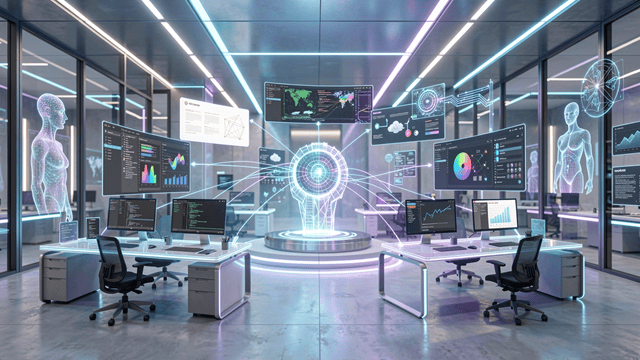
The announcement that Anthropic enables public artifact sharing is more than a product update—it signals the direction in which generative AI platforms are evolving. Businesses and individual users increasingly expect AI to participate throughout an entire project rather than assist with isolated tasks. Persistent workspaces, collaborative editing, and reusable AI-generated content are becoming essential features for modern productivity platforms.
As artificial intelligence continues to mature, collaborative workspaces are likely to become the standard rather than the exception. Instead of switching between multiple applications for brainstorming, writing, coding, reviewing, and publishing, users will increasingly complete these activities within unified AI-powered environments.
For organizations embracing digital transformation, this shift has the potential to simplify workflows, improve communication, and accelerate project delivery.
Industry-Wide Implications
The decision that Anthropic enables public artifact sharing reflects broader changes across the AI industry.
Technology companies are moving beyond building increasingly capable language models and are now competing to create comprehensive productivity ecosystems. Success is no longer measured only by how accurately an AI answers questions, but also by how effectively it supports collaboration, project management, and knowledge sharing.
This evolution is expected to influence several areas:
Enterprise Productivity
Businesses are seeking AI solutions that reduce repetitive work while improving collaboration between departments. Persistent AI workspaces can help teams maintain documentation, coordinate projects, and keep information current.
Software Development
Development teams increasingly use AI throughout the software lifecycle. Shared artifacts can simplify collaboration on application prototypes, source code, technical documentation, and testing plans while reducing duplicated effort.
Education and Research
Educators and researchers often work on documents that evolve over weeks or months. Persistent artifacts make it easier to update teaching materials, collaborate on research projects, and maintain living knowledge resources.
Content Creation
Marketing agencies, publishers, consultants, and creative professionals can use collaborative AI workspaces to develop campaigns, reports, proposals, and long-form content more efficiently while involving multiple contributors throughout the review process.
Best Practices for Using Claude Artifacts
Organizations adopting Claude Artifacts should establish practical guidelines to maximize value while maintaining quality.
Some recommended best practices include:
- Create separate artifacts for major projects instead of combining unrelated work.
- Review AI-generated content for factual accuracy before publication.
- Define clear ownership for shared artifacts.
- Maintain version review processes for business-critical documents.
- Protect confidential information by using appropriate sharing permissions.
- Encourage teams to update existing artifacts instead of creating duplicate copies.
- Integrate AI workflows into existing project management processes whenever possible.
These practices help organizations gain the productivity benefits of AI while maintaining governance and consistency.
Strategic Takeaways for Business Leaders
As Anthropic enables public artifact sharing, business leaders should evaluate AI platforms based on more than model performance alone.
Key questions include:
- Does the platform support long-term collaboration?
- Can teams work together efficiently?
- Does it simplify knowledge management?
- Can AI-generated work be reused and improved over time?
- Does the platform align with organizational security and governance requirements?
Answering these questions will help organizations select AI solutions that provide lasting business value rather than short-term productivity gains.
Conclusion
Anthropic enables public artifact sharing and team editing in Claude, marking an important milestone in the evolution of collaborative artificial intelligence. By transforming AI-generated content into persistent, shareable workspaces, Anthropic is helping users move beyond one-time conversations toward continuous collaboration.
The introduction of public artifact sharing makes it easier to distribute projects, while collaborative editing allows multiple contributors to improve documents, applications, reports, educational materials, and software prototypes within a single environment. Together, these capabilities position Claude as more than a conversational AI assistant—it becomes a workspace where ideas can be created, refined, and maintained over time.
For businesses, the update offers opportunities to improve productivity, strengthen knowledge management, and support cross-functional collaboration. For developers, educators, researchers, consultants, and content creators, Claude Artifacts provide a more efficient way to manage long-term projects while reducing the need to move work between multiple applications.
As collaborative AI platforms continue to evolve, organizations that adopt structured AI workflows, establish strong governance practices, and encourage responsible AI usage will be well positioned to benefit from the next generation of intelligent productivity tools. The fact that Anthropic enables public artifact sharing demonstrates that the future of AI is no longer centered solely on generating answers—it is increasingly focused on helping people work together more effectively.
Frequently Asked Questions (FAQs)
What does it mean that Anthropic enables public artifact sharing?
It means Claude users can share AI-generated artifacts through dedicated links, allowing others to access and, where supported, collaborate on documents, code, applications, and other AI-created projects.
What are Claude Artifacts?
Claude Artifacts are persistent AI-generated workspaces that can contain reports, code, websites, educational materials, business documents, interactive applications, and other content that remains editable outside the main chat conversation.
How does team editing improve collaboration?
Team editing allows multiple contributors to work on the same artifact, making it easier to review, refine, and expand AI-generated content without creating multiple disconnected versions.
Who can benefit from Claude Artifacts?
Software developers, marketers, educators, researchers, consultants, students, business teams, and enterprise organizations can all use Claude Artifacts to improve collaboration and productivity.
How does Claude compare with other AI platforms?
Claude emphasizes persistent AI workspaces and collaborative artifacts, while other platforms may focus more heavily on productivity suite integrations or conversational assistance. The best choice depends on an organization’s workflows and collaboration needs.
Transform Your Business with AI Solutions
Ready to unlock the full potential of artificial intelligence for your organization? Whether you’re exploring AI-powered collaboration, intelligent automation, custom AI applications, or enterprise AI integration, our experts can help you build solutions tailored to your business goals.
More AI coverage: explore Progressive Robot's AI Models, Tools & Releases hub — hands-on reviews, setup guides and benchmarks in one place.










