
There is a Toronto-based engineer who has made it his life’s work to convince the world that open models belong to everyone. Chris Alexiuk works at NVIDIA, streams hands-on lessons to thousands of viewers, and calls himself the company’s biggest fan. His nickname, earned on X, is simply llm_wizard. His mission is not subtle: take the best open models available, teach anyone to use them, and hand the tools of artificial intelligence to people who have not yet discovered them.
This is the story of the wizard of open models — how one person’s enthusiasm became a practical blueprint for making AI accessible, auditable and genuinely useful for ordinary working developers, and why that enthusiasm may matter more than any single model release this year.
Meet the Wizard of Open Models
The Engineer With a Stage Name
Chris Alexiuk is a senior product research engineer in NVIDIA’s deep learning organisation, based in Toronto. By day he works on making large language models practical. By night, or rather on livestreams, he teaches. His YouTube channel has gathered thousands of subscribers by doing one thing relentlessly: showing people how to build, fine-tune, evaluate and ship real applications on top of open models.
He does not treat this as a side hobby. He describes it as his life’s work, and he has built a persona around it. On LinkedIn he styles himself the number one Nemotron fan, complete with a profile picture of a cartoon wizard. On X, he posts as llm_wizard, laughing sorcerer avatar and all. The theatricality is deliberate; the engineering behind it is deadly serious.
Why the Performance Matters
The costume is not vanity. Alexiuk believes the hardest problem in artificial intelligence is not training another model — it is convincing enough humans to learn and use the ones that already exist. A quiet release of open models that nobody adopts helps nobody. So he shouts. He says if you believe in open source AI, be loud about it, and he has taken that as a personal instruction.
The wizard bit is marketing in the best sense: it makes an otherwise abstract debate about model weights memorable enough to spread. In a feed full of whitepapers, a laughing sorcerer is a very efficient attention engine.
Why Transparency Is the Precondition of Good AI
What “Fully Open” Actually Means
When Alexiuk says open models should come with everything, he means a specific inventory. The weights, so you can run and modify the model yourself. The training data, so researchers can find bias, contamination and gaps. The training recipes — the hyperparameters, curricula and compute budgets — so the next lab does not have to burn money rediscovering what already works.
Few releases on the market satisfy all three, which is why he keeps repeating the list: the industry has quietly redefined “open” to mean whatever is safe for the vendor. For him, the gap between marketing and reality is where trust goes to die, and where good open models get out-competed by better public relations.
The Case for Shouting
His answer to the question “why so loud?” is that silence is where good open projects go to die. Great open models have flopped purely because nobody explained them well. So the megaphone is a strategy: stream weekly, post constantly, name-drop shamelessly, make the thing unavoidable.
For Alexiuk the stakes are civilisational. If intelligence becomes a utility rented from a handful of opaque providers, then the people who rent it are never really its owners. Open models are the mechanism by which individuals, universities, startups and small countries can build genuine capability rather than borrowing someone else’s forever.
Where the Open Models Debate Gets Heated
The openness argument has opponents, and Alexiuk engages them by name. Fully open models can be fine-tuned by anyone, including people with worse intentions, he concedes; releasing weights means no kill switch afterwards. Some regulators now argue the most capable systems should stay behind controlled APIs for exactly that reason, and some researchers sign open letters saying the opposite.
His counter is uncomfortable but simple: closed models are not safer, they are simply less accountable. A hidden model making quiet decisions is supervised by whichever committee the vendor appoints, while open models are supervised by everybody simultaneously — including the attackers. He argues society already knows how to live with widely distributed capability, from cryptography to chemistry, and that transparency at least produces honest failure stories instead of sealed ones.
He is equally direct about money. Open models commoditise the model layer, which terrifies model vendors and delights everyone else. Chip demand rises, application margins improve, and no single company can price-gate an entire industry’s access to intelligence. That is not a bug he works around; it is the outcome he is trying to produce.
Nemotron: A Library of Prepared Spells

The wizard metaphor is Alexiuk’s own, and it is genuinely useful. He frames a developer working with Nemotron as a wizard in search of prepared spells: you do not need to invent the magic, you need to choose the right spell for the job in front of you. Nemotron is NVIDIA’s family of fully open, multimodal language models, built for long-running, self-evolving and specialised agentic tasks.
The model tiers map neatly onto very different users, which is exactly why his teaching keeps demand and supply in the same sentence. A solo developer and a Fortune 500 platform team can pull from the same family of open models and both feel the catalogue was built for them.
| Model Tier | Built For | Typical Job |
|---|---|---|
| Nemotron 3.5 Lightning | Individual developers | High-frequency, repetitive execution work on modest hardware |
| Nemotron Nano | Edge and laptop users | Summarisation, retrieval and lightweight agents that must run locally |
| Nemotron Ultra | Enterprise teams | Long-running autonomous agents, deep research and complex multi-step tasks |
Why He Calls It the Most Important Project That Exists
That is not a phrase he uses lightly, and he immediately explains it. He has said he will be the number one fan of whoever is doing openness best, and that today that is Nemotron. A fully open, fully documented family from a company whose hardware powers most of the industry changes what other labs must offer to compete.
His fanboy energy is aimed at a standard, not a brand. When the biggest silicon vendor in AI gives its best models away with the paperwork attached, every closed vendor’s pricing page gets a little more awkward, and every open release gets a little more normal.
From Birding to Model-Building

The Class That Changed Everything
Alexiuk did not start in artificial intelligence. He grew up in Ontario and went through Trent University, where a class in computational physics used machine learning to sort subatomic particles. He had never coded before. He discovered TensorFlow, and one weekend project followed another. As he puts it, he was not a prodigy; he was just someone who kept showing up while the tools kept getting easier.
The story he tells most often involves a bird. His friend kept a Yellow-Faced Gray Budgerigar, and during long online gaming sessions the parakeet kept wandering into webcam frames. So Alexiuk built an image classifier on a GPU that would alert him when the bird appeared. It worked.
From Freaking Out Over a Bird to Building in Minutes
Watching a neural network recognise a pet in real time — that, as he says, is when his whole life changed. He draws a straight line from that budgerigar classifier to today, when he can make any website in minutes with a model running on his laptop.
That arc, from “I can’t believe this works” to “I can build anything”, is precisely the journey he wants new developers to have. If access kept improving for a kid with a pet bird, it will keep improving for anyone with curiosity and a machine. That conviction is why open models matter so much to him: they are the reason the arc exists at all, collapsing the distance between a first experiment and a shipped product.
The Spreadsheet Behind the Dream
Underneath the showmanship sits a simple economic observation Alexiuk repeats on stream: the cost of running a capable model on personal hardware has collapsed faster than any software licence ever fell. A laptop in a student dormitory now out-performs the machines that trained the landmark models of a decade ago. That collapse is why his advice to beginners is always “start today, on what you own”.
He is careful, though, about who gets counted in that promise. Accessibility means more than cheap downloads; it means documentation in plain language, examples in your language, and communities that answer questions without mocking them. Every open models project he champions is judged by him on those three tests — can a newcomer run it, understand it, and belong while learning it?
What the YouTube Classroom Teaches
Build, Fine-Tune, Evaluate, Ship
The channel follows a deliberate curriculum. Viewers learn to build applications on open models, fine-tune them on their own data, evaluate them honestly, and finally ship to production. Each step is where hobbyists usually quit. Most tutorials stop at a chat demo; Alexiuk treats evaluation and deployment as the actual subject.
His Nemotron Labs Livestreams playlist has become a de facto onboarding course for developers who want agentic systems rather than party tricks. The episodes assume curiosity, not wealth: consumer hardware, free weights, open tooling, and the stubbornness to make them cooperate.
Teaching for the Not-Yet-Converted
His stated target audience is startling: the people who will most help us understand how to build and apply AI, who have not even heard of it yet. That reframes everything. The bottleneck is not model capability; it is onboarding humanity.
Every release of open models arrives with a manual nobody reads, so he reads it out loud, weekly, for anyone willing to listen. He keeps the format stubbornly practical — real terminals, real failures, real fixes — because a wizard who never shows the botched spells is just an advertisement.
One recurring theme on the streams is honest benchmarking. Alexiuk regularly runs the same task across several open models side by side, showing where each one stumbles, because he thinks false confidence costs beginners more than a bad error message ever will. The catalogue of prepared spells, he warns, still requires a wizard who can read the room.
Open Models Versus Closed Doors
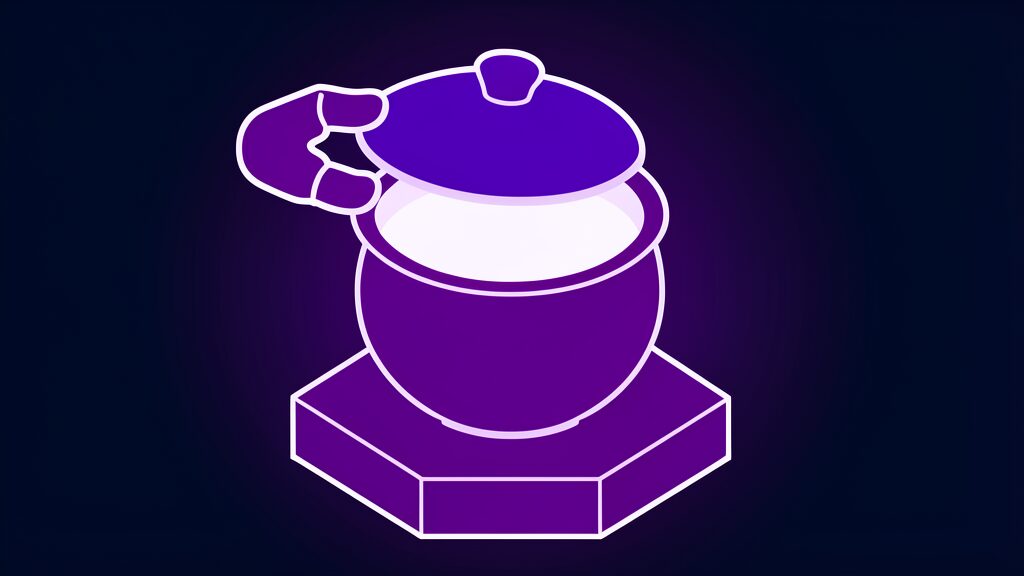
Stripped of the wizard costume, Alexiuk’s argument is a clean comparison between two ways of organising artificial intelligence. Closed systems are rented capabilities: convenient, polished, and permanently someone else’s property. Open models are owned capabilities: rawer at the edges, but inspectable, tunable and un-deletable by any single vendor’s pricing page.
His position is not that closed models are evil — it is that a civilisation which rents all of its intelligence has no floor to stand on when the landlord changes the rules.
| Dimension | Closed API Models | Fully Open Models |
|---|---|---|
| Weights | Never released | Downloadable and modifiable |
| Training data | Undisclosed | Published for audit and research |
| Training recipes | Trade secret | Documented so capability spreads |
| Continuity | Version can be retired at will | Runs on your hardware forever |
| Who benefits | Mostly the provider | Anyone able to learn |
Why the Middle Ground Is Shrinking
He argues the industry is being pulled toward openness by its own economics. Proprietary advantage decays as fast as open releases catch up, so the only durable strategy is to move first and give things away. NVIDIA shipping a fully open family — weights, data, recipes — is exactly the behaviour a fan like Alexiuk exists to amplify.
The wider industry story is moving his way, whether executives admit it or not. Chinese labs now ship strong open-weight models by the dozen. European projects publish weights to court sovereignty-minded buyers. Even traditionally secretive American labs have released smaller open models under competitive pressure. The centre of gravity in developer mindshare has shifted toward open models faster than most analysts predicted two years ago.
Alexiuk’s response to sceptics who call openness naive is to point at this scoreboard: every serious country now treats open model availability as strategic infrastructure, the way it once treated railways or electricity grids. When geopolitics itself starts arguing for open weights, the debate about whether openness is viable quietly ends.
The Build-a-Claw Classroom
Hands-On at GTC Berlin
Alexiuk attended and helped run the Build-a-Claw event at GTC Berlin, where developers gathered to build agents live rather than watch slides. Photographs from the event show him working the room, leaning over laptops, turning a conference into a workshop. It is the physical version of his livestreams: the same curriculum, the same refusal to let anyone stay passive, just with better coffee.
Events like this matter because they convert spectators into builders. A viewer who has shipped one agent on an open models stack at a conference booth goes home different. The open ecosystem needs thousands of those conversions, and in-person weekends are where they happen fastest.
Amplifying Skill, Not Replacing It
His answer to the standard AI anxiety — will tools erase human craft? — is refreshingly direct. If a tool is amplifying skill, he argues, it is amplifying human expression. The budgerigar classifier did not replace his wonder; it multiplied it.
The open models classroom does not replace engineers; it makes more of them. For a self-appointed wizard, he is oddly uninterested in making humans obsolete — his whole project is making humans numerous. That inversion is what makes his story worth telling: the showmanship is in service of multiplication, not spectacle.
The No. 1 Fan Wants to Be Surpassed
A Capstone He Hopes He Never Gets
Ask Alexiuk what success looks like and the answer is almost funny. He has said it would be the greatest day of his life to be surpassed by an even bigger fan of Nemotron — someone who caught the bug directly from his work, and then out-shouts him. Most evangelists fear being upstaged. He has made being upstaged his stated capstone, the thing he would point back to at the end of his career.
That is the tell that separates him from a corporate mouthpiece. A company person maximises personal influence; a true believer maximises the belief. He wants the faith reproduced beyond himself, which is exactly how open source ecosystems have always grown — one loud convert recruiting the next.
Why One Loud Engineer Changes the Odds
The open models movement has no shortage of brilliant researchers; what it lacks is people who will explain the same idea five hundred times without getting bored. That is the scarce role Alexiuk plays. The models themselves — Nemotron and its rivals — are excellent, but excellence quietly sitting in a repository changes nobody.
His streaming, his persona, his absurd wizard hat: all of it is machinery for turning quality into adoption. There is a real risk in this story too. Fandom that fixes on a single vendor can shade into brand loyalty, and openness as a creed can be selectively applied.
He navigates this by tying his loyalty to behaviour rather than logos — whoever does openness best gets the shouting. That keeps the fan relationship honest, and keeps the pressure on every lab, NVIDIA included, to actually release the data. If the people who will define AI have not heard of it yet, someone has to go and get them. Alexiuk has decided that someone can be him.
Alexiuk’s own plan is modest in scope and stubborn in frequency: keep streaming, keep answering the same beginner questions without sighing, keep showing the terminal. He has described the work less as a career hack and more as a bet on who deserves access to intelligence — everyone, immediately, in their own language and on their own hardware.
The open models he champions will keep improving without him; that part takes care of itself. What does not take care of itself is the million people currently deciding, from quiet suspicion, that AI is not for them. His answer to that quiet majority is the loudest voice in the room, a wizard hat, and a library of prepared spells with their names on them. The magic, he insists, was never the point — the door is.
References
- NVIDIA Blog — The Wizard of Open Weights: Chris Alexiuk Makes AI Easy With Open Models
- NVIDIA — Nemotron Foundation Models
- YouTube — NVIDIA Nemotron Labs Livestreams Playlist
- X — llm_wizard (Chris Alexiuk)
- Progressive Robot — Open Source AI Is Booming: Who Profits
- Progressive Robot — Meta’s Open Model Rival and the Chinese Open-Weight Surge
- Progressive Robot — Full-Stack Codesign and AI’s Memory Challenge
- NVIDIA GTC Berlin — Conference Sessions
More AI coverage: explore Progressive Robot's AI Models, Tools & Releases hub — hands-on reviews, setup guides and benchmarks in one place.










