

GraphQL Performance Issues have become an increasingly important concern as organizations adopt GraphQL for modern APIs, cloud-native applications, mobile platforms, enterprise software, and microservices architectures. GraphQL offers significant advantages over traditional REST APIs by allowing clients to request exactly the data they need through a single endpoint. However, these same capabilities can introduce hidden performance bottlenecks that become increasingly difficult to diagnose as applications scale. Without careful architecture, monitoring, and optimization, GraphQL implementations can suffer from slow response times, excessive database queries, high server utilization, inefficient caching, and unpredictable workloads.
GraphQL has fundamentally changed how frontend and backend systems communicate. Instead of exposing numerous fixed endpoints, GraphQL provides a flexible query language that enables applications to retrieve multiple related resources in a single request. Developers benefit from reduced over-fetching, fewer network calls, improved API evolution, and greater development flexibility. These advantages have made GraphQL popular among organizations building complex web applications, mobile platforms, SaaS products, and enterprise systems.
Despite these benefits, GraphQL does not automatically guarantee high performance. Many engineering teams mistakenly assume that replacing REST with GraphQL will immediately improve application responsiveness. In reality, performance depends far more on schema design, resolver implementation, database access patterns, caching strategies, infrastructure architecture, query complexity, and operational governance than on the API technology itself.
Diagnosing GraphQL Performance Issues requires understanding how GraphQL executes requests internally. Every incoming query is parsed, validated, resolved, and translated into multiple backend operations. Poorly optimized resolvers, excessive nested queries, inefficient database interactions, missing caching layers, synchronous processing, and insufficient monitoring can significantly increase response times even when the GraphQL schema appears well designed.
Unlike conventional REST APIs, where each endpoint typically performs predictable work, GraphQL allows clients to construct highly dynamic queries. While this flexibility benefits application developers, it also creates operational complexity because every query may generate a different execution plan. Performance problems therefore become more difficult to identify, reproduce, and optimize without comprehensive observability.
Understanding GraphQL Performance Issues has become essential for backend engineers, API architects, DevOps professionals, cloud engineers, software developers, database administrators, platform engineers, and enterprise technology leaders. Learn more about GraphQL through the GraphQL Official Documentation. Successful GraphQL deployments require disciplined schema governance, efficient resolver implementation, scalable infrastructure, continuous performance monitoring, and proactive optimization throughout the software lifecycle.
This comprehensive guide explores GraphQL Performance Issues, explains why GraphQL applications become slow, identifies the most common performance bottlenecks, examines diagnostic techniques, discusses optimization strategies, and provides practical recommendations for building scalable, high-performance GraphQL APIs.
Key Takeaways
- GraphQL flexibility introduces unique performance challenges.
- Resolver design strongly affects API performance.
- Database optimization remains critical.
- Query complexity requires active governance.
- Monitoring identifies hidden bottlenecks.
- Caching improves scalability.
- Infrastructure architecture influences response time.
- Performance optimization requires continuous engineering.
What Are GraphQL Performance Issues?
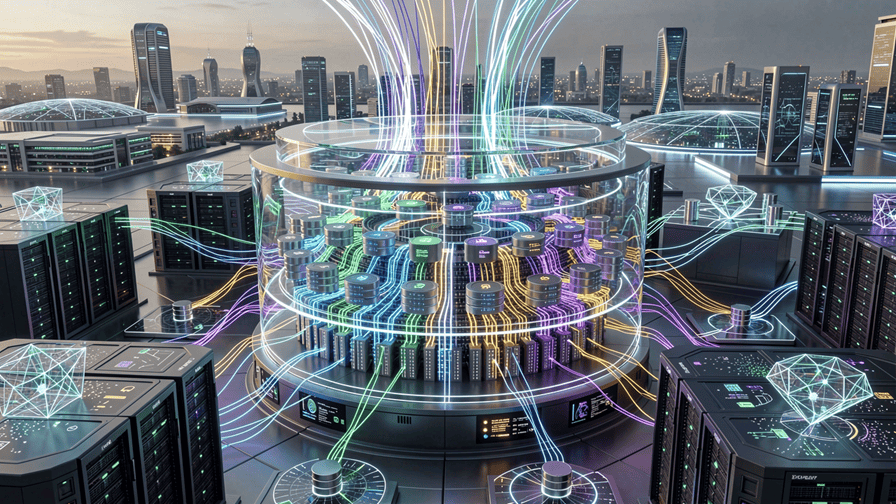
GraphQL Performance Issues refer to latency, scalability, throughput, resource utilization, or execution problems that reduce the efficiency of GraphQL APIs in production environments.
These issues commonly involve:
- Slow queries.
- Excessive database requests.
- High CPU utilization.
- Memory consumption.
- Resolver inefficiencies.
- Query complexity.
- Cache misses.
- Infrastructure bottlenecks.
Understanding the root cause is far more valuable than optimizing symptoms alone.
Why GraphQL Adoption Continues Growing
Organizations increasingly choose GraphQL because it offers significant architectural advantages.
GraphQL enables:
- Flexible data retrieval.
- Reduced over-fetching.
- Fewer network requests.
- Better frontend development.
- Faster API evolution.
- Strong typing.
- Unified API access.
- Improved developer productivity.
These benefits explain why GraphQL continues expanding across enterprise software ecosystems.
Why Diagnosing Performance Matters
Performance problems rarely originate from GraphQL itself.
Instead, GraphQL Performance Issues usually emerge from interactions between:
- Resolver implementation.
- Database design.
- Infrastructure.
- Cloud services.
- Authentication.
- External APIs.
- Network latency.
- Application architecture.
Finding the true bottleneck requires systematic analysis rather than assumptions.
Common GraphQL Performance Issues
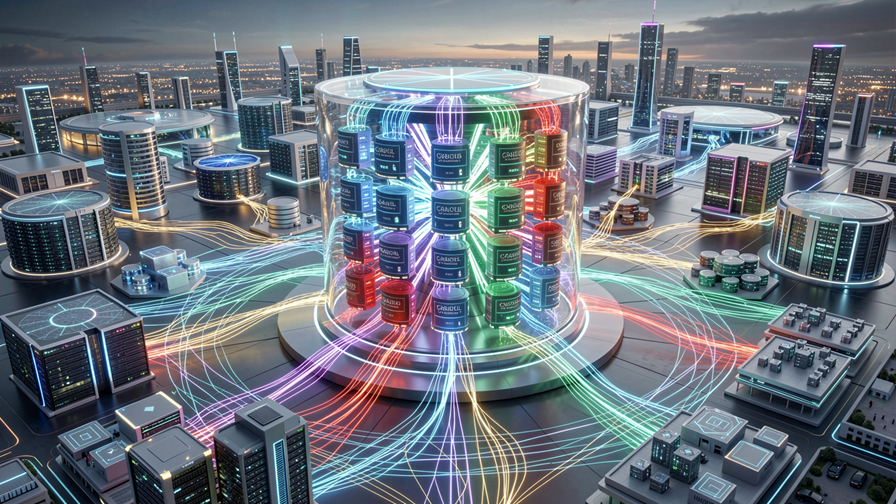
Diagnosing GraphQL Performance Issues begins with understanding where performance degradation most commonly occurs. Although GraphQL itself is highly efficient, its execution model introduces multiple layers that can influence latency, throughput, scalability, and infrastructure utilization. Performance bottlenecks may originate in resolvers, databases, caching systems, authentication services, external APIs, cloud infrastructure, or application architecture. Because these components interact during every GraphQL request, identifying the real bottleneck requires systematic analysis rather than assumptions.
Many engineering teams initially optimize GraphQL queries while overlooking slower downstream systems. In practice, GraphQL often exposes inefficiencies that already existed within backend services, making comprehensive observability essential.
Resolver Bottlenecks
Resolvers determine how GraphQL retrieves requested data.
Poor resolver implementation represents one of the most common GraphQL Performance Issues.
Typical resolver problems include:
- Excessive processing.
- Duplicate computation.
- Blocking operations.
- Synchronous execution.
- Redundant service calls.
- Repeated validation.
- Complex transformations.
- Inefficient object creation.
Well-designed resolvers should remain lightweight while delegating heavy processing appropriately.
The N+1 Query Problem
The N+1 query problem is among the best-known causes of GraphQL Performance Issues.
It occurs when GraphQL repeatedly executes similar database queries instead of batching requests efficiently.
Consequences include:
- Increased database traffic.
- Higher latency.
- Poor scalability.
- Unnecessary resource consumption.
- Reduced throughput.
- Slower API responses.
- Increased infrastructure costs.
- Poor user experience.
Batch loading techniques significantly reduce this problem.
Database Performance
Many GraphQL bottlenecks originate in underlying databases rather than GraphQL itself.
Common database-related GraphQL Performance Issues include:
- Missing indexes.
- Slow joins.
- Full table scans.
- Inefficient queries.
- Lock contention.
- Poor schema design.
- Excessive writes.
- Connection saturation.
Database optimization frequently produces the largest performance improvements.
Excessive Query Complexity
GraphQL allows clients to construct highly sophisticated queries.
Without governance, these requests may consume excessive computational resources.
Organizations should monitor:
- Query depth.
- Field nesting.
- Resolver count.
- Object expansion.
- Recursive queries.
- Large collections.
- Expensive calculations.
- Request complexity.
Complexity analysis protects production environments from inefficient workloads.
Missing Caching
Caching remains one of the most effective solutions for GraphQL Performance Issues.
Common caching opportunities include:
- Resolver caching.
- Database caching.
- Response caching.
- CDN caching.
- Object caching.
- Session caching.
- Authorization caching.
- Distributed caching.
Proper caching reduces repeated computation while improving response times.
External Service Latency
Many GraphQL APIs integrate multiple backend systems.
Performance problems may originate from:
- REST services.
- Payment providers.
- Authentication platforms.
- Third-party APIs.
- Cloud services.
- Legacy systems.
- Messaging platforms.
- Enterprise integrations.
GraphQL frequently reflects downstream latency rather than creating it.
Authentication Overhead
Security processes influence overall API performance.
Authentication-related GraphQL Performance Issues include:
- Repeated token validation.
- Excessive permission checks.
- Identity provider latency.
- Role resolution.
- Session lookups.
- Cryptographic overhead.
- Authorization recursion.
- Security middleware delays.
Optimizing authentication workflows often improves response consistency.
Infrastructure Bottlenecks
Infrastructure limitations frequently appear as GraphQL Performance Issues.
Common examples include:
- CPU saturation.
- Memory exhaustion.
- Network latency.
- Container limitations.
- Auto-scaling delays.
- Storage bottlenecks.
- Load balancing inefficiencies.
- Cloud configuration problems.
Infrastructure observability helps distinguish software issues from platform constraints.
Monitoring Gaps
Organizations cannot optimize what they cannot measure.
Insufficient observability may hide:
- Slow resolvers.
- Expensive queries.
- Database delays.
- API latency.
- Memory leaks.
- Infrastructure saturation.
- Cache effectiveness.
- Service dependencies.
Comprehensive monitoring remains essential for long-term GraphQL optimization.
Why Bottlenecks Often Hide Outside GraphQL
Successful optimization requires examining the complete request lifecycle.
GraphQL Performance Issues frequently originate outside the GraphQL server itself.
Comprehensive diagnostics should include:
- Resolver execution.
- Database behavior.
- External services.
- Cloud infrastructure.
- Authentication.
- Networking.
- Caching layers.
- Application architecture.
The fastest GraphQL implementation cannot compensate for inefficient backend systems.
Challenges and Limitations of GraphQL Performance Issues

Although GraphQL provides a highly flexible and efficient API architecture, eliminating GraphQL Performance Issues is rarely straightforward. Most production performance problems arise from interactions between multiple components rather than a single technical defect. Resolver execution, database access, authentication, cloud infrastructure, caching, networking, external services, and application architecture all contribute to overall response time. As GraphQL deployments grow larger, identifying the true bottleneck becomes increasingly complex.
Organizations often discover that GraphQL exposes weaknesses already present within backend systems instead of creating entirely new performance problems. For this reason, long-term optimization requires continuous engineering discipline rather than isolated tuning efforts.
Performance Depends on the Entire Stack
GraphQL represents only one layer of the application architecture.
Performance also depends on:
- Databases.
- Cloud infrastructure.
- Networking.
- Authentication.
- Storage systems.
- External APIs.
- Application services.
- Load balancing.
Optimizing GraphQL alone rarely resolves enterprise-wide latency problems.
Dynamic Queries Increase Complexity
Unlike fixed REST endpoints, GraphQL allows clients to construct highly customized requests.
While this flexibility improves developer productivity, it also creates operational challenges involving:
- Variable workloads.
- Unpredictable execution plans.
- Uneven resource consumption.
- Complex optimization.
- Query diversity.
- Monitoring difficulty.
- Capacity planning.
- Performance forecasting.
Dynamic behavior requires stronger governance than traditional APIs.
Caching Is More Difficult
Caching GraphQL responses can be significantly more challenging than caching REST resources.
Difficulties include:
- Highly customized queries.
- Variable field selection.
- Personalized responses.
- Authorization differences.
- Nested objects.
- Cache invalidation.
- Fragment reuse.
- Response uniqueness.
Organizations often combine several caching techniques to improve scalability.
Database Optimization Remains Critical
Even well-designed GraphQL schemas cannot compensate for inefficient databases.
Long-term GraphQL Performance Issues often stem from:
- Poor indexing.
- Inefficient joins.
- Data duplication.
- Weak normalization.
- Slow transactions.
- Lock contention.
- Resource exhaustion.
- Query planning.
Database engineering remains central to API performance.
Observability Challenges
Modern GraphQL applications generate highly dynamic workloads.
Traditional monitoring tools may struggle to capture:
- Resolver timing.
- Query complexity.
- Dependency latency.
- Service interactions.
- Infrastructure bottlenecks.
- Cache behavior.
- Authorization overhead.
- Database execution paths.
Comprehensive tracing becomes increasingly valuable as applications scale.
Infrastructure Costs
Performance optimization often requires additional infrastructure investment.
Organizations may deploy:
- Larger clusters.
- Distributed caches.
- Additional replicas.
- Autoscaling environments.
- Load balancers.
- CDN services.
- Monitoring platforms.
- High-performance databases.
Balancing performance improvements against operational costs remains an important engineering consideration.
Security Can Affect Performance
Security mechanisms introduce computational overhead.
Examples include:
- Authentication.
- Authorization.
- Encryption.
- Rate limiting.
- Input validation.
- API gateways.
- Identity providers.
- Compliance monitoring.
The challenge lies in maintaining strong security without significantly increasing latency.
Continuous Optimization Is Required
Applications evolve continuously.
As new features are introduced, GraphQL Performance Issues may reappear through:
- Schema expansion.
- Additional resolvers.
- New integrations.
- Larger datasets.
- Higher traffic.
- Business growth.
- Infrastructure changes.
- Software updates.
Performance engineering should therefore become an ongoing operational practice.
Best Practices for Reducing GraphQL Performance Issues
Organizations can significantly improve GraphQL performance by following disciplined engineering practices.
Monitor Resolver Performance
Measure execution time for individual resolvers to identify slow operations quickly.
Optimize Database Access
Reduce unnecessary database queries through indexing, batching, and efficient query planning.
Control Query Complexity
Limit excessive nesting, recursion, and expensive query execution using complexity analysis.
Implement Multi-Layer Caching
Combine resolver, object, response, CDN, and distributed caching strategies where appropriate.
Continuously Profile Production Systems
Use tracing, observability platforms, and performance analytics to detect emerging bottlenecks before users experience degradation.
The Future of GraphQL Performance Issues

The future of GraphQL Performance Issues will be shaped by advances in API platforms, cloud-native infrastructure, artificial intelligence, database technologies, observability tools, and distributed computing. As enterprise software systems continue growing in complexity, GraphQL will remain a powerful API technology, but performance optimization will increasingly depend on automation, intelligent monitoring, and architectural governance rather than manual troubleshooting alone.
Modern GraphQL platforms are already evolving beyond simple query execution. Emerging solutions incorporate intelligent caching, automated query analysis, AI-assisted resolver optimization, adaptive execution planning, predictive resource allocation, and continuous performance monitoring. These capabilities will help engineering teams identify bottlenecks much earlier in the software lifecycle.
Artificial intelligence is expected to play a growing role in GraphQL optimization. AI-powered observability platforms will increasingly analyze execution traces, detect inefficient resolver patterns, identify database bottlenecks, recommend caching opportunities, predict infrastructure saturation, and automatically prioritize performance improvements. Instead of waiting for users to report slow APIs, organizations will detect GraphQL Performance Issues proactively through intelligent monitoring systems.
Cloud computing will also continue transforming GraphQL deployments. Autoscaling infrastructure, serverless execution, edge computing, distributed caching, globally replicated databases, and intelligent load balancing will allow GraphQL APIs to handle increasingly dynamic workloads with greater resilience and lower latency.
Several trends are expected to shape the future of GraphQL Performance Issues:
- AI-assisted API optimization.
- Intelligent query analysis.
- Adaptive caching strategies.
- Automated resolver optimization.
- Predictive infrastructure scaling.
- Real-time observability.
- Distributed edge execution.
- Autonomous performance governance.
These innovations will reduce many operational challenges, but disciplined software engineering will remain essential for building scalable GraphQL platforms.
Strategic Takeaways
Organizations seeking long-term GraphQL success should prioritize engineering quality rather than focusing solely on API flexibility.
Key lessons include:
- GraphQL itself is rarely the bottleneck.
- Resolver design matters.
- Database optimization remains critical.
- Monitoring enables proactive improvement.
- Caching dramatically improves scalability.
- Governance protects performance.
- Infrastructure influences API responsiveness.
- Continuous optimization delivers long-term reliability.
Teams that adopt comprehensive observability and disciplined architecture typically achieve the best GraphQL performance.
Conclusion
GraphQL has become one of the most influential API technologies for modern application development because it enables flexible data retrieval, reduces unnecessary network requests, improves frontend productivity, and simplifies API evolution. However, successful GraphQL deployments require much more than designing an elegant schema. Production performance depends on efficient resolvers, optimized databases, intelligent caching, scalable cloud infrastructure, secure authentication, comprehensive monitoring, and disciplined software architecture.
The most important lesson about GraphQL Performance Issues is that GraphQL itself is rarely the root cause of slow applications. Instead, GraphQL often exposes inefficiencies already present within backend services, databases, infrastructure, or application design. Engineering teams that investigate only the GraphQL layer frequently overlook the actual bottleneck.
Finding the real performance problem therefore requires end-to-end visibility across the complete request lifecycle. Organizations that combine strong observability, architectural governance, database optimization, infrastructure engineering, and continuous performance monitoring are far better positioned to deliver fast, reliable, and scalable GraphQL APIs.
As GraphQL platforms continue evolving alongside artificial intelligence, cloud computing, and distributed systems, diagnosing GraphQL Performance Issues will become increasingly automated. Nevertheless, experienced software engineers, architects, database specialists, and DevOps professionals will remain essential for designing systems capable of sustaining long-term enterprise growth.
Frequently Asked Questions (FAQs)
What are GraphQL Performance Issues?
GraphQL Performance Issues refer to latency, scalability, execution, or resource utilization problems that reduce the efficiency of GraphQL APIs in production environments.
Is GraphQL slower than REST?
Not necessarily. Properly optimized GraphQL APIs often outperform REST by reducing unnecessary network requests, although poor resolver or database design can create performance problems.
What causes the N+1 query problem?
The N+1 problem occurs when GraphQL repeatedly executes individual database queries instead of batching related data retrieval efficiently.
How can GraphQL Performance Issues be diagnosed?
Engineers should analyze resolver execution, database performance, query complexity, infrastructure utilization, caching effectiveness, and distributed tracing to identify the true bottleneck.
Does caching improve GraphQL performance?
Yes. Resolver caching, object caching, response caching, CDN caching, and distributed caching significantly improve GraphQL scalability and response times.
Optimize Your GraphQL APIs for Enterprise Performance
Whether you’re troubleshooting GraphQL Performance Issues, improving API scalability, optimizing database access, or modernizing cloud-native applications, our experienced software engineers can help you identify the real bottlenecks and build faster, more resilient GraphQL platforms.










