

As enterprises increasingly adopt autonomous AI systems, the focus is shifting from building capable AI agents to ensuring they behave reliably in real-world environments. This is where AI agent evaluation becomes essential. While many organizations invest heavily in expanding test coverage and benchmarking AI performance, recent discussions within the industry suggest that the biggest challenge is not coverage—it is reality alignment. In other words, AI agents may perform well during testing but struggle when exposed to the unpredictable conditions of production environments.
Traditional software testing measures whether an application behaves according to predefined requirements. AI agents, however, interact with dynamic data, changing user inputs, external systems, and evolving business processes. Because of this complexity, conventional testing methods alone cannot guarantee reliable behavior after deployment. Effective AI agent evaluation must measure how closely an AI system’s decisions align with real-world expectations, organizational objectives, and operational constraints.
Many enterprises continue deploying AI agents despite recognizing these limitations. Competitive pressure, demand for automation, and rapid advances in generative AI encourage organizations to release AI-powered solutions quickly. While early deployment accelerates innovation, it also increases the risk of unexpected behaviors, inaccurate outputs, workflow failures, and costly operational mistakes if evaluation processes are insufficient.
Modern AI agent evaluation goes beyond measuring response accuracy. Organizations now assess consistency, factual reliability, reasoning quality, tool usage, workflow execution, safety, compliance, and resilience under changing conditions. These broader evaluation criteria help businesses determine whether an AI agent can be trusted to perform reliably outside controlled testing environments.
Reality alignment is becoming especially important as enterprises deploy AI agents for customer support, software development, financial analysis, healthcare assistance, cybersecurity, and business process automation. In these environments, even minor errors can affect productivity, customer trust, regulatory compliance, or financial performance.
In this article, we’ll explore what AI agent evaluation is, why reality alignment matters more than simple test coverage, how enterprises evaluate AI agents before deployment, and what organizations can do to improve reliability as autonomous AI systems become increasingly common.
Key Takeaways
- AI agent evaluation measures how reliably AI agents perform in real-world environments.
- Reality alignment is becoming more important than simply increasing test coverage.
- AI agents must be evaluated for reasoning, consistency, safety, and workflow execution.
- Enterprise organizations increasingly deploy AI despite known evaluation challenges.
- Continuous monitoring improves AI reliability after production deployment.
- Effective governance reduces operational and compliance risks.
What Is AI Agent Evaluation?

AI agent evaluation is the process of assessing how effectively an autonomous AI system performs tasks, makes decisions, interacts with tools, and achieves business objectives under realistic operating conditions.
Unlike traditional software testing, AI agent evaluation measures both technical performance and practical reliability.
Evaluation typically includes:
- Task completion.
- Reasoning quality.
- Response accuracy.
- Tool utilization.
- Workflow execution.
- Safety compliance.
- Consistency.
- Real-world adaptability.
These metrics help organizations determine whether an AI agent is ready for production deployment.
Understanding the Reality-Alignment Problem
One of the biggest challenges in AI agent evaluation is ensuring that AI behavior matches real-world expectations.
An AI agent may perform exceptionally well during benchmark testing while struggling when exposed to unexpected user requests, incomplete information, changing environments, or complex business processes.
Reality alignment focuses on questions such as:
- Does the AI understand business objectives?
- Can it recover from unexpected situations?
- Does it use external tools correctly?
- Are recommendations trustworthy?
- Does it follow organizational policies?
- Can it explain its reasoning?
- Does it remain consistent over time?
- Can humans confidently rely on its outputs?
Answering these questions requires evaluation methods that extend beyond conventional accuracy benchmarks.
Why Coverage Alone Isn’t Enough
Many organizations attempt to improve AI agent evaluation by increasing the number of test cases.
Although broad test coverage remains valuable, additional scenarios alone cannot capture every possible production environment.
Real-world deployments involve:
- Changing user behavior.
- New business requirements.
- External API failures.
- Unexpected data.
- Software updates.
- Infrastructure changes.
- Regulatory requirements.
- Human interactions.
Because production environments continuously evolve, organizations must evaluate adaptability in addition to correctness.
Why Companies Are Still Shipping AI Agents
Despite acknowledging evaluation challenges, enterprises continue deploying AI agents at an accelerating pace.
Several factors contribute to this trend.
Competitive Pressure
Organizations seek competitive advantages through automation and AI-assisted decision-making.
Delaying deployment may allow competitors to gain market leadership.
Productivity Improvements
AI agents can automate repetitive tasks, assist employees, and accelerate business operations.
Even imperfect systems may provide measurable productivity gains when appropriately supervised.
Rapid AI Innovation
Generative AI evolves extremely quickly.
Businesses often deploy early to gain operational experience while continuously improving AI agent evaluation processes after launch.
Continuous Learning
Unlike conventional software, many AI systems improve through ongoing monitoring, user feedback, and iterative model refinement.
Production deployment provides valuable real-world data that cannot be fully replicated in laboratory testing.
Reality Alignment Is Becoming the New Standard
As enterprise AI matures, organizations increasingly recognize that benchmark scores alone cannot determine production readiness.
Effective AI agent evaluation now emphasizes real-world performance, operational reliability, safety, transparency, and business outcomes.
Reality alignment helps enterprises build AI systems that not only answer correctly but also behave consistently, responsibly, and predictably under real operational conditions.
AI Evaluation Techniques

Modern AI agent evaluation combines multiple testing methods to determine whether autonomous AI systems can perform reliably in real-world environments. Since AI agents often interact with external tools, APIs, databases, and users, evaluating them requires far more than measuring response accuracy.
Organizations increasingly use layered evaluation frameworks that assess technical performance, business outcomes, safety, and operational reliability.
Benchmark Testing
Benchmark testing remains an important starting point for AI agent evaluation.
Standardized benchmarks help compare AI models using consistent tasks and measurable performance indicators.
Typical benchmark categories include:
- Question answering.
- Logical reasoning.
- Mathematical problem solving.
- Programming tasks.
- Language understanding.
- Tool usage.
- Planning.
- Multi-step execution.
While benchmarks provide useful comparisons, they cannot fully represent unpredictable production environments.
Scenario-Based Testing
Reality alignment requires testing AI agents using realistic business scenarios.
Instead of isolated prompts, organizations simulate complete workflows involving:
- Customer requests.
- Internal approvals.
- Database queries.
- API interactions.
- Document retrieval.
- Multi-step decision making.
- Unexpected interruptions.
- Error recovery.
Scenario testing measures how effectively AI agents adapt to changing operational conditions.
Human Evaluation
Human reviewers continue to play a critical role in AI agent evaluation.
Experts assess outputs for:
- Accuracy.
- Relevance.
- Reasoning quality.
- Policy compliance.
- Safety.
- Consistency.
- Professional judgment.
- Business value.
Human evaluation helps identify subtle issues that automated metrics may overlook.
Continuous Production Monitoring
Evaluation should not stop after deployment.
Organizations increasingly monitor AI agents continuously by measuring:
- Task success rates.
- Error frequency.
- User satisfaction.
- Tool failures.
- Response consistency.
- Workflow completion.
- System reliability.
- Operational costs.
Continuous monitoring allows enterprises to detect performance degradation before it affects business operations.
Enterprise Use Cases
As enterprise adoption grows, AI agent evaluation becomes increasingly important across a wide variety of industries.
Customer Support
AI agents assist customer service teams by answering questions, retrieving documentation, processing requests, and escalating complex issues.
Evaluation focuses on:
- Accuracy.
- Customer satisfaction.
- Policy compliance.
- Response consistency.
- Resolution quality.
Software Development
Development teams use AI agents for:
- Code generation.
- Documentation.
- Testing.
- Debugging.
- Code reviews.
- API development.
- Project planning.
- Technical assistance.
Reliable AI agent evaluation ensures generated code meets organizational quality standards.
Financial Services
Banks and financial institutions deploy AI agents for document analysis, fraud detection, customer support, compliance assistance, and reporting.
Evaluation emphasizes:
- Regulatory compliance.
- Data accuracy.
- Risk management.
- Auditability.
- Decision consistency.
Healthcare
Healthcare organizations increasingly evaluate AI agents that support clinical documentation, medical research, scheduling, and administrative workflows.
Safety and human oversight remain essential due to the sensitive nature of healthcare decisions.
Cybersecurity
Security teams use AI agents to analyze alerts, investigate threats, automate incident response, and prioritize vulnerabilities.
Evaluation focuses on:
- Detection accuracy.
- False positive rates.
- Investigation quality.
- Response speed.
- Security compliance.
Benefits of Reality-Aligned AI
Organizations investing in strong AI agent evaluation gain several operational advantages.
Improved Reliability
Reality-aligned AI agents produce more consistent results under changing conditions, increasing user confidence and reducing operational risks.
Better Decision Making
AI agents that understand organizational objectives provide recommendations more closely aligned with business priorities.
Reduced Operational Risk
Evaluating safety, compliance, and workflow execution before deployment helps minimize costly production failures.
Higher User Trust
Employees and customers are more likely to adopt AI systems that consistently deliver accurate, explainable, and dependable results.
Faster Long-Term Innovation
Organizations with mature AI agent evaluation frameworks can deploy new capabilities more confidently because they have reliable methods for identifying potential issues early.
Production Monitoring
Successful deployment depends on continuous observation after launch.
Important monitoring metrics include:
- Task completion rate.
- Response accuracy.
- Tool success rate.
- Latency.
- User feedback.
- Workflow failures.
- Safety incidents.
- Model drift.
Monitoring enables organizations to improve AI performance through ongoing refinement instead of relying solely on pre-deployment testing.
AI Governance and Risk Management
As AI agents gain greater autonomy, governance becomes a critical component of AI agent evaluation.
Effective governance frameworks typically include:
- Human oversight.
- Approval workflows.
- Audit logs.
- Security controls.
- Regulatory compliance.
- Risk assessments.
- Version management.
- Continuous evaluation.
Strong governance ensures AI agents remain aligned with organizational policies while supporting responsible innovation.
Reality Alignment Drives Better Business Outcomes
Organizations are increasingly recognizing that success is determined not by how many evaluation tests an AI agent passes, but by how reliably it performs in real operational environments.
Reality-aligned AI agent evaluation helps enterprises reduce risk, improve productivity, strengthen compliance, and build greater trust in autonomous AI systems.
Challenges and Limitations of AI Agent Evaluation
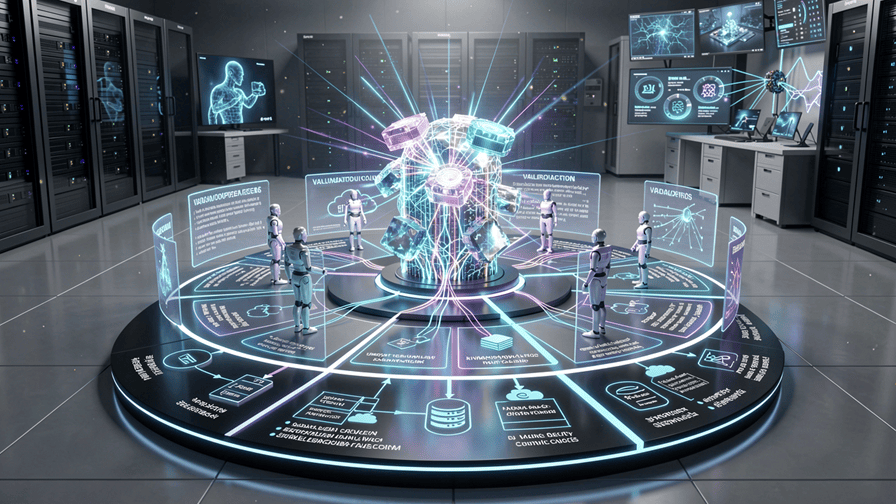
As enterprise AI adoption accelerates, AI agent evaluation has become increasingly sophisticated. However, evaluating autonomous AI systems remains one of the most difficult challenges in artificial intelligence. Unlike traditional software, AI agents operate in dynamic environments where user behavior, external systems, and business requirements continuously evolve. This makes it impossible to predict every possible scenario before deployment.
Organizations must therefore combine technical testing with continuous monitoring and human oversight to ensure reliable performance.
Reality Is More Complex Than Test Environments
One of the biggest limitations of AI agent evaluation is the difference between controlled testing environments and real-world production systems.
During development, AI agents typically interact with carefully designed datasets and predefined workflows. After deployment, they may encounter:
- Unexpected user requests.
- Incomplete information.
- Changing APIs.
- System outages.
- Conflicting instructions.
- Ambiguous business requirements.
- Unusual edge cases.
- Rapidly evolving data.
These unpredictable situations can significantly influence AI behavior.
Hallucinations and Inaccurate Reasoning
Even advanced AI agents can occasionally generate incorrect information or flawed reasoning.
Although modern models continue to improve, hallucinations remain an important consideration during AI agent evaluation, particularly in industries where accuracy is critical.
Potential consequences include:
- Incorrect recommendations.
- Faulty calculations.
- Invalid assumptions.
- Misinterpreted documents.
- Inaccurate summaries.
- Poor business decisions.
- Compliance risks.
- Reduced user confidence.
Evaluating reasoning quality—not just final answers—helps organizations detect these issues earlier.
Tool Integration Challenges
Enterprise AI agents often rely on external tools and services.
They may access:
- Databases.
- APIs.
- Knowledge bases.
- Cloud services.
- Business applications.
- Search systems.
- File repositories.
- Workflow platforms.
If any connected system becomes unavailable or behaves unexpectedly, the AI agent must respond appropriately.
Testing these interactions is an essential part of AI agent evaluation because failures often occur at integration points rather than within the AI model itself.
Measuring Business Success
Traditional AI benchmarks focus on technical accuracy, but enterprise success depends on business outcomes.
Organizations should evaluate whether AI agents actually:
- Increase productivity.
- Reduce operational costs.
- Improve customer satisfaction.
- Accelerate workflows.
- Support better decisions.
- Enhance compliance.
- Minimize risks.
- Deliver measurable value.
These broader metrics provide a more complete picture of deployment success.
Human-in-the-Loop Validation
Human oversight remains one of the most effective ways to improve AI agent evaluation.
Instead of allowing AI agents to operate completely independently, organizations often require humans to review high-impact decisions before execution.
Human reviewers can:
- Validate recommendations.
- Correct inaccuracies.
- Resolve ambiguous situations.
- Monitor compliance.
- Provide feedback.
- Improve training data.
- Build organizational trust.
- Reduce operational risk.
This collaborative approach combines AI efficiency with professional expertise.
Best Practices for Enterprise AI Agent Evaluation
Organizations deploying AI agents at scale should adopt structured evaluation frameworks that balance innovation with operational reliability.
Define Clear Success Metrics
Evaluation criteria should reflect business objectives rather than relying solely on benchmark scores.
Metrics may include:
- Accuracy.
- Reliability.
- Task completion.
- User satisfaction.
- Operational efficiency.
- Compliance.
- Safety.
- Cost savings.
Evaluate Continuously
AI agent evaluation should continue throughout the entire lifecycle of an AI system.
Regular reviews help identify:
- Performance degradation.
- Model drift.
- Workflow failures.
- Integration issues.
- New operational risks.
Continuous evaluation supports long-term reliability.
Test Realistic Workflows
Production simulations should mirror actual business operations as closely as possible.
Organizations should include:
- Multi-step tasks.
- External tool usage.
- Complex decision making.
- Incomplete data.
- Error recovery.
- Unexpected inputs.
These scenarios better prepare AI agents for deployment.
Build Strong Governance
Effective governance ensures AI agents remain aligned with organizational policies throughout their lifecycle.
Governance frameworks typically include:
- Security controls.
- Audit logging.
- Version management.
- Approval workflows.
- Regulatory compliance.
- Risk assessments.
Strong governance improves accountability while supporting responsible AI adoption.
Future Research Directions
Research into AI agent evaluation continues evolving rapidly.
Emerging areas of interest include:
- Automated evaluation frameworks.
- Multi-agent collaboration testing.
- Self-evaluating AI systems.
- Explainable AI.
- Adaptive benchmarking.
- Simulation-based testing.
- Safety verification.
- Enterprise governance automation.
These innovations aim to improve how organizations assess increasingly autonomous AI systems.
Building Trust Through Better Evaluation
Ultimately, successful enterprise AI depends on trust.
Employees, customers, and business leaders must have confidence that AI agents will behave consistently, safely, and predictably under real operating conditions.
Comprehensive AI agent evaluation provides the evidence organizations need to deploy autonomous AI responsibly while maximizing business value.
The Future of AI Agent Evaluation

As enterprise AI systems become more autonomous and capable of managing complex workflows, AI agent evaluation will become a core requirement rather than an optional quality assurance process. Organizations are moving beyond traditional benchmarks toward continuous evaluation frameworks that measure how AI agents perform in real-world business environments.
Future AI agent evaluation platforms are expected to combine automated testing, real-time monitoring, simulation environments, human feedback, and business performance metrics into a unified assessment framework. This holistic approach will help enterprises identify risks earlier while ensuring AI agents remain aligned with organizational goals.
Several trends are expected to shape the future of AI agent evaluation:
- Continuous production evaluation.
- AI-powered automated testing.
- Self-monitoring AI agents.
- Simulation-based validation.
- Multi-agent performance assessment.
- Explainable AI reporting.
- Adaptive benchmarking.
- Enterprise governance automation.
As AI agents become responsible for increasingly important business operations, organizations that invest in robust evaluation frameworks will be better positioned to deploy reliable, secure, and trustworthy AI solutions.
Strategic Takeaways
The growing focus on reality alignment demonstrates that AI agent evaluation is evolving beyond simple benchmark testing.
Key insights include:
- Reality alignment is more valuable than expanding test coverage alone.
- Enterprise AI requires continuous evaluation throughout the deployment lifecycle.
- Human oversight remains essential for high-impact decisions.
- Production monitoring improves long-term AI reliability.
- Governance frameworks reduce operational and compliance risks.
- Business outcomes should be measured alongside technical performance.
Organizations that prioritize comprehensive AI agent evaluation can improve trust, reduce deployment risks, and maximize the value of autonomous AI systems.
Conclusion
The rapid growth of enterprise AI has created enormous opportunities for automation, productivity, and innovation. At the same time, it has highlighted the importance of ensuring AI agents behave reliably under real-world conditions. This is why AI agent evaluation has become one of the most critical disciplines in modern artificial intelligence.
While traditional testing focuses on coverage and benchmark performance, reality alignment examines whether AI agents can consistently make sound decisions, use tools correctly, adapt to changing environments, and achieve business objectives after deployment. As enterprises increasingly deploy AI into production, this broader approach to evaluation is becoming essential.
Effective AI agent evaluation combines benchmark testing, scenario-based assessments, human review, production monitoring, governance, and continuous improvement. Together, these practices help organizations build AI systems that are not only technically capable but also dependable, transparent, and aligned with operational goals.
Although challenges such as hallucinations, integration complexity, evolving business requirements, and model drift remain, advances in evaluation methodologies continue to improve enterprise confidence in autonomous AI. Organizations that establish strong evaluation processes today will be better prepared to scale AI responsibly while maintaining security, compliance, and user trust.
As artificial intelligence continues to transform industries, AI agent evaluation will play a central role in ensuring enterprise AI delivers consistent business value and supports responsible innovation.
Frequently Asked Questions (FAQs)
What is AI agent evaluation?
AI agent evaluation is the process of assessing how effectively an autonomous AI system performs tasks, makes decisions, interacts with tools, and operates under real-world business conditions.
Why is reality alignment important?
Reality alignment ensures AI agents behave consistently in production environments rather than only performing well during laboratory testing or benchmark evaluations.
How is AI agent evaluation different from traditional software testing?
Traditional software testing verifies predefined functionality, while AI agent evaluation measures reasoning quality, adaptability, safety, workflow execution, business outcomes, and reliability under changing conditions.
Why do companies deploy AI agents before evaluation is perfect?
Many organizations deploy AI agents early to gain competitive advantages, improve productivity, and collect real-world operational data that helps refine future evaluation and model performance.
Can AI agents be trusted without human oversight?
For high-impact business processes, human oversight remains an important part of AI agent evaluation. Human reviewers help validate critical decisions, improve safety, and ensure compliance with organizational policies.
Deploy Reliable Enterprise AI with Confidence
Building successful AI solutions requires more than powerful models—it requires robust evaluation, governance, and continuous monitoring. Whether you’re developing autonomous AI agents, implementing enterprise AI workflows, or improving AI reliability, our experts can help you design, evaluate, and deploy secure, scalable AI solutions tailored to your business.
More AI coverage: explore Progressive Robot's AI Models, Tools & Releases hub — hands-on reviews, setup guides and benchmarks in one place.










