

Voxtral TTS is Mistral AI’s move from understanding speech to generating speech. That matters because the voice-agent market is no longer only about transcribing calls or routing spoken commands. It is about whether an AI system can speak back with low latency, useful emotion, consistent speaker identity, and enough control for real customer workflows.
Mistral’s official Speaking of Voxtral announcement describes Voxtral TTS as its first text-to-speech model, a lightweight 4B-parameter system for multilingual voice generation. The model is available through Mistral Studio and API at $0.016 per 1,000 characters, and a reference-voice version is available on Hugging Face under a CC BY-NC 4.0 license.
That combination is the story. Voxtral TTS is not only another hosted voice API. It is an open-weights TTS release that can be tested locally, deployed through vLLM-Omni, and evaluated for enterprise voice agents, customer support, accessibility tools, multilingual narration, and speech-to-speech translation pipelines.
The sensible view is not hype. Mistral’s own research paper reports strong human preference results for voice cloning, while independent ranking from the Artificial Analysis Speech Arena places Voxtral TTS as a notable open-weights option, not the overall leader. For UK SMEs, that nuance is useful. The question is not whether it wins every benchmark. The question is whether its mix of voice cloning, open weights, low latency, and language coverage fits a real business process.
Voxtral TTS at a glance

Voxtral TTS converts written text into spoken audio. It supports English, French, Spanish, Portuguese, Italian, Dutch, German, Hindi, and Arabic. Mistral says it can adapt to a new voice from a short reference clip, follow the tone and rhythm implied by that voice, and stream audio quickly enough for interactive voice-agent use cases.
| Area | What Mistral claims | Why it matters |
|---|---|---|
| Model size | Around 4B parameters | Small enough to make self-hosting plausible for some teams |
| Voice cloning | Works from short reference audio | Useful for branded voices, accessibility, and localization |
| Languages | 9 supported languages | Stronger fit for multilingual support than English-only tools |
| Latency | About 70ms model latency in Mistral’s benchmark setup | Important for voice agents where pauses feel awkward |
| License | Hugging Face weights under CC BY-NC 4.0 | Open for testing, but not unrestricted commercial self-hosting |
| API price | $0.016 per 1,000 characters | Similar to several mainstream cloud TTS prices, cheaper than some premium voice tools |
The phrase “open weights” needs care. Voxtral TTS gives developers more control than a purely closed API, but the Hugging Face model card says the weights inherit a non-commercial license. Commercial teams should treat the hosted API or an enterprise agreement as the safer route unless licensing is reviewed properly.
1. Separate Voxtral TTS from older Voxtral models

Voxtral TTS is easy to confuse with the earlier Voxtral speech-understanding models. Mistral released Voxtral Mini and Voxtral Small in 2025 for transcription, audio understanding, summarization, and voice-driven function calling. Those models listen and reason over audio. The newer TTS release goes in the opposite direction: it speaks.
That difference matters in product design. A complete voice agent often needs both sides. Speech-to-text turns the caller’s voice into structured information. An LLM or workflow engine decides what to do. Text-to-speech turns the answer back into audio. Voxtral TTS is the output layer in that pipeline, although it can sit alongside Voxtral Transcribe or another STT provider.
For SMEs, this distinction prevents messy vendor comparisons. Do not compare Voxtral TTS with Whisper or a transcription API. Compare it with other TTS and voice-cloning systems, then evaluate how it fits into the wider stack. Progressive Robot’s guide to GPT-Realtime-2 Voice Agents is useful here because real-time voice systems are orchestration problems, not just voice-quality demos.
2. The open-weights angle is the real differentiator
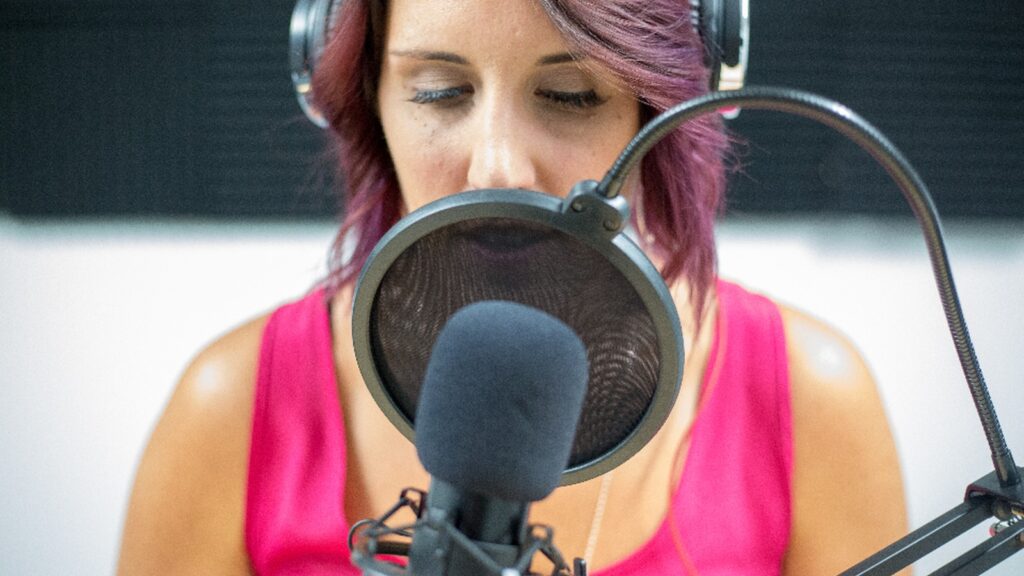
The most interesting thing about the release is not only how it sounds. It is that Mistral published open weights for a modern voice-cloning TTS model. Many high-quality voice platforms are API-only. That works for simple integrations, but it limits inspection, deployment control, and private experimentation.
Open weights change the evaluation process. A team can test prompts, compare voices, inspect latency, and build local prototypes without sending every experiment through a hosted speech API. The Hugging Face model card says the model can run with vLLM-Omni and a single GPU with at least 16GB of memory. That does not make production deployment trivial, but it makes serious experimentation more accessible.
The catch is licensing. The model weights are available under CC BY-NC 4.0 on Hugging Face, so commercial self-hosting is not a casual assumption. The API is the practical production route for most businesses. The open-weights release is still valuable because it lets technical teams test behavior before committing to a vendor path.
This is the same pattern appearing across AI infrastructure. The winning setup is often hybrid: use open models to understand capability and risk, then choose hosted, private cloud, or licensed deployment based on privacy, cost, and support requirements.
3. Voice cloning is powerful, but consent is the control point
Voxtral TTS supports zero-shot voice cloning from short reference audio. Mistral’s documentation says a voice can be cloned from as little as 2 to 3 seconds of audio, while the announcement describes a voice prompt of 5 to 25 seconds as the model’s input pattern. The research paper says the system generates natural speech from as little as 3 seconds of reference audio.
That is technically impressive and operationally sensitive. Short-reference voice cloning is useful for accessibility, personalized assistants, localization, product demos, internal training, and brand voice systems. It is also the same capability that can be misused for impersonation, social engineering, and fraud.
Any business testing Voxtral TTS should build consent into the workflow from day one. Record who provided the reference audio, what they approved, where the voice can be used, when consent expires, and how generated audio is marked or logged. Voice cloning without strong governance is not an innovation story; it is a trust problem waiting to happen.
That is especially true for regulated sectors. Financial services, healthcare, education, and public services should treat synthetic voices as identity-adjacent data. The risk is not just whether the audio sounds good. The risk is whether customers understand when they are hearing a synthetic voice and whether the organization can prove lawful, ethical use.
4. The architecture explains the expressiveness claim

The Voxtral TTS research paper describes a hybrid architecture. One part handles semantic speech tokens, another handles acoustic detail, and a custom Voxtral Codec encodes and decodes the audio representation. Mistral’s announcement breaks the system into a 3.4B-parameter transformer decoder backbone, a 390M-parameter flow-matching acoustic transformer, and a 300M-parameter neural audio codec.
That is not trivia. It explains why Mistral is positioning Voxtral TTS around expressiveness, not only pronunciation. The autoregressive component is suited to longer-range consistency, while the flow-matching acoustic component is meant to generate the fine-grained voice texture that carries rhythm, tone, and emotional delivery.
Mistral calls this “Voice-as-an-instruction.” Instead of asking developers to steer prosody with tags, the model uses the reference voice to infer pacing, emotion, accent, and delivery style. In practice, that means the quality of the reference clip becomes part of the prompt. A flat, noisy, or inappropriate reference may produce an output that technically works but feels wrong for the task.
For businesses, the lesson is practical. Voice design is no longer just choosing a preset. It becomes a testable asset: reference clips, consent records, brand guidelines, evaluation rubrics, and fallback voices all need to be managed like part of the product.
5. Latency decides whether voice agents feel usable

The model is aimed at voice agents, and voice agents live or die on latency. In text chat, a delay can be acceptable. In a spoken conversation, a two-second gap can feel broken, especially in support calls or guided workflows.
Mistral reports 70ms model latency for a typical 10-second voice sample and 500-character input, with the model generating up to two minutes of audio natively. Its documentation says end-to-end time-to-first-audio varies by format, around 0.8 seconds for PCM and roughly 3 seconds for MP3. That format detail matters. PCM may be better for live streaming, while MP3 is easier for file delivery and broad playback.
This release therefore belongs in architecture discussions, not just marketing demos. A real voice agent has speech detection, transcription, reasoning, tool calls, policy checks, response generation, TTS, streaming playback, interruption handling, and logging. A fast TTS model can still feel slow if the rest of the pipeline is badly designed.
This connects directly to inference economics. The relevant cost is not just dollars per character. It is cost per completed conversation, including retries, escalations, silence, abandoned calls, human takeover, and quality review.
6. Multilingual support is useful, but not universal

Voxtral TTS supports nine languages: English, French, German, Spanish, Dutch, Portuguese, Italian, Hindi, and Arabic. For many European and global support workflows, that list is useful. For some UK SMEs, it may cover the languages needed for customer onboarding, explainer videos, training audio, or first-line support.
The release is particularly interesting because Mistral highlights cross-lingual voice adaptation. In simple terms, the system can use a reference voice in one language and produce speech in another language that still carries some of the original speaker’s accent and character. That can help with speech-to-speech translation pipelines where the goal is not just accurate words but continuity of speaker identity.
There is still a boundary. Nine languages is not seventy. If your business needs Polish, Turkish, Mandarin, Urdu, Romanian, Bengali, or other languages outside the supported set, Mistral’s model may not be the primary tool yet. The right evaluation is not “does it sound good in a demo?” but “does it support our actual customer base?”
For multilingual SMEs, start with your top call reasons and top languages. Test short greetings, difficult names, addresses, product terms, and emotional states. A model that sounds natural on generic sample text may still stumble on brand terms, regional pronunciation, or legal wording.
7. Benchmark claims need both lab and market context

Mistral reports strong human evaluation results for the model. The arXiv paper says the model achieved a 68.4% win rate over ElevenLabs Flash v2.5 for multilingual voice cloning. Mistral’s announcement also says it performs at parity with ElevenLabs v3 in some quality comparisons while supporting emotion steering for lifelike interactions.
Those claims are meaningful, but they are still vendor-controlled evaluations. Independent context matters. Artificial Analysis ranks it as a notable open-weights TTS model, with an Elo score around 1056 and a listed API price of $16 per million characters. That places it among useful open-weights options, but below the highest-ranked TTS models overall.
This is not a weakness in the article’s argument. It is the argument. Voxtral TTS should be evaluated as a specific trade-off: open weights, short-reference voice adaptation, low-latency design, and nine-language support. If your only goal is the highest blind-listener score in English entertainment narration, another system may win. If your goal is controlled experimentation with a self-hostable, enterprise-oriented voice model, Mistral’s approach becomes more compelling.
Buyers should ask vendors for side-by-side tests using their own scripts, accents, support flows, and failure cases. A leaderboard can narrow the field. It cannot replace domain-specific evaluation.
8. Use cases should start narrow
Voxtral TTS can fit many workflows: customer support, accessibility narration, multilingual training, product onboarding, sales follow-up, internal learning, in-vehicle assistants, and public-service information lines. That does not mean every workflow should be automated first.
The safest pilots are narrow and measurable. For example, use the model to generate multilingual help-centre audio from approved scripts. Use it for an internal training narrator with clear disclosure. Use it in a voice agent that only handles order status, appointment reminders, or FAQ responses before moving to higher-risk tasks.
The first pilot should avoid identity-sensitive workflows unless the consent and escalation process is mature. Do not begin with payment disputes, medical advice, HR conversations, complaints, or anything where a synthetic voice could be mistaken for a named employee without proper disclosure.
This is where AI process redesign matters. Adding TTS to a broken support process will not fix the process. Map the workflow first, decide where speech improves the experience, and keep humans in the loop for ambiguity, emotion, and authority.
9. The real decision is build, buy, or blend
The release gives teams three broad paths. They can test the model in Mistral Studio, call the hosted API, or experiment with the open weights. Each path has a different risk profile.
The hosted API is the simplest for production trials. It reduces infrastructure overhead and gives access to Mistral’s managed voice features. The open-weight path is better for research, privacy-sensitive prototypes, latency experiments, and teams that need deep control. Enterprise licensing or private deployment may make sense where data residency, compliance, or brand voice control is central.
Most SMEs should blend. Use hosted tools to prove workflow value quickly. Use local testing to understand quality and failure modes. Move only the workloads with real privacy, cost, or control requirements toward private deployment. This avoids both extremes: locking into a voice API before understanding the use case, or overbuilding infrastructure before proving demand.
For teams already thinking about office agents and voice-driven workflows, this also connects to the broader Silicon Workforce pattern. Voice is not the agent. Voice is the interface. The agent still needs tools, permissions, approvals, audit logs, and fallback routes.
A practical 30-day Voxtral TTS review plan
Use the release as a structured evaluation, not as a weekend novelty.
Days 1 to 5: pick one workflow. Choose a bounded use case such as support greetings, training narration, internal knowledge-base audio, or appointment reminders. Avoid sensitive conversations at this stage.
Days 6 to 10: prepare scripts and reference voices. Use consented audio only. Write scripts that include product names, numbers, addresses, emotional phrasing, and common customer terms.
Days 11 to 15: compare providers. Test Voxtral TTS against at least two alternatives using the same text, language, and voice conditions. Include one independent score source and your own human listening panel.
Days 16 to 20: measure latency and workflow cost. Test PCM and MP3 if real-time interaction matters. Measure time-to-first-audio, total response time, character cost, retries, and human review time.
Days 21 to 25: design governance. Decide how consent is stored, how generated audio is labelled, who can create voices, who can approve scripts, and when a human must take over.
Days 26 to 30: choose a deployment route. Hosted API is usually best for a first production pilot. Open-weight testing is valuable for technical due diligence, privacy review, and future bargaining power.
FAQ
What is Voxtral TTS?
Voxtral TTS is Mistral AI’s text-to-speech model for generating natural speech from text. It supports voice adaptation from short reference audio, nine languages, streaming output, and hosted API access, with open weights available on Hugging Face under a non-commercial license.
Is Voxtral TTS the same as Voxtral Transcribe?
No. Voxtral Transcribe and earlier Voxtral models focus on speech-to-text and audio understanding. Voxtral TTS is the opposite direction: it turns text into speech and is designed for voice agents, narration, localization, and voice-cloning workflows.
Can businesses use the open weights commercially?
The Hugging Face model card lists Voxtral TTS under CC BY-NC 4.0, so commercial self-hosting requires legal review and likely a different commercial arrangement. The Mistral API is the cleaner production route for many commercial teams.
How many languages does Voxtral TTS support?
Voxtral TTS supports English, French, Spanish, Portuguese, Italian, Dutch, German, Hindi, and Arabic. Teams should test their own names, product terms, regional accents, and legal scripts before relying on it in customer-facing workflows.
Is Voxtral TTS good for real-time voice agents?
It is designed for low-latency streaming and voice-agent workflows, but real-time quality depends on the full pipeline. Speech detection, transcription, LLM reasoning, tool calls, TTS generation, playback, and interruption handling all affect the user experience.
What is the biggest risk with Voxtral TTS?
The biggest risk is misuse of voice cloning. Businesses should require consented reference audio, clear disclosure, audit logs, approval workflows, and strict limits on where synthetic voices can be used.
Final thought
Voxtral TTS is important because it pushes high-quality voice generation toward a more open and controllable model. It gives developers a way to test modern TTS outside a fully closed platform, while still offering a hosted API for production use.
The opportunity is real: better voice agents, more natural support flows, multilingual narration, accessibility tools, and faster experimentation. The risk is equally real: cloned voices can damage trust when consent, disclosure, and control are weak.
For SMEs, the right response is disciplined curiosity. Test Voxtral TTS where voice clearly improves a workflow. Measure it against alternatives. Keep humans in the loop. Treat voice identity as sensitive. If the model passes those tests, it may become a practical part of the next AI interface layer.
More AI coverage: explore Progressive Robot's AI Models, Tools & Releases hub — hands-on reviews, setup guides and benchmarks in one place.










