
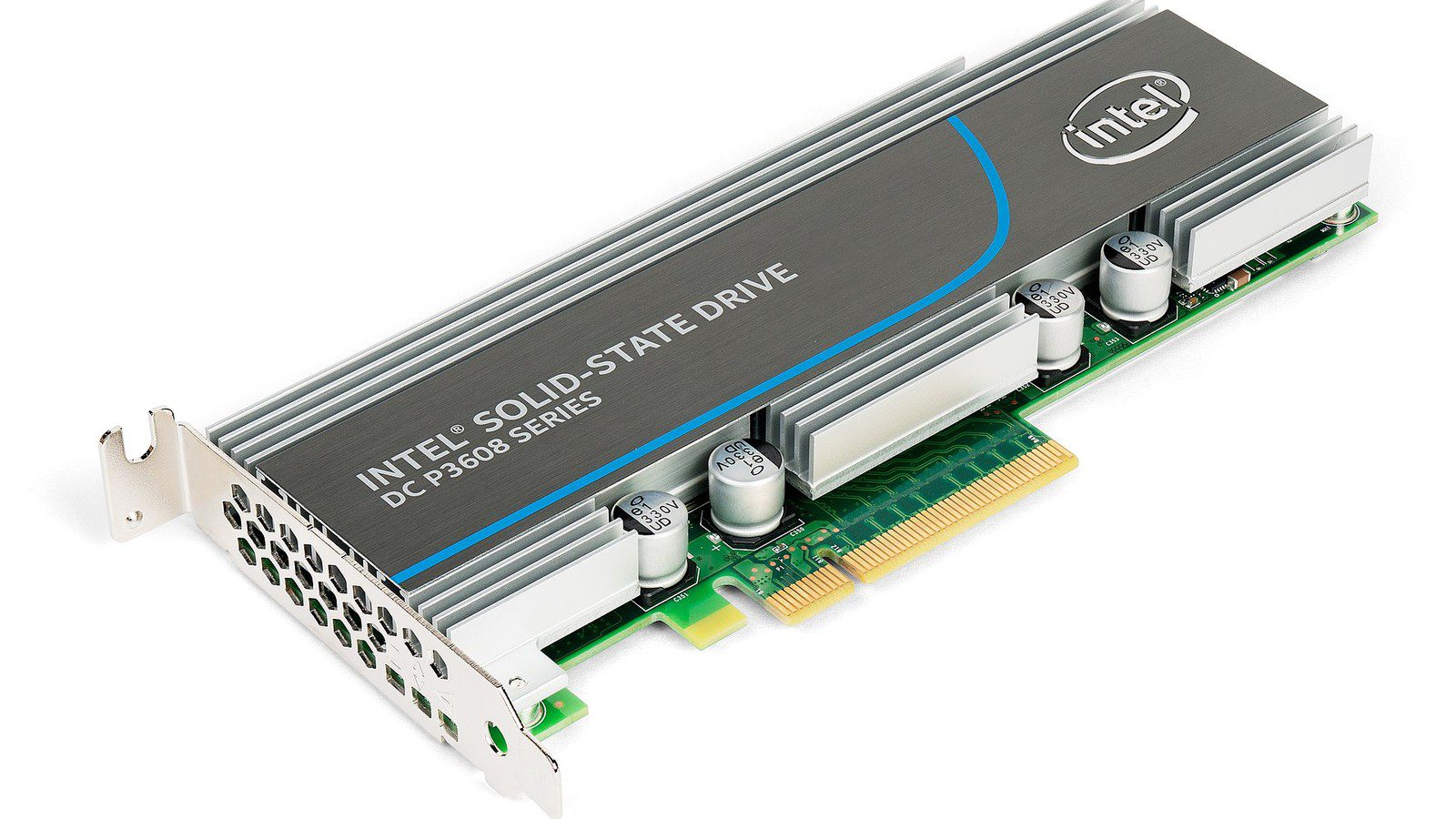
PCIe 8.0 has reached its draft 0.5 milestone, and PCI-SIG says the next major PCI Express generation is still on track for a full release by 2028.
If you want the short version, PCIe 8.0 targets a 256.0 GT/s raw bit rate and up to 1.0 TB/s of bidirectional bandwidth over a x16 configuration. That is double PCIe 7.0 and eight times the headline x16 bandwidth of PCIe 5.0. But the most interesting part is not only the bandwidth number. PCI-SIG is also evaluating new connector technology, which shows how hard the physical layer becomes when a mainstream interconnect tries to move toward terabyte-per-second links.
There is also one detail worth clearing up immediately. Some headlines describe this as a “0.5v” or “0.5V” moment, but PCI-SIG’s own wording is draft 0.5. That means version 0.5 of the specification draft, not a 0.5-volt electrical milestone.
That distinction matters because PCIe 8.0 is not a shipping desktop feature yet. It is a standards-development milestone that gives CPU, GPU, accelerator, retimer, connector, server, storage, networking, and platform vendors a clearer target for the second half of the decade.
This article draws on PCI-SIG’s official draft 0.5 announcement, the PCI-SIG/Al Yanes reprint in Signal Integrity Journal, ServeTheHome’s draft 0.5 analysis, and TechPowerUp’s report on 1 TB/s bandwidth and connector technology.
PCIe 8.0 at a glance
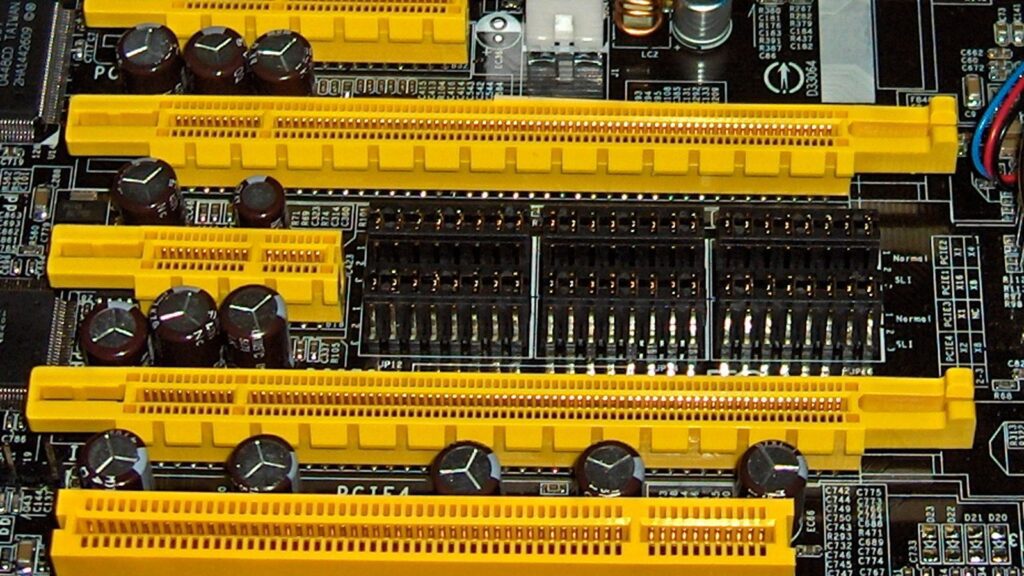
The new PCI Express milestone can be summed up in a few clear points.
- PCI-SIG says draft 0.5 is now available for member review.
- Draft 0.5 is the official first draft and incorporates feedback from draft 0.3, which was released in September 2025.
- The full specification remains targeted for release by 2028.
- The target raw bit rate is 256.0 GT/s.
- The target x16 bandwidth is up to 1.0 TB/s bidirectionally.
- PCI-SIG says it is evaluating new connector technology.
- PCI-SIG also lists latency, FEC, reliability, backwards compatibility, protocol bandwidth improvements, and power reduction as objectives.
- The target markets include AI, data centers, high-speed networking, edge computing, quantum computing, and other data-intensive systems.
| Item | Target |
|---|---|
| Draft milestone | Draft 0.5 available to PCI-SIG members |
| Final specification timing | Planned for 2028 |
| Raw bit rate | 256.0 GT/s |
| x16 headline bandwidth | Up to 1.0 TB/s bidirectional |
| Main physical-layer question | New connector technology under evaluation |
| Key markets | AI, data centers, networking, edge, quantum, storage, accelerators |
The headline number is huge, but the real story is ecosystem preparation. The standard is about making future platforms ready for much denser I/O traffic than today’s mainstream client systems need.
That is the useful way to read PCIe 8.0 now: as a standards signal for future platforms, not a promise that next year’s desktop PCs will need a new slot.
Why PCIe 8.0 matters
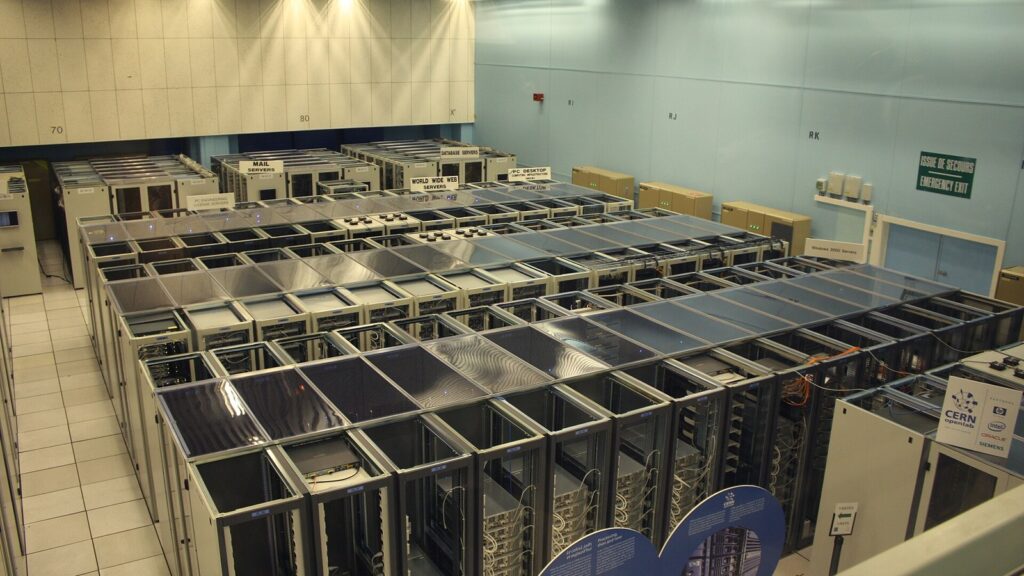
The standard matters because AI and data center systems are no longer limited by a single component. The hard problem is moving data between CPUs, GPUs, accelerators, NICs, storage, memory expansion devices, switches, and retimers without wasting power, adding too much latency, or breaking interoperability.
That is why the PCI-SIG objective list is broader than “make it faster.” The organization is targeting bandwidth, latency, reliability, FEC, backwards compatibility, protocol efficiency, connector feasibility, and power reduction at the same time. At 256.0 GT/s, the interconnect is no longer just a motherboard slot story. It becomes a system architecture story.
For teams following AI infrastructure and autonomous AI agents, the connection is straightforward. Larger AI clusters and agentic systems need more data movement between compute, memory, storage, and networking. PCIe is not the only fabric involved, but it remains one of the most important local I/O standards in servers and workstations.
This milestone also matters because standards work happens years before everyday products arrive. PCIe 7.0 was only released to members in 2025, and PCIe 6.0 adoption is still limited in many market segments. So this is not a sign that consumer motherboards will suddenly jump to 1 TB/s links. It is a roadmap signal for the vendors building the next wave of AI servers, accelerator platforms, storage systems, and high-speed networking hardware.
7 critical facts behind PCIe 8.0
1. Draft 0.5 is an official first draft, not the final standard
The most important context is maturity.
PCI-SIG says draft 0.5 is now available for member review. It also says this is the official first draft of the specification and that it incorporates feedback received after draft 0.3 in September 2025.
That makes the milestone meaningful, but it does not make the standard final. A draft 0.5 release means the technical workgroups have consolidated an early direction and are ready for deeper member review. It does not mean chips, motherboards, add-in cards, or consumer devices are around the corner.
The full specification is still targeted for release in 2028. After that, real products, compliance testing, platform validation, and broad ecosystem adoption will take additional time.
2. The target is 256.0 GT/s and up to 1.0 TB/s over x16
The bandwidth target is the easy headline.
The specification aims to deliver a 256.0 GT/s raw bit rate. PCI-SIG says that translates to up to 1.0 TB/s of bidirectional bandwidth over a x16 configuration.
That “bidirectional” wording is important. The headline figure combines traffic moving in both directions. In simple practical terms, it means a future x16 link would be designed for roughly half that headline number in each direction at once, with protocol and implementation details determining real-world usable throughput.
Even so, the jump is enormous. ServeTheHome notes that the roadmap doubles PCIe 7.0 from 128 GT/s to 256 GT/s. PCIe has kept a familiar rhythm for years: each major generation roughly doubles transfer rate, while the engineering burden rises sharply at the electrical and platform level.
3. Lane count becomes more strategically important
The x16 number gets attention, but the lane-count implications may matter just as much.
If a future x16 link targets 1.0 TB/s bidirectionally, then smaller links become very capable too. ServeTheHome highlights that a x4 link would reach 256 GB/s bidirectionally at the target rate. That creates more design flexibility for future accelerators, SSDs, NICs, CXL-adjacent devices, and platform backplanes.
This does not mean every device will use fewer lanes. Some high-end devices will consume more bandwidth as soon as it exists. But higher per-lane throughput lets system designers rethink tradeoffs between board area, connectors, routing complexity, switching, cabling, and expansion density.
That is one reason the draft matters beyond graphics cards. In a server, lanes are a scarce resource. More bandwidth per lane can change how platforms allocate I/O across accelerators, storage, networking, and memory expansion.
4. PCIe 8.0 is evaluating new connector technology
The connector line may be the most interesting part of the announcement.
PCI-SIG lists “evaluating new connector technology” as one of the specification objectives. TechPowerUp frames this as a sign that the familiar PCIe electrical connection may become a limiting factor as the standard moves toward 256.0 GT/s.
That does not automatically mean the classic desktop PCIe slot disappears in 2028. The official wording is careful: evaluating new connector technology. It signals active investigation, not a final physical connector decision.
Still, the direction is understandable. At very high data rates, insertion loss, reach, connector quality, board materials, retimers, cables, and signal integrity margins all become harder. A link that looks clean at one generation may need different physical assumptions two generations later.
The new generation is therefore not just a protocol update. It is a physical ecosystem challenge.
5. The standard still has to balance speed with latency, FEC, and reliability
PCI-SIG’s objectives make clear that bandwidth alone is not enough.
The standard is expected to ensure latency, FEC, and reliability targets are achieved. That matters because higher signaling speeds often require stronger error handling and more careful link design. Forward error correction can help maintain reliability, but it must be managed so the interconnect remains useful for latency-sensitive devices.
PCIe 6.0 introduced major architectural changes such as PAM4 signaling and FLIT mode, and ServeTheHome notes that the new draft continues the broad direction of doubling while keeping modern signaling and encoding approaches in the roadmap discussion.
For platform vendors, the practical issue is not a single benchmark number. It is whether the link can deliver speed, stability, and acceptable latency across real traces, cards, cables, connectors, switches, and retimers.
6. The early pressure comes from data-intensive infrastructure, not ordinary desktops
PCI-SIG names AI, data centers, high-speed networking, edge computing, quantum computing, and more as target markets. That list tells you where the pressure is coming from.
Consumer PCs will benefit from future PCIe generations eventually, but the most urgent demand is in infrastructure. AI training and inference systems need fast local I/O between accelerators, CPUs, NICs, storage, and memory expansion. High-speed networking cards and storage arrays need higher bandwidth without exploding lane counts. Edge and quantum-adjacent systems need dense I/O in more specialized form factors.
That is why the announcement should not be read as a normal PC upgrade story. It is more relevant to future data center boards, accelerator servers, storage shelves, CXL designs, and high-speed network appliances than to a near-term gaming desktop.
For business leaders tracking inference economics, this matters because I/O bottlenecks can become cost bottlenecks. Faster chips are only useful if systems can feed them data, move model state, handle storage, and keep network paths efficient.
7. There is a long road from draft to deployed systems
The final release target is 2028, but broad adoption will not happen on that date.
ServeTheHome points out that compliance timing usually trails the final specification, with preliminary testing and integrator-list work following later. Early products can appear before full ecosystem maturity, but broad interoperability takes time.
That is normal for PCIe. The standard is used across an enormous hardware ecosystem, so vendors need time to design silicon, validate boards, build retimers, qualify connectors, test firmware, tune platforms, and prove interoperability.
The practical takeaway is simple: this is a roadmap milestone, not a shopping-list item. The organizations that should care most right now are silicon vendors, data center platform designers, high-speed connector and cable companies, retimer vendors, hyperscalers, AI infrastructure teams, and storage/networking vendors planning late-decade systems.
For those groups, PCIe 8.0 is already relevant because design cycles for late-decade platforms begin long before final ratification.
PCIe 8.0 compared with recent PCIe generations
The new draft is easiest to understand as part of the wider PCIe doubling cadence.
| PCIe generation | Raw transfer rate | x16 bidirectional headline bandwidth | Practical status in 2026 |
|---|---|---|---|
| PCIe 5.0 | 32 GT/s | 128 GB/s | Common in newer servers and high-end client platforms |
| PCIe 6.0 | 64 GT/s | 256 GB/s | Emerging mainly in infrastructure-oriented roadmaps |
| PCIe 7.0 | 128 GT/s | 512 GB/s | Released to members in 2025 |
| PCIe 8.0 | 256 GT/s | 1.0 TB/s | Draft 0.5 available, full release targeted for 2028 |
The table shows why the connector question is so important. This is not a small incremental jump from what most users own today. It is a late-decade target that pushes the platform well beyond ordinary desktop requirements.
For client PCs, PCIe 5.0 is still more than enough for many workloads. For AI servers, storage fabrics, accelerator backplanes, and high-speed network cards, the future demand curve is different.
What teams should watch before PCIe 8.0 reaches final release

The most useful way to track the standard between now and 2028 is to watch the supporting ecosystem, not only the draft number.
- Connector direction: whether PCI-SIG keeps the familiar slot model, adds new connector types, or separates client and infrastructure needs more clearly.
- Optical and cable work: whether optical-aware retimers, CopprLink, or other physical-layer approaches become more central to high-speed PCIe deployments.
- Retimer availability: whether vendors can make high-speed links reliable across realistic server topologies.
- CXL alignment: how memory expansion and accelerator fabrics use the new capabilities.
- Power targets: whether the standard can double bandwidth without making platform power and cooling harder to manage.
- Compliance timing: when preliminary tests, plugfests, and integrator-list milestones appear after final release.
- Product segmentation: whether the new generation appears first in AI servers, networking, storage, or specialized accelerator systems.
For most SMEs, there is no reason to plan procurement around the draft today. But there is a reason to understand the direction if your roadmap depends on AI infrastructure, high-speed storage, networking, edge systems, or vendor platform choices later in the decade.
In other words, PCIe 8.0 is worth watching as an infrastructure roadmap marker, even if it is not yet a near-term buying requirement.
PCIe 8.0 FAQ
What is PCIe 8.0?
PCIe 8.0 is the next planned major generation of the PCI Express interconnect after PCIe 7.0. PCI-SIG says it targets a 256.0 GT/s raw bit rate and up to 1.0 TB/s of bidirectional bandwidth over a x16 configuration.
Is PCIe 8.0 final now?
No. PCIe 8.0 has reached draft 0.5, which is available to PCI-SIG members for review. The full specification remains targeted for release in 2028.
Does draft 0.5 mean 0.5 volts?
No. Draft 0.5 is a specification-version milestone. It does not mean the standard has reached a 0.5-volt electrical milestone.
How fast is PCIe 8.0 compared with PCIe 5.0?
At the headline x16 bidirectional level, PCIe 8.0 targets 1.0 TB/s, while PCIe 5.0 is commonly described at 128 GB/s. That makes the target roughly eight times higher at the same lane count.
Will PCIe 8.0 need a new connector?
PCI-SIG says it is evaluating new connector technology. That does not confirm a specific new connector yet, but it does show that the physical connection is a major part of the engineering challenge.
When will PCIe 8.0 appear in consumer PCs?
Not soon. The final specification is targeted for 2028, and real product adoption usually takes additional years. Server, AI, networking, and storage platforms are likely to feel the pressure before ordinary desktops.
Why does PCIe 8.0 matter for AI infrastructure?
AI platforms need fast data movement between accelerators, CPUs, networking, storage, and memory expansion. PCIe 8.0 is designed for the kind of bandwidth growth that future AI and data center systems are likely to need.
Final thoughts
PCIe 8.0 is a bigger story than a single 1 TB/s headline.
The draft 0.5 milestone shows that PCI-SIG is moving the next-generation interconnect toward 256.0 GT/s, while also confronting the physical realities that come with that speed. Connector technology, latency, FEC, reliability, backwards compatibility, power, retimers, cabling, and optical-aware work all matter because future I/O performance depends on the whole platform.
The practical reading is this: PCIe 8.0 is not something most buyers need to wait for today. But it is a clear signal about where AI servers, high-speed networking, storage, accelerator platforms, and data center architecture are heading by the end of the decade. For infrastructure planners, PCIe 8.0 is best treated as a standards roadmap marker rather than an immediate purchasing trigger.










