
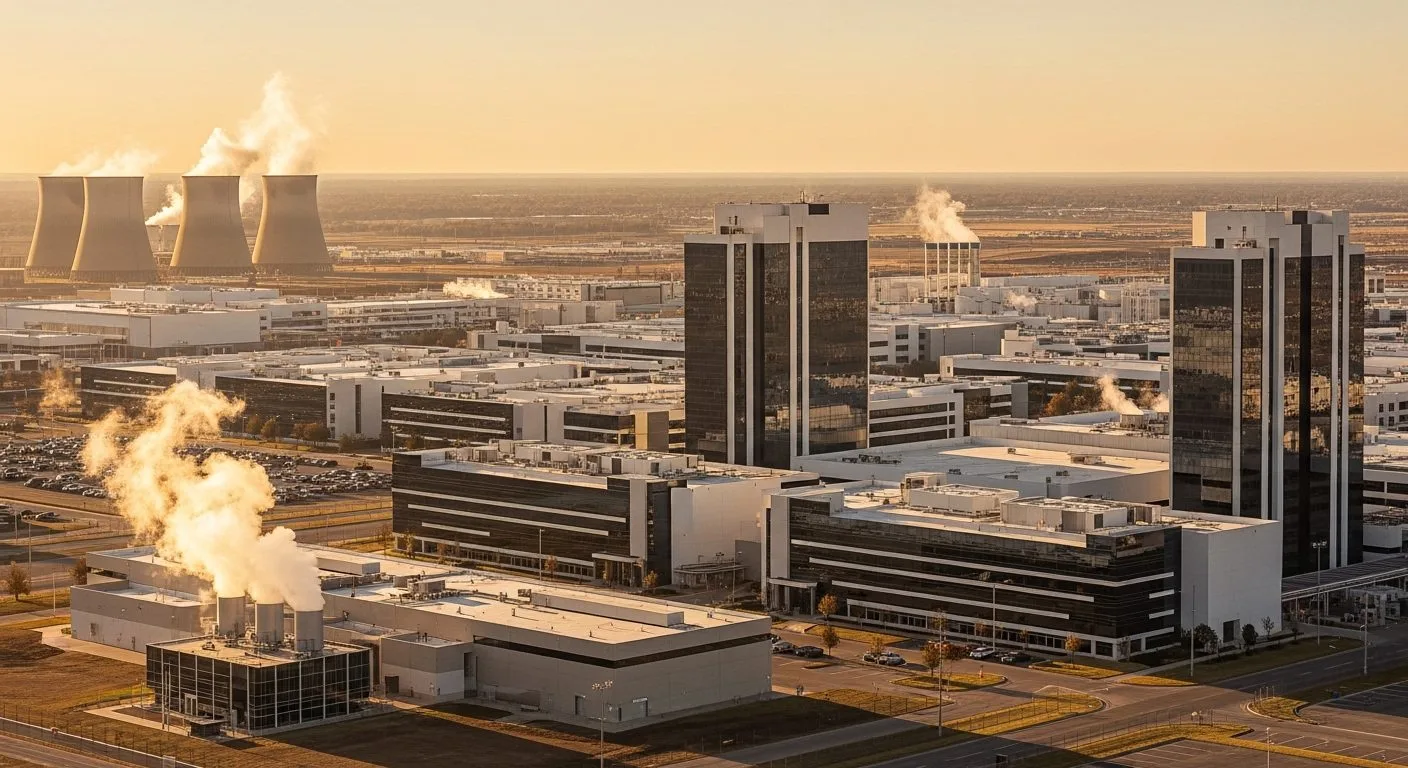
Intel Terafab chips project is suddenly worth taking seriously because Intel is the first major partner with the manufacturing experience to make Elon Musk’s semiconductor plan feel even remotely operational.
If you want the short version, TechCrunch reports that Intel will join SpaceX and Tesla in an effort to build a new U.S. semiconductor factory in Texas. The exact scope of Intel’s role is still unclear, but Intel said in a corporate post on X that its ability to design, fabricate, and package ultra-high-performance chips at scale would help accelerate Terafab’s aim to produce 1 terawatt per year of compute for future AI and robotics advances.
That makes the Intel Terafab chips project more than another Musk announcement. It changes the story from a two-company ambition led by Tesla and SpaceX into a potential foundry and industrial-capacity story with Intel at the center of actual semiconductor execution.
This guide uses TechCrunch’s April 2026 report on Intel joining Terafab, TechCrunch’s March 2026 report on Musk unveiling Terafab, and Intel’s linked corporate post on X as the main references. If you want broader background on how different chip types and compute architectures shape modern AI systems, Progressive Robot’s article on Heterogeneous Computing and AI Integration in Clusters is useful context.
In practical terms, the Intel Terafab chips project is not just about one fab announcement. It is about AI compute supply, domestic semiconductor manufacturing, and whether Intel Foundry can become essential to the next wave of Musk-linked hardware demand.
Intel Terafab chips project at a glance

The Intel Terafab chips project can be summarized in a few key points.
- TechCrunch reports that Intel will join SpaceX and Tesla in the Terafab effort.
- Intel said its strength in design, fabrication, and advanced packaging will help support the project.
- Terafab is tied to Musk’s broader effort to secure more chips for AI, robotics, satellites, and autonomous systems.
- Earlier reporting linked the facility to the Austin, Texas area near Tesla’s headquarters and Gigafactory footprint.
- The exact scope of Intel’s contribution has not been publicly detailed.
- Intel declined to comment further to TechCrunch, and SpaceX did not respond to the publication’s query.
- The project matters because chip fabs are among the most difficult and expensive industrial builds in the world.
Why Intel Terafab chips project matters

Intel Terafab chips project matters because it addresses the weakest part of Musk’s original semiconductor pitch: who was actually going to build and run the manufacturing side.
Tesla and SpaceX can both make a strong case that they need more advanced chips. Tesla wants more compute for autonomous driving and robotics. SpaceX has interests spanning satellites, communications, and possible orbital compute ambitions. But none of that automatically means either company knows how to build a cutting-edge semiconductor fab.
That is where Intel changes the tone of the story. Intel brings real foundry credibility, packaging experience, and manufacturing scale. Even if the details are still sparse, Intel’s involvement turns the Intel Terafab chips project into something investors, suppliers, and competitors have to watch more closely.
If you zoom out, this also fits the broader shift toward specialised compute stacks where CPUs, GPUs, accelerators, packaging, and fabrication strategy increasingly matter together rather than separately.
7 critical facts behind the Intel Terafab chips project

1. Intel is the first partner that makes Terafab sound operational
The first thing to understand about the Intel Terafab chips project is that Intel changes the credibility profile of the entire plan.
Before Intel appeared, Terafab looked like a classic Musk industrial moonshot. Tesla and SpaceX clearly have massive chip demand, but neither company is known for running advanced semiconductor manufacturing at foundry scale. TechCrunch put the problem directly: chip fabs are extremely expensive, highly specialised, and usually take years plus tens of billions of dollars to build properly.
Intel is different. Whatever its recent competitive struggles in advanced processors, it still knows how to design, fabricate, package, and operate semiconductor infrastructure. That does not guarantee success, but it means the Intel Terafab chips project now has a participant that actually belongs in the room when fab execution is discussed.
2. Terafab started as Musk’s answer to a chip supply bottleneck
The Intel Terafab chips project only makes sense if you understand why Musk started talking about Terafab in the first place.
According to TechCrunch’s March report, Musk said semiconductor manufacturers were not making chips quickly enough for the needs of his companies. His framing was blunt: either build the fab or risk not having the chips required for future products. The project was pitched as a response to constrained chip availability rather than as a generic manufacturing vanity project.
That helps explain why the Intel Terafab chips project matters beyond headlines. It reflects a view that chip dependency has become strategically dangerous for companies trying to scale AI, robotics, self-driving systems, and large satellite networks all at once.
3. Texas appears to be the center of the Terafab plan
The geographic logic behind the Intel Terafab chips project also matters.
TechCrunch’s March report, citing Bloomberg, said a photo shown at Musk’s Austin event suggested the Terafab facility would be built near Tesla’s Austin headquarters and Gigafactory. That gives the project a more tangible industrial setting than a vague national reshoring narrative.
Texas is also a logical center for the Intel Terafab chips project because it ties together Tesla’s physical footprint, Musk’s political and operational preference for Texas-based projects, and the state’s wider interest in advanced manufacturing and energy-intensive industrial development.
Even so, the public reporting still stops short of giving a full construction timeline, a detailed site plan, or a breakdown of which company would own which part of the buildout.
4. The compute ambition is enormous, even by AI-era standards
One of the most striking parts of the Intel Terafab chips project is the scale Musk and Intel are talking about.
Intel’s corporate X post, as quoted by TechCrunch, refers to Terafab’s aim to produce 1 terawatt per year of compute to power AI and robotics. Earlier March reporting on Musk’s own remarks described a goal of manufacturing chips that could support 100 to 200 gigawatts of computing power per year on Earth, plus a terawatt in space.
The exact public numbers are not perfectly aligned, but the broader point is clear. The Intel Terafab chips project is being framed at a scale far beyond a normal enterprise procurement story. It is being pitched as infrastructure for extremely large AI and robotics demand, possibly extending into orbital or satellite-linked compute ambitions.
That is part of why the project draws attention. Any plan talking about compute in this range is implicitly making a claim about national industrial strategy, supply-chain control, and next-generation hardware capacity.
5. Intel Foundry may gain the anchor customers it has been seeking
The Intel Terafab chips project also matters because it could help Intel solve one of its own biggest business problems.
TechCrunch notes that Intel has been hunting for large anchor customers to support its foundry business. If SpaceX and Tesla become meaningful customers inside a Terafab-linked manufacturing relationship, Intel could gain exactly the kind of high-profile, strategic demand base it has wanted.
That does not automatically mean Intel wins a full manufacturing monopoly over Musk-related chip programs. But the Intel Terafab chips project creates the possibility that Intel Foundry becomes deeply tied to long-horizon demand from autonomous vehicles, robotics, satellites, and AI hardware.
In other words, this is not only a Musk story. It is also a live test of whether Intel can turn foundry ambition into commercially sticky industrial partnerships.
6. The target applications go far beyond one chip category
Another reason the Intel Terafab chips project is notable is that the intended demand is not confined to one narrow use case.
TechCrunch’s April report says Musk’s March announcement linked Terafab to chips for AI compute, satellites, a mooted space data center, autonomous Tesla vehicles, and robots. That is a broad portfolio of hardware needs with very different performance, power, reliability, and packaging requirements.
That matters because the Intel Terafab chips project is not just about training one model family more cheaply. It sits at the intersection of terrestrial AI compute, mobility systems, space infrastructure, and embodied AI. If it moves forward meaningfully, it could become one of the more unusual demand clusters in U.S. semiconductor manufacturing.
7. The biggest unanswered question is what Intel is actually signing up to do
The most important caution in the Intel Terafab chips project story is that the scope remains vague.
TechCrunch says Intel’s contributions are unclear. Intel did not provide further comment to the publication. That leaves major open questions: Is Intel acting mainly as a foundry partner, a packaging partner, a process and equipment adviser, a co-builder of the fab, or some mix of all of those roles?
That uncertainty matters because each option implies a very different risk profile. A conventional foundry relationship is one thing. Deep co-development of a new fab ecosystem is something else entirely. Until Intel and the Musk companies disclose more, the Intel Terafab chips project remains strategically significant but operationally underdefined.
Intel Terafab chips project in simple terms

If you want the plain-English answer, the Intel Terafab chips project is Musk’s semiconductor manufacturing plan plus the first partner that actually knows how to build chips at industrial scale.
Tesla and SpaceX supply the demand story. Intel supplies the manufacturing credibility. Texas appears to supply the geographic center. The unresolved part is how those pieces fit together in practice and who is responsible for which layer of the fab stack.
That is why the Intel Terafab chips project matters. It could become a serious U.S. chip-manufacturing partnership, or it could stay a high-profile but loosely defined industrial concept until more specifics appear.
FAQs
The Intel Terafab chips project raises a few obvious questions.
Did Intel officially confirm involvement?
Intel did not publish a detailed press release that was surfaced in this research, but TechCrunch cites an Intel corporate post on X saying the company would help accelerate Terafab’s compute ambitions through its chip design, fabrication, and packaging capabilities.
What is Terafab supposed to build?
Based on TechCrunch’s March and April reporting, Terafab is meant to support chip demand tied to AI compute, robotics, Tesla autonomy, satellites, and related Musk-linked hardware ambitions.
Where is the facility expected to be?
Earlier reporting cited by TechCrunch suggested the project would be built near Tesla’s Austin headquarters and Gigafactory in Texas.
Why is Intel’s involvement such a big deal?
Intel matters because semiconductor fabs are incredibly difficult to build and operate. Intel brings real manufacturing and packaging experience to a project that otherwise looked heavily dependent on companies without that core expertise.
Is the Intel Terafab chips project fully defined yet?
No. The biggest gap in the public story is the exact scope of Intel’s role, along with the structure, economics, and execution timeline of the partnership.
Final thoughts
Intel Terafab chips project is one of those stories that becomes more important the moment it stops sounding like a pure concept and starts sounding like industrial execution.
The key change is Intel. Musk’s original Terafab pitch was ambitious, but Intel’s arrival gives the plan a partner with actual fabrication and packaging depth. That does not remove the risk, and it certainly does not answer every question. It does, however, make the project more plausible than it was a month earlier.
If you want the simplest takeaway, Intel Terafab chips project is really a story about whether AI-era chip demand is now strategic enough for Musk’s companies and Intel to attempt a vertically integrated U.S. manufacturing push together.
More AI coverage: explore Progressive Robot's AI Models, Tools & Releases hub — hands-on reviews, setup guides and benchmarks in one place.